Extremities
After Marjorie turns the would-be rapist who attacked her in her home into a captive, her roommates debate whether to call police and whether he can be convicted. His knowledge of the women's lives turns them against one another.
8284 shows
Clear filtersAfter Marjorie turns the would-be rapist who attacked her in her home into a captive, her roommates debate whether to call police and whether he can be convicted. His knowledge of the women's lives turns them against one another.
FOB is a 1980 Obie Award-winning play by American playwright David Henry Hwang. His first play, it depicts the contrasts and conflicts between established Asian Americans and "fresh off the boat" (FOB) newcomer immigrants.
In a one-person comic parody and tribute to Friends, Gunther recounts the events of all ten seasons from the lovelorn coffee-shop worker's perspective.
A two-character poetic and conceptual dialogue with Samuel Beckett's drama, described as a postmodern patchwork that reworks elements of Beckett's plays into a distinct theatrical work.
Thai garment workers are lured to Los Angeles and held in a confined underground sewing shop to pay debts to traffickers. The play interweaves their experience with the investigation by an immigration officer and labor authorities, whose raid frees the workers and arrests the trafficking ring.
When her husband takes her money, successful Manhattan publicist Undine is forced to return to her former life in Brooklyn and confront her working-class relatives.
A farce about East/West cultural stereotypes, Face Value examines how racial and cultural assumptions shape identity and theatrical representation.
After a sacked construction worker rams his former boss's car, a community convener brings the worker, his boss, their families, and coworkers together to discuss the harm and circumstances behind the incident instead of sending the case directly to court.
Ten years after leaving their Sheffield flat, estranged spouses Dave and Joanna meet again when she visits wanting a baby. Their reunion becomes a vicious argument and encounter as they reveal the secrets behind their separation and confront debt and family pressures.
A stage adaptation of Edward Dyson’s factory-worker stories, reshaped around a murder plot among low-life characters.
In parallel plots, William the Conqueror disguises himself to court a Danish princess while her sister falls for him, and miller's daughter Em pretends to be blind and deaf to avoid two suitors as she pursues the faithless Manvile. The plots converge when Em's true noble identity is revealed and her virtue helps reconcile William to his marriage.
Friends Laura Bartlett and Jack Wheeler enjoy going out partying, but their respective spouses, Billy Bartlett and Blanche Wheeler, do not. One evening when Laura and Jack are out together, Billy and Blanche decide to try partying themselves. The inexperienced drinkers mix a cocktail so potent that they pass out together after just one drink, leading their spouses to think they are having an affair. Blanche returns the next day to apologize, but Laura has already decided to leave Billy and is having the furniture removed. The misunderstanding is resolved by Tessie, the Barletts' maid.
As Beverly prepares a birthday celebration for her mother, tensions rise among her African-American family. White characters comment on race while the family repeats the action, and the play's layered structure culminates in Keisha addressing the audience about who gets to tell Black stories.
Two homeless fifteen-year-olds meet in a derelict community centre. Kirsty is grieving her mother and resents her father’s engagement; through shared storytelling, she and Gideon confront their fears and hopes.
The play consists of four parts, with a monologue making up each part. The monologues are given, in order, by Hardy himself; his wife, Grace; his manager, Teddy, and finally Hardy again. The monologues tell the story of Hardy, including an incident in a Welsh village in which he cures ten people. Teddy's monologue reveals that Grace dies by suicide, while Hardy ponders whether his gift is real or not. In Hardy’s second monologue, it is suggested that he is beaten to death for his failure to heal a cripple. He says that he knows he will not be able to heal him and, going to face death, he feels a sense of homecoming. From Teddy’s preceding monologue it is made explicit however, that Hardy is actually killed.

Across generations, the Piper family confronts secrets and loss, from Cape Breton through the First World War and New York's jazz scene. Years later, a daughter travels to New York seeking answers about her family.
Julia and Jane, whose former lover Maurice is expected to visit, debate whether they can resist him and prepare to leave their homes. They drink and quarrel while waiting; when Maurice finally arrives the next morning, he invites both women upstairs, leaving their husbands to panic.
The play features a love triangle between three characters.
A Brechtian political play opposing nuclear energy and mining. It casts corporations as characters and dramatizes episodes involving uranium mining, including the swindling of governments, a 1961 court martial, and the Ranger Uranium Mine inquiry.
False Appearances is a 1789 comedy play by the British politician and general Henry Seymour Conway, inspired by the 1740 French play Trompeurs Dehors by Louis de Boissy. It appeared at the Theatre Royal, Drury Lane in London on 20 April 1789. The Irish premiere took place at the Crow Street Theatre in Dublin on 13 July 1789 The original Drury Lane cast included John Philip Kemble as Marquis, Richard Wroughton as Baron, William Parsons as Governor, John Bannister as Abbé, Robert Palmer as Robert, Elizabeth Farren as Countess, Anna Maria Crouch as Lucile, Priscilla Kemble as Caelia and Jane Pope as Lisette. The epilogue was written by John Burgoyne.
False Colours is a 1793 comedy play by the British writer Edward Morris. It premiered at the Theatre Royal, Haymarket in London on 3 April 1793. The original cast included Richard Suett as Lord Visage, Thomas King as Sir Paul Panick, Richard Wroughton as Sir Harry Cecil, William Barrymore as Captain Montague, John Bannister as Grotesque, Robert Palmer as Subtle, Ralph Wewitzer as Tony, Walter Maddocks as Alfred, Jane Pope as Lady Panick, Elizabeth Farren as Constance, Charlotte Goodall as Harriet and Elizabeth Heard as Lucy.
Lord Windworth and Lady Betty Lambton are in love, but Betty is too shy and delicate to admit it, feeling rejected. Winworth seeks Miss Marchmont, and she only accepts him because she believes that Betty agrees.
False Impressions is a 1797 melodramatic comedy play by the British playwright Richard Cumberland. It was first staged at the Covent Garden Theatre in November 1797. Much of the plot resembles Cumberland's 1795 novel Henry. Algernon has to pretend to be a servant to restore his good name. The original cast included John Quick as Scud, Joseph George Holman as Algernon, Joseph Shepherd Munden as Simon Single, Charles Murray as Sir Oliver Monrath, John Whitfield as Earling, James Thompson as Frank, Julia Betterton as Emily Fitzallan, Margaret Knight as Jenny Scud and Mary Ann Davenport as Mrs Buckram.
Rejected by Henry V, Falstaff is recruited into a conspiracy to kill the king. His resentment and hopes of marrying for money lead him to weigh betrayal against a possible return to royal favor.
Falstaff and his companions scheme for money and marriage, while Nym's deception leads to a series of mistaken identities and swapped partners before Falstaff's wedding feast.
As a Zimbabwean-American family prepares for eldest daughter Tendi’s wedding, she and her white fiancé ask to include the Roora bride-price ceremony, to be facilitated by Tendi’s aunt Anne. Tendi’s mother resists, exposing conflicts over cultural inheritance and identity.
A Victorian family gathers after the funeral of its father. As they reminisce, Lavinia reveals he was cruel and mean, and that she and the butler burned his final will, which would have deprived the family of its inheritance. They celebrate their reprieve by dancing together.
A Second City sketch revue moves through short comic scenes, including local political satire, a therapy sketch, hockey fans, an interactive music-video parody and political comedy involving children and Charlton Heston.
A Los Angeles Chinese-American family across three generations confronts the clash between Eastern and Western cultural values, religion and family life.
On a retiring judge’s seventieth birthday, his eldest daughter shelters an asylum seeker from border patrol, setting off conflict within the family.
A mother, son and dead father are heard through interlocking monologues and letters they write to one another. The son has moved to the city; the mother appears never to receive his letters and asks why he does not answer, while telling him his father has died. Their failed communication deepens the work's absurdity.
Two months after Marius leaves without news, Fanny discovers she is pregnant by him. Panisse, who had asked her to marry him, accepts her and the child; when Marius later returns wanting them back, Fanny’s arguments and the family’s love lead him to return to sea.
The framing story has Fanny stage her own play anonymously for her father and theatre critics. Within it, two respectable families discover that their children have been jailed for rowdy behavior; the encounter upends their social conventions and romantic plans.
Three clowns embody war, art and love while narrating the romance of Hans, a piano player who lost his hearing in war, and Marie, a dancer who lost her sight. Their play-within-a-play carries the story in a warm, lyrical style.
As a child, Joan discovers her uncle secretly transporting injured people. Years later, she designs hats for prisoners in a society that turns executions into public spectacle; eventually, she fears that every part of nature may be at war.
In 1950s Japan, a young American naval officer seeks adventure before returning home. The drama follows Americans stationed abroad and their personal relationships.
Biology student Nikolai Kolesov falls in love with Tanya, daughter of his university's rector. Her father offers to advance Kolesov's academic career if he gives up his feelings for her, testing his priorities.
Six short plays, five dialogues and a monologue, imagine successive future societies shaped by Shaw’s utopian ideas, including poison gas warfare, social testing and state power, food-free life, artificial reproduction and disembodied intellectual beings.
In Vurgun's reworking, Shirin loves both Khosrov and Farhad, and kills herself over Farhad's body after he dies because of false news about his beloved. Khosrov is presented as Shirin's predatory enemy rather than Farhad's rival, while Shirin is an active, independent figure.
King Philip V of Spain suffers insomnia and depression. Queen Isabella brings the castrato Farinelli to court, hoping his singing will ease the king's illness; music and the unusual split between Farinelli as actor and singer reshape the court and their relationships.
A political drama loosely based on Howard Dean's 2004 presidential primary campaign, examining ambition, the pursuit of power, and its personal costs.
Inês rejects the dull farmer Pêro Marques in pursuit of a clever, prosperous husband, and marries the squire Brás da Mata, who soon tyrannizes and confines her. After Brás dies, she marries Pêro and takes a lover, with her new husband carrying her to meet him in the final scene. The play satirizes social ambition and marriage.
May Buchanan travels west across gold-rush Canada in pursuit of independence. Two men who want to reclaim her follow, turning the journey into a conflict over desire, ownership, and the cost of freedom.
Fashionable Friends is an 1802 comedy play by the British author Mary Berry, although she initially claimed it to have been written by her friend Horace Walpole and found amongst his possessions after his death. It appeared at the Theatre Royal, Drury Lane on 22 April 1802. The Drury Lane cast included Thomas King as Sir Valentine Vapour, Charles Kemble as Sir Dudley Dorimant, William Barrymore as Mr. Lovell, Richard Suett as Doctor Syrop, Walter Maddocks as Music Master, Ralph Wewitzer as Lapierre, Maria Theresa Kemble as Lady Selina Vapour, Jane Pope as Mrs. Racket, Dorothea Jordan as Miss Racket, Sarah Harlowe as Trimming and Charlotte Tidswell as Lappet. The prologue was written by William Robert Spencer. The title is also written as The Fashionable Friends.
Fashionable Levities is a 1785 comedy play by the Irish writer Leonard MacNally. It premiered at the Theatre Royal, Covent Garden in London on 7 April 1785. The original cast included William Thomas Lewis as Welford, John Quick as Sir Buzzard Savage, Richard Wroughton as Captain Douglas, Ralph Wewitzer as Colonel Staff, John Edwin as Nicholas, John Henderson as Mr Ordeal, Margaret Martyr as Clara, Sarah Maria Wilson as Grace and Mrs Webb as Honour. MacNally dedicated the play to the Anglo-Irish aristocrat the Countess of Salisbury. The Dublin premiere took place at the Crow Street Theatre on 5 April 1786.
Juicy, a young gay black man, is confronted by the ghost of his father during a cookout, who demands that Juicy avenge his murder. Juicy, already familiar with Hamlet's plight, tries to break the cycles of trauma and violence.
In a large city, professional businessman Tom meets overweight librarian Helen in a crowded restaurant at lunch. Tom is taken with Helen's brash acceptance of how people see her and her in-your-face honesty, and they begin dating. After a few weeks, Carter, Tom's best friend at work, suspects that Tom has a new girlfriend. He badgers Tom for details, finally raising the matter in front of Jeannie, a woman from accounting whom Tom had been seeing casually for a while. Jeannie becomes distraught, and Tom admits that he is "sort of" seeing this new woman. Carter continues his inquiries and, when Tom says he is busy that night, suspects that Tom is going on a date despite his protests that he is going to a business dinner with people from the Chicago branch office. That evening, Carter goes to a restaurant that he knows Tom likes and sees Tom and Helen together. Carter introduces himself to Helen and, when she excuses herself, he berates her as a "fat pig", assuming that Tom would never date anyone like her and that she is in fact from the Chicago office. Jeannie learns about "the fat cow from Chicago" from gossip with Carter, and later discovers that Chicago hadn't sent anyone for meetings. She confronts Tom, demanding to know where they stand. Tom replies that he is romantically uninterested in her and will remain so, and admits that he was not at a business dinner. Jeannie slaps Tom, hurt that he would pick an obese woman over her. Carter apologizes to Tom for his rudeness about Helen, but, after pestering Tom for a picture, shows it to everyone in the office who laugh at the "fat pig" Tom is dating. Carter tries to convince Tom that he should "stick to his kind". Meanwhile, Tom and Helen fall deeper in love. Helen informs Tom that she has been offered a better job in another city but does not want to leave him. She asks if she can meet his friends; when he hesitates, she believes that he is ashamed of her weight. Later, Tom takes Helen to his company's beach barbecue, where they become secluded with everyone else making jokes and ridiculing Helen's weight behind her back. Seeing Tom embarrassed and ostracized, Helen gives him an ultimatum: to accept her and defend her to his friends or end their relationship. Tom replies that he cannot handle it and that she should take the other job. They walk away from each other, brokenhearted.
On a Hungarian estate on the Puszta, idealistic young student George Peredy is captivated by Mathilde Fay, a sophisticated married woman stranded at his family’s house. When she denies the affair and turns back to her husband, George confronts the disillusionment of his first romance.
Fatal Attraction is a 2014 play adapted from his original screenplay by James Dearden. It is based on the 1987 film Fatal Attraction, and it opened in London's West End at the Theatre Royal Haymarket on 25 March 2014, following previews from 8 March.
This parody reworks the 1987 film as a camp tragedy, following its basic plot while a chorus comments on the action through language from Greek tragedy. The chorus’s formal commentary satirizes the film’s fear of a successful businesswoman and its celebration of conventional family values.
Fatal Curiosity is a 1737 verse drama tragedy by the British writer George Lillo. It is also known by the alternative title Guilt Its Own Punishment. The original cast included Thomas Davies and Charlotte Charke. Implicitly, the work attacks the government and Imperial strategy of Robert Walpole, who had then been prime minister for over a decade. It was shown with Henry Fielding's The Historical Register as an afterpiece. Soon afterwards Walpole brought forward a Licensing Act 1737 to clamp down on theatrical criticism of the government.
Fatal Extravagance is a 1721 tragedy by the British writer Aaron Hill. It was presented by another writer Joseph Mitchell, a friend of Hill, at the Lincoln's Inn Fields Theatre in London. The original cast included James Quin as Bellmour, Anthony Boheme as Courtney, John Ogden as Bargrave and Anna Maria Seymour as Louisa. It was printed with the slightly longer title The Fatal Extravagance. Hill was inspired by the recent South Sea Bubble where speculative investment had led to a massive crash, ruining backers of the company. In the play this takes the former a out-of-control gambler who ends up killing a creditor and planning to commit suicide. In 1793 a version of the play retitled The Prodigal by Francis Godolphin Waldron was staged at the Haymarket Theatre, with a happy ending added.
Fatal Love; Or, The Forc'd Inconstancy is a 1680 tragedy by the English writer Elkanah Settle. It was first staged by the King's Company at the Theatre Royal, Drury Lane in London. The original cast members are unknown. Producer at the time of the Popish Plot scare and the Exclusion Crisis, it was notably anti-Catholic similar to Settle's other tragedy of the same year The Female Prelate.
During the American Civil War, an enslaved man named Hero must decide whether to accompany his owner into Confederate service in exchange for a promise of freedom. Three connected plays follow the decision, the war, and his return home.
A priest hears a murderer's confession while an innocent man is condemned. To save the innocent without breaking the seal of confession, the priest accuses himself of the crime.
Father's Day is a 1971 play written by Oliver Hailey. The play is a "dark comedy" that follows three divorced women who reside in the same apartment building, exploring their post-divorce lives and their relationships with their ex-husbands. Despite its short run, the production received nominations for Best Actress in a Play (Seldes) and Best Scenic Design (Jo Mielziner) at the 25th Tony Awards. While the original Broadway production of Father's Day was panned by critics, Hailey continued to revise the show with subsequent revivals outside of Broadway that received more positive reviews.
In mid-nineteenth-century Russia, anarchic medical student Bazarov visits his friend Arkady’s family estate. His contempt for the family’s complacency conflicts with his own emotions, and his actions have tragic consequences.
Faulkener (also sometimes spelt as Faulkner) is an 1807 historical tragedy by the British writer William Godwin. The play premiered at the Theatre Royal, Drury Lane on 16 December 1807. The cast included Robert Elliston as Faulkener, Henry Siddons as Stanley, Harriet Siddons as Lauretta, Jack Palmer as Benedetto, William Powell as Orsini and Jane Powell as Arabella.
In an improvised interactive comedy, characters based on the Fawlty Towers television sitcom serve audience members a three-course meal.
In Part One, the scholar Faust makes a wager with Mephistopheles and pursues Gretchen, whose family is destroyed and who is imprisoned after killing her child. In Part Two, Faust undertakes new adventures across social, political and classical worlds, ultimately striving toward redemption.
The Lord wagers that Mephistopheles cannot lead the striving scholar Faust astray. Mephistopheles offers Faust worldly pleasures in exchange for his soul if Faust ever wishes a moment to last. Faust's pursuit of Gretchen brings seduction, her mother's death through a sleeping potion, her brother's death, and Gretchen's imprisonment after infanticide. Faust tries to free her, but she refuses to flee; a heavenly voice announces her salvation.
In this dramatic continuation, Faust encounters Helen of Troy, seeks power over nature and the sea, and later dies after developing reclaimed land. The closing scenes follow his soul’s ascent through the intercession of heavenly figures.
Faustina, wife of Marcus Aurelius, falls in love with gladiator Galba, who is killed in a ritual ceremony intended to ease her jealousy. The collapsing scenery represents Roman civilization's fall, and Faustina's closing address challenges the audience for failing to intervene.
After critics dismiss his latest work, a married young scientist and philosopher makes a demonic bargain with an eccentric party entertainer called Magus.
Fawlty Towers: The Play is a comedy play by John Cleese based on his television sitcom of the same name that he co-wrote with Connie Booth. The play adapted three episodes of the television series, forming one storyline; "The Hotel Inspectors", "Communication Problems" and "The Germans".
Fazio is a tragedy by the British writer Henry Hart Milman. It was first published in 1815. An unauthorised adaptation was performed at the Surrey Theatre under the title The Italian Wife. Another unauthorised version was performed at the Theatre Royal, Bath. In 1818 Milman granted permission for the Theatre Royal, Covent Garden to stage the play. It premiered there on 5 February 1818. It starred Charles Kemble as Giraldi Fazio, Elizabeth O'Neill as Bianca, Daniel Egerton as the Duke of Florence, Charles Mathews as Gonsalvo, William Blanchard as Bartolo, Harriet Faucit as Aldabella and Charles Connor as Falsetto. A first Dublin performance took place at the Crow Street Theatre on 6 April 1818. Fanny Kemble later played Bianca in Britain and America, where she appeared at the Park Theatre in 1832. It was revived on both sides of the Atlantic over the following decades.
On a lonely moor during a storm, a husband overwhelmed by fear hears a cry across the moor; his wife, whom he loves, tries to comfort him.
Three New Jersey locals—a plumber, a professor and a teenager—confront one another after a girl disappears in the woods.
Harry argues with his wife Olivia over moving to a gated community for their family's safety. Their son Alex has been dreaming about a headless soldier, and the couple's disagreement opens into a wider examination of fear and insecurity in modern life.
A cycle of short plays depicts Nazi Germany through scenes of poverty, surveillance, antisemitism, coercion and fear. Families, workers, prisoners, judges and officials reveal how everyday relationships and institutions are distorted by the regime; the epic-theatre production makes that behavior and the cycle's anti-Nazi argument explicit.
A modern retelling of the story of Tereus, Procne and Philomela from Ovid’s Metamorphoses.
Feeding the Dragon is an autobiographical one-woman play in which Sharon Washington recounts her childhood growing up in an apartment inside the St. Agnes branch of the New York Public Library. Framed as “a modern fairy tale about the little girl who lived in a library,” the play follows Washington’s experiences as an only child surrounded by books and family. As a young girl, Washington spends her days and nights exploring the library before and after opening hours, treating it as her personal playground. She develops a love of reading and storytelling, nurtured by both her grandmother and her unrestricted access to literature. Her father works as the library’s custodian, responsible for maintaining the facility and tending to the coal furnace in the basement, which she imagines as a “dragon that must be fed.” The play is structured by a series of episodic memories from childhood, including interactions with Washington’s parents, grandparents, and friends, as well as moments of play, discovery, and creativity within the library, As she grows older, the tone of her story shifts to reveal more complex family dynamics, specifically her father’s struggle with alcoholism. Washington’s story then expands beyond the library, visiting relatives in Queens, and traveling with her father to the American South, where she begins to understand broader social realities, including systemic racism and intergenerational trauma. The play concludes by returning to the metaphor of the “dragon,” which comes to represent both the literal furnace in the library, as well as the personal struggles and triumphs of Washington’s family. Through storytelling, Washington reflects on themes of memory, forgiveness, and the formative power literature as “the little girl in the library.”
A role-playing educational play for children ages six to twelve that teaches how to recognize safe and unsafe physical intimacy and avoid sexual assault by trusted people, relatives or strangers.
In 1935, Fefu and seven women friends gather at her country house to rehearse a charity presentation for school education. Their conversations expose personal and social struggles; the play’s four interior and exterior scenes are staged simultaneously in different parts of the theater, with audience groups rotating among them.
As political authority shifts in Bácska after the war, Irina, the wife of a Serbian landowner, and her husband’s Hungarian friend, a chief magistrate, confront a long-suppressed mutual love amid divided loyalties and upheaval.
A three-actor narrative-theatre adaptation uses nearly all of Dickens's novella, with performers rotating through Scrooge and found objects standing in for characters such as Tiny Tim and the Christmas ghosts. Its spare staging aims to restore the source's satire and political comment.
In the English Fens, rural women farmworkers struggle with poverty, abusive labor relations, and constrained lives. Val leaves her family for farmer Frank but cannot reconcile love with her guilt and financial hardship; she ultimately asks him to kill her. The play unfolds through brief scenes and intersecting character portraits.
The focus of Wilson's attention in Fences is Troy, a 53-year-old, African American working-class head of household who struggles with providing for his family. The play takes place in Pittsburgh, Pennsylvania; although never officially named, it makes mention of several key locations in Pittsburgh. In his younger days, Troy was an excellent player in Negro league baseball and continued practicing baseball while serving time in prison for a murder he had committed during a robbery. Because the color barrier had not yet been broken in Major League Baseball, Troy was unable to get into the MLB to make good money or to save for the future. He now lives a menial, though respectable, blue-collar life of trash collecting; later in the play, he remarkably crosses the race barrier and becomes the first black truck driver in Pittsburgh instead of just a barrel lifter. Troy lives with his wife, Rose, and their teenage son, Cory. He has a younger brother, Gabe, a World War II veteran whose war injury to his head has caused him noticeable psychological damage. Gabe had received $3,000 from the government, and Troy took control of this money to purchase a home for his family, including a room for Gabe. A short time before the play's opening, Gabriel has rented a room elsewhere, but still in the neighborhood. Lyons is Troy's older son from a previous marriage, and lives outside the home. Bono is Troy's best friend and co-worker. The play begins on payday, with Troy and Bono drinking and talking. Troy's character is revealed through his speech about how he went up to their boss, Mr. Rand, and asked why African-American men are not allowed to drive garbage trucks; Rose and Lyons join in the conversation. Lyons, a musician, has come to borrow money from Troy, confident that he will receive it, and promises to pay him back because his girlfriend Bonnie just got a job. Troy, who is a rigid believer in hard work and responsibility, belittles his son because he refuses to find a real job, as Troy did, rather than pursuing his dream of becoming a musician. Cory tells Troy and Rose about an opportunity for a college football scholarship. Troy tells Cory he will not let his son play football for fear of racial discrimination, as Troy believes he experienced when he wanted a career in the major leagues. It is suggested later on that Troy told Cory's coach that his son is no longer able to play football. When Cory discovers this, he and Troy get into a fight, resulting in Troy sending Cory to his room. Later, it is revealed that Troy's age after serving a prison sentence, not his race, may have been the primary factor in his inability to join the major leagues. Father and son argue about Troy's actions, but Troy stubbornly does not back down from his argument and kicks Cory out of the house. After a talk with Bono, Troy admits to Rose that he has been having an affair and that his mistress Alberta is pregnant. Six months later, Alberta dies in childbirth, and Troy brings his baby daughter Raynell home. Rose agrees to raise the girl as her own and remains in the family home, but the couple are estranged; she refuses to accept Troy back into her life, saying: "From right now... this child got a mother. But you a womanless man." Troy becomes more of a drunkard while Rose enjoys some personal freedom in attending church with baby Raynell. Seven years later, Troy has died. Cory comes home for a visit from the military where he is a corporal in the Marines. Lyons is in prison for cashing other people's checks and Gabriel has been institutionalized but they both are allowed to leave for the day to attend Troy's funeral. Cory initially refuses to go to the funeral due to long-standing resentment, but he is convinced by his mother to pay his respects to his father — the man who, though hard-headed and often poor at demonstrating affection, nevertheless loved his son. Raynell and Cory bond over a song that Troy used to sing about his old dog named Blue. The family say their farewells to Troy and offer forgiveness that may not be fully deserved. The brother Gabriel is potentially an allegory to salvation. Other than being actually named Gabriel, like the angel, Gabe wears a trumpet, constantly chases away unseen "hellhounds", and regularly believes himself to be speaking with Saint Peter. At the end, just before Troy's funeral, the family gathers around Gabe in the yard. He blows three times into his trumpet, but no sound comes out. In a moment of trance, Gabe begins to dance and sing. The sun breaks through the clouds while the family looks on. Troy is at last delivered and the rest of the family is too; each seeming to find peace in their relationship with Troy. The fence referred to by the play's title is built over many years and is revealed to be finished only in the final act of the play. It is not obvious as to why Troy wants to build it, but a dramatic monologue in the second act shows how he conceptualizes it as an allegory — to keep the Grim Reaper away. The fence is also symbolic of the emotional barrier that Troy erected between himself and his sons, one from each of his adult relationships. Rose also wanted Troy to build the fence as a symbolic means of securing what was her own, keeping what belonged inside (in her family), and making what should stay outside, stay out. It also refers to hitting a home run in baseball, ie "swinging for the fences," attempting the supreme achievement in baseball.
In Palermo, courtesan Fenisa tries to seduce the wealthy merchant Lucindo for his money. She falls for Dinarda, who is disguised as Don Juan while searching for the man who abandoned her. Fenisa tricks Lucindo once, but he later turns the scheme against her; Dinarda reunites with Albano while Fenisa loses both money and marriage prospects.
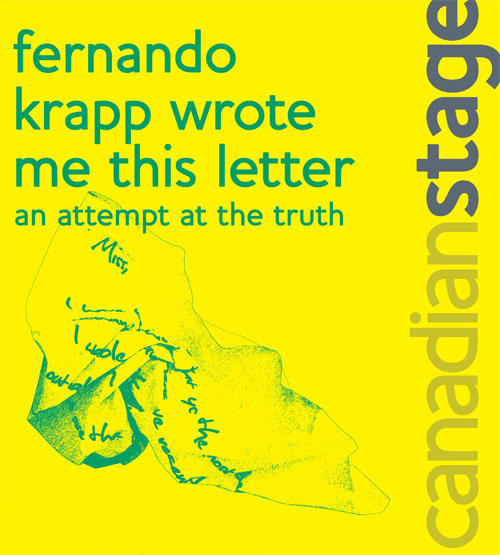
A wealthy stranger declares in a letter that he will marry Julia. Their relationship develops into a struggle over jealousy and control, leaving her increasingly uncertain of which version of events she can trust.
At a wealthy family's reunion for its patriarch's 60th birthday, one son uses a prepared speech to accuse his father of sexually abusing him and his late sister. The family must confront the revelation and decide whether his account is true.
In the days before an anticipated Muhammad Ali–Sonny Liston fight, Ali forms an unlikely friendship with vaudevillian film star Stepin Fetchit. The play follows the two influential Black Americans as they shape their public personas and legacies during the mid-1960s Civil Rights Movement.
In a large corporation’s basement customer-service department, Segis Basil is kept isolated by his superstitious father, the company’s CEO. When his father gives him a day in charge, Segis’s misunderstanding of business language sends company stock plunging and he is returned to the basement. Meanwhile, employees compete for advancement and office conspiracies unfold.
Young conspirators hide a dead tycoon’s body to gain an inheritance. Their financial scheme grows dangerous when they discover that the supposed natural death was murder.
Fidele returns from abroad to find that his beloved Victoria has fallen for his friend Fortunio, whose feelings she doubts. A captain secretly in love with Victoria, a sorceress, and several mistaken suspicions entangle the couples before Fortunio marries Virginia, Fidele reunites with Victoria, and the other characters also marry.
In 1547 Genoa, Count Fiesco joins a conspiracy against the ruling Doria family, while concealing whether he seeks a republic or power for himself. When the revolt succeeds, his ambition and divided loyalties lead to a tragic confrontation with the republican Verrina.
Two gods give fifteen Toronto dogs human consciousness to settle a wager about happiness. The altered pack confronts language, power, love, and the knowledge of mortality.
Kenneth Talley Jr. is a gay double amputee Vietnam veteran living in his childhood home with his boyfriend, botanist Jed Jenkins. At the beginning of the play, he is due to return to his former high school to teach English, but has decided not to. Visiting Ken and Jed are Ken's sister, June Talley, and her daughter, Shirley, as well as Ken and June's longtime friends, John Landis and his wife Gwen, inheritor of a large industrial copper conglomerate. John is ostensibly visiting to purchase the Talley house for Gwen to convert to a recording studio, so that she can have a career as a country singer. Unbeknownst to anyone but June, John and Ken, Shirley is actually John's daughter, and the visit is also his attempt to gain joint custody of Shirley. Ken, meanwhile, believes that the singing career is a way of distracting Gwen so that John can take over her business. Other visitors include Weston Hurley, Gwen's guitarist, and Ken's aunt, Sally Talley, who still has her husband Matt's ashes in a candy box a year after his death. The play culminates with a "bidding war" between Sally and John for the house, after it is revealed that Ken plans on selling it to Landis. Sally ultimately outbids Landis and says she will give the house to Jed so he can finish his garden.
Impoverished music teacher David Blake takes comfort in philosopher Azaïs's theory that happiness and misery balance out. His new confidence wins him a job managing a casino, but as his luck rises, the formerly fortunate Stromboli's declines; a jealous secretary engineers Blake's downfall, while Blake and casino owner's daughter Peggy ultimately unite.
The curtain opens on Domenico Soriano, 50, a wealthy Neapolitan shop-keeper who is raging against Filumena, 48, a former prostitute. They have lived together for many years (but with him frequently having trysts with other women). Now, when he was intending to marry the younger Diana, Filumena has tricked him into marrying her instead: she pretended to be dying, and so coaxed him into a marriage in articulo mortis, but as soon as they were married she sprang up from her bed to send away Diana, whom Domenico had disguised as a nurse to have her nearby. Filumena reveals her reason for wanting to be Domenico's wife: she wants him to legitimise her three sons (Umberto, Michele and Riccardo) who have grown up in foster care and have no idea of who their mother is. Domenico is not going to have any of this, and briefs his lawyer Nocella to have the marriage declared null and void. When the lawyer explains to Filumena that he'll easily win the case, she accepts the failure of her ruse, but tells Domenico that one of the three young men is actually his child, then leaves him. Ten months later, with all his attempts to find out which of the three young men is his son having failed, Domenico remarries Filumena, accepting all three as his sons. In the play, Filumena memorably tells Domenico that "children are children, and they're all equal" (I figli sono figli e sono tutti uguali).
On a sunny New England beach, four male-female pairs share 21 brief scenes. A mother and her teenage son meet the other characters and uncover that Benjamin and Daniel were once lovers; the wives struggle with the men's unresolved feelings as a suicide attempt and an older man's death interrupt their conversations.
Bob and Jane Reynolds live modestly in a bungalow on Staten Island, where Bob earns $25 a week. Jane has grown dissatisfied with their limited means and wants the clothes and comforts that they cannot afford. John Brand, a wealthy and unscrupulous former college classmate of Bob's, offers Bob $40,000 to approve the use of inferior cement in the construction of a dam. Bob initially refuses, but Brand persuades Jane to influence her husband, and Bob eventually accepts the bribe. Five years later, Bob and Jane live in an expensive house on Long Island. Bob has lost money through speculation and has written a $10,000 check against an overdrawn account. Drunk and desperate, he blames Brand for his ruin and threatens to expose the bribery unless Brand helps him. Brand warns that exposing the scheme will also implicate Jane, but he ultimately covers Bob's check. Bob and Jane decide to abandon their affluent life and begin again. Before they can do so, however, they learn that the dam constructed with the defective cement has collapsed, destroying a community and killing many people. Overcome by guilt, Bob telephones the police and asks that an officer be sent to the house. The lights go out, a gunshot is heard, and Jane realizes that Bob has killed himself.
In Victorian England, pickpocket Sue Trinder agrees to help a con man steal an heiress’s fortune. The scheme draws her from London’s criminal underworld into a secretive household and an asylum, where deception, desire and betrayal overturn her understanding of the people around her.
As a troubled actress struggles to complete a major motion picture, its producer must decide whether to cancel the late, over-budget production. The play draws on Arthur Miller and Marilyn Monroe's experience making The Misfits.
Set in Florence in 1492, Thomas Mann’s play makes Fiorenza an allegory of the city and the mistress of the dying Lorenzo de’ Medici. The preacher Girolamo Savonarola, who had once courted and been rejected by her, now preaches asceticism; Fiorenza confronts Lorenzo with her inability to escape Savonarola’s influence, while Lorenzo recognizes the religious leader as his equal.
During the 1919 siege of the Vilna Soviet, Iulius and other Bolshevik leaders debate the Soviet’s role as rival socialist parties betray them and counter-revolutionaries seize the city. The leaders choose suicide rather than surrender.
In a seemingly ordinary family, siblings Kurt and Olga are in an incestuous relationship. Kurt is obsessed with fire; when Olga begins seeing Paul, his fixation turns dangerous, the parents are killed, and Kurt burns himself.
A one-person verbatim play built from interviews with 26 people in 29 monologues, presenting differing perspectives on the 1991 Crown Heights riot, racial and religious identity, and the aftermath.
A landed proprietor's daughter is engaged to her cousin, but her Gypsy adoptive sister also loves him. Their romantic triangle reaches a climax on a symbolically charged Saint John's Eve; the play explores gratitude, dependence, and their bonds.
This three-part bill offers distinct views of American life: a journalist and celebrated writer manipulate one another in an interview; a football coach's press conference allegorizes Lyndon B. Johnson and the Vietnam War; and guests at a Fourth of July cocktail party reveal suburban life.
At a Fourth of July cocktail party in suburban America, the play comments on suburban life.
Fortescue and Harcourt begin the play as friends, but have a falling out when Fortescue mistakenly believes he has spoken badly of him to Mrs Freemantle, a widow who he is in love with. Other quarrels break out amongst other characters, over misunderstandings, and its only in the fifth and final act that these mistaken "first impressions" are corrected.
Lucy Chase Wayne, wife of the secretary of state, who exemplifies the pedigreed Washington hostess, is incensed with the upstart Irene Hibbard, wife of a Supreme Court justice. Irene has stolen away Lucy's cook, an unforgivable social transgression. It is doubly mortifying, for though Irene is only the daughter of a Midwest auto seller, she has acquired a sophisticated image from her European education and a brief prior marriage to a "Slovanian" prince. Furthermore, Lucy learns that Irene is contemplating divorce from her elderly and dyspeptic husband Carter, whose only interests are fishing, comic strips, and radio programs. Irene is ambitious to become First Lady, and has chosen for her vehicle a personable young senator Keane from the Western United States. To thwart Irene, Lucy creates a rumor that Carter is highly thought of for his party's nomination. She spreads it by flattering Mrs. Creevey and Ellsworth T. Ganning with her "confidences". Her reasoning is that the rumors will force Irene to stick with Carter, whose age and unambitious nature is unlikely to excite a nominating committee. However, as the months go by she finds that a groundswell of popular opinion, now propelled by Irene, is floating Carter Hibbard's candidacy. Senator Hardwick remonstrates with Lucy, because the party elders had been contemplating her own husband Stephen Wayne for the nomination. Aghast, Lucy tries to find a way to stymie Irene's campaign. It comes from an unexpected source, Jason Fleming, a State department expert on the Balkans, who is dating her niece Emmy. Lucy learns that a treaty between the US and Slovania was never ratified, so the divorce Irene obtained in that country is not recognized in the states. Lucy uses her knowledge to pressure Irene into backing down, allowing Stephen's candidacy to gain momentum.
First Love is a 1795 sentimental comedy play by the British playwright Richard Cumberland. It was first performed at the Drury Lane Theatre in May 1795. Frederick Mowbray becomes the protector of Sabrina Rosny after her abandonment by Lord Sensitive. The original Drury Lane cast included Richard Wroughton as Lord Sensitive, Thomas King as Sir Miles Mowbray, John Palmer as Frederick Mowbray, John Bannister as David, Robert Palmer as Mr Wrangle, Richard Suett as Billy Bustler, Elizabeth Farren as Lady Ruby, Jane Pope as Mrs Wrangle, Charlotte Tidswell as Mrs Kate, Dorothea Jordan as Sabrina Rosny and Ann Heard as Lady Ruby's Servant.
The play begins after the death of Stanley Moorehead, an Associate Justice of the United States Supreme Court. The remaining justices speculate about whom the President of the United States will appoint to fill the vacancy, with jokes among the justices that the appointee may be a black man, or a woman. While playing tennis, Ruth Loomis, a staunch conservative judge from the United States Court of Appeals for the Ninth Circuit in California, learns that she is to be the nominee. Associate Justice Daniel Snow is appalled to learn this, as her conservative views are strongly in conflict with his own liberal thinking. Loomis testifies before the United States Senate, and is questioned about the business ties of her late husband. The Senate confirms her, and she is the first woman appointed to the US Supreme Court. On the court, Loomis and Snow immediately clash on their opposing legal and philosophical viewpoints, on such matters as freedom of speech and individual rights vs. the rights of society as a whole. One case concerns a fictional pornographic film, The Naked Nymphomaniac. Although Snow and Loomis never concur on any of the issues before the Court, they learn to develop a respect and affection for one another with the passing of time.
An eminent elderly novelist and a resentful younger writer become involved in a complicated affair.
In a Chicago nursing home, Fil Acayan struggles with failing memory and listens to recordings that bring back his earlier life. The play moves between 1980 and 1960, when Fil and his flatmate Tony awaited a troupe of visiting Filipino dancers.
The play opens in a hospital waiting room. Sidney Drexel, the family patriarch, is dying and assorted family members are coming to pay their last respects—and squabble over everything from which son will have to take care of Mom to who gets Dad's Rolex watch. Brothers Norman Drexel and Arthur Drexel are visiting their father in the hospital, along with Norman's wife Brenda and Arthur's girlfriend Michelle. Brenda is upset because she fears that her mother-in-law Gloria will live with them should the ill father die.
A short comedy set in the Australian bush country associated with Jack Donahoe, retelling the Campbelltown ghost legend through a cast of colonial characters. Stewart interweaves verse and prose, with the Ghost and a bush tracker among the figures in the story.
A play about the everyday lives of gay and straight millennial students in drama and dance class, created to address homophobic bullying in British schools.
A children's theatre performance reworks the Dutroux affair through five monologues. Short filmed scenes introduce each sequence before the children take over live roles, while an adult performer in the director role films and coaches them. The production examines both the affair's violence and the power relationship between director and child actors.
Five people compete to define themselves through the things they post, consume, and reveal online. As their exchanges intensify, the pursuit of visibility erodes the boundaries between private experience and public identity.
At a Suffolk weekend cottage, furniture manufacturer Stanley and his wife Louise clash with their son Clive over culture, ambition and family expectations. Their daughter’s young German tutor, Walter, unsettles the household and exposes its resentments; after Clive’s false accusation and Walter’s attempted suicide, the family rallies to save him.
The story of Mary and her daughters Susan and Janet, who have lived under Billy's physical, emotional and sexual abuse, unfolds through interviews with police and psychologists. After years of abuse, the daughters shoot their father during an epileptic seizure.
Five Miles Off is an 1806 comedy play by the British writer Thomas Dibdin. It premiered at the Theatre Royal, Haymarket in London on 9 July 1806. The original cast included William Chapman as Squire Flail, John Fawcett as Kalendar, Vincent De Camp as Luckless, Charles Mathews as Spriggins, John Liston as Flourish, Jane Powell as Mrs Prue, Sarah Liston as Laura Luckless, and Maria Gibbs as Jenny. Its Irish premiere took place at the Crow Street Theatre in Dublin on 2 August 1816
An unscrupulous newspaper publisher decides to boost circulation by reviving an old scandal involving Nancy Voorhees, a woman who was accused of murdering her lover twenty years before. Although she was acquitted by a jury, Nancy fears the damage a revival of the story could cause her family. She is married and has a daughter who is about to have her own wedding to a wealthy young man whose family would not approve of Nancy's past. Nancy begs the assigned reporter not to pursue the story, but he refuses. When the story is published on their daughter's wedding day, Nancy and her husband commit suicide. The daughter seeks out the reporter to kill him for vengeance, but discovers that he is wracked with guilt over what he has done.
Five Thousand a Year is a 1799 comedy play by the British writer Thomas John Dibdin. The original Covent Garden cast included William Thomas Lewis as George Fervid, Alexander Pope as Frederick Fervid, Joseph Shepherd Munden as Sir Matthew Maxim, Charles Farley as Paragraph, Charles Murray as Mr Goulding, Julia Betterton as Maria, Jane Pope as Lady Julia, Nannette Johnston as Aurelia and Isabella Mattocks as Lady Maxim. It was dedicated to Count Starhemberg, the Austrian ambassador to London.
During an ostentatious wedding reception in Knoxville, five bridesmaids take refuge in the bride’s sister’s room. As they share their histories and views of the wedding, the women discover common ground despite their differences.
Big 8 faces foreclosure on her Wyoming ranch, where she rehabilitates injured rodeo cowboys. The arrival of Shedevil and a one-eyed Ukrainian biker named Black Dog leads to violence in a sadistic satire of the cowboy mentality of pulp Western writers.
At the Falcon Hotel on the Lincolnshire coast, men from a nearby RAF airbase are planning to spend the weekend with their wives. Patricia Graham, an actress from London, has something to tell her husband Teddy, who is a bomber pilot. The situation is complicated when Peter Kyle, a Hollywood film star, arrives at the hotel, and Teddy is sent out on a night raid over Germany. Patricia is torn between a rekindled old flame and loyalty to the husband who relies on her for support. Patricia and Peter had a love affair before she met Teddy, but she left because Peter was not free to marry her. Patricia married Teddy after a "whirlwind wartime romance" while he was on a week's leave. She does not know her husband very well, and she was still in love with Peter when they wed. She reconnected with Peter in London and now plans to tell Teddy she is leaving him, but she is annoyed by Peter's unexpected arrival at the hotel. Peter tells her that his career is waning as he gets older and that he needs her. Teddy's tail gunner Dusty Miller is awaiting his wife Maudie, who is late. Maudie only has a short time off from the laundry where she has had to work since the war began. She was bombed out of their home in the Blitz, but she says matter-of-factly: "... there's a war on, and things have got to be a bit different, and we've just got to get used to it – that's all." Doris waits for her husband Count Skriczevinsky, a Polish pilot serving with the RAF. His wife and son were killed by the Nazis, and he came to Britain, despite his poor command of the English language, to join the war against Germany. Doris met him while working as a barmaid, and though she is now his Countess, she worries about what will happen when the war is over and he is able to return to Poland. Also present at the hotel are the proprietor, Mrs. Oakes; Percy, a young waiter who is interested in RAF operations; and an airman named Corporal Wiggy Jones. Soon after everyone has arrived, Squadron Leader Swanson summons the men back to base for an unscheduled night operation, and their wives are left behind to await their return. Swanson, who is affectionately called Gloria by Teddy, remains at the hotel. As Patricia and Swanson look out at the flare path from the hotel window, one of the planes is destroyed on takeoff by the Luftwaffe. Doris and Maudie come downstairs while Swanson calls the airfield and learns that the plane did not belong to any of their husbands. At 5:30 a.m., Teddy and Dusty return from the mission, but Count Skriczevinsky is missing in action. Teddy confesses to Patricia that he is losing his nerve. His plane was hit and he was responsible for bringing his six crewmen back home. He knew his crew trusted him but he was terrified, and he tells Patricia she was the only thing that kept him going. Patricia has a change of heart and decides to stay with Teddy. She tells Peter, "I used to think that our private happiness was something far too important to be affected by outside things, like war or marriage vows..." but that "beside what's happening out there;... it's just tiny and rather – cheap – I'm afraid." Doris asks Peter to translate a letter written in French that the Count left for her in case anything happened to him. In the letter, the Count says he loves her and wishes he could have taken her to Poland after the war. Doris asks if Peter made that part up, but Peter tells her he did not. Peter intends to tell Teddy everything but changes his mind and departs. Count Skriczevinsky returns safely and is reunited with Doris.
Showing 1,897–2,016 of 8,284 shows
Load more shows