Daylight Saving
A comedy about a married couple living in Pittwater in north Sydney.
8284 shows
Clear filtersA comedy about a married couple living in Pittwater in north Sydney.
A reworking relocates the story to 1960s London and focuses on a young couple newly arrived from Belfast.
De Monfort is an 1800 Gothic tragedy by the Scottish writer Joanna Baillie. It was originally published in the author's Plays on the Passions in 1798. It premiered at the Theatre Royal, Drury Lane, then under the management of Richard Brinsley Sheridan, on 29 April 1800. The cast featured John Philip Kemble as De Montfort, Sarah Siddons as Jane De Montfort, Montague Talbot as Rezenvelt, William Barrymore as Count Freberg, John Powell as Manuel, William Dowton as Jerome, Thomas Caulfield as Grimbald and Elizabeth Heard as Countess Freberg. It was produced at the Theatre Royal, Edinburgh in February 1810, and revived at Drury Lane in 1821 with Edmund Kean in the title role.
A con man persuades a farmer to sell a cow he has stolen from him. While the farmer sells the animal to another buyer, the thief orders food and drink at an inn; after treating the farmer with the proceeds, he leaves without paying. To conceal how he was tricked, the farmer also pays the bill.
Fabricio leaves Panama for Miami to live as a gay man without fear of his family’s disapproval. His relative privacy is disrupted when his mother and brother visit, and he fears they will discover his sexuality.
Dead Accounts is a Broadway play written by Theresa Rebeck. The comedy premiered at the Music Box Theatre on November 29, 2012, and closed on January 6, 2013. The production starred Norbert Leo Butz and Katie Holmes, and was directed by Jack O'Brien.
Dead End concerns a group of adolescent children growing up on the streets of New York City during the Great Depression. Bonnie Stephanoff, author of a book on homelessness during the Depression, wrote that it "graphically depicted the lives and longings of a group of boys who swam in a polluted river, cooked food over outdoor fires, smoked cigarettes, gambled, swore, fought, carried weapons and became entangled in [crime] on Manhattan's Lower East Side." The long opening stage directions for Act One vividly evoke the grim setting, and the action carries on. “A gang of boys are swimming in the sewerage at the foot of the wharf, splashing about and enjoying it immensely. Some of them wear torn bathing trunks, others are nude. Their speech is a rhythmic, shocking jargon that would put a truck-driver to blush.” The boys' horseplay includes tossing feces and offal at each other. Gimpty is a would-be architect who struggles with unemployment. As his nickname suggests, one leg is deformed, because he suffered from rickets as a child. A gang member in his youth, he managed to turn his life around, finish high school and go on to college. He dreams of rebuilding the neighborhood with clean housing units, but poverty and hardships have forced him to search for work wherever possible. He yearns for Kay, a young woman who lives in the elegant apartment house on the other side of the street. Drina is a working-class girl who has been struggling to keep her younger brother Tommy off the streets ever since their parents died. Meanwhile, local gangster Baby-Face Martin returns to his old neighborhood to visit his mother and to find his old love, Francey. At the end of the play, Martin is dead and Tommy is headed to reform school, his future uncertain. Variety's review of the film pinpointed some key elements in the play that fell prey to the censors. The girl Gimpty yearns for is being kept in her elegant apartment by a rich man. Martin's former girlfriend, Francey, now a prostitute, is riddled with disease. The play is full of profane language, including ethnic slurs that were common at the time.
Nick Parsons’s play reworks a script based on the true story of an Aboriginal man who killed someone in the 1930s for traditional reasons.
Tim Robbins’s stage adaptation of Sister Helen Prejean’s account of her work as a death-row chaplain brings the death penalty into focus through a play used by schools and colleges for theatrical and academic engagement.
At a café, Jean answers the ringing phone beside a dead man and becomes entangled with his family, widow, and mistress. As she invents stories about his final wishes, she discovers he sold organs on the black market and travels to South Africa to confront the consequences. The play uses the phone to explore connection and isolation in modern life.
Dead Secret is a 1952 thriller play by the British writer Michael Clayton Hutton. A murder mystery, it premiered at Her Majesty's Theatre, Brighton before transferring to London's West End where it ran for 29 performances at St James's Theatre between 5 November and 29 November 1952. The West End cast featured Ian Hunter, Hugh Wakefield, Joyce Heron and Sophie Stewart.
A satirical response to post-structuralist theory, the play challenges claims that people and truth are wholly constructed by language and ideology. Shakespeare appears as a recurring motif.
After closing a small London restaurant, its staff and owner play poker with the owner's son. As debts and concealed identities come to light, the game exposes the different ways the players are addicted to gambling and tests their trust.
After playwright Antoine dies in his Bavarian castle, his former wives and other important people in his life gather to hear his will. Trapped there by an avalanche, they discover that Antoine had meticulously arranged the gathering and written a play about it.
The theme of the play is whether it would benefit people if they could have their lives over again and make different choices. The characters consist of dissatisfied couples, who all feel that they have taken the wrong turning in life. They are brought together to the house of an ancient individual bearing the Shakespearean name of Lob, who is described as "all that is left of Merry England". In Act 3 the characters return to reality, having benefited to varying degrees from their experiences in the wood in Act 2. The butler resigns himself to domestic service rather than high finance; the philanderer is mortified but predicts he will be unable to reform; an elderly man who had longed for a second youth proposes again to his faithful spouse; the artist and his wife are reconciled, and the dream child of Act 2 has become almost real to both of them and lives on in their hearts.
Dear Daddy is a 1976 play written by English playwright Denis Cannan, first staged at the Ambassadors Theatre in London's West End.
After Gareth Southgate is appointed England manager, he works with psychologist Pippa Grange to address the team’s history of penalty shoot-out failures and its pressures on players. The play follows England through the 2018 World Cup, Euro 2020 and the 2022 World Cup, including the racist abuse of players after the Euro final and Harry Kane’s missed penalty in Qatar.
Two actors bring to life the letters exchanged between playwright George Bernard Shaw and actress Mrs. Patrick Campbell, dueling through their correspondence.
An epistolary drama follows Marine Charles Vernon Brown's wartime service in France through letters exchanged with his family and friends, ending with the news of his death and his body's return home.
Three generations of the Randolph family gather for Charles and Dora's golden wedding anniversary. As the family explains itself and recalls the past, the eldest son Nicholas's romance with the companion Fenny supplies a thread of plot; the family toasts its enduring bonds as a tentacled 'dear octopus' from which no member can escape.
Dear Ruth is a successful 1944 Broadway play written by Norman Krasna. It ran for 680 performances.
A meek salesman, Kleinman, is forced into a vigilante mob hunting a serial killer. The factions repeatedly mistake the plan, accuse one another and finally condemn Kleinman, only for the real killer to appear and murder him while the mob disperses after false sightings.
It is a dark and stormy night at Shantay Manor on remote Tuck Island where Lady von Fistenberg has invited a series of top celebrities to gather for her annual dinner party in honour of Prince Charles and Lady Diana's tenth anniversary. As each guest arrives, various rivalries and alliances take shape. 'World Of The News' editor Morgan Pierce brings her camera and tape recorder, convinced that the royal couple themselves will join them for the evening. Conservative MP Rich Whiteman is also a guest and confronts Pierce, upset that his reporters have been harassing his wife with repeated calls, trying to speak with him. Meteorologist and television personality Summer Raines enters and is subjected to a tirade by MP Whiteman about how he considers women to be stupid and helpless. Television producer Phil Maker arrives, bragging about a brief encounter with a woman on the train, before realising that it was Raines he had been with. Maker also states that Pierce had published embarrassing photos of a night out he had had with a pop star. Shazza (the pop star) then arrives, announcing that the island is now cut off as a tree has blocked the bridge. Later we find out the Shazza fears she is losing her celebrity status. Each guest admits they don't actually know Lady von Fistenberg but accepted the invitation regardless. Throughout the evening Lady von Fistenberg and her guests are assisted in turn one by one of the Bottomley triplets, Blue, Brie and Spread (we only see one at a time as all three are played by the same actress). The electricity flickers and the phone line is cut. After eating one of the Bottomley sisters' crispy filled pancakes, Raines becomes violently ill and dies from poisoning. Spread Bottomley attempts to serve a tray of Swiss roll but the lights cut off and on, during which time her hands are chopped off. She too falls dead to the floor. Aware they have a murderer in their midst, but with no way to leave the house or to contact the authorities, the guests agree to go to their separate rooms to wait for morning. Shazza has left her bedroom late in the night and sings a self-described 'dramatic' number to open Act 2. Maker joins Shazza and attempts to seduce her, but he is electrocuted when trying to turn on the television. The other guests run in to find Shazza with Maker's body. A detective arrives at the door. Dressed in a trenchcoat and speaking with a heavy French accent, he says he is Inspector Gadgee, who has reached the island by boat. He begins to interrogate the guests, who have been accusing each other for the murders as each of them seems to have a motive. Blue and Brie prepare breakfast (with one of the sisters now played by the actor who had played Phil Maker). While discussing their buttering skills a masked ninja bursts in on them and mortally injures Brie. Gadgee believes Pierce to be the killer, but Pierce refuses to be interrogated and decides to leave the manor. As soon as she starts her car outside it explodes. Gadgee is now convinced that MP Richman is the killer after the MP admits Pierce had uncovered his affair with a rentboy named Valentino. The MP is tied to a chair for interrogation, then left alone so Gadgee can look for evidence. While the MP is tied to the chair the mysterious masked figure enters and kills him. As the bodies continue to pile up and with accusations flying, Shazza draws a gun she has found. A ricocheting bullet hits Lady von Fistenberg, who falls to the floor. Blue is shot in the foot, causing her to collapse. With only Shazza and Gadgee left standing, Gadgee removes his hat, moustache and trench coat to reveal he is actually Summer Raines, who had faked her death to get her revenge on each of the guests, as she had longstanding grudges against each of the other celebrities. Lady von Fistenberg recovers, retrieves a pistol and shoots Raines dead. There is a knock on the door and Princess Diana enters, apologising for being late to the party.
In colonial Nigeria, Elesin, the Yoruba king’s horseman, prepares for ritual death after the king dies, but colonial administrator Simon Pilkings intervenes. Elesin is blamed for failing his duty; his son Olunde returns from Europe and dies in his place, after which Elesin also kills himself. The community’s ritual order and future remain uncertain.
Paulina Salas is a former political prisoner from an unnamed Latin American country who was raped by her captors, including a sadistic doctor whose face she never saw. During her torture, the doctor played Schubert's String Quartet No. 14, subtitled Death and the Maiden. Years later, after the repressive regime has fallen, Paulina lives in an isolated country house with her husband, Gerardo Escobar. When Gerardo returns home from a visit to the president, he gets a flat tire and is helped by a stranger named Dr. Miranda. Later that night, Dr. Miranda returns and Paulina recognizes his voice and mannerism as that of her rapist. She takes him captive in order to put him on trial and extract a confession from him. Gerardo acts as Dr. Miranda's lawyer and attempts to save his life, but after hearing the full story of Paulina's captivity, he formulates a confession with Dr. Miranda based on the specific details Paulina shared with him. Paulina records the entire confession and has Dr. Miranda sign it. She then sends Gerardo to get Dr. Miranda's car so he can go home. While they are alone for the last time, Paulina accuses Dr. Miranda of being unrepentant and guilty beyond a reasonable doubt. She shares that she purposely altered small details of her story when sharing it with Gerardo, and Dr. Miranda corrected those details in his own confession. Although Dr. Miranda denies this, Paulina is completely convinced of his guilt and prepares to execute him. The play then skips forward in time, and the audience sees Paulina and Gerardo attending a concert. It is never revealed whether Paulina ultimately killed Dr. Miranda. As the concert orchestra begins to play Schubert's Death and the Maiden, Paulina sees Dr. Miranda across the room cast in a "phantasmagoric" light, and the audience is left to wonder whether he is truly there or only in Paulina's mind.
The three interconnected plays follow Michael, Delroy, Denise and Carly through stories of family, identity and class in Britain.
A Persian play about the death of Yazdgerd III, also described by its original subtitle as Regicide.
Death on the Table is a 1938 thriller play by the writers Michael Pertwee and Guy Beauchamp. The plot revolves around American gangsters, Harley Street doctors and a murder that takes place on the operating table. It premiered at Richmond Theatre before transferring to the West End where it ran for 93 performances between 9 March and 7 May 1938, initially at the Strand Theatre then moving to the New Theatre. The original London cast included Kay Walsh, Peter Coke, Walter Fitzgerald, Hartley Power, Hugh McDermott, Bill Shine and Ellis Irving. Produced by Basil Dean, the sets were designed by the art director Edward Carrick. It was staged on Broadway at the Playhouse Theatre under the alternative title Come Across, but lasted only 13 performances.
Act I, Scene 1 Sidney Bruhl, a previously successful playwright, has had a series of box office flops and is having trouble writing. Sidney mimics reading a play that he tells his wife, Myra, he has received from a student of his, Clifford Anderson. Sidney asserts that the student's play is a certain hit. Interspersed with reassurances that he is only kidding, he frightens Myra with suggestions that he may kill Clifford in order to steal the script. Sidney telephones Clifford to invite him over to give him suggestions on improving the play. Clifford's play is, like the actual play itself, entitled Deathtrap, and is also a one set, five character thriller. Scene 2 Sidney arrives back at his den, having picked up Clifford at the train station. After socializing briefly, Sidney determines that there are no other carbon copies or xeroxes of the play in existence and escalates the sense that he may kill Clifford. To Myra's horror, Sidney chokes the young man to death and drags him off to bury him. Scene 3 As Sidney returns from disposing of Clifford's body, psychic Helga ten Dorp comes to the Bruhl home to warn Sidney and Myra that she is having visions of terrible pain coming from the Bruhl home. Helga wanders around the house revealing visions that appear to be only partially correct. Sidney, relieved that Helga has not accurately envisioned the murder, reassures Myra to the point that she admits her own secret wish that Sidney was going to go through with the murder to steal the script. As Sidney and Myra are about to go to bed, Clifford, covered in mud, snatches Sidney from behind, and apparently beats Sidney to death. Myra, shocked and terrified, collapses and dies from a heart attack. Clifford confirms Myra's death and exclaims to Sidney that their plan has been successful: Clifford's murder had been staged to shock and kill Myra. Act II, Scene 1 Two weeks have elapsed, Clifford is working on his manuscript but Sidney continues to suffer from writer's block. Porter Milgrim, Sidney's attorney, throws suspicions on Clifford by alerting Sidney that he has seen Clifford locking his manuscript in his desk drawer. Sidney surreptitiously reads Clifford's manuscript and discovers that Clifford is writing a play called Deathtrap based directly on the plot that caused Myra's heart attack. Sidney confronts Clifford, who threatens to move out and write the play regardless of whether Sidney wants him to or not. Sidney agrees to help Clifford write his play. Scene 2 Helga comes again to warn Sidney that Clifford is going to attack him. Sidney tells Clifford that he has completed work on the second act but needs to see if what he has written will be believable. By "trying out" these bits, Sidney believes that he is laying the groundwork to make his intended murder of Clifford (to stop Clifford from actually writing the play about Myra's murder) look like self-defense. Clifford, however, is several steps ahead of Sidney. He has put blanks in Sidney's gun and now forces Sidney to handcuff himself to a chair. Sidney's attempt to kill Clifford has given Clifford the plot details he needs to complete his play. The handcuffs prove to be fake, and Sidney escapes and shoots Clifford with a crossbow. Sidney starts to telephone the police, but Clifford rises up behind him, pulls the arrow from his own body, and stabs Sidney. Both die. Scene 3 Helga and Porter return to Sidney's den. She envisions what has actually occurred and tells Porter. Both realize simultaneously that the story would make an excellent thriller and that the title Deathtrap is ideal, but immediately argue and threaten each other over whether they will share in the rewards their "one set, five character" play will undoubtedly reap.
Three prisoners share a cell: Green-Eyes awaits execution for murder, while Maurice and Lefranc serve lesser sentences and compete for his attention. Lefranc’s jealousy and desire to join Green-Eyes’s solitude culminate in his strangling Maurice.
Debonair is a 1930 British play by Frank Vosper, based on a novel of the same title by Gladys Bronwyn Stern who co-wrote the adaptation with Vosper. It ran for 37 performances at the Lyric Theatre in London's West End. The original cast included Vosper, Celia Johnson, Mary Jerrold, Walter Fitzgerald, Kate Cutler and May Hallatt. It was cut dramatically after its opening performance.
Siblings Michael and Michelle struggle to make sense of a dysfunctional childhood, inventing elaborate stories about their past. Michael tries to protect a found baby, Debris, from their alcoholic father, while Michelle remains fixated on conflicting accounts of their mother’s death.
Debtor and Creditor is an 1814 comedy play by the British writer James Kenney. It premiered at the Theatre Royal, Covent Garden in London's West End on 20 April 1814. The original cast included Daniel Terry as Churlton, William Abbot as Etherington, William Blanchard as Average, John Liston as Gosling, John Emery as Sampson Miller, William Chapman as Hammond and Jane Powell as Mrs. Wallis. It marked the final performance on the London stage of Dorothea Jordan who played Barbara.
The celebrated mime Jean-Gaspard Deburau abandons his marriage for Marie Duplessis. As he grows older and suffers from her betrayal, his bitterness turns toward his talented son, whose youth and promise threaten his pride as an artist.
Twenty short plays by a group of writers combine into an overarching theatrical narrative commemorating the tenth anniversary of the September 11 attacks.
Decorated Black lieutenant Brett Charles returns to the segregated Deep South, where Senator Langdon frames him for theft after his advocacy for equality and romance with Langdon’s younger daughter; released after public outrage, Brett remains to work for progress.
After her fiancé Deep is shot by a friend, Azure struggles with an eating disorder and grief while Tone helps her investigate what happened; the play connects their personal story to racial profiling, police brutality and community healing.
Deep Blue Sound is a dramatic stage play written by American playwright Abe Koogler. The play tells the story of various occupants of a small town off the coast of Puget Sound trying to decipher why the local whales have disappeared. One of the townspeople, Ella, is dying of cancer and wishes to utilize the Death with Dignity Act.
A documentary drama based on firsthand testimonies about the gunshot deaths of four trainees at Deepcut Barracks and their aftermath.
A man asks a plastic surgeon to replace his face so that he looks more like the past and Mount Rushmore’s presidents.
A blend of stand-up comedy, lecture, and therapy session, it attempts to resolve the war between the sexes. The play manages to stand up for the male viewpoint, while still being sympathetic to the female side of issues as well. Becker describes the play as a vehicle for showing that "men have emotions, but they express them differently."
At a military base, a colonel promotes a Black officer solely because of his race. When the officer learns that the colonel had an affair with a private's wife, he must choose between staying unnoticed and doing what he believes is right.
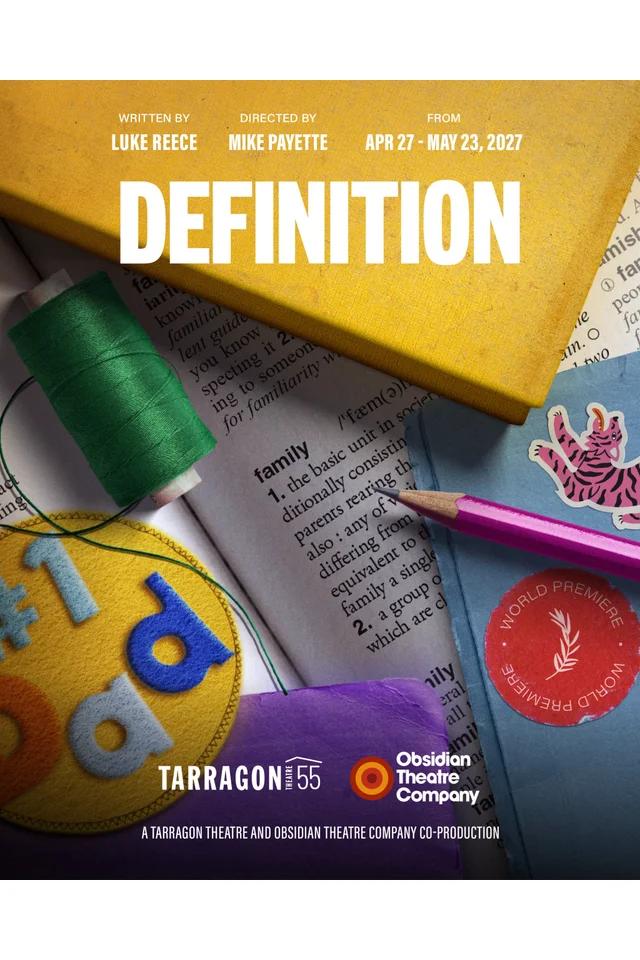
Ali tries to make peace with her past away from her family, while Martin searches for meaning at home. Their daughter Emerson enters her first spelling bee as the family revisits the dreams and expectations that have shaped their lives since a chance meeting in 1999.
Deirdre flees with Naoise, son of Usna, rather than become the aging King Conchubor's queen. After seven years in exile, the couple accept the king's offer to return; Naoise is killed, and Deirdre takes her own life beside him.
Delays and Blunders is an 1802 comedy play by the British writer Frederick Reynolds. It premiered at the Theatre Royal, Covent Garden on 30 October 1802. The original cast included Charles Murray as Sir Edward Delauny, Henry Siddons as Lieutenant St. Orme, Joseph Shepherd Munden as Sapling, William Thomas Lewis as Henry Sapling, John Fawcett as Paul Postpone, Samuel Simmons as Privilege, John Emery as Robert Grange, James Thompson as Farmer Nightshade, George Davenport as Sternly, George Davies Harley as Landlord, Isabella Mattocks as Mrs Sapling, Nannette Johnston as Honoria, Harriett Litchfield as Mrs. St Orme and Harriet Siddons as Lauretta.
In this unfinished drama and its planned continuation, Demetrius wins Polish support for his claim to the Russian throne. Discovering that he is not Ivan the Terrible’s son, he asks Marfa to recognize him anyway, but she follows her conscience and refuses.
Based on actual events, the play follows West German chancellor Willy Brandt's decision about whether to expose Günter Guillaume, a spy serving as his secretary with access to state secrets.
The mercurial fashion-merchant widow Lucretia becomes entangled in a love dilemma involving two pairs of siblings; her shifting moods confound those around her.
On Good Friday, two priests representing Joseph of Arimathea and Nicodemus remove an image of Christ from the cross above the altar, wash its wounds with wine and water, and lay it in a church niche.
Feared prosecutor Staatsanwalt Hallers secretly leads a criminal double life. Analie Frieben learns his secret but cannot expose him because of her own past; Hallers’ ego eventually brings about his downfall.
A barber disguises himself as a revolutionary general to trick a wealthy peasant into giving him a meal. The imposture triggers suspicion of Jacobin conspiracy before a nobleman exposes him and restores order.
A state-orchestra double bassist addresses the audience from his soundproof apartment, drinking beer and praising the instrument he both depends on and resents. Through anecdotes and fantasies about chamber music and a young mezzo-soprano, he reveals his loneliness and disappointment in his own playing; the monologue ends as he leaves for a concert with his future unresolved.
Klabund’s reworking of Li Qianfu’s story changes the ending so that the emperor marries the heroine, rather than her returning to live with her brother.
During an expedition over a mountain pass, a boy falls ill and cannot continue. Against the custom that the group sacrifice him to preserve the mission, he refuses and asserts the individual’s right to reject a harmful rule.
After the hungry Severin steals a pineapple and is shot by policeman Olim, Olim wins a lottery and quietly uses his fortune to help Severin recover. They travel to Olim's castle, where the scheming Frau von Luber takes the estate and money; Fennimore reconciles the two men, who leave together through winter toward the frozen Silbersee, resolved to face the future with hope.
The play opens with a discussion between Gerstein and the Papal Nuncio of Berlin over whether Pope Pius XII should have abrogated the Reichskonkordat to protest the actions of the Nazi government of Germany. Father Riccardo Fontana, the priest protagonist, and Gerstein meet for the first time. A number of German aristocrats, industrialists, and government officials (including Adolf Eichmann) spend an evening in an underground bowling alley. Despite the commonplace setting the scene is rather macabre: conversations alternate between lighthearted pleasantries and equally dismissive discussions of the treatment of Jews. An icy Catholic industrialist—played by the same actor as Pius—defends his use of slave labor. The final scene ends with Riccardo meeting Gerstein at his apartment; at the latter's urging, he agrees to trade clothes and documents with a Jew, Jacobson, Gerstein has been hiding in order to help him escape. Act II repeatedly attempts to drive home the point that Hitler feared Pius more than any of his contemporaries and that Pius's commercial interests preclude him from condemning Hitler. One of the Cardinals argues that the Nazis are the last bulwark that remains against Soviet domination of Europe. As the Jews are rounded up for deportations "under the Pope's windows," Riccardo declares "doing nothing is as bad as taking part [...] God can forgive a hangman for such work, but not a priest, not the Pope!" and a German officer comments that the Pope has given "friendly audiences to thousands of members of the German army". Riccardo first voices his idea to follow the example of Bernhard Lichtenberg and to follow the Jews to the death camps in the East, and possibly to share in their fate. Pius, with a "cold, smiling face," "aristocratic coldness," and an "icy glint" in his eyes voices his concerns about the Vatican's financial assets and the Allied bombing of factories in Italy. Pius verbally reiterates his commitment to help the Jews but states that he must keep silent "'ad maioram mala vitanda" (to avoid greater evil). When angrily questioned by Riccardo, Pius pontificates on the geopolitical importance of a strong Germany vis-a-vis the Soviet threat. Ultimately, Riccardo shames the Pope into dictating a statement for public release; however, its wording is so vague that all are confident it will be ignored by the Germans. Riccardo views this as akin to the Crusades, a sin that forever stains Mother Church, and feels called on to prove to God that the Church is indeed worthy of his trust: " 'If God once promised Abraham that he would not destroy Sodom if only ten just men dwelt in it...maybe...God will still forgive the Church if even only a few of its servants - like Lichtenberg - stand with the persecuted...The Pope's silence burdens the Church with a guilt for which we have to atone...Not Auschwitz is at stake now! The idea of the papacy must be preserved pure in eternity, even if it is briefly embodied by an Alexander VI, or a -'" Riccardo breaks off, but clearly he, and possibly Hochhuth, want to imply a comparison between the Borgia Pope (Alexander VI) and Pius XII. Riccardo dons the yellow star and joins deportees to die at Auschwitz, where the rest of the act takes place. He is confronted by the Doctor, who is otherwise not named but closely resembles Josef Mengele. The Doctor is a nihilist to whom "Auschwitz refutes creator, creation and the creature... cursed is he who creates life. I cremate life." He takes Riccardo under his protection, hoping that the church will help him escape the hangman after Germany loses the war. Gerstein appears at the camp in an unsanctioned attempt to rescue Riccardo. Unfortunately in the end they are found out, and Riccardo momentarily loses in faith and violates his vow not to take up arms in order to shoot the maleficent Doctor, but is himself gunned down before he can pull the trigger. Gerstein is taken into custody, and Riccardo follows in a long tradition of tragic figures by showing himself partly redeemed with his dying declaration, a whispered "'in hora mortis meae voca me'" (Latin, and modally ambiguous: one could read subjunctive :"in the hour of my death may He call unto me" or imperative "in the hour of my death, call unto me!" In either case, Riccardo does not die entirely confident of salvation, which would lessen his status as a tragic hero. The play ends with a quotation from German ambassador Weizsäcker: Since further action on the Jewish problem is probably not to be expected here in Rome, it may be assumed that this question, so troublesome to German-Vatican relations, has been disposed of.
Touring actor Bruscon stops with his family in the small village of Utzbach to perform his own play, The Wheel of History. He tyrannizes his family during rehearsal and boasts of his artistry, but the performance fails when a storm damages the inn and the audience leaves.
In a modern political setting, the chief protagonist’s attempt to combine the principles of Moses and Aaron leads to his downfall. Schoenberg used the drama to promote the idea of a militant United Jewish Party.
Tandi, a Kalmyk prince travelling through Europe, and Count Camäleon both seek to marry Wilhelmine, daughter of Captain von Biederling. A returning visitor reveals Tandi is the Biederlings' son, apparently making the pair siblings, but a later revelation shows Wilhelmine is the daughter of a Spanish count and the infants were switched. Tandi and Wilhelmine can marry, while Diana's efforts to avenge the Count's betrayal end in a knife attack.
The title character, General Harras, is modeled on Ernst Udet. The play follows his wartime struggle to work within the Nazi regime while openly opposing the Nazi Party, using a serious scenario with a comic and satirical tone.
In this Barking Abbey liturgical play, the convent represents the souls held in Hell as Christ descends to free them. The action continues with the officiating priest entering the tomb and raising a glass vessel containing the Lord’s body before the congregation, singing that Christ is risen.
Toni Morrison responds to Othello by centering Desdemona’s relationship with Barbary, the African woman who served Desdemona’s mother. This connection gives Desdemona an emotional relationship to African people and a perspective on her past beyond Shakespeare’s play.
Desert Rats is a 1945 play by the British writer Colin Morris. It revolves around a patrol of the British Eighth Army operating in the desert outside Tripoli during the North African Campaign. It premiered at the Theatre Royal, Brighton before transferring to the Adelphi Theatre in London's West End where it ran for 44 performances between 26 April to 2 June 1945. The original West End cast included Richard Greene, Bill Owen, Kieron Moore, Ian Colin, Larry Noble, Manning Whiley and Michael Whittaker.
The artist Gilda and her former lover, writer Leo, are living with painter Otto, with whom Gilda is also involved. Across Paris, London, and New York, the trio repeatedly separate and reunite as each pursues other relationships and careers, until Gilda returns to Otto and Leo and the three laugh together at their unconventional arrangement.
A surreal, nonlinear farce pairs Big Foot and his love interest Tart with abstract figures such as Onion, Silence and the Bow-wows. Its stage directions call for impossible-looking visions, including transparent doors and the dancing shadows of monkeys.
On a New England farm, Eben resents his father Ephraim for his mother’s death. When Ephraim remarries, Eben and his stepmother Abbie become lovers; their struggle over the farm ends in the killing of their child and their joint arrest.
A one-man, seventeen-character performance billed as a magical mystery tour through Generation X, with each character searching for something magical in life.
This biblical drama follows Saul and David during a war whose enemies are portrayed as Turks. Alongside the defeat and the deaths of Saul’s sons, Pulci introduces the torture and martyrdom of Saul’s wife.
An unnamed woman delivers a 45-minute monologue about Asian women’s societal, cultural and emotional restrictions in a mixed-influence society. Its four linked concepts—details, cannot, body and wants—examine women’s struggles, limits on identity, gendered perceptions of the body and women’s desires, supported by a chorus, props, music and parody.
Over a day in a New York police station, detective McLeod pursues suspects with uncompromising severity. When one investigation exposes a secret from his wife’s past, his rigid view of justice collides with his personal life.
Mary and Ben live in an unnamed suburb near a midsize American city, but the city is never specified. Ben has just lost his job as a bank loan officer, and is starting a new job operating an Internet site to give help to people who are in debt. Mary and Ben are hosting their new neighbors, Sharon and Kenny, with a backyard barbecue. Sharon and Kenny live next door in a rented house which has no furniture. During the course of the play, the characters discuss suburban angst related to upward mobility, spousal relationships and economic anxiety.
Two former successful tennis partners, now retired, reunite to be honored at a women's quarterfinals match at the US Open. As the two women watch the match, they reminisce about athletes including Althea Gibson and Babe Didrikson Zaharias and complain about the lack of form and scanty dress of the players, while commentators Kelly Short and Ryan Becker share patter, and a starstruck middle-aged fan offers soliloquies about his idols.
A Bhojpuri social play arguing for Devanagari’s supremacy over the Persian script.
A young woman is married to a butcher who has a mistress and three adult children from an earlier marriage. His oppressive treatment drives her mad, and she kills him with a ritual slaughter knife; the play protests arranged marriage.
A husband arranges his wife’s murder for financial gain. When the plan fails, he tries to frame her, while an inspector works out the deception.
A racy woman in the 1890s anchors Mae West's comedy and her first major Broadway success.
Underpaid department-store worker Diana inherits £300 and spends it on a holiday in Switzerland, where she rejects a wealthy suitor and exposes a poorer man's dependence on a rich wife. Later, both she and the man confront homelessness and hardship before renewing their engagement.
A three-act poetic-prose dramatization of the Fenian tale of Diarmuid and Grania, written collaboratively by George Moore and W. B. Yeats.
Helen McCarter’s wealthy husband Charles ends their marriage after an affair with her friend Brenda and leaves Helen physically and emotionally abused. With support from her mother Myrtle and Madea, Helen confronts the betrayal, forms a friendship with Orlando, and ultimately chooses to reconcile with Charles after he is paralyzed in a car accident and begs forgiveness.
A Jacobean stage play based on the autobiography of the English sailor Dicke of Devonshire.
In a one-person performance, Miriam Margolyes presents 23 characters—21 women and two men—based on or inspired by Dickens’s fiction and life. Character sketches, readings, biographical material and mordant commentary focus on Dickens as storyteller, his interest in youthful beauty and his relationships with his sisters-in-law.
A comic crime spectacle set in Chicago's underworld follows Dickie and his fiancée Effie through chases and shootouts, with human actors and puppets sharing the stage.
After Aeneas arrives in Carthage, Dido falls in love with him after Cupid’s intervention and rejects her suitor Iarbas. Aeneas’s duty to sail to Italy ends the affair; Dido kills herself, followed by Iarbas and Anna.
A five-act dramatic adaptation of Frances Sheridan's novel in the sentimental-comedy style, moving through a tragic narrative toward a happy ending.
After his wife Eveline dies, Professor Robert Pilgram plans to bury himself in academic work. Conversations with his neighbor Olga and his friend Alfred reveal that he misunderstood Eveline's relationships and kept her lonely. Learning that Olga had concealed the truth from him as well, Robert leaves the summer resort.
Prince Hermann resists Roman pressure and an alliance offer while navigating conflict with Marbod and the Roman general Varus. After Roman violence against his people, Hermann turns them against Rome and leads the Germanic forces to victory in the Battle of the Teutoburg Forest.
Written for the newly married Grand Duke and Maria Pavlovna, the dramatic poem depicts a farming family preparing a festival for their new queen. They plant a tree as a symbol of the country, and the seven arts greet the sovereign.
Investors pursue ever-rising returns while bankers chase maximum turnover. Jelinek’s dark economic comedy follows their excess toward financial catastrophe, then the cycle’s swift return as crashes are followed by renewed speculation and million-euro adviser bonuses.
In Dürrenmatt’s 1979 stage reworking, Traps receives two verdicts: metaphysical guilt and legal innocence. The judge leaves the choice to him; Traps ultimately shoots himself and hangs himself.
A family drama about paternity and identity, in which a self-absorbed older generation's pursuit of a legacy drives away those who might carry it forward.
Refugees fleeing Africa reach Europe across the Mediterranean, where most are denied protection. Jelinek intertwines their modern experience with allusions to Aeschylus' The Suppliants, contrasting the ancient story's asylum granted to refugees with contemporary European policy and questioning the relationship between humanitarian ideals and human rights.
After 78-year-old Friedrich nearly burns down his kitchen, his family considers sending him to a nursing home. Instead, he uses his hoarded savings to found a commune with his old friend Hannes. Their experiment changes when Hannes’s granddaughter, who has studied Kommune 1, arrives.
A camp parody of 1960s gothic-horror films crossed with Sophocles’ Electra. Busch developed the work from his plan to adapt Electra and play Clytemnestra, shifting the setting to 1967 and adding a horror element.
Setting: The parlor of home on a side street of a seaport village in New England in 1890. Emma is engaged to an older man, a sea captain named Caleb. She discovers that he was briefly unfaithful while at sea and calls off the wedding. In the seaport village, the women tended to accept the promiscuity of the men who work at sea. Emma however, expected her future husband to be of different nature than the sailors in the village. Setting: The same location in 1920. 30 years go by, but the ageing sea captain still hopes that he can marry his former fiancé from 1890, Emma. Caleb's sister Harriet and her husband, Alfred, have raised their son Benny, who has now returned to the seaside from a tour of duty in World War I, where he had been stationed in France. Benny becomes good friends with Emma, who he sometimes calls Aunt Emma. On the stage, the audience sees that Benny is having various financial problems and has hatched a plan. However, the audience does not know what it is. Emma does not know that Benny was actually a grifter and charlatan. Caleb later arrives and notices how her home has changed. Emma explains that in the last two weeks, the "gloomy and old-timey" look of the house started to bother her so changed the style to "light and airy and young-looking". Caleb explains to Emma Benny's real character, his dishonesty and so on. Caleb also points out that he, however, has always been honest with her, especially after expressing regret for the unfortunate act. Emma declares that she is going to marry Benny. Caleb, clearly upset, tells Emma that he would rather pay Benny to cancel the wedding than see Emma suffer with a terrible mistake. Caleb tells Emma that he had always thought she was "diff'rent" than the rest of the people in the village. However, he now finds her the same as everyone else, but just more mentally ill. After Caleb leaves, Benny returns. Benny tells Emma that he will take the bribe from Caleb to not marry her. Benny was using Emma as if she were property that he could negotiate with. Emma is overwhelmed with shock of Benny explaining this to her. Emma later learns of Caleb's suicide, and she begins to exit, intending to join Caleb.
Two husbands are thrown out by their wives on the same anniversary day: a clerk after a stolen necklace goes missing and a jewel thief after his wife discovers a fake. The men meet at a bar and contract with each other to get even with their wives.
At the wedding of Protestant Morrie McAdam and Catholic Reen Delaney, their two families try to maintain decorum as drink, insults, and fights unleash comic chaos. The audience is treated as wedding guests, served food and drink, and drawn into the action.
Paige Janssen invites friends to dinner to celebrate the publication of her husband Lars's book. Unusual courses and an unexpected guest bring surprising revelations and eventually death.
During an apparently innocent dinner at the Oldofredi home on the night Italy wins the 1982 World Cup, the guests engage in a parallel game of coups, betrayals, revelations and ambiguity.
Dinner at Eight is a 1932 American play by George S. Kaufman and Edna Ferber. The plot deals with the Jordan family, who are planning a society dinner, and what they, as well as various friends and acquaintances—all of whom have their own problems and ambitions—do as they prepare for the event. The film adaptation Dinner at Eight followed, and Mentone Productions released a spoof, Supper at Six. Several revivals, a made-for-TV movie, and an opera followed.
During a dinner at Gabe and Karen's home, their longtime friend Beth reveals that she is divorcing Tom after his infidelity. A flashback to the couples' introduction and subsequent scenes show how the breakup makes Gabe and Karen question their own marriage and friendships.
A young musician, Dinny, accidentally gains control of the world by playing his trumpet to three witches. After time leaps forward a century, the witches trick him into surrendering the world in exchange for making his beloved Amy perfect; the seven deadly sins kill her, and the cycle returns to its beginning with Dinny and Amy imagining their future child.
The Performance Group’s environmental adaptation of The Bacchae deconstructs Euripides’ text with performer-devised material and draws spectators into the action, using a flexible shared space and participatory ritual staging.
Among English officers and diplomats, the theft of an official dispatch entangles a marriage in suspicion and espionage. The husband’s brother takes a central role in uncovering the intrigue, while the Russian spy Countess Zicka becomes a more sympathetic figure as the deception is exposed.
In August 1944, Swedish diplomat Raoul Nordling meets German general Dietrich von Choltitz in his Paris hotel suite to persuade him not to carry out Hitler’s order to destroy the city; their tense, largely dialogic cat-and-mouse conversation imagines the encounter.
An independent filmmaker begins his first big-budget Canadian movie with money, stars, and a clear artistic vision. As the production falls apart, the compromises of mainstream filmmaking become increasingly difficult to ignore.
Dirty Blonde is a play by Claudia Shear. The play ran Off-Broadway and on Broadway in 2000. It involves two fans of Mae West who discover their shared passion for her, and for each other.
Set in fictional Illyria near the end of World War II, the play follows young Communist Hugo Barine, ordered to assassinate party leader Hoederer for negotiating a coalition. Told largely in flashback, it examines whether Hugo's act was driven by political conviction or personal jealousy.
In Dirty Linen, a parliamentary committee investigates a tabloid sex scandal while its members try to hide their own affairs with their secretary, the woman behind the accusations. New-Found-Land interrupts the play with a short exchange between two Home Office officials debating an American’s naturalization; the committee later returns to finish its report.
The political relationship between Israel and Palestine is allegorically staged as a turbulent sexual and sadomasochistic relationship between a man and a woman, refereed by an armed American cowboy and his British sidekick.
Shop-walker James Milligan is suspected when a jewel disappears, and a corrupt house detective plants it on him. Milligan, junior employee Evie Wynne and several colleagues stage a fake burglary to lure the real jewel thieves back into the shop, exposing the gang and clearing Milligan.
At Brisket Place, naïve army captain Llewellyn Prime is manipulated into proposing to Blandina Wigmore, who accepts. Mrs. Jasper, one of the original plotters, repents and frees Prime from the engagement before accepting his proposal; Blandina meanwhile accepts Percy Trafford and later regrets it.
Lawyer Amir Kapoor, who has distanced himself from his Muslim upbringing, hosts a dinner with his wife, a colleague, and her husband. A discussion of religion and politics exposes conflicts over identity, ambition, and belonging, with consequences for Amir’s marriage and career.
In a fictionalized 1875, Prime Minister Benjamin Disraeli seeks financing to buy the Suez Canal shares and secure Britain's route to India while outmaneuvering Russian spies. He also tries to bring young Clarissa and Charles together and reunite with his ailing wife, Lady Beaconsfield. The play invents characters and incidents around the historical transaction.
Distress'd Innocence; Or, The Princess Of Persia is a 1690 tragedy by the English writer Elkanah Settle. It was first performed by the United Company at the Theatre Royal, Drury Lane in London. Incidental music was composed for the play by Henry Purcell. The original cast included John Bowman as Isdigerdes, William Mountfort as Hormidas, George Powell as Theodosius, John Hodgson as Audas, George Bright as Cleontes, Edward Kynaston as Otrantes, Samuel Sandford as Rugildas, John Freeman and John Verbruggen as Persian Magi, Elizabeth Barry as Orundana, Anne Bracegirdle as Cleomira and Katherine Corey as Doranthe.
Young Wyn Hayward becomes infatuated with Rayetta Muir, an actress who treats their Italian holiday affair as brief. When she rejects him in London, his fixation grows; after she turns him away, he strangles her. He confesses to his surgeon father, who gives him poison to avoid the legal consequences.
Dividing the Estate is a play by Horton Foote. The play premiered at the McCarter Theatre in 1989 and Off-Broadway in 2007, winning the Outer Critics Circle Award for Outstanding New Off-Broadway Play.
Set in Port Kembla against the economic rationalism of the 1980s, this Australian play places its drama in the industrial community’s changing economic climate.
Cyprienne seeks to leave her husband Des Prunelles for Adhemar after a mistaken belief that divorce has become legal. Des Prunelles feigns an affair, making Cyprienne jealous and leading the couple to reconcile.
In a post-apocalyptic Stockholm overgrown by jungle, wolves find an abandoned human baby, Mowgli. When Shere Khan demands the child, Akela calls a council and Mowgli is accepted into the pack after Baloo and Bagheera speak for him. The production recasts the animals as contemporary social groups.
Showing 1,489–1,608 of 8,284 shows
Load more shows