Colour Blind
Based on Rabindranath Tagore's life, the play seeks to look beyond his public image and show the man through his relationships.
8284 shows
Clear filtersBased on Rabindranath Tagore's life, the play seeks to look beyond his public image and show the man through his relationships.
An episodic theatrical mosaic follows a person growing up, leaving home and finding identity elsewhere. Childhood objects, family mementos and historical images mingle as the play explores memory, home and the passage through life.
The first act follows eight archetypal students in a fictional high school as isolation, bullying, and social pressures deepen. The second act depicts the Columbine perpetrators through source materials, and a later-added third act gives survivors and townspeople space to reflect on the events.
Columbus: Or, A world Discovered is a 1792 historical play by the British writer Thomas Morton. His first play, it was staged at the Theatre Royal, Covent Garden on 1 December 1792. The original cast included Alexander Pope as Christopher Columbus, Joseph George Holman as Alonzo, William Thomas Lewis as Harry Herbert, John Quick as Doctor Dolores, Joseph Shepherd Munden as Bribon, William Macready as Roldan, James Thompson as Valverdo, William Cubitt as Moscoso, Charles Farley as Captain, William Farren as Orozimbo, George Davies Harley as Solasco, Jane Pope as Cora and Harriet Pye Esten as Nelti. The Irish premiere took place at the Crow Street Theatre in Dublin on 10 July 1793.
An all-female fan club called the Disciples of James Dean meets at a five and dime store in the small town of McCarthy, Texas. The group reunites in 1975 to commemorate the twentieth anniversary of Dean's death. (In 1955, the actor was filming Giant in Marfa, not far from where the store stands.)
Set in the Midwestern house of Lola and Doc Delaney, the plot centers on how their life is disrupted by the presence of a boarder, Marie, a college art student who has a keen interest in the young men around her. Middle-aged Lola engages in mild flirtations with the milkman and the mailman. She sees in Marie a younger version of herself and encourages her pursuit of her hometown boyfriend, the wealthy Bruce, but also her classmate, the athletic Turk. Doc, a chiropractor, abandoned a different career in medicine when he married a pregnant Lola, who subsequently lost the baby. A recovering alcoholic, Doc maintains a precarious sobriety. To him, Marie represents youth and opportunities long gone; seeing her with Turk brings out resentments against Lola for ruining his life. Ultimately these feelings cause him to fall off the wagon, and act violently toward Lola. Frightened, she calls Doc's Alcoholics Anonymous sponsor, who comes to collect Doc and take him to a state asylum where he can be sobered up. When he comes back four days later, Marie has married Bruce and left, and he and Lola reconcile. The title refers to Lola's missing dog, who disappeared before the play's opening and remains gone throughout the story. Lola hopes for the puppy's return throughout the play by calling "Come back, little Sheba" daily from the front door, but eventually faces reality and gives up on Sheba's return.
Come Blow Your Horn is Neil Simon's first play, which premiered on Broadway in 1961 and had a London production in 1962 at the Prince of Wales Theatre. Simon rewrote the script more than two dozen times over several years, resulting in a hit premiere that allowed Simon to leave his full-time television writing career to write stage and film scripts.
At a Lausanne hotel, philosophical Verner Conklin falls for the recently met widow Maud, while his domineering wife Anne-Mary plans a grand dinner party; he leaves his wife to pursue Maud.
Unable to afford the upkeep of his country estate, young aristocrat Bill, Lord Towcester, relies on Jeeves to help solve his financial troubles. Their schemes unfold among a wealthy American widow, a white hunter and the household at Towcester Abbey.
Three childhood friends meet on a bench in near-darkness. As each woman leaves and returns, the other two exchange an unheard secret about her; the women complete a ritual pattern of seat changes and finally link hands.
The one-act play consists of two overlapping monologues by Matthew, a former Jesuit priest, and Margaret, the woman from his village who became his lover.
The play opens in a classroom on a rainy night, where the school caretaker is cleaning graffiti off a blackboard. Gethin Price, a young man, enters and begins to shave. One by one, Phil Murray, George McBrain, Sammy Samuels and Mick Connor file into the room, as they discuss their outfits for later that night. Eddie Waters, the teacher of their stand-up comedy evening class, comes in. Eventually Ged Murray completes the class, and they swap jokes and begin to warm up. Later on, they will perform in front of Bert Challenor, the president of the Comedy Federation, who has come up from London to scout for talent. Waters takes exception to a misogynistic rhyme told by Price, and takes the opportunity to denounce sexist, racist and other such forms of comedy, explaining that they feed on ignorance and "starve the audience". Mr Patel, an Asian man, walks into the room, having mistaken this class for a different one. Waters welcomes him and allows him to stay in the room. Waters then makes the stand-ups recount a serious story from their past, creating a tense and emotional atmosphere. Breaking into this, Challenor enters and greets the men who will perform for him tonight. He gives some words of advice about what he is looking for, in stark contradiction to the lessons Waters has been trying to teach, and leaves. In his wake, the men have frantic arguments over whether to change their act to please the scout. The action moves to the club, the scene of the men's performances. First on is Mick Connor, who delivers a routine based on his identity as an Irishman in England, staying true to his previous stand-up. Next up is Sammy Samuels, who offers a fast-paced collection of jokes about women and sex, as well as satirising his Jewishness. He has sold out for a shot at fame. Thirdly, the brothers Ged and Phil Murray begin a chaotic performance in which they have an argument onstage about their act, resulting in a dismal failure. Then George McBrain tells a range of racist and sexist jokes. Lastly, Gethin Price comes carrying a tiny violin and bow, dressed in a bizarre mime-style outfit. After crushing the violin, he launches into a kata and other kung fu exercises. Two shop mannequins, a man and woman, are illuminated in the corner. Price begins a crazed conversation with the dummies before stabbing them and shouting a stream-of-consciousness monologue. He plays The Red Flag on another, unbroken violin, and leaves. The club secretary restarts the bingo. The comedians are back in the classroom after the show. Samuels and McBrain attack Price for his surrealist routine, while Connor, Ged and Phil feel dejected after their performances. Challenor enters and assesses the men act by act. Connor and the Murray brothers are admonished, while Samuels and McBrain are praised for their stereotyped jokes that titillate the audience. He reserves the strongest condemnation for Price, who he describes as "aggressively unfunny" and "repulsive". After summarising, Challenor reveals that he will take Samuels and McBrain under his wing, and exits. Most of the men leave for the pub, and only Waters, Price and Mr Patel remain. Waters tells Price that his act was brilliant, and goes on to tell an emotionally charged anecdote about performing comedy during the Second World War in Bielefeld. Price leaves, the men parting on good terms. Finally, Mr Patel tells a joke to Waters, and they exit the classroom.
An avant-garde comedy in four acts, described as a tentative Futurist stage text that plays with traditional readers’ expectations.
In a Paris house during the French Regency, actress Clarice distracts a gathering of the Regent's companions with improvised comic vignettes while her husband duels with the Regent in the garden; her performance turns to tragedy when she fears for her husband's life.
Comes a Day is a three-act play written by American playwright Speed Lamkin. The drama is based on Lamkin's short story of the same name, which won a 1950 O. Henry Award.
During a flood, a squatter's wife, an artist and his wife (the doctor's ex-wife), a trade-union organiser and a young person gather at a doctor's house.
Cooking-show host Bette faces an uncertain future as her television persona loses its fit and her son retreats into the internet. The approaching changes force her to reconsider what sustains her.
In a future television studio, androids known as actoids have replaced most actors. Writer Adam Trainsmith sees an android named Jacie laugh at slapstick and persuades her director to make a comedy for her; after management orders her memory erased, Adam kidnaps her and they fall in love.
The play is set in 1982 in Kentish Town. It follows Tony, a struggling writer, and his partner Greg. The couple engage in one night stands as long as they don’t impact their relationship. The couple engage a new cleaner, Robert, to clean the flat. Greg begins an affair with Robert and this challenges the couple’s relationship, exposing differing attitudes to love.
In 1943, U.S. Air Forces commanders in England debate a dangerous bombing operation aimed at German jet-fighter factories. General Casey Dennis presses ahead despite heavy losses and political pressure, while a reporter, rival officers and a congressional committee complicate the decision. The drama examines command responsibility and wartime sacrifice.
Servant Ellen Neal is dismissed after becoming pregnant by her employer's son, Hugh Fullerton. She seeks redress in court, where a trial exposes a hidden family relationship between Ellen and Judge Filson; after the case, she and Hugh confront the class barrier between them.
A prostitute named Poopay finds a hotel suite that moves between 1974, 1994, and 2014. To save herself from the murderous Julian, she must prevent the murders of two wives of businessman Reece.
Lidia persuades her husband Decius to submit to a series of humiliating tests so that she and his knight Pearus can sleep together. Decius mistakes their tryst beneath a pear tree for an illusion and orders the tree destroyed.
After the September 11 attacks, journalist Ben Kritzer faces a Grand Jury and must make a consequential choice.
A Lady becomes separated from her brothers in the woods and is captured by Comus, who tries to tempt her into intemperance. She resists, and her brothers, aided by the Attendant Spirit and the nymph Sabrina, rescue and free her.
Patrick Barlow reframes Milton’s chastity masque for the Sam Wanamaker Playhouse.
The widow of a heroic officer is assaulted by an unrevealed comrade in arms and an investigation takes place to determine his identity. A kangaroo court is convened, as the regiment doesn't wish to have itself dishonored in public. A second lieutenant by the name of Edward Millington is accused of the assault by Mrs Hasseltine, the victim and, at first, everyone is prejudiced against him. Millington himself has no interest in remaining in the army, even though his father was a decorated official. Millington's friend and comrade Arthur Drake is given the duty of defending Millington, much to his initial displeasure. But as events begin to unfold, Drake realizes that Millington is in fact not guilty, and slowly manages to convince everyone else as well. But the question remains... who is guilty?
In a seedy Southern California bar, four regulars confess their lives. The staging makes their confessions feel directed privately to the audience rather than to one another.
Set amidst London's 1925 social season, Conflict centers on Lady Dare Bellingdon, a young debutante living with her aristocratic father, Lord Bellingdon. She is romantically involved with Sir Ronald Clive, a Conservative politician aligned with her father. Despite their long courtship, the match leaves Dare feeling restless and intellectually unfulfilled. Dare's outlook begins to change when she encounters Tom Smith, an earnest and articulate working-class candidate for Parliament representing the Labour Party. Initially dismissive of his politics, Dare becomes increasingly intrigued by Tomy's ideas about social reform, class inequality, and workers' rights. As she spends more time with him, she begins to question her own assumptions about society and her place within it. The political contest between Ronald and Tom—who are opposing candidates in an election—parallels Dare's personal conflict. Torn between her established life with Ronald and her growing admiration for Tom, she is forced to confront the moral and emotional implications of her choices. Her evolving political consciousness leads her to reassess her loyalties, both romantic and ideological. Ultimately, Dare breaks with Ronald and aligns herself with Tom, signaling both a romantic union and a shift in her political sympathies. The play concludes with her embracing a more socially conscious worldview, suggesting the possibility of personal transformation amid broader societal change.
Five interconnected one-act plays follow characters whose attempts at companionship repeatedly fail through obsession, self-absorption and miscommunication. The scenes move from a house and hotel to a village fete and park, where everyday encounters reveal shared isolation.
Barry, a dentist, and his wife Gen talk in their bedroom as they approach their 21st wedding anniversary. They discuss their marriage, children and work; Gen's new legal career has shifted their balance of power, and each later reveals an infidelity.
Conscience; or, The Bridal Night is an 1821 tragedy by the Irish writer James Haynes. It premiered at the Theatre Royal, Drury Lane in London on 21 February 1821. The original cast included Sarah West as Elmira, John Powell as Duke of Venice, John Cooper as Arsenio, James William Wallack as Lorenzo. It was acted five times on its original run. It then appeared at the Anthony Street Theatre in New York in May 1821. Haynes dedicated the play to James Perry. John Genest considered the play's language better than its plot.
Barristers Ed and Tim take opposing briefs in a rape case, with a woman whose life differs sharply from theirs as the key witness. As the case unfolds, their own marriages and relationships unravel and put their competing accounts of truth and consent under pressure.
Constantine the Great is a 1683 tragedy by the English dramatist Nathaniel Lee. It is based on the reign of the Roman Emperor Constantine the Great. It was first staged by the United Company at the Theatre Royal, Drury Lane in London. The epilogue was written by John Dryden. The original Drury Lane cast included William Smith as Constantine, Thomas Betterton as Crispus, Philip Griffin as Dalmatius, Cardell Goodman as Annibal, John Wiltshire as Lycinius, Thomas Gillow as Arius, Carey Perin as Labienus, Richard Saunders as Eubolus, John Bowman as Sylvester, Elizabeth Barry as Fausta and Sarah Cooke as Serena.
Physicist Marianne and beekeeper Roland meet and form a relationship. Their brief scenes repeat with different outcomes, reflecting Marianne's ideas about cosmology and multiple universes; across these variations they separate, reunite, marry, and face her terminal illness.
A one-act moralized dramatic piece in which a cobbler confronts a financier, returns the money he was given, and ends with the lesson that contentment is better than wealth.
Three friends representing different political positions unwillingly argue through a ticking-time-bomb scenario. As they revise their views and reassign roles, the debate blurs the boundary between real and hypothetical, past and future, and day and night.
In an Irish pub, Michael returns from America to visit old friends Tom and the ailing JJ, a former mentor. As the men drink and talk, disappointed ambitions and the hurt caused by Michael's earlier departure surface.
Conversations with My Father is a play by Herb Gardner. The play, which ran on Broadway in 1992 to 1993, was a finalist for the 1992 Pulitzer Prize for Drama.
Two sisters confront their lives after one has been in prison.
Jack Bailey loves Eva Braddon, while villain Rupert Seymour conspires with bushrangers and pressures Eva's father to consent to her marriage to Seymour; Bailey and Nardoo intervene.
A disabled Elvis impersonator, his sexually frustrated wife and their teenage daughter live with the consequences of a dysfunctional family life. Their conflict with the daughter’s young baker lover erupts into surreal scenes of the father’s hallucinatory Elvis fantasies.
Three spirits come together to try to apprehend and explain one simple question: "Why did Heisenberg go to Copenhagen?" The rest of the play details information around this subject through argument and interjections. Heisenberg – "No one understands my trip to Copenhagen. Time and time again I've explained it. To Bohr himself, and Margrethe. To interrogators and intelligence officers, to journalists and historians. The more I've explained, the deeper the uncertainty has become. Well, I shall be happy to make one more attempt." Along the way, Heisenberg and Bohr "draft" several versions of their 1941 exchange, arguing about the ramifications of each potential version of their meeting and the motives behind it. They discuss the idea of nuclear power and its control, the rationale behind building or not building an atomic bomb, the uncertainty of the past and the inevitability of the future as embodiments of themselves acting as particles drifting through the atom that is Copenhagen.
Eden, a Toronto mining-company manager, returns to Zambia when her estranged father becomes ill. Back in her powerful family's orbit, she confronts conflicting loyalties and the human consequences of the industry that supports them.
Act I (Living room of Dr. Besant's home. September, early evening.) Jimmie, Dr. Besant, and Stanley Wentworth discuss Norma's refusal to settle on one man. Jimmie resents her curtailing of his second helpings at dinner, so she has tidbits to feed her evening callers. Stanley dotes on her but she will not take him seriously, in part because her father favors him as suitor. Norma's latest beau is ne'er-do-well Michael Jeffery, which alarms Dr. Besant. Norma tries to paint a brighter picture of Michael, coercing Stanley to support her, but betrays her interest and arouses her father's suspicions. Later, Norma upsets Stanley by breaking their dance date so she can go with Michael, and persuades him to take Betty instead. Betty is staying with the Besant's temporarily, so Norma helps her try on a dress for the dance, her first. Mr. Wentworth comes to advise Dr. Besant that Michael Jeffery was involved in a fight on Main Street with a former beau of Norma, who called her a "coquette". Michael calls early on Norma; he cannot take her to the dance because he lacks a dress suit. Norma is unused to being turned down, but quickly rallies and puts Michael on the defensive. A confrontation between Dr. Besant and Michael is averted when Norma fibs and says a patient telephoned about a sick baby. Nevertheless, Dr. Besant forbids Michael to see Norma again. Michael and Norma confess their love for each other. Michael tells Norma he will go away for six months to work with a surveying party in the hills, and return only when he has made enough money for them to marry. (Curtain) Act II (Same as Act I. A bright morning, three months later.) Stanley calls on Norma, but Betty Lee will not let him see her. Norma is moody and upset, for Michael came back unexpectedly last night to the Country Club dance. He had been drinking, and after she cut other partners to dance with him, the two of them left the dance. A friend of Betty saw them driving around at 3am, so Norma must have come home very late. Later, Dr. Besant calls out Jimmie for coming home at 4am and making so much noise. Jimmie says nothing; he actually got in at 12:30am, but allows his father to believe otherwise. Jimmie scolds his sister for chancing her reputation like that, but Norma is unrepenetant. However, she grows anxious as Dr. Besant draws Betty Lee aside to have a little talk. When Michael rings the bell, the other young people clear off to let him speak with Norma alone. From their conversation it is clear they have been intimate. Michael is determined they shall marry today, but Norma pleads with him to let her deal with father. A sternly cold Dr. Besant comes in to accuse Norma of disobeying him and Michael of putting her at risk. He orders Michael out, but the young man will not go without saying his piece. He is intemperate and hotheaded, and reveals all in his rage, before rushing out. Dr. Besant orders Julia to take Norma to her room, and commands Jimmie to take care of Norma, for he will soon no longer be there. Taking a pistol from the matched set in the drawer of a side table, he goes out of the house. It is Stanley who takes the news to Norma; her father has shot and killed Michael, and turned himself in to the law. Norma rages against her father for killing the man she loved, and scorns Mr. Wentworth's advice to say she resented Michael's attention. Growing hysterical, she vows to let her father hang. (Curtain) Act III (Same as Act I. A cold day in March.) Norma and Jimmie have returned home from their father's ongoing trial. They are both discouraged, and Norma expresses remorse for having precipitated this crisis. Joe Reynolds tells Jimmie that sentiment is running against his father, especially as he is being permitted to remain under house arrest, with Sheriff Forsythe transporting him each day to court. Mr. Wentworth, as defense counsel, advises Norma that the District Attorney may subpeona her if the defense does not call her as a witness. Michael having been a veteran, the local Legion post has joined the press in pushing for a tough prosecution. Norma is scared of testifying, and when Wentworth explains the crux of the trial hangs on whether the jury believes her to be pure, she becomes hysterical. Her father has an unwritten right to defend a virgin daughter, but if she is found morally wanting it is murder. Controlling herself, Norma asks Wentworth to return after dinner. She summons Stanley and confesses to him she is carrying Michael's child. After swearing him to secrecy and sending him away, she takes the other pistol from the side table drawer and hides it in her pocket book. As Forsythe brings her father home, Norma intercepts him and asks him to be kind to her. They embrace, and he goes to his study. Norma chats inanely with Betty Lee and Jimmie, excusing herself after a few minutes. A shot is heard from the dining room, followed by screams and shouts. Norma has killed herself, to save her father from conviction once her condition is known. (Curtain)
Coralie, an independent woman who refuses to settle down with one man, stays at an ex-lover’s beach house. A series of visitors prompts her to reconsider her place in the world.
The action takes place in the eighteenth century. The benevolent Thomas Coram has recently opened a Foundling Hospital in London called the "Coram Hospital for Deserted Children". Unscrupulous men, known as "Coram men", take advantage of the situation by promising desperate mothers to take their unwanted children to the hospital for a fee. The story follows a range of characters, focusing on two orphans: Toby, saved from an African slave ship; and Aaron, the deserted son of the heir to an estate, as their lives become closely involved with this true and tragic episode of British social history.
A verbatim theatre work based on historical events at Coranderrk, a former Aboriginal reserve in Victoria. It brings the story of the reserve and its history to the stage.
After a Roman general wins the name Coriolanus for his victories over the Volscians, his contempt for plebeians and conflict with the tribunes lead to exile. He joins his former enemies and leads them against Rome, but his mother persuades him to make peace; the Volscians then kill him for betraying their cause.
Brecht’s unfinished adaptation of Shakespeare’s tragedy reworks the conflict through Brecht’s political thought, particularly Mao Zedong’s concept of primary and secondary contradictions.
A psychologist goes to work at a building company in this satire of the corporate world.
Two card sharps shoot a simpleton after he beats them at cards.
In modern-day Texas, Joshua and the other young men are presented through a retelling of the Jesus story. Joshua performs miracles, helps form relationships among his friends, and marries James and Bartholomew before the group returns to Corpus Christi for the Last Supper and crucifixion. Judas betrays him, and the crowd votes for Joshua to be executed for being gay.
A comedy stage celebration of Coronation Street's fiftieth anniversary, compressing the long-running soap's story into a theatrical event with guest narrators drawn from its television cast.
MP Tom Watson investigates the News International phone-hacking scandal and those behind it while balancing his personal life, as the scandal engulfs Rupert Murdoch's media empire and British politics.
Cortez: Or, The Conquest of Mexico is an 1823 historical extravaganza by the British writer James Planché with music composed by Henry Bishop. It premiered at the Theatre Royal, Covent Garden on 5 November 1823. The original cast included John Cooper as Herdinando Cortez, Mary Ann Paton as Amazitli, Thomas Comer as Velaszque de Leon, William Chapman as Maxicazin, William Claremont as Tentile, George John Bennett as Teluxo, and Thomas Cooke as Oxoctzin. It also featured thirteen horses on stage and the trick rider Andrew Ducrow. The libretto by Planché is inspired by the Spanish conquest of Mexico under Hernán Cortés, and it enjoyed great success.
Two relationships connect disabled people and their caregivers: John, a graduate student with cerebral palsy, and Jess, his caregiver; and Ani, a quadriplegic woman, and Eddie, her unemployed ex-husband.
In 1971, young director Lewis stages Mozart's Così fan tutte with patients at a Melbourne mental institution. As he works with the cast, he develops empathy and comes to reassess love and his own relationships amid the Vietnam War protests outside.
Count Your Blessings is a 1951 comedy play by the British writer Ronald Jeans. A married couple draw up a plan to solve their financial problems, but this soon runs into trouble. It premiered at the Garrick Theatre, Southport before transferring to the West End where it ran for 92 performances between 7 March and 26 June 1951, initially at Wyndham's Theatre and then moving to the Westminster Theatre. The original London cast included Naunton Wayne, Patricia Dainton, Harold Lang, Eileen Way, Ambrosine Phillpotts, Joyce Redman and Viola Lyel.
Drawing on S. Shakthidharan's family story and interviews, the play follows four generations of a Tamil family between Sri Lanka and Australia from 1956 to 2004, exploring reconciliation across generations, communities and homes.
This Coventry civic cycle dramatized New Testament stories in pageants. In its fullest form it comprised about ten plays; two pageant texts survive, one covering events from the Annunciation through the Massacre of the Innocents and the other the Purification and the Finding in the Temple.
An isolated Wild West town waits for husbands who vanished in the gold rush. When bandit Jack Cannon arrives seeking refuge from bounty hunters, their presence challenges the inhabitants’ expectations of gender, desire and freedom.
A play about Bass Reeves.
Aspiring rock star Slim and former inmate Cavale live together in a motel room after Cavale kidnaps him at gunpoint. Their volatile relationship moves between anger, storytelling, and love as they summon the symbolic Lobster Man for food and entertainment.
Travis Park, a Korean American teacher in Wyoming, falls for a new colleague but believes she prefers white men. He writes love letters for a friend instead, drawing the three into a romantic conflict shaped by race and self-doubt.
On death row in a southern prison, articulate writer John Brennan and developmentally challenged Bobby Reyburn face the consequences of their crimes and conflicting ideas of evil. A prison guard and a journalist frame the play’s examination of capital punishment.
Released from prison after decades, Rasher Moorigan reunites with his mother in a decaying Dublin home. Their encounter brings the family’s hidden past, painful memories and forbidden relationships into the present.
Set in Africa, the play explores lust, jealousy and humanity’s relationship to primitive impulses.
Craig's Wife is a 1925 play written by American playwright George Kelly. It won the 1926 Pulitzer Prize for Drama, and has been adapted for three feature films.
In a West Virginia coal-mining community riven by unionization, the fervent Linda Hicks mistakes itinerant preacher Syd Gody for the returned Messiah. When his attempt at a miracle fails, violence exposes his fraud and destroys the family.
Four characters identified as A, B, C, and M speak in a non-linear, poetic dialogue that circles pain, love, abuse, and trauma.
In a small Welsh town, three men in their mid-twenties confront the lasting reputations they acquired at school as the gimp, the geek and the bully. Told in three monologues, the play follows their frustrations and hopes of leaving town.
Crazy Mary is a play by A.R. Gurney (The Dining Room; Mrs. Farnsworth; The Cocktail Hour) that had its world premiere at Playwrights Horizons in New York City from May 11 to June 26, 2007. The cast included Kristine Nielsen as Mary, Sigourney Weaver as Lydia and Michael Esper as Skip. Scenic design was by John Lee Beatty (The Color Purple; Chicago; Talley's Folly), costume design by Claudia Brown (Blue in the Face; Psych), lighting design by Brian Aldous (Mrs. Farnsworth; Blue Man Group: Tubes) and sound design by Jill BC DuBoff. Janet Takami served as the production stage manager. The play was directed by Jim Simpson (Mrs. Farnsworth; Psych) and was staged on PH's Mainstage Theater. Crazy Mary follows the scion of a wealthy Buffalo, New York family and her willful, college-aged son. In an attempt to account for the family inheritance, they visit their long-lost cousin Mary. The catch: Mary is living in an asylum, and has barely spoken in years, forcing the mother and son to employ radical methods to communicate with her. The play premiered on May 11, 2007 to sellout crowds, and its run was extended by a week beyond its original closing date. Critical reviews were indifferent. The play has since been performed in community theaters in Florida and elsewhere.
At an inn, a mischievous old fairy enchants people to act against their natures: a farmer threatens everyone, a soldier cowers, a shy young woman embraces all she meets, and a miser gives away money. Their resulting chaos overwhelms the fairy, who releases the spells and leaves.
Chrissie works as an ambulance paramedic until the director of paramedical services discovers that her qualifications are entirely fabricated.
At a seaside hotel, the teacher Gustav manipulates his former wife Tekla's new husband, the artist Adolf, into suspicion and jealousy; when Gustav resumes his intimacy with Tekla, the scheme ends in Adolf's death.
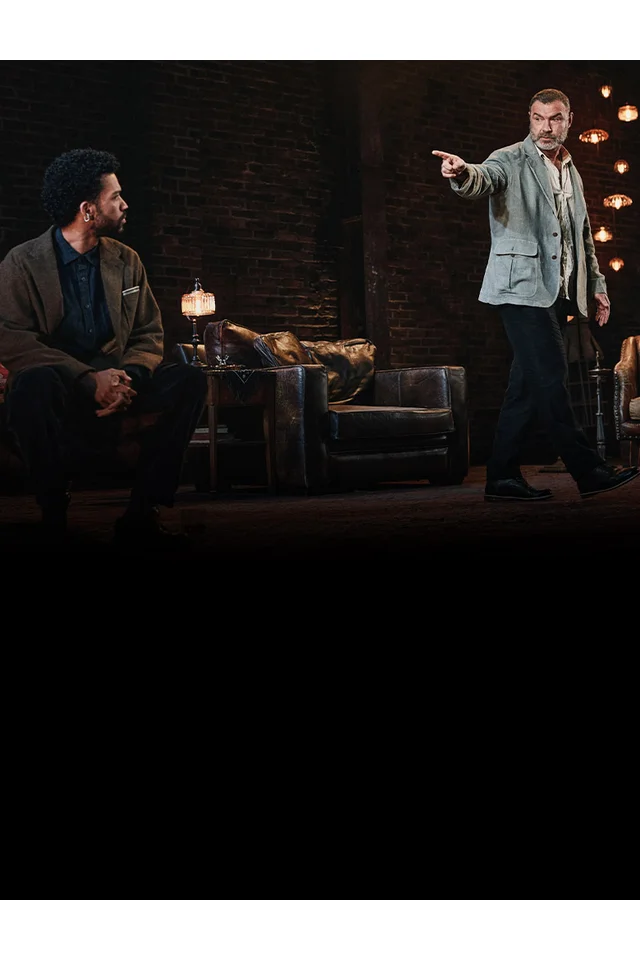
At a seaside hotel, a stranger befriends a young artist and begins to undermine his confidence in his marriage. Jen Silverman’s adaptation of August Strindberg’s play follows the resulting struggle over love, influence and revenge.
Four men with cerebral palsy work in a sheltered workshop in 1970s Toronto. They escape to its bathroom and barricade themselves there to protest their menial work and treatment; a telethon and Shriners circus performance periodically interrupt them.
In Minos’s palace, the king discovers Pasiphaë has borne the Minotaur and condemns her after a debate in which she argues that divine madness, not voluntary desire, caused her actions. Fragments also indicate the Cretan chorus’s rites and Icarus’s bold monody before his fatal flight.
Creusa, Queen of Athens is a 1754 tragedy by the British writer William Whitehead. It is based on the story of Creusa of Athens. The original Drury Lane cast included David Garrick as Aletes, Maria Macklin as Ilyssus, Hannah Pritchard as Creusa, Henry Mossop as Phorbas and Edward Berry as Xuthus.
A murder draws a troubled student, a detective, and a young woman into an inquiry into guilt and conscience. Three actors perform multiple roles in Campbell and Columbus’s 90-minute adaptation of Dostoevsky’s novel.
The tragicomedy relates the story of the three Magrath sisters, Meg, Babe, and Lenny, who reunite at Old Granddaddy's home in Hazlehurst, Mississippi, after Babe shoots her abusive husband. The sisters were raised in a dysfunctional family with a penchant for ugly predicaments. Each has endured her share of hardship and misery. Past resentments bubble to the surface as the sisters are forced to deal with assorted relatives and past relationships while coping with Babe's latest incident. Each sister is forced to face the consequences of the "crimes of the heart" she has committed.
A valet departs from the usual service of his master: he tries to supplant him in love and gain for himself.
The action takes place in the Ballantines’ Washington Square duplex apartment in Manhattan. Act One opens on Parker, Angela, and John Ballantine at the breakfast table. John reports that the downstairs neighbor, Dr. von Hagedorn, is writing a play. This prompts Angela to announce that she has been thinking about writing a play herself. It would be based on her memories of her Uncle Ben, who ran a rooming house. Parker is skeptical, but Angela insists and goes off to start work on the play. This gives Parker the idea to write an article for Harper’s magazine entitled "Don’t Write That Play!"—a piece that would discourage amateur playwrights. As Angela begins to write, Parker starts dictating his article into a tape recorder. Angela completes her play, entitled “The Gingerbread World”, and sends it off to a producer. While awaiting his response, she asks Parker to read it. He does, and tells Angela that the play is horrendous. Angela reacts angrily, but when she phones the producer, S.P. Champlain, she learns that he loves the play and wants to produce it, with Dion Kapakos as director. Kapakos, however, feels the play needs work. He demands a rewrite, including a change of title, to “A Houseful of Silence.” Among his other artsy and grandiose changes is the addition of a Greek chorus and a new ending: the suicide of Uncle Ben. The play's first run-through is attended by Parker's son, John. John reports to Parker that the play is the worst thing he's ever seen and questions his father about whether he would really review the play honestly were it to open in New York. John worries that Parker will repeat the mistake he made with the first Mrs. Ballantine: that he'll write a favorable review of a bad play just because it was written by his wife. John is concerned that this will end Parker's marriage to Angela. Parker assures John that, unlike his first marriage, his and Angela's is a strong one and secure enough to weather an honest review. Parker explains that were he to lie about Angela's play, he would lose his own self-respect and become angry with Angela and the whole world as a result. As Angela prepares to depart with Dion to New Haven and Boston for the out-of-town try-outs of “A Houseful of Silence,” they learn that Parker intends to review the play in New York. Angela becomes furious. She storms out of the apartment after recriminating with Parker over writing the Harper's piece. Parker sits down with his tape recorder and begins to erase the entire tape of his article as the curtain falls on Act One. Charlotte, Angela's mother, has been staying in the apartment to cook for Parker and John while Angela is out of town. Charlotte begs Parker to give the play a positive review for the sake of the marriage. The doorbell rings and Ivy London, Parker's first wife, appears. She has learned, from a phone call to Parker's maid, that Angela is out of town. Angela reports to Parker that she has just come from Boston where she was in the same hotel as Angela and Dion and she believes that the two are having an affair. Ivy also tells Parker that she still love him. Ivy leaves and Charlotte re-enters. Charlotte admits she's been eavesdropping on the conversation with Ivy, and tells Parker she believe what Ivy has reported: that it is likely that Angela and Dion are having an affair. Charlotte calls Parker naïve for not believing the rumor and warns him that if he gives Angela's play a bad review that night, he will lose Angela forever. Angela and Dion return to the apartment before going to the theater for the opening of the show. Once again, Angela begs Parker not to review the play. She reminds Parker that he lied about Ivy's bad performances six times while Parker was married to Ivy. She tells Parker that Dion loves her. She repeats Parker's words that during the opening of the play they are not husband and wife, but critic and playwright. She asks whether she should even come home after the play that night. Parker finally backs down, gives his tickets back to Angela, and says he won't review the play after all. Angela and Dion leave for the theater and Parker begins to drink heavily. John becomes angry at Parker for going back on his word about reviewing the play and about staying honest to himself. Parker continues to drink, calls Ivy, and invites her to the apartment to give him a backrub. Ivy is busy making dinner for Parker as he continues to drink. Ivy again proclaims her love to Parker and tells him they will get back together. Parker becomes increasingly drunk and maudlin about not being true to his word about doing his job as a critic regardless of Angela's connection with the play. Finally, Parker decides he must review the play and he rushes out to catch a cab to the theater. Ivy leaves. Charlotte and John return from the opening night party discussing how bad the play was. Angela and Dion storm in carrying the newspaper reviews. Angela tells Charlotte that Parker reviewed the play after all and now Angela is moving out and going to live with Dion. Parker, now sober, returns home and enters with Ivy while John is reading Parker's review, “Opening Night Report”. Angela grabs her suitcase and readies to leave the apartment, but Parker insists that she listen to him. Parker then apologizes for making fun of Angela when she first began to write the play, and for not going to New Haven and Boston to make suggestions to improve it. He tells her that if she did have an affair with Dion in Boston then he, Parker, is to blame for not having traveled there with her. He begs her forgiveness, but goes on to say that “A Houseful of Silence” was an awful play, he was right to give it a bad review, and that Angela should not try to keep Parker from doing his work as a critic. He promises that if Angela writes another play he will help her, and he asks her to stay with him. Angela, charmed, relents. Dion and Ivy leave together. Angela and Parker retreat to the bedroom.
During the English Civil War, Queen Henrietta Maria seeks help from Cromwell’s circle to reach the imprisoned Charles I. Cromwell maneuvers between royalists and parliamentary leaders while weighing the crown, his own power, and the fate of the king and his family; the queen’s efforts to protect Charles and her sons drive the political conflict.
A historical drama centered on Oliver Cromwell's internal conflict when he is offered the crown of England.
Cross Partners is a 1792 comedy play by the British writer Elizabeth Inchbald. It premiered at the Theatre Royal, Haymarket in London on 25 July 1792. The original Haymarket cast included Richard Wilson as Sir Charles Cullender, Thomas King as General Touchwood, James Brown Williamson as George Cleveland, John Palmer as Captain Herbert, Ralph Wewitzer as Corporal Smack, Charles Farley as Pompey, John Henry Johnstone as Thomas, Lydia Webb as Lady Diana Dupely, Charlotte Goodall as Maria Sydney, Louisa Fontenelle as Mrs Mutter and Elizabeth Heard as Louisa Fairfax. It enjoyed a solid run of nine performances.
A symphonic historical drama reenacts the founding of St. Augustine and early Spanish colonization of Florida, including Pedro Menéndez de Avilés’s conflicts with French Huguenots at Fort Caroline. The production combines music, dance, pantomime and poetic dialogue.
At a busy Tehran crossroads, two former lovers meet by chance after fifteen years apart. Their encounter unfolds amid the disrupted lives of the city’s passersby and the damage wrought by political tyranny, commercialism, nationalism, and hypocrisy.
Set at Marlborough House from 1936 to 1945, the play depicts the private effects of Edward VIII's abdication crisis on Queen Mary and the royal family.
In this English Host miracle play, a Christian merchant sells a consecrated host to a group of skeptical Jewish merchants. Miraculous signs follow their attempts to destroy it; they repent, the host is restored, and the play ends with conversion and a Te Deum.
The wife of a military commander waits for his return as reports of his campaign become increasingly troubling. A young woman brought from the war zone reveals how public violence and private desire have become entangled.
Three couples—Australian, English, and American—are seated together on a cruise for a week. Their fixed dinner-table arrangement forces strangers who may loathe one another to coexist, and the situation grows worse.
The play takes place in Brooklyn in 1950. An African-American man, Godfrey Crump, grieving over his wife's death, finds new meaning in religion. He moves his family, Ernestine, a 17-year-old and Ermina, 15 years old, from Florida to Brooklyn. Their Aunt Lily espouses Communist sentiments and Godfrey's new wife is not only a white woman, but German. Nottage has said of the play (in the booklet that accompanied the Center Stage production, page 4): "The 1950s was such a moment in American history in which I felt so much change...everything I had seen was in black and white. And I wanted to make it colorful. So I started writing Crumbs from the Table of Joy to try to understand that era."
After illness leaves Steve with six months to live, he tries to reconcile with his estranged son and bring his family together to help him die.
Cry Liberty is a play by the British writer Esther McCracken. After a premiere at the Theatre Royal, Newcastle, the work's West End at the Vaudeville Theatre lasted for 26 performances from 21 April to 13 May 1950. It was considerably less successful than McCracken's pre-war and wartime hits such as Quiet Wedding and No Medals. The original cast included Irene Handl, Joyce Barbour, Edwin Styles and Anthony Sharp.
Street performer Plantagenet Smith loves Polly Toddleposh and must win her father's consent to their marriage. He displays an array of theatrical and verbal talents until the father relents and offers him both employment and Polly's hand.
After racist bullying at school leaves Crystal considering dropping out, her vardo becomes a time machine. She travels through centuries of Romani dispossession, criminalization, and persecution before reaching an imagined future without discrimination.
Between waking and dream, Csongor searches for meaning and happiness through his love for Tünde. His desire leads him through obstacles toward the fairy realm, where their union joins earthly and heavenly worlds.
Cuckold's Haven; Or, An Alderman No Conjurer is a 1685 comedy play by the Irish writer Nahum Tate. It was first staged at the Dorset Garden Theatre in London by the United Company. It was a reworking of George Chapman, Ben Jonson and John Marston's Eastward Ho. The original cast included Thomas Percival as Mr Nokes, Thomas Jevon as Quicksilver, Anthony Leigh as Security, Joseph Williams as Sir Petronell Flash, Thomas Gillow as Captain Seagull, Joseph Haines as Bramble, Susanna Percival as Girtred, Katherine Corey as Mrs Touchstone and Emily Price as Security's Wife.
Three small-time suburban families—the Smiths, Johnsons and Joneses—put considerable effort into appearing happy.
Cult Of Love is a dramatic stage play with music, written by American playwright Leslye Headland.
Cupid and Death accidentally exchange arrows. Cupid’s shots kill prospective lovers, while Death’s arrows make the elderly ardent and stop duelists from fighting. Mercury eventually restores order, Cupid is banished from princes’ courts to ordinary cottages, and the slain lovers rejoice in Elysium. A comic anti-masque adds a tavern host, a chamberlain, and dancing satyrs and apes.
When Duke Leontius suppresses the customary worship of Cupid at his children's urging, Cupid oversees the ruin of the royal family and their attendants through disastrous love entanglements.
Jealous Sir Troublesome suspects his wife of infidelity and devises schemes to prove it, while she rejects repeated advances from Lord Nonsuch. A second plot follows the philandering Lord Alphonso and the idle orator Prate, whose clients expose his negligence. Disguises and mistaken identities feed a web of changing affections that ends in three marriages.
Phaedromus loves Planesium, enslaved by a dealer, and sends the parasite Curculio to obtain money to free her. When that fails, Curculio steals a soldier’s ring and uses it to trick the banker into paying for her. The ruse is exposed, but Planesium proves to be the soldier’s freeborn sister, allowing her to marry Phaedromus.
In postwar Rabaul, brothers Max and Harry salvage wartime equipment while their driver Curly waits to recover £10,000 he buried on an island during the Japanese invasion. When fellow soldier Scobie, now a double amputee, arrives demanding his half, the family is drawn into a struggle over the money and its cost.
Against the backdrop of the Trojan War, stay-at-home father Od struggles to raise the children while his wife Pen covers the conflict as a journalist. This contemporary play on gender roles adapts the Odyssey.
The Tate family fights over whether to sell its derelict California farm while the alcoholic father, Weston, incurs debts and the mother, Ella, pursues her own escape. Their children Wesley and Emma struggle against the family's poverty and instability, ending in violence and loss.
At Rockwood High, quiet senior Clifford Mumford is accidentally cast opposite Donna, the popular girlfriend of bully Biff, in the school play. Rehearsals collapse, Biff threatens Clifford and tries to sabotage the show, and Clifford ultimately wins Donna's affection.
Five women inherit equal shares in a dilapidated theatre and try to restore it through fundraising, including a concert with local talent and a world-famous star. When their plans go wrong, they scramble to keep the audience from discovering the truth.
At a Friday-night staff dance in Paisley in 1957, former slab boys Phil and Spanky arrive after Phil has lost his job, while their old workplace acquaintances gather in the town hall. Hector, newly promoted but still a target of their jokes, stabs himself during a confrontation; the play ends with Spanky affirming his hopes for the future.
On Sicily, Odysseus and his crew encounter the enslaved satyrs and Silenus, who serve Polyphemus. Odysseus argues with the Cyclops, then gets him drunk and blinds him; using the name 'Nobody' to foil rescue, Odysseus escapes with the satyrs.
When Cymbeline banishes his daughter Imogen's husband Posthumus, a wager and false evidence of infidelity set off a chain of disguise, attempted murder, and war. Imogen survives under the name Fidele; revelations about her brothers and Iachimo's deception reunite the family and restore peace between Britain and Rome.
George Bernard Shaw rewrites the final act of Shakespeare’s Cymbeline, cutting supernatural revelations and the implausible victory over Rome. In Shaw’s ending, Imogen takes a more assertive role, recognizes Posthumus and confronts the immorality of his actions before agreeing to return with him.
At Cynthia’s revels, courtiers and ladies drink from Narcissus’s spring and become enamored of themselves. The foolish Asotus challenges them in a contest of courtly compliments, while two symbolic masques reveal that vices have masqueraded as virtues. Cynthia orders the offenders to make reparation and purify themselves.
Cyrano, a gifted but self-conscious soldier and poet, loves Roxane, who loves the handsome Christian. Cyrano supplies Christian with eloquent letters and words, concealing his own love until the deception is revealed after Christian's death.
Cyrus is a 1768 tragedy by the British writer John Hoole. The original Covent Garden cast included William Powell as Cyrus the Great, William Smith as Cambyses, Robert Bensley as Mithrades, Thomas Hull as Harpagus, Mary Ann Yates as Mandane of Media and Isabella Mattocks as Aspasia.
Cyrus the Great is a 1695 tragedy by the British writer John Banks. It was his final work, although his earlier The Island Queens was staged several years later. Set at the court of the Persian Emperor Cyrus the Great, it was staged by Thomas Betterton's Company having previously been rejected by the United Company. John Downes described it as one of the "principal new plays" of the decade, although it did not enjoy many performances on stage. The original cast included Thomas Smith as Cyaxeres, Edward Kynaston as Hystaspes, John Bowman as Craesus, John Thurmond as Artabasus, Elizabeth Barry as Panthea and Anne Bracegirdle as Lausaria. The play used the innovation of casting Barry as the romantic object of Cyrus' love, while Bracegirdle is besotted with him and driven to distraction by his rejection.
A grotesque puppet-theatre portrayal follows Mr. Jones through transformations into multiple personalities, genders, and even species, using multimedia, masks, costumes, lighting, and music.
Showing 1,321–1,440 of 8,284 shows
Load more shows