8285 shows

Clear filters

Walden

Play · 2021

In a near-future with worsening climate change and refugee crisis, and where synthetic foods, cloning, and war are common, Cassie, a NASA astronaut returned from a year-long lunar mission, visits her estranged fraternal twin sister Stella, and Stella's partner Bryan, at a remote cabin. Stella, a former NASA architect, designed a Mars habitat called Walden while at the agency. Cassie is about to begin training for a mission to Mars, where she will live in the Walden habitat. Stella, while still believing in NASA, now favors prioritizing the Earth, while Bryan is an "Earth Advocate" activist, and they argue with Cassie about space colonization. A love triangle develops.

Waltz of the Stork

Play · 1981

Waltz of the Stork is an American semi-autobiographical play written and originally performed by Melvin Van Peebles. It also featured his son Mario Van Peebles. The play originally ran for four months in 1982. It ran from January 5, 1982, to May 23, 1982. The song "The Apple Stretching", featured in this play, was later covered by Grace Jones, and released as a single. In 2008, a film based on the play, Confessionsofa Ex-Doofus-ItchyFooted Mutha, was released, directed by Van Peebles.

War Horse

Play · 2007

A foal is auctioned for sale in Devon, the United Kingdom. Hoping to give it to his son Billy, Arthur Narracott bids on the foal; instead, his brother Ted competes with him and bids 39 guineas—an exorbitant amount that Arthur can't meet – and wins the foal. Ted is the local drunkard and thought to be a coward, for refusing to have fought together with his brother in the earlier Boer War in South Africa. At the auction, Ted used money reserved to pay his farm mortgage. Ted's wife Rose fears they will lose their farm. Their son Albert promises to raise the foal and train him for sale. The boy names the foal Joey, and forms a strong bond with the horse during training. Jealous of his cousin Albert, Billy convinces his father to get Ted drunk and make a bet: if Joey (bred and trained as a hunter, not a plough horse) can be taught to plough within a week, Arthur will pay Ted 39 guineas, the auction price. If Joey won't plough, Billy gets the horse. Albert successfully teaches Joey to pull the plough and gets to keep him. News of the outbreak of World War I reaches Devon. When Ted sells Joey to the cavalry, Albert is crushed. Captain James Nicholls, who often sketched Albert riding the hunter, promises that he will personally look after the fine horse. At the same time, Arthur enlists Billy to fight despite his protests. Arthur gives Billy his grandfather's knife for protection. Joey and Topthorn (another army horse) are shipped to France. The charges of the British cavalry are overwhelmed by the fire from German machine guns, representing their new technology. During the first charge, Nicholls is shot and killed. Billy is assigned to ride Joey into battle and is captured by German troops. Nicholls's sketchbook is sent to Albert, who learns Joey is serving "unprotected" in France. He lies about his age, enlists in the army and goes to France. There he befriends Private David Taylor, a fellow soldier. The Germans have taken Billy to a French farm being used as a makeshift hospital. He is killed brandishing his knife. Emilie, the girl of the farm family, is nearly killed in the altercation. German officer Friedrich Muller is reminded of his own daughter left in Germany. He and Emilie share a love of horses and, with Emilie's mother, they take care of the horses Joey and Topthorn, which are being kept to pull an ambulance for wounded soldiers. When a shell kills most of his comrades, Friedrich switches his coat and identity with an enlisted medic, hoping to survive to return home. His subterfuge is discovered but Friedrich enables Emilie and her mother to escape. When the Germans force the two fine horses to work as draft horses, Joey inspires Topthorn to pull in order to survive. Once enemies, the two horses become friends, but Topthorn dies from exhaustion. As Friedrich mourns the horse, a tank attack hits his group, killing him and causing Joey to flee in escape. He is caught in barbed wire in No Man's Land between the enemy lines. The Germans and British each send out a man under a white flag to aid the horse. Winning a coin toss, the British take the injured Joey back to camp. Albert and David's infantry division encounter Emilie, who is alone and traumatized; they take her to British headquarters. On the way, Albert sees a dead horse with Billy's knife in him. Believing that the horse is Joey, Albert is broken. Recognizing Joey's name, Emilie tries to talk to Albert, but David is shot and killed, and Albert temporarily blinded by tear gas. Emilie does not have the chance to tell him about his horse. Behind the lines, in a British encampment, Albert tells his story to a nurse just as the damaged Joey is brought to the camp by soldiers. The soldiers prepare to kill the injured horse, but Albert whistles and Joey responds to him. Learning the full story, the soldiers agree to let Albert care for Joey during their joint convalescence. The horse and farmboy return home safe to Devon at the end of the war.

Warn That Man!

Play · 1941

Warn That Man! is a 1941 comedy thriller play by the British writer Vernon Sylvaine. A comedy-thriller, its plot concerns an attempt to kidnap wartime Prime Minister Winston Churchill from an English country house. Having debuted at the New Theatre, Oxford, it then ran for 352 performances at the Garrick Theatre in the West End between December 1941 and September 1942. Amongst its cast were Gordon Harker, Veronica Rose, Basil Radford, Ethel Coleridge and Judy Kelly.

Was geschah, nachdem Nora ihren Mann verlassen hatte; oder Stützen der Gesellschaften

Play · 1979

Jelinek follows Nora after she leaves her husband, tracing the social roles projected onto her as wife, mother, worker, lover, and businesswoman. Her attempt to escape an upper-class domestic role exposes how a small capitalist elite controls political and economic institutions, while her ambitions also entangle her in exploitation.

Watch on the Rhine

Play · 1941

It is 1940, in late spring. For the past 17 years, the German-born engineer Kurt Mueller and Sara, his American wife of 20 years, have lived modestly in Europe and raised three children. He has been deeply involved in anti-Fascist activities in Spain and Germany. The Muellers and their children Joshua, Babette, and Bodo are visiting Sara's wealthy relatives, the Farrellys, her brother David, and mother Fanny, in Washington, D.C. Sara tells the Farrellys she and her family hope to live peacefully in the U.S. The Farrellys have another houseguest, Teck de Brancovis, an impoverished Romanian count "with good manners and odious character" who has been conspiring with the Germans while living in Washington. He searches the Muellers' bedroom and in a locked suitcase discovers a gun and $23,000 intended to finance underground operations in Germany. The Muellers learn that Max Freidank, a member of the resistance, has been arrested in Germany. Because Freidank once rescued Kurt from the Gestapo, Kurt plans to return to Germany to assist Max and those arrested with him. Teck threatens to expose Kurt's plans to the Nazis unless they pay him $10,000 to keep silent. Kurt kills Teck. David and Fanny agree to help him escape capture by the American police. The play ends with Kurt saying goodbye to his wife and children and voicing his hope that they'll all be reunited someday in a freer, better Germany.

Water by the Spoonful

Play · 2011

Set seven years after Elliot, A Soldier's Fugue, the play features veteran Elliot Ortiz, who was wounded and has returned to his home town of Philadelphia. He works at a sandwich shop and cares for his ailing aunt Ginny, who raised him. He is coping with recurring bouts of posttraumatic stress disorder (PTSD), characterized by visions of an apparition, a man who continually offers a hand and repeats an Arabic phrase. Elliot's cousin Yazmin, a Swarthmore College music professor in the middle of a divorce, introduces him to Professor Aman, from Swarthmore's Arabic Studies department. Elliot wants to decipher the phrase the ghost repeats, but does not want to share its origin. Aman says that he will translate the phrase if Elliot agrees to contact a filmmaker friend of his who is making a documentary about the Iraq War. When Elliot accepts, Aman reveals that the phrase means, "Can I please have my passport back?". Odessa is Elliot's birth mother and Ginny's sister. She had given up her son because of her crack addiction. In recovery, she uses the alias Haikumom to moderate an anonymous online message board for recovering addicts. These include Orangutan and Chutes&Ladders. Haikumom and Chutes&Ladders are delighted by the appearance of Orangutan, who has not logged into the site for three months. She tells them that she is 90 days sober and has moved to Japan to meet her birth parents. Fountainhead, a wealthy Philadelphian addict-in-denial, arrives and sows discord on the message board. Odessa wants to welcome him, but Orangutan and Chutes&Ladders doubt his intentions, especially when he seeks help to avoid telling his wife about his addiction. After Fountainhead and Odessa leave the chatroom, Orangutan encourages Chutes&Ladders to visit her in Japan, but he refuses. He fears that the awkwardness of the meeting and the break from the routine he has built for himself might threaten his 10-year sobriety. When Ginny dies, Elliot and Yazmin have limited funds to pay for her funeral, and they start seeking money from the rest of the family. While this is happening, Odessa meets Fountainhead at a diner to discuss rehab and treatment options. Yazmin and Elliot arrive and confront Odessa for her failure to contribute to her sister's funeral. Elliot reveals to Fountainhead that Odessa had a daughter who died of dehydration from the flu at the age of two. He blames Odessa, claiming that she was too busy getting high on crack to give his sister the "water by the spoonful" she needed to survive. Shamed, Odessa gives Elliot permission to pawn her personal computer for Ginny's funeral expenses. He and Yazmin go to Odessa's apartment to retrieve it. Elliot logs in and poses as Haikumom on the message board, where he insults Orangutan. Yazmin grabs the keyboard to explain it is Haikumom's son using the computer. Orangutan tells them that Haikumom has always spoken very highly of Elliot on the site. She had regretted her absence from his life due to her addiction. Orangutan posts that she plans to visit her birth parents' address, but Chutes&Ladders attempts to dissuade her. He suggests that the emotion of the visit might make her want to use again. Orangutan says that she prefers uncertainty about the future to Chutes&Ladders' strict routine, and leaves for the train to Kushiro, where her birth parents supposedly reside. That night, Odessa relapses and the hospital calls Fountainhead, whom she listed as an emergency contact without his knowledge. In the morning, Orangutan reveals that she did not take the train to her birth parents. Chutes&Ladders says that he has decided to face his fears and has bought a ticket to Japan. Fountainhead enters the chat with the news about Odessa, and Chutes&Ladders convinces him that he now has a duty to care for her. Fountainhead agrees and calls his wife, giving her the credentials to his profile on the message board, so that she can find out about his addiction struggles. Orangutan and Chutes&Ladders meet in person in Japan. Yazmin and Elliot travel to Puerto Rico where they scatter Ginny's ashes. Yazmin plans to purchase Ginny's house there and to start a family. Elliot vows to pursue his acting dream in Los Angeles.

Waterloo Bridge

Play · 1930

American chorus girl Myra Deauville is stuck in 1917 London at the height of World War I, unable to find work and book passage home. She resorts to prostitution to support herself. She meets her clients on Waterloo Bridge, the primary entry point into the city for soldiers on leave. There she meets fellow American Roy Cronin, a young soldier in the Canadian Army on convalescent leave after being wounded in France, and impressed by his innocence, invites him to her apartment for tea instead of soliciting his business. Afterwards she sends him away. The next day Myra's friend and neighbor Kitty finds Roy waiting for Myra in her room. Unaware that Kitty is also a prostitute and that their landlady, Mrs. Hobley, has been forced to run her house as a brothel because her husband is a prisoner-of-war, Roy is persuaded that Myra needs his protection. Kitty hints that Roy should ask Myra to marry him and tries to convince Myra to accept a proposal, justifying the idea as an expedient of survival. Rationalizing that Myra will make a soldier happy for a few days, Kitty tells her that she owes it to herself as an honest resolution to a predicament she did not create. Mrs. Hobley learns that Roy is flush with back pay and encourages Myra so Roy will pay her delinquent rent. The gullible Roy is worried that he will be sent to Camp Bramshott at any moment to prepare for return to the front and proposes. Myra accepts, but then sneaks away when she feels guilty. Restored to duty, Roy assigns part of his pay to her and names her as the beneficiary of his life insurance. Mrs. Hobley, in need of self-justification, tells Roy that her "Christian duty" compels her to warn him that Myra is a "harlot". Roy accepts the truth as a reality of the times and rejects her warning. Crossing the bridge on his way to the railway station, he meets Myra again and makes her promise to accept the allotment and sign for the life insurance benefit. After he leaves for Bramshott, Myra remains on the bridge, lighting a cigarette, just as a German air raid begins, and she is killed.

Ways and Means

Play · 1788

Ways and Means; Or, a Trip to Dover is a 1788 comedy play by the British writer and theatre manager George Colman the Younger. It premiered at the Theatre Royal, Haymarket in London with a cast that included John Bannister as Sir David Dunder, John Palmer as Random, James Brown Williamson as Scruple, James Aickin as Old Random, Howard Usher as Paul Peery, Lydia Webb as Lady Dunder and Elizabeth Kemble as Harriet. Its Irish premiere was at the Crow Street Theatre in Dublin on 24 April 1793.

We Are Proud to Present a Presentation About the Herero of Namibia, Formerly Known as Southwest Africa, From the German Südwestafrika, Between the Years 1884–1915

Play · 2012

Actors rehearse a presentation about the Herero genocide in German colonial Namibia, confronting how they represent the violence and how the rehearsal affects their relationships.

We Bombed in New Haven

Play · 1967

We Bombed in New Haven is a 1967 play by Joseph Heller. An anti-war black comedy, it is thematically linked in part to Heller's famous novel Catch-22. The play opened on Broadway at the Ambassador Theatre on October 16, 1968, and closed on December 29, 1968, after 85 performances. The play is heavily metatheatrical, being not only staged at but also set at the Ambassador Theatre, the actors playing actors appearing in a play at the Ambassador. This play-within-a-play concerns a strategic bombing squadron; the squadron commander frequently steps out of character to reassure the audience that they are only watching a play. This conceit is carried to the point where the actors themselves exhibit confusion over whether they really are actors playing airmen, or actual airmen. For instance, in the second act, Henderson (played by Ron Leibman) is scheduled to be killed – he knows this, being familiar with the script, and is not worried; but then later, a corporal is killed on a mission, and Henderson is unable to find him offstage. Henderson worries that the corporal really has been killed, and that perhaps the "play" is reality. This "phantasmagoric world in which actors might not know where the grease paint ended and the blood began", where the audience is led to believe in both levels of reality as the borders blend and blur in manner reminiscent of the works of Luigi Pirandello, is used by Heller to satirize and excoriate the moral blindness that leads people to treat war as spectacle, equating the real death and suffering of war with the deaths of actors in war movies. New York Times theatre critic Clive Barnes gave the play a mixed review ("I would call it a bad play any good playwright should be proud to have written, and any good audience fascinated to see"); the New York Post was more enthusiastic ("An exceptional quality of imagination that is at once comic, bitter and moving, and it is immensely effective in dramatic terms"). The title of the play is ironic with a double meaning. In 1967, plays frequently opened in New Haven, Connecticut for a tryout run before moving to Broadway (perhaps via Boston or Philadelphia), and "bombed in New Haven" would describe a play that was found there to be too flawed to make it to Broadway. And the airmen do literally bomb in New Haven (as well as other targets such as Minnesota and "Constantinople") in the course of the play, reason for these seemingly absurd targeting orders from the High Command never being given. Prior to its Broadway opening, the play was premiered in New Haven by the Yale Repertory Theatre in 1967 starring Stacy Keach, Estelle Parsons, and Ron Leibman (who went with the play to Broadway). In the original Broadway production, players included Ron Leibman, Anthony Holland, Jason Robards, Diana Sands and William Roerick. Although its eleven-week run was respectable, the play is generally considered to have not been a success, but a Broadway revival was staged in 1972 at the Circle in the Square Theatre, featuring Steven Keats and James Doerr, and the play has been occasionally staged at various venues throughout the rest of the twentieth century and into the twenty-first.

Wedding Band: A Love/Hate Story in Black and White

Play · 1966

In 1918 South Carolina, Julia, a Black seamstress, and Herman, a white baker, have been together for ten years but cannot marry under anti-miscegenation laws. When Herman falls ill, racial hostility and fear of legal consequences keep Julia’s neighbors and his family from helping; after his death, Julia gives their planned escape tickets and wedding band to a neighbor facing her own marriage barriers.

Wedding Bells

Play · 1919

Wedding Bells is a 1919 comedic play which played on Broadway. The play was written by Salisbury Field and staged by Edgar Selwyn, and opened on Broadway on November 12, 1919 at the Harris Theatre. It played through April 1, 1920, for a total of 168 performances. Prior to opening in New York, initial performances occurred in Washington, D.C. Wallace Eddinger and Margaret Lawrence played the lead roles. The play received generally positive reviews, and Burns Mantle included the play on his list of best plays of the season. It was adapted into a silent film released in 1921 featuring Constance Talmadge. It also was staged in London, and subsequent to a touring production after closing on Broadway, other productions of the play in the United States were mounted into the 1930s. Aside from appearing in editions of Burns Mantle's best play lists, the play has subsequently received little attention.

Wednesday's Child

Play · 1934

Wednesday's Child is a 1934 Broadway two-act drama written by Leopold L. Atlas, produced by H.C. Potter and George Haight, staged by Potter with scenic design created by Tom Adrian Cracraft. It ran for 56 performances from January 16, 1934, to March 1934 at the Longacre Theatre. The play was included in Burns Mantle's The Best Plays of 1933-1934. It was adapted into the 1934 film Wednesday's Child directed by John S. Robertson and starring Edward Arnold and Karen Morley with Frank Thomas Jr. recreating his role as Bobby Phillips. It was also adapted into the 1946 film Child of Divorce.

Werter

Play · 1785

Werter is a 1785 tragedy by the British writer Frederick Reynolds. His debut play, it is an adaptation of the 1774 novel The Sorrows of Young Werther by Johann Wolfgang von Goethe. It first appeared at the Theatre Royal, Bath on 25 November 1785. Its London premiere came at the Theatre Royal, Covent Garden on 14 March 1786. The original Covent Garden cast included Joseph George Holman as Werter, William Davies as Sebastian, James Fearon as Leuthrop, William Farren as Albert and Ann Brunton as Charlotte. The Dublin premiere was at the Smock Alley Theatre on 2 December 1786.

What Every Woman Knows

Play · 1908

The Wylies, a well-to-do but uneducated Scottish family, are concerned about their daughter, Maggie, a plain young woman who they fear will remain a spinster. One night the Wylies discover that a serious young university student, John Shand, has been breaking into their home so that he can read books from their large library. Shand is penniless and cannot afford to buy books for his law school education. Maggie Wylie and John Shand come to an understanding: that her family will fund his education if, at the end of five years, he agrees to marry her. John honours his commitment to Maggie, marrying her although he does not love her. Recognising her husband's ambition to become a Member of Parliament, Maggie quietly uses her intelligence and her connections behind the scenes to get John elected. She continues to foster his career, never allowing him to see that she is the power behind his rise to fame. Eventually John begins to believe that his wife is too plain for a man of his stature and position, and he takes up with Lady Sybil Lazenby, a beautiful, refined and high-born young Englishwoman. Maggie is prepared to let her husband go, if Sybil can help him more than she herself can. However, when Shand is preparing a speech that will make or break his career, he finds that Sybil is no help to him, and he realises that Maggie is his inspiration.

What Price Glory

Play · 1924

Flagg and Quirt are veteran United States Marines whose rivalry dates back a number of years. Flagg is commissioned a captain in command of a company on the front lines of France during World War I. Sergeant Quirt is assigned to Flagg's unit as the senior non-commissioned officer. Flagg and Quirt quickly resume their rivalry, which this time takes its form over the affections of Charmaine, the daughter of the local innkeeper. However, Charmaine's desire for a husband and the reality of war give the two men a common cause.

What a Life

Play · 1938

What a Life is a 1938 Broadway play by Clifford Goldsmith. What a Life is set in Central High School, with action primarily occurring in the principal's office. The main character, Henry Aldrich, "thinks he is dumb because his father won a Phi Beta Kappa key at college." During the play, Aldrich faces charges that he caused a disturbance in class and that he stole brass instruments from the band. He also has to deal with a student who bullies him. It languished for more than one year, but things changed when producer George Abbott took charge.

What the Butler Saw

Play · 1969

Characters Dr Prentice Geraldine Barclay Mrs Prentice Nicholas Beckett Dr Rance Sergeant Match The play consists of two acts – though the action is continuous – and revolves around a Dr Prentice, a psychiatrist attempting to seduce his attractive prospective secretary, Geraldine Barclay. The play opens with the doctor examining Geraldine in a job interview, during which he persuades her to undress. The situation becomes more intense when Mrs Prentice enters, causing the doctor to hide Geraldine behind a curtain. His wife, however, is also being seduced and blackmailed, by Nicholas Beckett. She therefore promises Nicholas the post as secretary, which adds further confusion, including Nicholas, Geraldine and a police officer dressing as members of the opposite sex. Dr Prentice's clinic is also faced with a government inspection, led by Dr Rance, which reveals the chaos in the clinic. Dr Rance talks about how he will use the situation to develop a new book: "The final chapters of my book are knitting together: incest, buggery, outrageous women and strange love-cults catering for depraved appetites. All the fashionable bric-a-brac." A penis ("the missing parts of Sir Winston Churchill") is held aloft in the climactic scene.

When Knighthood Was in Flower

Play · 1901

When Knighthood Was in Flower is a play in four acts by Paul Kester. It is based on the 1898 novel of the same name by Charles Major. The work premiered on Broadway at the Criterion Theatre on January 14, 1901. It ran for a total of 176 performances; closing in June 1901. The original production was produced by Charles Frohman and used sets by Ernest Albert, Frank E. Gates and Edward A. Morange. The costumes were designed by Mrs. Charles Hone and Harper Pennington. The cast was led by Bruce McRae as Charles Brandon and Julia Marlowe as Mary Tudor among others. Marlowe, however, was initially criticized for taking on a non-Shakespearean role as critics thought the work inferior to her usual repertoire. The play, however, was a huge popular and financial success for Marlowe and the show's producers both in New York and on national tour, and was subsequently revived on Broadway at the Empire Theatre in 1904.

When We Are Married

Play · 1938

Alderman Joseph Helliwell and his wife, Maria, are joined at their house in Clecklewyke in the West Riding of Yorkshire by Councillor Albert Parker and his wife, Annie, together with Herbert Soppitt and his wife, Clara. They are celebrating their silver weddings, all three couples having been married on the same day in the same nonconformist chapel in Lane End, Clecklewyke. Their characters quickly become clear: Helliwell and his wife are easy-going, but he is self-satisfied and inclined to infidelity; Parker is a narrow-minded and parsimonious bully and his wife is under his thumb; Soppitt, contrariwise, is bullied by his domineering wife. The men are all prominent elders of Lane End chapel, and after the celebrations in the dining room, they gather in the sitting room, replete with port and cigars, to confront the chapel organist, Gerald Forbes, whom they intend to sack, because he has been seen walking out with young women, and, worse, is a southerner. Gerald turns the tables by revealing that on holiday he met a church minister, the Rev Francis Beech, who confided that thirty years ago, as a young minister at Lane End, he conducted four marriages – three of them on the same day – under the impression that he was qualified to do so, but, he later discovered, he lacked the requisite licence for it. The three men are horrified. Their marriage services, conducted by Beech, were invalid. They foresee a scandal, and dread the reaction of Maria, Annie and Clara: "Then t'balloon goes up properly. Talk about a rumpus. You'll 'ear 'em from 'ere to Leeds". Their anxiety is intensified by the discovery that a domestic servant, Mrs Northrop, has been eavesdropping and knows what Gerald has revealed. Worse, a reporter and photographer from the regional paper, Fred Dyson and Henry Ormonroyd, are on the premises, having come to report on the anniversary and take pictures of the three couples. The three men agree that Mrs Northrop must be bribed to secrecy, and the newspaper men bluffed and kept in ignorance. Mrs Northrop tells Maria, Annie and Clara what she has learned. The couples slowly adjust to finding themselves unmarried. The two downtrodden partners, Herbert Soppitt and Annie Parker, seem on the verge of rekindling the romantic feelings they had for each other before they paired off with Clara and Albert. Herbert rounds on the domineering Clara and asserts himself. Annie does the same to Albert. A convivial barmaid, Lottie arrives. It quickly emerges that she has in the past had an affair with Helliwell, and thinks she can assert the right to become his wife. She is an old flame of Ormonroyd, who tells her and the others that he is married, although he wishes he were not. The ceremony, he says, was at Lane End conducted by Beech. His wife – equally keen as he to become unmarried – has investigated and established that the four weddings conducted by Beech were legally valid because in those days nonconformist weddings had to be certified by a registrar, and this had been duly done. Finding they are married after all, the three couples look forward to a future without domestic tyranny or extramarital infidelity. Ormonroyd takes a group photograph of the three couples and looks forward to life as proprietor of a photographic shop, with the backing of Helliwell and his colleagues.

When You Comin' Back, Red Ryder?

Play · 1973

The story starts out in a neat but rundown little diner just off the highway in the middle of nowhere, New Mexico. The protagonist, Stephen "Red" Ryder, is sitting at the counter after finishing his shift. He is smoking a cigarette and drinking coffee from a paper cup. Angel enters to start her shift. Red and Angel discuss various subjects including Angel's bumpy relationship with her mother, Red's aspirations of getting out of town, and how they'd both like to tell off their boss, Clark. Red claims he can't leave town as of yet since his stepfather has just left his mother. Lyle, the gas station attendant across the street, enters and offers to lend Red some money so he can buy a car to leave town. Red rejects the offer, haughtily. Richard and Clarisse, a white collar couple who are clearly not from these parts, enter and take a seat at the counter. Lyle leaves to help fill their car. Richard emphasizes that Clarisse is a classical violinist and talks about subjects well out of the realm of understanding for the local folk, much to Clarisse's discomfort. Teddy, a foreboding man dressed in fatigues, and his much younger girlfriend, Cheryl, enter and tell everyone their car needs a new part. Lyle offers to take a look but Teddy insists he not look in the trunk. Teddy states they're on their way to Mexico while taking on an obvious and badly-mimicked southern accent which comes and goes. He comes off as incredibly abrasive as he orders his food and makes small talk, prodding Angel, Red and Richard with increasingly uncomfortable questions, and his threats are often veiled by a joking manner. Richard, put off by Teddy, hurries Clarisse out only to return moments later because their keys are missing. Lyle approaches Teddy and admits he saw what was in his trunk (suggesting smuggled drugs). Teddy tells him he shouldn't have done that and Lyle agrees, but suggests that if Teddy were to have taken Richard's keys it would be a bad move since no one here wants any trouble. He pushes him to just take Cheryl and leave. Instead, Richard begins accusing Teddy of stealing his keys outright which Teddy answers by pulling out a gun. Teddy demands they empty the register and tells Richard to give him Clarisse's violin as well. Richard refuses and tells Teddy he'll just have to shoot him. The stage goes black as Teddy fires. Act two begins with the diner attendees tending to Richard's flesh wound. He's only been grazed in the arm. Teddy admonishes Red and Lyle for staring at Cheryl's breasts. He gives her his keys and tells her to follow Lyle to the car with the gun and make sure he repairs the car. In the meantime, Teddy begins to question the moral fiber of everyone there. He can see Clarisse and Richard's marriage is on the rocks and asks if she's happy with her husband parading her around and demanding she perform. Richard protests but makes no move to silence Teddy. Teddy then moves on to Angel, suggesting that her weight and lack of smarts will land her in the same spot for the rest of her life; unmarried and spending her evenings watching TV with Lyle. When Red protests, Teddy attacks his spinelessness. He pokes fun at Red for sporting 1950s greaser garb and "Born Dead" tattoo and suggests if he were a real man he would've gotten a tattoo with a girl's name on it and been out of this town a while ago. Teddy even becomes enraged at Red's self-appointed nickname, insisting that the real Red Rider would've knocked him flat. He then begins a series of demands for the others to reenact a scene from a cowboy TV show, which gets more and more uncomfortable. He threatens Red with violence if he doesn't pretend to ride around on a horse, "slap leather", and kiss his "best gal", (played by Angel), on the lips. Teddy even goes so far to demonstrate what a real kiss is on Clarisse, in front of a helpless Richard. Lyle comes back with Cheryl to let Teddy know the car is fixed. When Teddy suggests Red have sex with Angel, the others protest. Instead, Teddy insists they all dance along to the jukebox, forcing them to occasionally change partners. Teddy himself starts to dance which turns into a frenzy as he rips open Clarisse's shirt and roughly shoves her in front of the men, suggesting they ogle her like they previously did to Cheryl. Red attacks him only to be taken down immediately. Teddy tells Red to tape everyone's hand and wrists. He steals the money from Richards wallet before he leaves, but Cheryl is now seriously hesitating to follow him out. Teddy leaves without her. A little while later, Clark, the diner owner enters, frees the others, and tells Richard to call the police while he keeps Cheryl from running. He demands to know why Red let his diner get robbed. Red finally tells him off before accepting Lyle's loan and hitching a ride with Richard and Clarisse to leave the diner, and the town, for good. Lyle asks Angel if she'll be over to watch TV tonight and she says she should stay home and make amends with her mom. The play closes with her resuming her duties behind the counter.

Where to Find a Friend

Play · 1811

Where to Find a Friend is a comedy play by the British writer Richard Leigh. It premiered on 20 May 1811 at the Lyceum Theatre in London, which was being used the Drury Lane company while their own theatre was being rebuilt after a fire. The original cast included Henry John Wallack as Sir Harry Morden, George Bartley as General Torrington, William Dowton as Heartly, Edward Knight as Jack Bustle, John Henry Johnstone as Barny, William Oxberry as Timothy Scamp, Joseph Ebsworth as Servant to General, Maria Rebecca Davison as Lady Morden, Frances Maria Kelly as Maria and Sarah Sparks as Mrs Bustle. It was Leigh's second play performed by the Drury Lane company following Grieving's a Folly in 1809.

Which Way to the Stage

Play · 2022

At the Richard Rodgers Theatre in New York City, Judy and Jeff wait outside the stage door during a performance of If/Then, hoping to meet Idina Menzel. She didn't come out the day they saw the show, and its closing has been announced. Both of them are aspiring actors. Judy has recently begun auditioning again after establishing a career in real estate, while Jeff works as a drag queen. Jeff admonishes Judy for using the word "faggot" to insult Jeff's ex-boyfriend, and Judy is surprised that he has taken offense given her allyship bona fides. It then starts to rain and they assume Menzel will not come out. Judy attends a callback for the roles of Kate Monster and Lucy the Slut in a production of Avenue Q to be staged in Maine. An actor, Mark, flirts with Judy and another actress, giving them both his phone number. Judy is intimidated by the other actress, who is voluptuous and conventionally beautiful, but that actress hears Judy sing and is likewise intimidated. At the stage door that night, Judy tells Jeff she didn't get the part, and is offended when Jeff offers advice about femininity. Mark arrives, Judy having told him where she'd be. He booked the role of Princeton in Avenue Q. Mark, who has an Ivy League business degree, describes how he left his job in finance to pursue acting. Jeff has developed a new drag act based on Menzel, and Judy and Mark decide to attend as their first date. They learn that Menzel's understudy is performing in her place that night. At the drag club, Judy and Mark enjoy each other's company. They nearly kiss, but Judy pulls away as Jeff's performance starts. A drunken bachelorette interrupts the show, and Judy is troubled when Jeff shuts down the heckler by insulting her vagina. The performance continues, but Judy soon leaves, telling Mark she doesn't feel well. After the show, Mark stays to talk to Jeff after the patrons have all left. Jeff tells Mark that Judy's voice is incredible, but she always restrains herself to her detriment. Mark kisses Jeff, who physically pushes Mark away out of respect for Judy. At a callback for Spamalot, Judy sees the same actress again and smiles privately on learning that Mark never called her back. The actress is surprised Judy didn't book Avenue Q, but reveals the director sexually harassed her when they worked together before. She praises Judy's voice and encourages her to perform enthusiastically. At the stage door, the tension between Judy and Jeff comes to a head. She tells him that his performance was misogynistic and appropriative of femininity, and would have offended Menzel. He argues that none of the great musical theatre roles are for men; rather, they were written by gay men who created female characters because they couldn't express their authentic selves. He tells her that Mark kissed him, and she admits that she felt too insecure to let Mark kiss her. Judy storms off and Jeff leaves in tears. Jeff and Mark see each other at a callback. Jeff has been ignoring Mark's texts, but after Jeff reveals he and Judy are no longer friends and Mark unreservedly expresses his romantic interest in Jeff, they kiss passionately and agree to date. But on learning that Mark dropped out of Avenue Q because he didn't want to leave the comfort of his life in New York and thinks he can get other roles easily, Jeff decides that Mark is unserious in pursuing theatre and does not authentically share his values. Jeff tells Mark not to come back to the stage door. Some time later, Judy has reached out to Jeff after a period of noncontact, to ask for a slot in his show. She gives a bravura drag performance of "Rose's Turn."

Which is the Man?

Play · 1782

Which is the Man? is a 1782 comedy play by the British writer Hannah Cowley. The original Covent Garden cast included John Henderson as Fitzherbert, William Thomas Lewis as Beauchamp, Richard Wroughton as Belville, John Quick as Pendragon, Charles Lee Lewes as Lord Sparkle, Isabella Mattocks as Sophy Pendragon, Sarah Maria Wilson as Kitty, Mary Morton as Clarinda, Harriet Pitt as Tiffany, Elizabeth Satchell as Julia and Elizabeth Younge as Bloomer.

Who Goes There!

Play · 1950

Who Goes There! is a 1950 comedy play by the British writer John Dighton. The action takes place entirely around St James's Palace. It premiered at the Theatre Royal, Windsor in September 1950. It then ran for 222 performances in London's West End between 4 April and 13 October 1951, initially at the Vaudeville Theatre before transferring to the Duke of York's Theatre. The cast included Nigel Patrick, Beatrice Campbell, Anthony Sharp, Trevor Reid, Frances Rowe and Geraldine McEwan, making her West End debut.

Who Wants a Guinea?

Play · 1805

Who Wants a Guinea? is an 1805 comedy play by the British writer George Colman the Younger. It premiered at the Theatre Royal, Covent Garden in London on 18 April 1805. Less successful than his previous work John Bull, it lasted for nine performances. The original cast included John Philip Kemble as Barford, Joseph Shepherd Munden as Torrent, William Chapman as Heartly, Charles Kemble as Henry, John Waddy as Hogmore, John Fawcett as Solomon Gundy, Samuel Simmons as Jonathon Oldskirt, William Thomas Lewis as Sir Larry Mac Murragh, John Emery as Andrew Bang, George Davenport as Carrydot, Maria Gibbs as Fanny and Isabella Mattocks as Mrs Glastonbury. The Irish premiere was at the Crow Street Theatre in Dublin on 25 May 1805.

Who's Afraid of Virginia Woolf?

Play · 1962

George is an associate professor of history, and his wife Martha is the daughter of the president of the college where George teaches. After they return home from a faculty party, Martha reveals she has invited a young married couple she met at the party over for a drink. (Also cut in the definitive edition: Just before the couple—Nick and Honey—arrive, George gives a vague warning about "the bit with the kid" that Martha appears to understand.) As the four drink, Martha and George engage in scathing verbal abuse of each other in front of Nick and Honey. These interactions embarrass the younger couple, but they stay. At one point, Honey lets on that Martha told her about their son, which appears to unnerve George. After this, Martha's taunts and George's passive aggression only increase. When Martha launches into an embarrassing story about how she humiliated him with a sucker punch at a backyard party, George disappears. The story continues, with Nick and Honey laughing, until George appears with a rifle and fires at Martha. To their surprise, a Chinese parasol pops out of the gun barrel. Everyone finds this extremely funny, but Martha quickly resumes her taunting of George, which culminates in Martha relating how her father had thought that George would eventually rise to lead the college, but George's lack of ambition has made him pathetic to Martha, who calls him a "great big fat flop". George reacts violently by breaking a bottle. Honey, who has grown more and more deliriously drunk, quickly runs to the bathroom to vomit, leaving George alone with glass all over the room. (Traditionally, "Walpurgisnacht" is the name of an annual witches' meeting, satiric in the context of the play.) Nick returns to find George alone. As they talk about their wives, Nick reveals that Honey once had a "hysterical pregnancy". George tells Nick about a time he went to a gin mill with some boarding school classmates, one of whom had accidentally killed his mother by shooting her. This friend was mocked for ordering "bergin" (bourbon). The following summer, the young friend was driving with his father and suddenly swerved to avoid a porcupine, accidentally killing his father. The boy was then sent to an asylum and became mute. As the story concludes, George and Nick discuss children, but the conversation turns insulting before Martha and Honey return. Honey calls for music, so they put on a record. Because George refuses to dance, Martha dances with Nick, taunting George by making the dance very sensual while she tells another embarrassing story about George: his efforts to publish a novel about a boy who accidentally killed both of his parents (with the insinuation that the deaths were actually murder), but Martha's father would not let it be published. Nick begins detecting the novels resemblance to the story George shared with him about his boarding school classmate, right as Martha mentions that he had written the novel to be autobiographical, quoting George on how he'd informed her father that it recollected events that had happened, personally, to him. George attacks Martha, but Nick separates them. Clearly not satisfied, George launches into a new "game" called "Get the Guests", in which George begins telling a story about a "mousie" that is a thinly veiled retelling of everything Nick told George about Honey, including her alcoholism and her "hysterical pregnancy", implying that Honey "trapped" Nick into marrying her by pretending to be pregnant. Honey, devastated, again runs to the bathroom to vomit. Martha begins to openly seduce Nick in the living room right in front of George, who blithely smiles and pretends to read a book. This greatly annoys Martha, who tells George that if he does nothing to stop her, she'll have sex with Nick. George is unmoved, so Martha goes upstairs with Nick. Immediately, an enraged George throws his book against the house's doorbell chimes, which ring out as he promises to make Martha "regret this." In some productions until 2006, Honey then returns, wondering who rang the doorbell. George then interrogates Honey about her pregnancy, then openly tells Honey that he is going to inform Martha that their son has died. In a 2006 revision by the author of the script, however, this scene is cut. (Exorcism is the expulsion or attempted expulsion of a supposed evil spirit from a person or place.) Martha enters an empty living room and shouts for the others to come out of hiding. Nick joins her. The doorbell rings, and George enters carrying snapdragons and making literary jokes that Martha seems to actually enjoy. Martha and George then argue about whether the moon is up, an odd game whose metaphors reveal that Nick was too drunk to have sex with Martha upstairs. George asks Nick to bring Honey back for the final game, "Bringing Up Baby". Nick and Honey sit helplessly as George, at last, talks openly about his and Martha's son. As he accuses Martha of being overbearing to their son, she protests, leading George to ask for her "recitation". Martha agrees, and begins to recall their son's beauty and talents and accuses George of ruining his life. As she speaks, George recites sections of the Libera me (part of the Requiem Mass, the Latin mass for the dead) and Kyrie eleison (ancient Greek: "Lord, have mercy"). This continues until George informs Martha that the doorbell earlier was a messenger from Western Union arriving with a telegram that George says informed him that their son was dead, having been killed in a car crash when he swerved to avoid a porcupine—the exact wording that George earlier used in a story about a completely different person. Martha demands proof, but George insists on the reality of the situation. Martha, distraught, collapses. It slowly dawns on Nick that the son George and Martha have been talking about is not real. The fictional son is a "game" the two have been playing since discovering early in their marriage that they are infertile. George has decided to "kill" him because Martha broke the game's single rule: not to mention the boy to anyone else. Overcome with pity, Nick and Honey leave. Martha suggests that they could invent a new imaginary child, but George insists they cannot. The play ends with George singing "Who's afraid of Virginia Woolf?", a joke song someone sang that night at the faculty party. Martha weakly replies, "I am, George. I am."
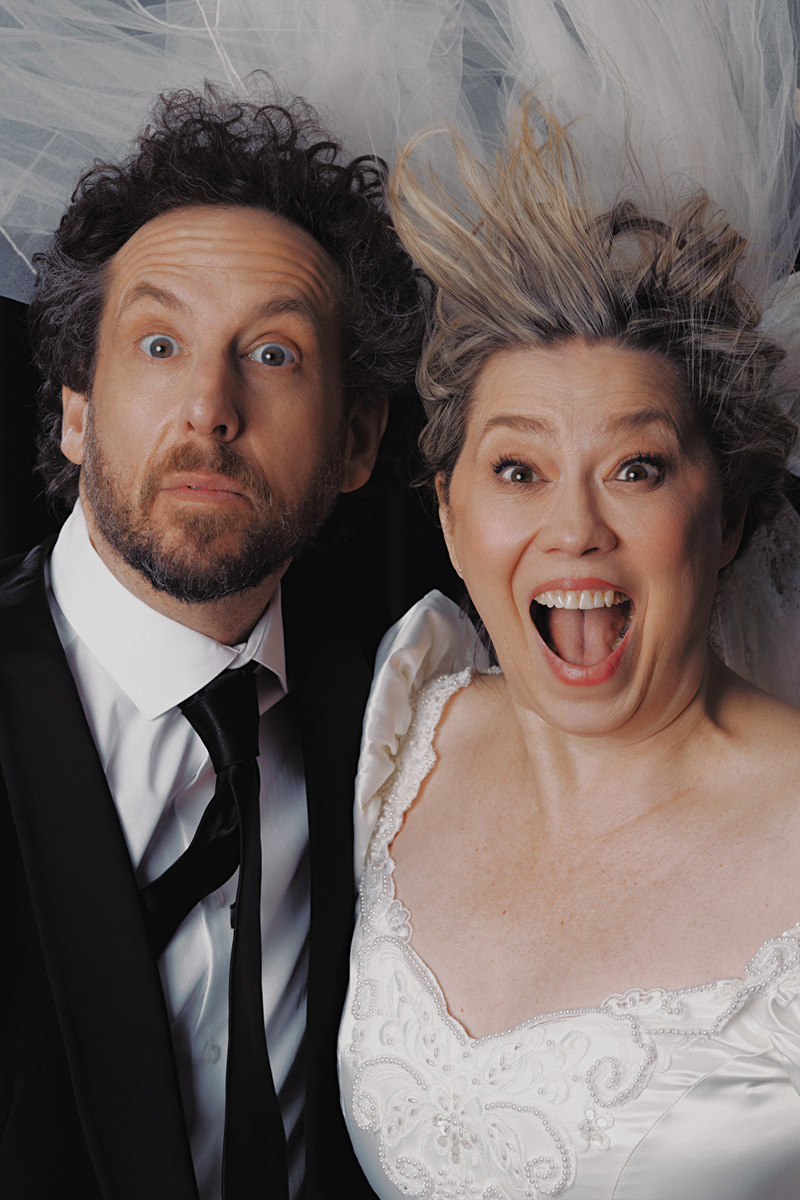
Who's the Dupe?

Play · 1779

Who's the Dupe? is a 1779 comedy play by the British writer Hannah Cowley. A two-act farcical afterpiece, it premiered at the Theatre Royal, Drury Lane in London on 10 April 1779. The original cast included William Parsons as Doiley, James Aickin as Sandford, John Palmer as Granger, Thomas King as Gradus, Priscilla Brereton as Elizabeth and Mary Ann Wrighten as Charlotte. The Irish premiere was at the Smock Alley Theatre in Dublin on 8 February 1791. Cowley had enjoyed success with her debut play The Runaway and followed it with the tragedy Albina and this farce. It became one of her most popular works.

Showing 7,969–8,088 of 8,285 shows

Load more shows