The Queen's Handbag
Villains from children's literature, angry at missing the palace party, try to spoil it for the invited characters. One steals the Queen's handbag, threatening her ability to deliver the closing speech.
8284 shows
Clear filtersVillains from children's literature, angry at missing the palace party, try to spoil it for the invited characters. One steals the Queen's handbag, threatening her ability to deliver the closing speech.
The play is set in the private office of the King, on the second floor of the palace, in the capital city of the Kingdom of Merland, located in the North Sea somewhere between Scotland and Denmark. Act I (The King's private office. Afternoon) Frederick Granton turns away visitors announced by Phipps; the King is out for a walk. The Queen also is absent, preparing for her departure to America that day on a fund-raising trip. When Princess Anne comes seeking her father, Granton is delighted. The King arrives, followed by the Queen, who instructs him to wear a hussar uniform for her departure. Northrup comes in with Lord Birten, who has brought a penguin statuette for the King's collection, provoking a scolding from the Queen about the royal hobby. Northrup complains that execution papers for various political prisoners have not been signed, but is stymied by the King's obfuscation. Lord Birten has brought news for the Queen: the marriage alliance with Greck is agreed, the Princess Anne to marry Prince William. The Princess is dismayed, and so secretly is Granton, but the Queen is delighted. When alone with Phipps, the King suggests a game of checkers. The footman agrees but warns his monarch he is dubious about his sportsmanship. When the Queen returns, the King tries to hide the board, but she seizes it and berates him for playing a foolish game. After the King changes to the hussar uniform, they set off for the Queen's departure ceremony. (Curtain) Act II (Same as Act I. Evening, two months later.) The Queen is still in America. Northrup has provoked the opposition into rioting over unemployment. He then uses the Army to suppress the protesters, hoping they will rebel. They oblige, but prove stronger than expected, forcing their way to the palace. Northrup and Birten are alarmed by the romance between Granton and Princess Anne, as it will upset the planned wedding with Prince William and alliance with the Empire of Greck. Princess Anne pleads with her father not to force this wedding upon her. He tries to console her but is unsure he can do anything about the wedding. Northrup now threatens to turn the Navy's big guns against the revolt, but the King countermands this. Instead he summons Dr. Fellman and Laker to the palace with Major Blent as an escort. Under flag of truce, they meet and a ceasefire is agreed. Dr. Fellman explains their main concern is unemployment. Upon assurance the Queen's fund-raising will help alleviate the problem, they have their forces stand down. (Curtain) Act III (Same as Act I. Morning, a week later.) Prince William and Princess Anne meet for the first time; she finds him repellent. When Granton intrudes, the Prince is amused at their obvious relationship and angers them both by saying he will not object after the wedding. The Queen, returned from America, is upset with the King for not having backed Northrup, and for allowing Grafton to woo Anne. The King speaks of their own wedding; he realizes she loved someone else when they married. The King orders Phipps to summon Northrup, Birten, Dr. Fellman, and Laker. The King stuns everyone by announcing he has read the constitution, and will exercise his powers under it. He tells Northrup that Parliament is immediately dissolved. Northrup is irate and resigns, which the King accepts. The King then asks Dr. Fellman to form a new government, mollifying Laker who guarantees no interference with the royal wedding. The Queen sets off for the cathedral where Prince William waits. When all have left, the King has Major Blent bring in Granton and Princess Anne. As head of the national church, the King officiates over their quick wedding. Then as head of state, he orders Granton and his wife deported. Major Blent will escort them aboard a ship departing within the hour and return on the pilot boat. The King sets out for the cathedral, where all expect him to bring the Princess. He apprehensively tells Phipps he will return shortly. (Curtain)
The Racket is a 1927 Broadway three-act drama written by Bartlett Cormack and produced by Alexander McKaig. It ran for 119 performances from November 22, 1927, to March 1928 at the Ambassador Theatre. Edward G. Robinson had a major role as a snarling gangster, which led to his being cast in similar film roles. It was included in Burns Mantle's The Best Plays of 1927-1928. It was adapted as a silent feature film also titled The Racket in 1928 and the 1951 film noir remake The Racket, starring Robert Mitchum.
The Rage is a 1794 comedy play by the British writer Frederick Reynolds. It premiered at the Theatre Royal, Covent Garden in London on 23 October 1794. The original cast included William Thomas Lewis as Gingham, Alexander Pope as Darnley, James Middleton as Sir George Gauntlet, John Fawcett as Honourable Mr Savage, John Quick as Sir Paul Perpetual, Joseph Shepherd Munden as Flush, George Davenport as Ready, John Bernard as Signor Cygnet, Rosemond Mountain as Clara Sedley, Isabella Mattocks as Lady Sarah Savage and Jane Pope as Mrs Darnley. The Irish premiere took place at the Crow Street Theatre in Dublin on 16 January 1795.
In Edwardian England, house painters face poverty and job insecurity as their bosses cut wages and exploit their labor. Socialist Owen explains the system's inequities and is tasked with decorating a Moorish room; after a wage cut divides the workers, the play closes with a call for workers to unite.
After their father disappears, three children move with their mother to the countryside. Their friendship with a railway porter and their fascination with passing trains lead them into adventures while they try to understand what happened to their family.
Set in a drought-ridden Western rural town in Depression-era America, the play tells the story of a pivotal hot summer day in the life of spinsterish Lizzie Curry. She keeps house for her father and two brothers on the family cattle ranch. She has just returned from a trip to visit pseudo-cousins (all male), which was undertaken with the failed expectation that she would find a husband. As their farm languishes under the devastating drought, Lizzie's family worries more about her marriage prospects than about their dying cattle. A charming confidence trickster named Starbuck arrives and promises to bring rain in exchange for $100. His arrival sets off a series of events that enable Lizzie to see herself in a new light.
A hapless man becomes guardian to his uncle's adopted daughter and eventually wins her love.
The Rambling Justice; Or, The Jealous Husbands is a 1678 comedy play by the English writer John Leanerd. It was first staged at the Theatre Royal, Drury Lane by the King's Company. The original Drury Lane cast included Martin Powell as Sir Arthur Twilight, John Wiltshire as Sir Generall Amorous, Thomas Disney as Contentious Surly, Carey Perin as Sir Geoffrey Jolt, John Coysh as Bramble and Sarah Cooke as Flora.
In 1850s California, Ramona, a mixed-race orphan adopted by Señora Moreno, falls in love with Alessandro, a Native American. They flee together, face dispossession and hardship, and after Alessandro is killed, Ramona returns and marries Moreno's son.
A petty thief seeking a room at a rural inn is mistaken by the town's leaders for a fugitive Nazi war criminal. They flatter him and help conceal their own wartime crimes, while the thief accepts their gifts until his real identity is revealed and he is arrested.
The Rat is a play by the British writers Ivor Novello and Constance Collier which first premiered in 1924. It ran for 282 performances in its original West End run, initially at the Prince of Wales Theatre before transferring to the Garrick Theatre. Novello himself starred as the title character, an Apache dancer who frequents Paris nightclubs. The cast also included James Lindsay and Isabel Jeans. On Broadway it enjoyed a run of 126 performances at the Colonial Theatre. The play's success led to a film adaptation The Rat, released the following year by Gainsborough Pictures with Novello again in the title role. This in turn was followed by two sequels The Triumph of the Rat and The Return of the Rat.
Novelist Sheila marries aspiring playwright Keld despite a friend’s warning that two egotistical writers will struggle to share a life. As Sheila’s writing stalls and Keld has an affair with an actress, she leaves him; later, pregnant and frightened, she considers returning despite no longer loving him.
In a Berlin tenement, Jette John steals and substitutes infants in an attempt to keep a baby as her own, while conflicts among a former theatre manager's family and aspiring actors unfold nearby. The thefts and deceptions are exposed, ending in Jette's suicide.
Two lovers arrive at an empty flat for drinks and discover they have been drawn into a murder plot.
Set in the Appalachian Mountains between World War I and World War II, the two-act drama follows the life and death of writer Byron Herbert Reece.
Two theatre critics, Moon and Birdboot, review a country-house murder mystery. As they watch, their own jealousies and desires mirror the drama; when Moon goes onstage to answer a ringing telephone and Birdboot is mistaken for a character, the critics become trapped in the play-within-the-play. The cast and critics then exchange roles, and the murder mystery's identities converge with their own.
Once admired and charismatic, Nikolai Ivanov has become overwhelmed and depressed. Those around him offer explanations he cannot accept, in a compact comic treatment of despair and mutual misunderstanding.
Setting: London in 1982 In the first scene, Max accuses his distant and travelling wife, Charlotte, of adultery. Upset, she leaves. In the second scene, Charlotte's personality appears to have changed and she is now married to a playwright named Henry. The audience is gradually led to realize that Charlotte is an actress, and the first scene was her performance in a play that Henry, her husband, wrote. In the play, the character of Max is played by the husband of a married couple with whom Henry and Charlotte are friends, also named Max. The scene reveals that Charlotte is unhappy with the play. She believes that Henry gives limited development to the female lead in order to show off his wit through the male lead's lines. Max and his wife Annie drop by for a social visit with Charlotte and Henry. Without the benefit of Henry's dialogue, the real-life Max seems superficial. By contrast, his wife Annie is, according to the script, "very much like the woman Charlotte has ceased to be." Annie is a devoted activist on behalf of an imprisoned soldier, Brodie, who has been arrested for setting fire to the wreath on the Tomb of the Unknown Warrior. Henry mocks her as a sentimental do-gooder, giving offense to Max. But when Annie and Henry are left alone, the scene reveals that their fight was also a performance: they are having an affair, and she agrees to meet him later on the pretext of visiting Brodie in prison. Max discovers the affair, and Annie leaves him to be with Henry. Soon, Henry is reduced to writing television scripts in order to pay alimony to Charlotte. He struggles to write a play about his love for Annie, but finds it difficult to find the right language to express sincere emotion: he can vocalize his feelings but has difficulty expressing them honestly in writing. Two years later, Henry's play about Annie remains unwritten. Annie asks him to ghost-write a play by the prisoner Brodie, whom she continues to visit. Brodie's anarchist politics, anti-intellectualism, and lack of writing ability are the antithesis of everything Henry values. Annie discounts Henry's distaste and states that what matters is the passion behind the writing. Henry defends the importance of beauty in language and skill in writing using an analogy with a cricket bat: good writing is like hitting a ball with a cricket bat (i.e. something that has been carefully designed and crafted to hit balls in the best manner possible); bad writing is like hitting it with a plank of wood (i.e., something that has the same composition as a cricket bat, and bears it some resemblance, but is ultimately random and inferior). Henry accuses Annie of being attracted to Brodie, and instantly realizes his mistake. When Annie is cast in a production of Tis Pity She's a Whore in Glasgow, she must be away from Henry for some time, and Henry visits Charlotte and their daughter Debbie. The teenage Debbie declares that monogamy is a thing of the past, a form of colonization. Henry gently cautions the girl against his own vice of making clever phrases for their own sake, but he is shaken by her cynicism. For her part, Charlotte breezily admits to multiple affairs during their marriage, and tells him that his affair with Annie only caused trouble because he treated it romantically instead of as a source of fun. Henry returns home in a frenzy of jealousy and ransacks his and Annie's apartment searching for evidence of infidelity. His confrontation with Annie echoes the scene from the play he wrote that was performed in the first act of The Real Thing, but Annie has more to say than his imaginary wife did. She admits that she is having an emotional affair with her young co-star Billy, though she claims it is not a physical one; but she refuses to either give Billy up or leave Henry: both romances have a moral claim on her, and Henry must accept this. With pain, he does. Her relationship with Billy seems to come to an end, but there remains a notable distance between her and Henry. Adding strain to the already difficult relationship between Henry and Annie, Brodie is released from prison and visits them. He turns out to be a prize oaf, with all of Henry's arrogance and elitism, but none of the playwright's eloquence. He is highly critical of Henry's ghost work on his television play, and makes several crass comments about Annie. It is revealed that Annie's crusade to free Brodie had not been based on a belief in the righteousness of his cause but rather on a sense of guilt over Brodie's intention in committing his crime, which was to impress her. In the end, Annie throws Brodie out of the house, and peace between her and Henry is restored. The play ends with a phone call from Max, who tells Henry that he is newly engaged.
Young playwright Claude writes his parents into his first play. They reject his portrayal as inaccurate, while the drama shifts between their real lives and Claude's imagined version of them.
The Realistic Joneses is a play by Will Eno. It opened on Broadway in 2014 after premiering in 2012 at the Yale Repertory Theater.
In a theatre lobby before a politically scandalous play, spectators crowd in to witness the supposed indecency while pretending to condemn it. Two men repeatedly attend to moralize, and two husbands try to hide from each other as each escorts the other's wife; tangled deceptions bring their hypocrisy to light.
Act 1 Bonny, Ward and Troup have just arrived after an arduous journey from London and are disappointed to find that Stanley has gone on ahead. They discover from Major Barttelot that they are to wait for Tippu Tib to bring 600 more porters before they can follow Stanley. The porters already in the camp, Zanzibaris and Soudanese, are diseased and many of them have been flogged for thieving. Ward and Troup are furious when Barttelot refuses to release provisions promised to them in London, on the basis that Stanley has left no explicit orders for them to be released. Later, Barttelot asks Bonny if he can recommend him as unfit for service as he hasn't been sleeping, mistakenly thinking that Bonny is a doctor. Bonny informs Barttelot that he is only a medical orderly, and couldn't make such a recommendation, but is fully in support of the major carrying on his duties. That evening, a goat is cooked especially to mark the arrival of the three officers. Barttelot, under the suggestion of Jameson, offers to give them half their provisions then, and the other half when they meet up with Stanley. The officers agree. Act 2 Six months later. Ward is outside performing a flogging. Jameson is due back from a trip up the river to investigate rumours the Tippu Tib is nearby. Troup complains to Barttelot that Jameson is always absent during floggings and has always voted against them, on the grounds that enough of the porters are dying from disease already. Ward returns and says he is coming round to Jameson's point of view, and suggests they should try not flogging for a while. Troup agrees, but Bartellot is adamant that they should continue with the floggings, from which many people now have died. Jameson returns with no confirmation of Tippu Tib being near, but he has seen the remains of a cannibal feast. Troup demands that they talk about what they are going to do, arguing that Stanley couldn't possibly want them to wait indefinitely, particularly as medical supplies are running low. Barttelot insists that they must wait, as they have enough brass rods to pay the porters for another six months. Ward, who has been suffering from a fever, gets quickly worse and asks that Jameson stay next to him as he tries to sleep. A few days later, on Christmas Day, Ward is feeling better, and the officers all enjoy brandy and cigars. Act 3 Six months later. A native woman is tied by the neck to a post, suspected of stealing morphine from the supplies tent while the guards were sleeping on duty. Bonny observes her while Ward makes a sculpture of her. Ward tells Bonny that he knows it was him who stole the morphine to help him sleep. Troup comes in, suffering terribly from a fever. Barttelot enters with two rotting fish, provided by the native woman's husband to buy her back, so he sets her free. Troup asks Barttelot for some quinine from Stanley's supplies, but Barttelot refuses. Jameson returns from another sortie to report that he has met Tippu Tib, who has promised he will be there in a month with the 600 porters, bringing great relief all round. Jameson then gives Troup his quinine. Ward suspects that Jameson is lying and when they are alone he quizzes him about the trip. Jameson admits that while he did meet Tippu Tib, but it was obvious that the promise he gave was a lie. Later that night, Barttelot confesses to Jameson that the day before he had attacked the native woman who beats drums every night in the camp and bitten her in the neck, then afterwards, with blood round his mouth, beaten his servant boy, John Henry. Bonny comes in and looks at Jameson's sketches from his trip. One sketch shows a young native girl tied to a tree. Jameson explains that, as he had never seen a cannibal feast, under Tippu Tib's suggestion he had bought the girl so that she could be given to a cannibalistic tribe, and he could sketch her being killed and eaten. The other men are shocked, and Jameson realises with horror what he has done. Barttelot is furious that, as Jameson had given copies of the sketches to Tippu Tib, the story will get out and his reputation will be ruined. In his rage Barttelot attacks John Henry and kills him, then runs outside to the beating drum where he is shot and killed by the porters. In the final scene of the play, Stanley has arrived, but only Bonny is left in the camp. Jameson has died of illness at a mission house, Ward has gone missing and Troup is on his way back to England.
In Shrewsbury, recruiting officers Captain Plume and Captain Brazen pursue military recruits and romantic matches. Sylvia disguises herself as a man to enter the town, becoming entangled in a recruiting contest and legal proceedings, while a fortune-telling deception and mistaken identities complicate the courtships of Melinda, Worthy, and Brazen.
In a Dallas hotel lounge soon after President Kennedy’s assassination, a confined businessman's wife seeks escape with King Del Rey, a former mariachi leader with a brain tumor. Her affair has exposed her to a conspiracy involving the assassination. King dies trying to help her, and she is seized by a gang as the world around them collapses.
The Reformation is a 1673 comedy play by Joseph Arrowsmith. Originally staged by the Duke's Company, it premiered at the Lincoln's Inn Fields Theatre in London. The cast included Samuel Sandford as Camillo, Anthony Leigh as Pacheco, Cave Underhill as Tutor, Henry Harris as Antonio, Philip Cademan as Pedro, John Crosby as Leandro, Matthew Medbourne as Lysander, Mary Betterton as Juliana, Margaret Osborne as Lelia and Mary Lee as AEmilia.
Two young woman both have men they wish to marry, but their father has given first refusal to a fop. Together they try and work their way around the obstacle.
The Regent is a 1788 tragedy by the British author Bertie Greatheed. It premiered at the Theatre Royal, Drury Lane in London on 29 March 1788. The original cast included Sarah Siddons as Dianora, John Philip Kemble as Manuel, Richard Wroughton as Gomez, James Aickin as Solerno, John Hayman Packer as Gerbin, Robert Benson as Pedro, William Bates as Diego, Richard Wilson as Servant, John Phillimore as Banditti and Sarah Ward as Paula. The Irish premiere took place at the Crow Street Theatre in Dublin on 5 July 1788. Although it was not a great success, it was nonetheless published and a German translation was issued in 1790.
Gaston de Chanley, chosen to assassinate the Regent of France, travels to say farewell to Hélène, unaware that she is the Regent’s secret daughter. Disguises and counterplots engineered by Dubois put Gaston’s mission and love in conflict, until the Regent offers a pardon.
Playwright Bayes presents a rehearsal of an incoherent heroic drama assembled from borrowed theatrical passages. As he gives absurd directions and defends the bombast, Johnson and Smith expose its gaps, inflated speeches, arbitrary dances, and implausible action.
In this sequel to Love's Last Shift, Loveless, previously reformed by his wife Amanda, succumbs to a new affair with the vivacious widow Berinthia, while Amanda resists the persistent Worthy. In a parallel plot, young Tom tricks his elder brother Lord Foppington out of his intended bride and her dowry.
During London's debutante season, Sheila Broadbent's anxiety about scandal leads her to mistake two suitors named David and set up her reluctant daughter Jane with the wrong one.
The Reluctant Peer is a 1964 comedy play by the British writer William Douglas Home. It was the latest in his series of political farces and appeared at the Duchess Theatre in London's West End where it ran between 14 January 1964 and 6 March 1965. The cast included Sybil Thorndyke, Frank Pettingell, Helen Horton, Imogen Hassall, Naunton Wayne and Viola Lyel, with Athene Seyler and Peter Graves later coming in as replacements. The plotline of an aristocrat who renounces his title imitates the real-life 1963 renunciation of his title by the author's brother Alec Douglas-Home. It includes a number of characters who had appeared in his earlier plays including The Chiltern Hundreds.
In a Melbourne police station, new constable Ross and chauvinistic Sergeant Simmonds respond to Fiona's report of domestic abuse. Their attempt to help remove her furniture escalates into violence and a cover-up after Kenny dies, exposing the abuse of authority and social indifference.
In Tunis, Venetian gentleman Vitelli seeks his captured sister Paulina, held in the viceroy’s harem. A Turkish princess falls in love with Vitelli, while the renegade pirate Grimaldi regrets his past; the interlocking conversions, captivity and escape plots reunite the family and send them back to Italy.
Journalist Meg Lehmann cons her way into an interview with celebrated writer Ben Bran. Their conversation becomes a contest in which each tries to manipulate the other.
The Reprisal; or, The Tars of Old England is a 1757 comedy play by the British writer Tobias Smollett. An afterpiece, it was first performed at the Theatre Royal, Drury Lane in London and produced by David Garrick. The cast included Howard Usher as Heartley, John Palmer as Brush, Richard Yates as Oclabber, Henry Woodward as Block, Maria Macklin as Harriet. It marked Smollett's last attempt to write for the stage, as several projects had fallen through and his 1749 tragedy The Regicide remained published but unperformed. It was revived in 1784 at the Haymarket.
Captured aboard a French frigate off Normandy, the English lovers Heartly and Harriet must deal with a commander who plunders his prisoners and courts Harriet. Heartly passes himself off as her brother, while the ship’s Irish and Scottish officers offer possible allies.
At Mr. Bonsor’s villa, Nina (appearing as Mrs. Freshville) returns after her Paris relationship with Paul Doubleday. Paul has been isolated by his stepmother and co-guardian as a suspected reprobate. Blanche Amber objects to his treatment; she accepts his proposal, freeing him from isolation, while Captain Chanter pursues Mrs. Doubleday. Paul proves mature and responsible.
In 1930s Chicago, mobster Arturo Ui seeks control of the cauliflower racket by eliminating competition and intimidating its leaders. Brecht's parable satirizes Hitler's rise and the establishment of Nazi power through parallels between the fictional gangsters and historical figures.
Lizzie, a white prostitute in the American South, refuses to falsely accuse a Black man who defended her from white attackers on a train. A senator and his son pressure her to sign a false statement to protect their relative, while a lynch mob searches for the accused man.
The Rest is Silence is a 1944 historical play by the British writer Harold Purcell. It is based on the 1857 trial of Madeleine Smith accused of poisoning a former lover which concluded in a not proven verdict. The play premiered at the Theatre Royal, Nottingham on 4 April 1944 before transferring to the Prince of Wales Theatre in London's West End where it ran for 59 performances from 20 April to 3 June. The London cast featured Ann Todd as Madeleine Smith, Michael Whittaker, Peter Jones, Nicholas Hannen, Martin Walker, Hugh Miller, Karel Stepanek, Tristan Rawson, Sheila Burrell, Lesley Osmond, Lucy Griffiths and Renee Kelly. It was presented by George Black and choreographed by Wendy Toye. The rights to the film were acquired by the Rank Organisation. However, when it came to the 1950 film Madeleine, also starring Todd, director David Lean chose to discard the play and base the screenplay entirely from reporting of the trial.
Three men identified as the Greek or Egyptian, the Hebrew and the Syrian debate after being among the first to meet the resurrected Christ. Outside, followers of Dionysus perform frenzied rituals and threaten to burst into the house; the debate leaves the Greek and Hebrew unable to absorb the collapse of their worldviews, while the Syrian embraces the consequences.
The end of a three-decade marriage and its emotional aftermath are framed by a title drawn from Napoleon's costly invasion and retreat from Moscow.
Two small-time criminals take a late-night train from Perth to Fremantle and menace its passengers. As the journey becomes a tense contest of peer pressure, anxiety and suppressed violence, the boundary between aggressor and victim begins to blur.
After leaving university, Philomusus and Studioso struggle to earn a living, taking humble jobs and seeking patrons while finding their education has little financial value. Their former fellow students face similar failures.
Philomusus and Studioso seek work after their studies, while Ingenioso satirizes writers and patrons. The play also follows the sale of a church position, exposing the practice of simony.
Presumed killed in the Boer War, burglar and cricketer A. J. Raffles returns to London and reunites with Bunny Manders. With Lord Alfred Douglas, they plan to rob the Marquess of Queensberry, whose treatment of Oscar Wilde motivates their revenge; an unexpected theft of the Prince of Wales’s letters complicates the scheme.
Eddie, an Elvis Presley fan who is depressed and planning suicide, waits at a Witbank street corner where he remembers his youth and a terrifying incident. Hearing Elvis on the radio revives him; he realizes Elvis once saved his life and finds hope for the future.
The Return of Sherlock Holmes is a play written by J. E. Harold Terry and Arthur Rose and originally starring Eille Norwood as Sherlock Holmes. The play premiered at Princes Theatre on October 9, 1923. Based on the work of Sir Arthur Conan Doyle, the play incorporated aspects of four stories: "The Adventure of the Empty House", "The Adventure of Charles Augustus Milverton", "The Disappearance of Lady Frances Carfax", and "The Red-Headed League". Actor Eille Norwood had previously portrayed Holmes in the Stoll film series from 1921 to 1923.
Djabal returns to an oppressed Druse community intent on avenging his murdered family and leading his people back to Lebanon. To unite them he has encouraged the belief that he is the divine Hakeem. As the revolt approaches, his desire for liberation conflicts with his awareness that he has won their faith through deception.
The Return of the Soldier is a 1928 play by the British writer John Van Druten. It is an adaptation of Rebecca West's 1918 novel of the same title about a shell shocked officer returning from the First World War with amnesia who is no longer in love with his wife. It was staged at the Playhouse Theatre in the West End, running for 46 performances. The cast included Cyril Raymond, Aubrey Mather, Eliot Makeham, Mary Clare and Grizelda Hervey.
Corina, a courtesan drawn into a relationship with Wellman, turns toward revenge while resisting the control of Mrs Dunwell, the older bawd who encouraged her involvement. Their conflict adds a darker account of sexual exploitation to the comedy of courtship and deception.
The Revenge is a 1721 tragedy by the British writer Edward Young, set in a mostly undefined region of 16th-century Africa under Spanish rule. It concerns the character of Zanga, an African prince who becomes cruel after his experiences in slavery. Although initially it did not enjoy the same success as his previous play Busiris, King of Egypt, it later became a much-revived work during the eighteenth century particularly popular because of the Othello-like role of the Moorish character Zanga. John Philip Kemble revived the work briefly in 1798 before Edmund Kean in 1815 did so with great success and it became part of his repertoire. The original Drury Lane cast included Barton Booth as Don Alonzo, Robert Wilks as Don Carlos, John Thurmond as Don Alverez, John Mills as Zanga, Mary Porter as Leonora and Christiana Horton as Isabella. The work was dedicated to Young's patron the Duke of Wharton. The character of Zanga was portrayed by the African-American actor Ira Aldridge in 1848, and received favourable reviews, although critics were less kind to the play itself. For example, the Era said that "As Zanga he is exceedingly fine, looking the character of the Moor to perfection and acting it with great power and correctness. For the tragedy itself we have little regard."
Two neighboring castle owners, Cześnik and Rejent, feud over a dividing wall while their children, Klara and Wacław, secretly love each other. After rival marriage plans and comic confrontations, the young couple marry, and the older men reconcile.
After Bussy’s death, his brother Clermont follows the Duke of Guise and embraces Christian Stoicism. Tamyra urges him to avenge Bussy by killing her husband Montsurry; when Guise is assassinated and Clermont hesitates, Bussy’s ghost tells him divine justice requires Montsurry’s punishment, which Clermont finally carries out before taking his own life.
The plot focuses on two disparate characters. Henry Bell is a 42-year-old executive, divorced and recently fired from his job, and Karen Knightly is 25 years old, wealthy, very eccentric, and recently abandoned by her lover Anthony Staxton-Billing, who opted to return to his wife Imogen. Both are intent on committing suicide by leaping from the Albert Bridge in London. When neither succeeds, they strike a bargain whereby each agrees to exact revenge on behalf of the other. Karen finds employment at Lembridge Tennit, the conglomerate for which Henry worked, and in short order two of her bosses meet violent deaths and a third has a nervous breakdown. Henry, meanwhile, is finding it difficult to keep his end of the bargain, since he has fallen in love with Imogen. Instead of planning her demise, he begins an affair with the beguiling woman. After accidentally killing her husband, Henry finds himself torn between marrying her and fulfilling his promise to Karen by disposing of her. In the end, love prevails, and a thwarted Karen hurls herself into the Thames.
Vindice seeks revenge on the Duke for poisoning his fiancée and uses disguise to expose corruption at court. He engineers the Duke’s death with a poisoned skull, then joins his brother in killing the newly installed Duke and his supporters. After Vindice confesses their crimes, Lord Antonio condemns the brothers to execution.
The Revolution of Sweden is a 1706 tragedy by the British writer Catharine Cockburn. The original Haymarket cast included Barton Booth as Gustavus, Thomas Betterton as Arwide, John Corey as Erici, Benjamin Husband as Viceroy, John Bowman as Archbishop and Elizabeth Barry as Constanta.
Seven women on the fictional Wasaychigan Hill reserve hope to attend the world's biggest bingo and raise money for the trip. Their journey brings family rivalries, painful histories and illness into the open; Marie-Adele dies at the bingo, while the others return home with life mostly unchanged.
The Richmond Heiress is a 1693 comedy play by the English writer Thomas D'Urfey. It was staged by the United Company at the Drury Lane Theatre. The original cast included John Freeman as Charles Romance, George Bright as Sir Quibble Quere, George Powell as Tom Romance, Samuel Sandford as Doctor Guaiacum, Joseph Williams as Frederick, John Bowman as Rice ap Shinken, Cave Underhill as Dick Stockjobb, John Hodgson as Hotspur, Thomas Doggett as Quickwit, William Bowen as Cummington, Anne Bracegirdle as Fulvia, Elizabeth Barry as Sophronia, Frances Maria Knight as Madame Squeamish, Elizabeth Bowman as Mrs Stockjobb and Elinor Leigh as Marmalette. Henry Purcell composed incidental music for the play.
After a car crash, bigamist insurance agent Lyman Felt faces his two wives at his hospital bedside and defends the parallel family lives he has kept in New York and Elmira. Flashbacks reveal tensions and compromises within both households as each character confronts hypocrisy.
The Right Honourable Gentleman is a dramatization of the rather complicated real-life Crawford scandal of Victorian England. Sir Charles Dilke, an important Liberal member of Parliament, is seen as a possible successor to Gladstone as Prime Minister. The circumstances leading to his destruction, his private affairs as contrasted with those of the Empire, form the crux of the play. The play introduce Dilke in his finest hour, an obvious choice for the new cabinet. But a certain Mr. Crawford sues his wife for divorce, naming Sir Charles as an involved party, based on his wife's confession that she had been having an affair with Sir Charles for some time. Mrs. Crawford provides dates and facts and is quite credible, while Sir Charles offers avowals of complete innocence, not just publicly but solemnly sworn to in private to his fiancee. And in fact Mrs. Crawford is lying, and instead is madly in love and carrying on with a certain Captain Foster, which may have been a reason for inventing her charges against the unfortunate Sir Charles. But Sir Charles had been conducting a long-term affair with Mrs. Crawford's mother, which, when it comes out, destroys his reputation and career.
A stage expansion of Bryan Wade’s radio comedy about a reluctant groom reconsidering his choices on his wedding day.
The Rimers of Eldritch is a play by Lanford Wilson. The play is set in the mid-20th century in Eldritch, Missouri, a decaying Bible Belt town that once was a prosperous coal mining community. The plot focuses on the murder of the aging local hermit, Skelly Mannor, by a woman, Nelly Windrod, who mistakenly thought he was committing rape when he was actually trying to prevent a rape from occurring.
The first half reconstructs how the 2011 England riots spread through accounts from rioters, police officers, onlookers, and residents, including a man whose home was burned. The second half uses interviews with politicians, police, teachers, community leaders, and others to examine the causes and consequences.
The Rise and Fall of Little Voice is a 1992 play written by English dramatist Jim Cartwright.
A preserved body known as Lindow Man or Pete Marsh is found in 1984; one act recounts his life in Roman Britain, and the next has him discovered and briefly revived in 2000. The play contrasts Celtic nature religion, Christian belief and genetic engineering in the human search for immortality.
A policeman guarding a quay in search of an escaped prisoner keeps company with a ballad singer. The singer is the very man the police are hunting.
After betraying his employer for profit, Gorge Mastromas becomes a successful businessman. He manipulates and marries Louisa by fabricating a history of abuse, publishes the lie as a memoir, and kills his brother when he threatens to expose him.
Businessman Gaetano Proclo takes refuge from his homicidal mobster brother-in-law in a Manhattan gay bathhouse, where he encounters eccentric patrons and performer Googie Gomez. His wife arrives and misreads the situation, compounding the farcical misunderstandings.
The Rival Fools is a 1709 comedy play by the British writer Colley Cibber. It drew inspiration from the earlier play Wit at Several Weapons. Despite Cibber's previous record of turning out hits, it was not a great success. The original Drury Lane cast featured William Pinkethman as Sir Oliver Outwit, Robert Wilks as Young Outwit, Barton Booth as Cunningham, William Bullock as Sir Gregory Goose, Colley Cibber as Samuel Simpson, George Pack as Sir Threadbare, Theophilus Keene as Priscian, Anne Oldfield as Lucinda, Mary Porter as Mirabel and Elizabeth Willis as Governess.
The Rival Ladies is a 1664 tragicomedy by the English writer John Dryden. It was originally performed by the King's Company at the Theatre Royal then in Brydges Street. Dryden dedicated the published version to the Irish politician and playwright the Earl of Orrery.
The Rival Modes is a 1727 comedy play by the British writer James Moore Smythe. The original Drury Lane cast included Colley Cibber as the Earl of Late Airs, Theophilus Cibber as Lord Toupet, John Harper as Sir Oliver Bruin, Robert Wilks as Ballamine, John Mills as Sagely, Henry Norris as Henry, Joe Miller as George, Anne Oldfield as Amoret, Mary Porter as Melissa and Christiana Horton as Clary.
The Rival Queens, or the Death of Alexander the Great is a Restoration tragedy written by Nathaniel Lee. Regarded as one of his best tragedies, the play revolves around Alexander the Great and his two wives, Roxana and Statira, whose competition for his affections ends in tragedy. The play was largely influenced by French dramatist La Calprenède's historic romance Cassandre.
The Rival Sisters: or, The Violence of Love is a 1695 tragedy by the English writer Robert Gould. Gould's previous attempt to have a tragedy Innocence Distress'd staged by the United Company was blocked and by the time his second work was performed he had given up writing.
Ariadne has sacrificed everything to save Theseus for love, but he turns to her sister Phaedra. When the two leave together, Ariadne’s devotion gives way to despair and she takes her own life.
The Rival Widows, or the Fair Libertine is a 1735 comedy play by the British writer Elizabeth Cooper. The plot is a re-gendered mashup of two popular eighteenth-century genres: the libertine comedy (in the tradition of William Wycherley and George Farquhar) and the comedy of sentiment (man-of-feeling plays in the tradition of Colley Cibber and Sir Richard Steele). The beautiful and brilliant libertine widow Lady Bellair battles the hypocritical friend and rival Lady Lurcher for the attentions of man of feeling Freelove. Bellair loves Freelove, but is exasperated by his rhetoric of feeling and his lack of interest in using witty exchanges or clever plotting to try to seduce her and win her love. In response, she creates various strategems to essentially manipulate him into tricking her into agreeing never to love him, knowing that she will desperately want anything that is forbidden to her. Her character is well summarized early in the play with her own comment that "my pleasures are my principles" and Freelove's summary of her character: "she has wit enough to supply the present dearth of it on the stage, and good nature to make that wit agreeable, even at court. In short, she's gay without levity, libertine without scandal, generous without design, and well-bred without affectation" (1.6). Her comments on marriage convey her recognition that power is at the core of all pleasure for a libertine: "why would you exchange all these pretty things for a husband? Men only buy their slaves, but women their masters: --and I hate fetters, though of gold... I had rather have twenty lovers, than be troubled with another [husband] for all that; there's some joy in having the man you doat on for your slave, but none for your Lord; I can now dispose of my frowns and smiles like an absolute Princess, to whom I please; can humble, exalt, undo, create again, to keep my subjects in obedience and exercise my power... Tis always my way to strip Nature stark naked and view her without the disguise of custom and Hypocrisy--I think freely and speak openly, and the same honest frankness that obliges me to speak what I think, will oblige me to think what is right" (2.2). Young Modern provides a point of comic ridiculousness as would-be rival for Lady Bellair's affections and victim of her witty performances of power. When Young Modern seeks to seduce Bellair, she replies that she cannot risk her reputation: if she is to agree to sleep with him, he must change the world's opinion of him from extravagant libertine of the old Restoration model to a puritan-style man of religious respectability. While Young Modern believes he is terribly witty and edgy in his role playing, he is rendered ridiculous in his failures, most clearly in his not-quite-correct clothing choices and in the fact that when he purchases the "godly library" that Lady Bellair demands, every book is wrong. At the end of the play, Young Modern is about to be disowned by his uncle Modern for being so ridiculous and failing to live up to his principles, but he is saved by Lady Bellair, who explains her game. The elder Modern so admires her libertine cleverness that he offers her all of Young Modern's inheritance, of which she accepts only the coach, silver, and furniture that the elder Modern ordered for himself at the start of the play. At the end of the play, Lady Bellair agrees to marry Freelove, reveals Lady Lurcher's moral hypocrisy, and—following the tradition of fifth-act reformations in later libertine comedies—makes a moral statement in the last hundred words of the play, in response to the generosity of Modern's gift: "These are the only actions I can envy, and such as I only would be rich and great to imitate-- Pleasure, I have ever thought to be the chiefest good, but that pleasure is to be found no where, but in obeying reason and virtue" (5.11). She reframes the site of pleasure while remaining committed to its pursuit. Tiffany Potter summarizes the play's reflections on Bellair's mediation of libertinism, sentiment, and gender: "The relative social liberty of widowhood allows Bellair to recreate herself not as a mere extension of a man, nor just as a woman appropriating the privilege of masculinity, but as a model for a revised eighteenth-century femininity that others might emulate... Both libertinism and sensibility win in this play, but only when they are genuine, original and passionate, and in this balance Cooper's Rival Widows looks outside rigid binaries to locate a femininity that integrates the competing value systems of eighteenth-century culture without sacrificing the individual woman's good-natured privilege, intelligence, or passion" (20). In addition to In a parallel plot that runs through the play, Young Modern's uncle Modern and Freelove's father Sir William Freelove debate the relationships among wealth, morality and gentlemanliness, with Modern arguing for intergenerational fiscal generosity and large allowances as long as a man "spends it like a gentleman" including "taverns, horses, gaming, women, any thing in reason... except avarice, cowardice and hypocrisy, I can forgive him anything" (1.1). Freelove argues for parsimony as a strategy for raising a good man, leaving the younger Freelove unable to marry for love because of financial constraint. These two characters speak in conflicting languages of economy in a way that reflects several contemporary debates, and with the presence in the play of an extended scene among several merchants and creditors, Rival Widows offers a site of useful reflection on the challenge for members of various economic ranks in navigating the evolving relationships among birth, wealth, and status. The original Covent Garden cast included John Hippisley as Sir William Freelove, Roger Bridgewater as Modern, Lacy Ryan as Freelove, Thomas Chapman as Young Modern, Anne Hallam as Lady Lurcher and Christiana Horton as Lady Bellair.
In Arcadia, Theocles and Philander become rivals for Heraclia’s affection. Their competition tests desire and virtue in a comedy that reshapes the setting, characters and action of The Two Noble Kinsmen.
The play is set in 18th-century Bath, a fashionable spa town. The plot is about two young lovers, Lydia and Jack. Lydia, who is addicted to popular novels, wants a purely romantic love affair. To court her, Jack pretends to be "Ensign Beverley", a poor junior army officer. Lydia is enthralled with the idea of eloping with a penniless soldier in spite of the objections of her guardian, Mrs Malaprop, a moralistic widow. Mrs Malaprop is the chief comic figure of the play, thanks to her continual misuse of words that sound like the words she intends to use, but mean something different (the term malapropism, current from the early 19th century was coined in reference to the character). Lydia has two other suitors, Bob Acres (a somewhat buffoonish country gentleman) and Sir Lucius O'Trigger, an impoverished and combative Irish baronet. Sir Lucius pays Lucy to carry love notes between him and Lydia (who uses the name "Delia"), but Lucy is deceiving him: "Delia" is in fact Mrs Malaprop. As the play opens, Sir Anthony arrives suddenly in Bath. He has arranged a marriage for Jack but Jack demurs, saying he is in love already. They quarrel violently but Jack soon learns through the gossip of Lucy and Fag that the marriage arranged by Sir Anthony is, in fact, with Lydia. He makes a great show of submission to his father, and is presented to Lydia with Mrs Malaprop's blessing. Jack confides to Lydia that he is only posing as Sir Anthony's son. She annoys Mrs Malaprop by loudly professing her eternal devotion to "Beverley" while rejecting "Jack Absolute". Jack's friend Faulkland is in love with Julia but he suffers from jealous suspicion; he constantly frets about her fidelity. Faulkland and Julia quarrel foolishly, making elaborate and high-flown speeches about true love that satirise the romantic dramas of the period. Bob Acres tells Sir Lucius that another man ("Beverley") is courting the lady of Acres's choice (Lydia, though Sir Lucius does not know this). Sir Lucius immediately declares that Acres must challenge "Beverley" to a duel and kill him. Acres goes along, and writes out a challenge note – despite his rather less belligerent inclinations and the misgivings of his servant, David. Sir Lucius leaves, Jack arrives and Acres tells him of his intent. Jack agrees to deliver the note to "Beverley" but declines to be Acres's second. Mrs Malaprop again presents Jack to Lydia but this time with Sir Anthony present, exposing Jack's pose as "Beverley". Lydia is enraged by the puncturing of her romantic dreams and spurns Jack contemptuously. Sir Lucius has also learned of the proposed marriage of Jack and Lydia and determines to challenge Jack. He meets Jack, who, smarting from Lydia's rejection, agrees to fight him without even knowing the reason. They will meet at the same time as Acres is scheduled to fight "Beverley". At the duelling ground, Acres is reluctant to fight but Sir Lucius will have no shirking. Jack and Faulkland arrive. Acres learns that "Beverley" is actually his friend Jack and begs off from their duel. Jack is quite willing to fight Sir Lucius and they cross swords. David informs Mrs Malaprop, Lydia, Julia and Sir Anthony of the duel and they all rush off to stop it. Sir Lucius explains the cause of his challenge but Lydia denies any connection to him and admits her love for Jack. Mrs Malaprop announces that she is Delia but Sir Lucius recoils in horror, realising that he has been hoaxed. Sir Anthony consoles Mrs Malaprop, Julia is reconciled to Faulkland and Acres invites everyone to a party.
The River is a 1925 play by the British writer Patrick Hastings. It is set in West Africa, where two diamond hunters are in love with the same woman. It ran for 53 performances in the West End, initially at St James's Theatre before transferring to the Lyric Theatre. The cast included Owen Nares, Clifford Mollison, Jessie Winter, Helen Ferrers, and Leslie Faber.
In the Second World War a soldier is killed in the mistaken belief that he is a secret German agent.
The River Niger is a play by Joseph A. Walker, first performed by New York City's Negro Ensemble Company off-Broadway in 1972. The production made its Broadway debut with a transfer to the Brooks Atkinson Theatre on March 27, 1973, for a run of 162 performances. Critically acclaimed, The River Niger won the Tony Award for Best Play in 1974, and was adapted into a film starring James Earl Jones and Cicely Tyson in 1976.
At the roadside Aksident Store, drivers and assistants discuss their experiences, while the Professor tries to comfort the dead at collision scenes and Kotonu, a former driver, helps him salvage parts from wrecked cars. The Professor also sells palm wine, and unemployed drivers gather there for political security work.
Miss Helen, a South African widow, has made an overgrown sculpture garden as her dream vision of Mecca. Pastor Marius urges her to move into a seniors’ home, while Cape Town teacher Elsa arrives unexpectedly to support Helen’s artistic independence.
After Rome's defeat at Cannae, Fabius Maximus's restless wife Amytis enters Hannibal's camp and seduces him. Her questions about his hatred and pursuit of war persuade him to spare Rome, while he frees two slaves and returns Amytis to her husband.
The Road to Ruin is a 1792 comedy play by the British writer Thomas Holcroft. It premiered at Covent Garden in London with a cast that featured William Thomas Lewis as Goldfinch, John Quick as Mr Silky, Joseph George Holman as Harry Dornton, Richard Wilson as Mr Sulky, Joseph Shepherd Munden as Mr Dornton, George Davies Harley as Mr Milford, James Thompson as Sheriff's Officer, William Macready as Hosier, Ann Brunton Merry as Sophia, Sarah Harlowe as Jenny and Isabella Mattocks as Mrs Warren.
To win his father's consent to marry Mary Fitz-Allard, Sebastian pretends to pursue Moll Cutpurse, a notorious cross-dressing Londoner. Moll helps the couple outwit their fathers while defending herself against slander and thieves; in parallel, a gallant manipulates a shopkeeper's wife and husband for money.
After Franz deceives their father into disowning him, Karl joins a band of robbers in hopes of defending the weak. Franz schemes to take over the family and win Amalia, while Karl's violence and loyalty to the band ultimately prevent him from returning to her.
A group of bricklayers work to build a new church despite poor foundations, lack of money and hostile criticism. Interwoven pageant scenes recall episodes from church history, while a chorus connects the building project to contemporary religious concerns.
In imperial Rome, actor Paris’s performances expose the abuses of Emperor Domitian. Domitian’s fascination with the stage turns lethal when Paris becomes entangled with the emperor’s household and is killed during a staged scene; conspirators then assassinate the tyrant.
In a surreal, irrational world, Ivan struggles to lead a rational life amid apartment intruders and absurd encounters, including an argument with a taxi-ordering machine. The comedy uses this disorder to challenge state power.
The rightful Emperor of Rome, Valentius, is at war with his brother, Hostilius, who has usurped the throne. Valentius, believing himself to be the son of Macrinus, is clandestinely informed by Arsenius, a member of the opposing side, that he is, in actuality, his son, distressing him. The Emperor's wife, Fulvia, attempts to seduce Florus. When Fulvia fails, she resolves to take revenge by claiming that Florus forced himself upon her; Florus is promptly executed. Aurelia, Valentius's niece and Florus's former lover, has sworn Florus off (and actively facilitated his execution by claiming that he betrayed Valentius) after being told by her father that her lover killed her brother in battle. Upon discovering that her father lied to her in the hopes that she would cease to pursue Florus, she murders him. Afterwards, Sophonia, the Emperor's first wife- who, after being wrongfully accused of adultery, has been posing as the handmaid of Aurelia- commits suicide and leaves a note revealing her innocence as well as the fact Florus was her son, whom she, fearing that her own disgrace would endanger his life, passed off as Macrinus's child. After Valentius reads Sophonia's note, Macrinus explains that he had been asked by Arsenius. to rear his son as his own while he left to fight for Hostilius. While Macrinus complied with the Arsenius's wishes, the latter's child died. In order to protect Valentius's son, Macrinus let Arsenius believe that the child Macrinus was now raising was Arsenius's own son. Distressed by these revelations, Valentius commits suicide shortly thereafter.
The Roman Father is a 1750 tragedy by the British writer and future Poet Laureate William Whitehead. It is set during the reign of Tullus Hostilius, the legendary third King of Rome and his war with the neighbouring city of Alba Longa. The original Drury Lane cast featured David Garrick as Horatius, Spranger Barry as Publius Horatius, John Sowdon as Tullius Hostilius, Thomas King as Valerius, Sarah Ward as Valeria and Hannah Pritchard as Horatia. Incidental music was composed by William Boyce. It was met with "extravagant applause" and ran for twelve performances that season. It was revived frequently at both Drury Lane and Covent Garden.
The Roman Maid is a 1724 tragedy by the British writer Robert Hurst. It is set during the reign of the Roman Emperor Diocletian. The original cast included John Ogden as Dioclesian, Thomas Walker as Galerius Caesar, Charles Hulett as Carus, Anthony Boheme as Paulinus and Anne Parker as Camilla.
The Romance of David Garrick is a 1942 historical play by British writer Constance Cox. It ran for 35 performances at St James's Theatre in London's West End. Donald Wolfit both directed and starred as the eighteenth century actor David Garrick.
Told largely in rhymed couplets and using Filipino performance traditions, the play follows lovesick migrant farmworker Magno Rubio, who becomes entranced by a white woman in Arkansas who seeks to exploit him.
Howard Brenton's play links Roman invasion of Celtic Britain in 54 BCE, Britain in 515 CE and Ireland in 1980 to comment on imperialism and abuses of power, drawing a direct parallel between Roman conquest and the contemporary British presence in Northern Ireland.
A comedy of manners following Rosario, a 23-year-old heroine, with a sophisticated suitor and a thrice-married grandmother; the action spans one August evening to the next and examines women’s place in Spanish society.
A five-act melodrama built around jealousy between two half-brothers, one of them half Romani.
A comic afterpiece derived from Love in the City, centered on the earlier play's popular character Priscilla Tomboy, also known as Miss Prissy.
Rose tries to preserve the comfort and safety of her bedsit while discussing the weather with her silent husband Bert and evading the landlord's questions. A young couple arrive looking for a flat; then Riley, a blind man with a message from Rose's father, appears. Bert returns, attacks Riley and leaves Rose crying that she cannot see.
Sharon is recently divorced and lives in Iowa and invites Robyn, relocating from New York City, to be her roommate. As the two get to know each other better, secrets are revealed and they learn more about themselves in the process.
The Rope Dancers is a dramatic stage play written by American playwright Morton Wishengrad (1913–1963). The play premiered on Broadway at the Cort Theatre in 1957. The play was a critical and commercial success, and transferred to the Henry Miller Theatre beginning January 27, 1958 for an extended run. The play was nominated for the Tony Award for Best Play. The plays tells the story of Margaret and James Hyland, who have a daughter born with six fingers and suffers from Saint Vitus' dance.
The Rose Tattoo is a three-act play written by Tennessee Williams in 1949 and 1950; after its Chicago premiere on December 29, 1950, he made further revisions to the play for its Broadway premiere on February 2, 1951, and its publication by New Directions the following month. A film adaptation was released in 1955. The Rose Tattoo tells the story of an Italian-American widow in Mississippi who has withdrawn from the world after her husband's death and expects her daughter to do the same. The setting is a place in proximity to Biloxi. Jacob Adler stated that the story is disconnected from the culture of the Southern United States as the plot "has almost no Southern connections".
The Rose Without a Thorn is a 1933 historical play by the British writer Clifford Bax. It portrays the courtship and marriage of Henry VIII and his fifth wife Catherine Howard. It ran in the West End for 128 performances, debuting at the Duke of York's Theatre before transferring to the Vaudeville Theatre. The cast was headed by Frank Vosper as Henry VIII and also included Joan Maude, Alastair Sim, Lawrence Hanray and Fabia Drake. In 1947 it was adapted by the BBC into a television film of the same title starring Arthur Young and Victoria Hopper as Henry and Catherine.
The Rose of Arragon is an 1842 tragedy by the Irish-born writer James Sheridan Knowles. It premiered at the Theatre Royal, Haymarket in London on 4 June 1842. The cast included Ellen Kean as Olivia, Charles Kean as Alasco, Henry Howe as the King of Arragon, Samuel Phelps as Almargo and Frederick Vining as Velasquez. It was similar in style to Knowles' earlier work The Wife of Mantua. In 1849 William Creswick opened his actor-management of the Surrey Theatre by playing Alasco in a revival.
During the 1665–66 plague in Eyam, Reverend William Mompesson and former Puritan rector Thomas Stanley set aside their differences and persuade villagers to remain in quarantine. As deaths empty the village, the community sustains isolation until the outbreak ends without spreading to the county.
Set shortly before the Restoration, the play portrays members of the Committee of Safety as they plot against one another for power. Two aristocratic women fall for Royalist Cavaliers as the king's forces retake London, bringing imprisonment and romantic reunions.
During Carnival in Naples, Hellena, destined for a convent, pursues the naval captain Willmore, while Florinda tries to escape her brother's marriage plans and wed the English colonel Belville. Their entangled romantic and comic schemes culminate in marriages, as Willmore agrees to marry Hellena.
The Royal Convert is a 1707 tragedy by the British writer Nicholas Rowe. The play is set in England during the Saxon era featuring two brothers in a love triangle with a young Christian woman. It was staged at the Queen's Theatre in the Haymarket enjoying a compartiviely successful run for the era of five consecutive nights, followed later by two request performances. Barton Booth played the role of Hengist, King of Kent with Robert Wilks as his brother Aribert. John Mills was Seofrid, Benjamin Husband was Offa, Theophilus Keene was Rodogune, Elizabeth Barry appeared as Rodogune and Anne Oldfield as Ethelinda. Many of the actors in the play had appeared in Rowe's previous tragedy Ulysses. Rowe dedicated the play to the Whig Junto member Lord Halifax. As with many of his works, the plot was in line with his Whig views and supported the prospect of a Hanoverian Succession rather than their rival Jacobites.
The exploits of the Barrymore-Drew family are parodied in this George S. Kaufman and Edna Ferber comedy.
In Peter Shaffer's dramatization of Pizarro's conquest of Peru, young Martin joins an expedition driven by gold and Christian conversion. After the Spaniards massacre Incas and capture Atahualpa, Pizarro bargains for a room filled with gold and grows close to the Inca ruler. Despite Pizarro's change of faith, Atahualpa is executed; his promised rebirth does not occur, and Pizarro grieves.
In Naples, royal favorite Montalto seeks to marry Theodosia, the king’s sister, by breaking up her proposed match with the Duke of Florence and arranging for the duke to fall for Domitilla. His deceptions create a scandal around Theodosia, but the king’s apparent defense of Montalto becomes a trap that exposes the favorite’s crimes. A presumed murder victim, the secretary Riviero, is revealed alive, and Montalto’s death sentence is commuted to banishment.
The Royal Suppliants is a 1781 tragedy by John Delap. The original Drury Lane cast included William 'Gentleman' Smith as Acamas, John Bannister as Hyllus, James Aickin as Iolaus, William Farren as Alcander, John Hayman Packer as Thestor, Robert Palmer as Officer, Robert Bensley as Demophon, Ann Crawford as Dienira and Elizabeth Farren as Macaria. It was dedicated to Henry Temple, 2nd Viscount Palmerston.
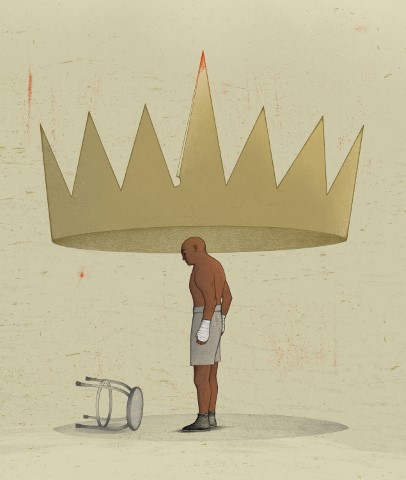
A Black heavyweight boxer pursues a championship bout against a white opponent in the Jim Crow era. As the contest approaches, his ambition collides with the consequences that a historic victory could carry for his family and community.
The Royalist is a 1682 comedy play by the English writer Thomas D'Urfey. It was staged at the Dorset Garden Theatre by the Duke's Company, shortly before the merger that created the United Company. It is set during the Commonwealth Era following the English Civil War. The original cast featured William Smith as Sir Charles Kinglove, Joseph Williams as Heartall, John Bowman as Broom, Anthony Leigh as Sir Oliver Oldcut, Thomas Jevon as Sir Paul Eitherside, Thomas Percival as Captain Jonas, Cave Underhill as Copyhold, George Bright as Slouch and Mary Betterton as Camilla.
Inspired by an iconic photograph of Julius and Ethel Rosenberg, this play moves between the 1950s and 1970s and takes its conception from the story of nuclear spies.
In the sea-bound Maine community of Machias, townspeople confront the first naval engagement of the American Revolutionary War: the 1775 capture of the British ship Margaretta.
In a London bedsit, Joyce and Mike's uneasy life is disrupted by Wilson, a young man seeking revenge for his brother Frank's murder. Wilson goads Mike into jealousy and violence, and the couple's shocking indifference to Wilson's death is underscored by their grief over a dead goldfish.
Showing 6,913–7,032 of 8,284 shows
Load more shows