The Accidental Caregiver
An aspiring actor accepts a temporary job caring for Maria Altmann, an elderly Austrian Holocaust refugee. Their unexpected bond forces him to confront love, loss and his own ambitions.
8284 shows
Clear filtersAn aspiring actor accepts a temporary job caring for Maria Altmann, an elderly Austrian Holocaust refugee. Their unexpected bond forces him to confront love, loss and his own ambitions.
After discovering his father’s pornography collection as a boy, Andrew develops an addiction that follows him into adulthood. When he meets his future wife, he struggles to balance sexual fantasy with reality.
The play portrays Hillel Kook and the Emergency Committee for the Rescue of European Jewry as they press the United States to help Europe's Jews during the Holocaust, despite opposition from Stephen Samuel Wise and other mainstream Jewish and Zionist leaders.
During the First World War, the play contrasts the experiences of the Accrington Pals at the front and at the Somme with the lives of the women left behind in Accrington.
Dikaiopolis, weary of the Peloponnesian War, obtains a private peace treaty with Sparta through Amphitheus. The old men of Acharnae oppose him, but he argues that profiteers and political leaders perpetuate the war. He establishes a private market where he trades with Athens' enemies, while the warlike general Lamachus is summoned to battle and returns injured; Dikaiopolis returns from a feast celebrating peace.
An actor and his wife confront their relationship during an obligatory journey.
An accountant finds himself backstage and is mistaken for an actor’s understudy. Forced into scenes from several plays he has never rehearsed, he cannot recall lines or even his identity and tries to navigate a performance that culminates in an execution scene.
Mr. Zero lives in an unnamed major city where he has worked for 25 years in an accounting office adding figures together by hand. His coworker, Miss Devore, dreams of having the courage to kill herself and detests Zero. His wife, Mrs. Zero, spends her days gossiping, going to see lowbrow movies, and nagging Mr. Zero for being a disappointing husband. One day, after work, Zero's boss unceremoniously fires Zero and informs him he will be replaced by a mechanical adding machine. Zero murders his boss on the spot and then returns home in time for his wife's dinner party. The guests' inane chatter is interrupted by a cop who arrives to arrest Zero. At his trial, Zero tries to justify his actions and explain his frustrations but the jury declares him guilty. Before his execution, Zero is kept in a zoo-like exhibit where tour groups view him and buy souvenirs. Mrs. Zero visits him but leaves after their conversation enrages her. Zero is then visited by a winged, otherworldly "Fixer" who taunts Zero before having two henchmen drag Zero to his execution. Zero, dead, awakens in a cemetery where he befriends a man named Shrdlu. Shrdlu considers himself innately evil and recounts his religious upbringing with his mother, whom he eventually murdered. After another corpse screams at Shrdlu and Zero to be quiet, they relocate to the Elysian Fields, where Zero encounters the soul of Miss Devore, who has killed herself. Zero and Miss Devore begin a romance and try to be happy together in the afterlife. Shrdlu, however, is distraught and confused at the lack of divine punishment in the afterlife. Zero, finding his existence aimless, begins obsessively operating an enormous adding machine. Eventually, Lieutenant Charles, the boss of the Elysian Fields, comes to tell Zero that he is a waste of space and his soul is scheduled to be recycled and reborn on Earth. Zero resists, but Charles lures him away using an attractive woman named Hope, leaving Charles to grumble about his own unpleasant job.
After a family of aristocrats and their servants are shipwrecked, the practical butler Crichton becomes the island's leader while his former masters become his subjects. Lady Mary falls in love with him, but once rescued the group returns to conventional social roles.
The Adventures of Five Hours is a 1663 comedy play by the English writer Sir Samuel Tuke, 1st Baronet. Based on the play Los empenos de seis horas by Antonio Coello, It is an early example of the developing Restoration comedy tradition. Its success led to a series of sentimental plays in the Spanish style about love and honour, very different to the more sophisticated and cynical comedies which the Restoration era became known for. Performed by The Duke's Company, it premiered at the Lincoln's Inn Fields Theatre in London. The original cast included Thomas Betterton as Don Henriq, Henry Harris as Antonio, Cave Underhill as Diego, Samuel Sandford as Ernesto, William Smith as Corrigidor, John Young as Octavio, Hester Davenport as Camilla, Jane Long as Flora and Mary Betterton as Portia. It ran for thirteen straight performances, a considerable hit by the time.
In an alternate history where Victorian Britain pioneered space travel, stoic Englishmen confront French schemes against the British Empire. The comedy draws on science fiction and farce, with a small cast doubling many roles.
After her daughter’s death, Dr. Rainey Baldwin-Johnson struggles with grief and faith while her father and his friends organize to reclaim Black history in Negro Creek. Their resistance to the renaming of Negro Creek Road and a museum heist over a militia jacket bring the family together as her father nears death.
Teresa rents a room to Elena, a young student, and the two develop a close bond as Teresa explains that her former lover Lorenzo left her. When Lorenzo arrives, he begins an affair with Elena, transforming their three-way relationship.
A group of professors at Cambridge University try to hire an old colleague back even though they all don't like him, they all agree he was dismissed unfairly.
A historical play about the Affair of the Poisons during Louis XIV’s reign and the downfall of his mistress, Madame de Montespan.
After the US invasion of Afghanistan, an Afghan woman returns from the United States to establish an orphanage. When a warlord attempts a coup and uses orphans as human shields, she kills him and urges his son to reject violence.
Selby leaves a corporate job for charity work, where campaigns are repeatedly blocked by political interests. After her colleague's efforts to promote hard-hitting but inoffensive appeals fail, Selby travels to a hurricane-struck country and is kidnapped by guerrillas; comic sketches expose the contradictions of charitable fundraising.
The Age of Innocence is play in five scenes by Margaret Ayer Barnes that was adapted from Edith Wharton's 1920 novel of the same name.
A solo theatrical recital arranges speeches from Shakespeare’s plays into three parts—Youth, Manhood and Old Age—to trace the journey of life from birth to death.
The play follows Susan B. Anthony and Frederick Douglass across a 45-year friendship. It begins with Douglass playing the violin while Anthony is at a picnic and traces their distinct paths toward equality.
At Bedford’s country house, Sir Ralph Damant and the supposedly dead artist Mark Bernal both claim the inheritance. Mark produces an album of sketches that complicates the succession. Mark and Grace Jesmond marry, as do Teddy Ashdown and Maud Vincent; Sir Ralph rejects Lady Basset’s fortune hunting and gives the inheritance to Mark.
A physical comedy built around a clown and a juggler, combining clowning, juggling and mime.
During a London plague, servant Jeremy takes over his absent master's house and joins conman Subtle and Dol Common in a series of frauds. They promise gamblers, merchants, religious zealots, and a wealthy would-be alchemist impossible gains, until the returning master and the victims expose the scheme. Jeremy saves himself by helping his master marry the widow the trio had targeted.
An actor’s memories of South America merge with a story about a mysterious point containing everything in the universe. Personal anecdotes give way to an exploration of desire, perception, and the limits of storytelling.
Behind a Vermont coffee shop, two disaffected men in their thirties talk about music and poetry and the band they never launched. When Evan, a high-school student who works at the shop, arrives, they take him under their wing. Baker builds the character study through silences, pauses, and understated conversation.
A Jewish college professor agrees to sign a student manifesto responding to police brutality, then reconsiders when its criticism of Israel challenges his beliefs and identity.
Act I, Scene 1 Nurse Ann is in love with Dr. Clitterhouse. She has been waiting for him to return to the office at one in the morning. When he arrives he immediately wants to check his blood pressure and other vitals. She discovers some white paint on his coat. She gets a bottle of ether from his bag and discovers that he has stolen jewels from Cranston Lodge in his bag, which she promises to keep a professional secret even though she doesn't like it. Detective-Inspector Charles sees the lights on and drops in for a visit, being friends with Dr. Clitterhouse. Lady Challing, one of the previous burglary victims, has involved Scotland Yard based on the value of the stolen jewels as 2,000 pounds, and because each crime was committed four days apart, the Yard expects the next one to follow quickly. Over coffee, Charles and Clitterhouse, who know each other affectionately as Charley and Clit, discuss the burglar's methods in the Challing burglary, which Charles dismisses as the work of a rank amateur, identifying the use of the gardener's ladder, a table-knife, and a tyre-lever. As casual conversation, Clitterhouse asks Charles how one gets rid of his "swag," and Charles tells him about fences, saying that there wouldn't be any crime without them. He tells him that fences aren't very smart except for one named Benny Kellerman, who has a club of Theobald's Road. Charley is soon called at Clitterhouse's by the constable in the police box to let him know that Cranston Lodge, the home of Councillor Anderson, has been burgled and leaves to investigate. After Charles leaves, Clitterhouse explains to Ann that criminals need to be caught much earlier through investigations of their medical state and has begun studying crime by committing crimes himself in order to experiment on himself in order to learn the pathology of crime. Ann reiterates her promise to keep what he us doing confidential and promises to unload the loot at Benny Kellerman's in the morning.
Three sisters are raised by their aristocratic father as male heirs and struggle to adjust to society. Pinero’s farcical romance follows the social complications of their upbringing and gender expectations.
The Ambitious Slave; Or, A Generous Revenge is a 1694 tragedy by the English writer Elkanah Settle. It was first staged at the Theatre Royal, Drury Lane by the United Company. The original cast included John Bowman as King of Persia, John Verbruggen as Tygranes, George Powell as Orontes, John Freeman as Briomar, Jane Rogers as Mirvan, Frances Maria Knight as Herminia, Anne Bracegirdle as Clarismunda, Elizabeth Barry as Celestina and Elinor Leigh as Rosalin.
The Ambitious Statesman; Or, The Loyal Favourite is a 1679 tragedy by the English writer John Crowne. It was originally staged by the King's Company at the Theatre Royal, Drury Lane in London. The original cast is unknown except for Joseph Haines who played La Marre, and also spoke the epilogue.
The Ambitious Stepmother is a 1700 tragedy by the British writer Nicholas Rowe. It was his debut play. Rowe set his play in Biblical times, but it had strong subtexts of the contemporary questions about the British succession that led to the Act of Settlement in 1701. At the court of Persia, Artemisa schemes against her stepson Artaxerses. The original cast included John Verbruggen as Artaxerses, Barton Booth as Artaban, Thomas Betterton as Memnon, John Bowman as Magas, George Pack as Cleanthes, Elizabeth Barry as Artemisa, Elizabeth Bowman as Cleone and Anne Bracegirdle as Amestris. The play was dedicated to Edward Villiers, the Right Honourable Earl of Jersey, Lord Chamberlain of His Majesty's Household.
In a Harlem church community, pastor Margaret Alexander's authority is shaken when her long-estranged, ill husband returns and reveals that she left him rather than the reverse. Her son and congregation confront her perceived hypocrisy; as she loses her family and pulpit, Margaret recognizes that faith cannot be used to avoid the struggles of human relationships.
A Black gravedigger who resembles Abraham Lincoln becomes an impersonator at the Great Hole of History, where visitors pay to reenact Lincoln’s assassination. A second act follows his wife Lucy and son Brazil as they confront his absence and the replica hole he left behind.
The Baum family loses its wealth during the Great Depression and must leave its Manhattan home to live with relatives in Brooklyn. Their son Lee, who hopes to become a writer, narrates the family’s experience.
In a middle-class home, Mommy and Daddy receive Mrs. Barker while Grandma exposes what happened to the couple's adopted child. A young man arrives who embodies an emptied, idealized version of the American Dream and is welcomed as a replacement for their dead child.
In 1960 Eva Adler, who is a widow, has a vacation home in the Catskill Mountains, in New York, across a lake from a resort. Her daughter, Lili Adler, is a socially awkward 20-year old who feels trapped by her mother's constant attention. Lili meets Nick Lockridge, an aspiring architect who is engaged to a woman from a wealthy family. Lili and Nick develop a romantic relationship over the course of the summer. Eva, Lili's controlling mother, is against any relationship and works to discredit Nick.
A spectacle of American history, set first at Ellis Island in 1896 and later in a small American town, depicting an American life against the country's historical and democratic ideals.
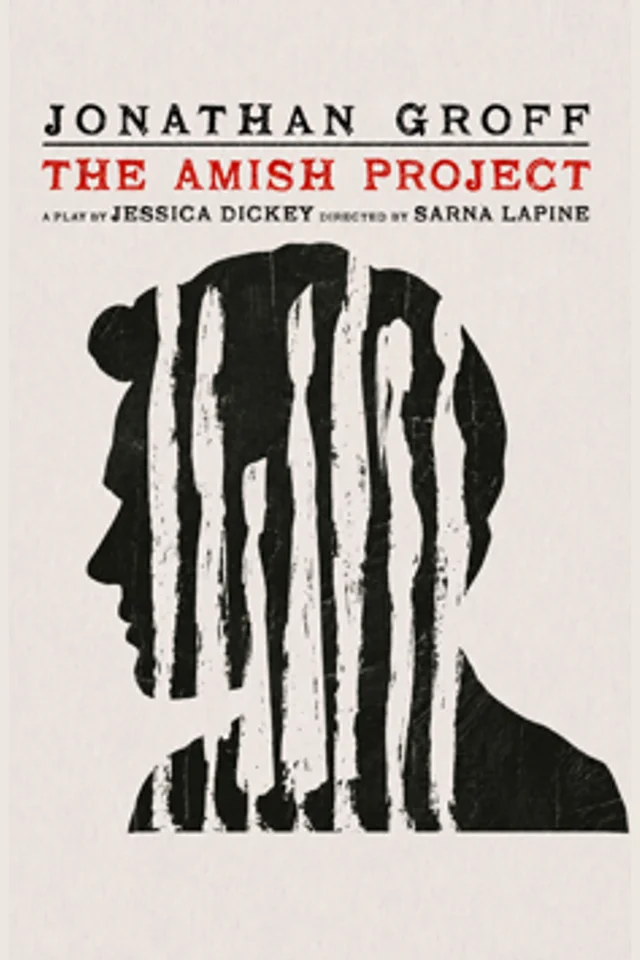
In the aftermath of a shooting at an Amish school, a community responds to loss with an unexpected act of forgiveness. One performer portrays several fictional characters whose lives intersect around the tragedy, exploring grief, compassion and the limits of understanding.
The Amorous Old Woman; Or, 'Tis Well If It Take is a 1674 comedy play by the English writer Thomas Duffet. It was originally staged by the King's Company at the Lincoln's Inn Fields Theatre. It was part of the tradition of Restoration comedy. Given the number of younger actors in the cast, it may have been a lenten play. The original cast included William Beeston as Amante, Carey Perin as Cicco, John Coysh as Riccamare, Martin Powell as Furfante, Elizabeth Cox as Constantia, Elizabeth James as Arabella, Elizabeth Boutell as Clara and Katherine Corey as Strega.
In Florence, Prince Frederick pursues Cloris and Laura, his friend Curtius's fiancée, with little regard for consequences. Meanwhile Antonio devises a test of his wife Clarina's fidelity, but she and Ismena outwit him through disguises and counterplots.
In a prison parole office, an officer questions a former domestic terrorist who killed two police officers. Their argument turns on the prisoner’s lack of remorse and the officer’s decision about parole.
A courtroom drama about the 1865 court-martial of Andersonville prison commander Henry Wirz. Prosecutor Norton P. Chipman seeks justice for Union prisoners who died in the camp, while Wirz is presented as a tragic and sympathetic defendant.
Ernest and Ernestine move into a small apartment, certain that love will make their life together work. Their conflicting habits and unspoken frustrations gradually turn everyday domestic problems into an escalating battle.
A political play centred on the Angry Brigade anarchist group.
A 90-minute dramatic monologue about the École Polytechnique massacre, told from Marc Lépine’s point of view; performances address male and female audience members separately before bringing them together during the massacre account.
In rural Greece after the financial crisis, indebted theatre director Zoe is tricked by her finance-career sister Selina and Selina’s hedge-fund colleague into signing a plan to turn the family estate into a hotel and tourist attraction. Zoe resists their plans for the olive trees and her avant-garde theatre.
The Hobbs family gathers at its dilapidated ancestral home in 1939, where Augusta, her brother and her estranged adult children revive old grievances. Her sons Dudley and Elisha torment Augusta and Miranda; Augusta kills Miranda, and the coachman reveals himself as Jeremy, who arranged the reunion to force the family's conflicts into the open.
A physician and a theatrical troupe stage an imagined upside-down England to cure Peregrine Joyless of his obsession with travel and help address his family’s marital distress. Their improvised play-within-the-play turns into a social satire as Peregrine takes control and tries to reform the Antipodes.
Count Anselmo squanders the household’s money on counterfeit antiquities while his wife Isabella mistreats Doralice, the merchant’s daughter who married their son Giacinto. Servants and would-be peacemakers exaggerate each woman’s grievances, turning the household into a comic battleground. Doralice’s father Pantalone finally takes charge of the finances and separates the women, though they still refuse to reconcile.
The Duke of Pisa travels in disguise among his subjects. Young Lionell exploits his uncle Veterano’s obsession with supposed antiquities by selling him fakes, while the Duke and Lionell play further tricks on him. Parallel plots involve the courtesan Lucretia’s suitors, household disguises and marriages achieved through deception.
In the near future, curators at a museum of late human antiquities archive and recreate human history through exhibits and vignettes; the museum's creators are revealed to be non-organic artificial intelligences.
Recently evicted Nami takes refuge in his brother and sister-in-law’s high-tech house. A violent uprising outside traps the three inside, turning their secured home into the setting for a horror story about technology and vulnerability.
At the International Bureau of Inventions in Paris, timid Agnes learns from a homeless man from Bellac to tell men they are beautiful. The flattery wins her favor with the men at the bureau as the inventor quietly disappears.
The Apostate is an 1817 tragedy by the Irish writer Richard Lalor Sheil. It premiered at the Theatre Royal, Covent Garden on 3 May 1817. The original cast included William Macready as Pescara, Charles Kemble as Hemeya, Charles Mayne Young as Malec, Thomas Comer as Hamy, Charles Murray as Alvarez, Daniel Egerton as Gomez and Elizabeth O'Neill as Florinda. The prologue was spoken by Charles Connor. It was loosely inspired by a 17th-century work by the Spanish playwright Pedro Calderón de la Barca. The play was a success, but reviewers generally attributed this to O'Neill's acting rather than Sheil's writing. John Wilkes Booth's last appearance onstage before he assassinated Abraham Lincoln was as Pescara at Ford's Theater. Of that appearance, the Washington Republican later wrote: "The villain Pescara was represented by the greater villain Booth."
The Apparition: or, The Sham Wedding is a 1713 British comedy play written by an anonymous author. It premiered at the Theatre Royal, Drury Lane in London. The original cast included Henry Norris as Sir Tristram Getall, William Bullock as Sir Thomas Etherside, John Bowman as Mendwell, Barton Booth as Welford, John Mills as Friendly, James Spiller as Foist, George Pack as Plotwell, Susanna Mountfort as Aurelia, Hester Santlow as Clarinda and Margaret Saunders as Buisy.
In Shaw’s satirical political comedy, King Magnus spars with Prime Minister Proteus and the cabinet, who seek to strip the monarchy of political influence. Magnus also opposes Breakages, Limited, a corporation that controls politicians and impedes technical progress, and ultimately outwits the prime minister by threatening to leave the throne and seek elected office.
Dick Wingate is apprenticed to an apothecary and expected to marry his employer's daughter, but he longs to act and joins a London spouting club. After he and Charlotte attempt to elope and are arrested, Dick agrees to finish his apprenticeship in exchange for permission to marry her.
While searching the Scottish coast for fossils, amateur palaeontologist Pearl discovers a white stone bearing Egyptian hieroglyphs. Her investigation opens a Gothic mystery in which scientific and religious explanations compete.
A romantic tangle unfolds when King Basilius's family retreats to a forest lodge to evade an oracle: disguised suitors seek his daughters, while Basilius and his queen fall for the disguised Pyrocles. Poison, mistaken judgment and a delayed prophecy's fulfillment follow.
In a possibly bugged room in an Eastern European former Archbishop’s palace, writer Sigmund must choose between detention under the regime and defection to the West. Two writer friends urge him toward defection, while their shared former lover Maya complicates the conflict among politics, art and sex.
A solitary man and an emperor share a deserted island. Their shifting master-and-servant relationship unfolds through games that expose social conventions, claims of civilization and the weight of their pasts.
Artist Sophie and financier Phillip fall in love and move in together, but an unexpected pregnancy divides them: she wants an abortion while he wants to become a father. Their escalating argument, including an unsuccessful attempt at couples counseling, exposes deeper conflicts over control and their future; the outcome remains unresolved.
After Meredith and Pip argue about a film, their marriage reaches breaking point. They turn to friends Jane and Tony, whose own feelings complicate the separation, while the couple's families and friends become entangled in the wider conflict.
The Chisera, a Paiute medicine woman believed to mediate with the gods, falls in love with Simwa the arrow maker. When he leaves her for the chief’s daughter, she stops interceding for the tribe, bringing grief and misfortune; she dies from one of her own enchanted arrows.
At a new New Jersey restaurant, cash-strapped owners Ellen and Cal serve three groups of guests whose eccentricities and troubles expose how etiquette and social expectations shape eating and relationships. Cooking and eating happen onstage; the evening ends with the owners settling their differences over a communal meal.
A biographical play centered on the life of artist William Hogarth.
A Canadian artist commissioned to document war confronts the cost of witnessing and recording violence.
The Artful Husband is a 1717 comedy play by the British writer William Taverner. Staged at the Lincoln's Inn Fields Theatre, it ran for fifteen nights. It was frequently revived during the eighteenth century. The cast included Thomas Elrington as Sir Harry Freelove, Theophilus Keene as Winwife, James Spiller as Stockwell, George Pack as Frank Flash, Jane Rogers as Mrs Winwife and Sarah Thurmond as Belinda. The part of Lady Upstart was played by the veteran actress Frances Maria Knight.
The Artifice is a 1722 comedy by the British writer Susanna Centlivre, first published in 1723. It was her final play, returning to the more robust style of restoration comedy which was very uncommon by this era. Staged at the Drury Lane Theatre the cast included Robert Wilks as Sir John Freeman, Anne Oldfield as Mrs Watchit, William Wilks as Fainwell, John Mills as Ned Freeman, Benjamin Griffin as Watchit, John Harper as Tally, Christiana Horton as Olivia, Elizabeth Younger as Louisa.
Climber Michael Ransom reluctantly accepts a British press and government expedition to the peak of F6, a mountain on the border of a British colony and the fictional country of Ostnia. His rush to reach the summit before the Ostnian climbers destroys him; the story functions as a parable about leadership, ambition, and power.
The Assassin is a 1945 play by the American writer Irwin Shaw. It was inspired by the assassination of the Vichy French official Admiral François Darlan in 1942. The play premiered at the Pavilion Theatre, Bournemouth before transferring to the Savoy Theatre in London's West End, running for 74 performances between March 22 and June 2, 1945. The original London cast included Henry Oscar, Barry Morse, Leslie Perrins, Charles Quatermaine and Rosalyn Boulter. It was first performed on Broadway at the National Theatre in October of the same year, but lasted for only 13 performances.
In 1980, the Bascov family gets together to celebrate Christmas. They are Jewish, but do not observe their religion. They gather at the large and luxurious Upper West Side (New York) apartment of Julie, a former teen movie star, and her wealthy husband Ben. Also present are their sons Scotty, recently graduated from college and young Timmy, sick with the flu. Ben's sister Faye, her husband Mort and their daughter, Shelley, arrive. Jeff, a school friend of Scotty, is a visitor. 20 years later, in 2000, the family meets again at Christmas at Julie's apartment. However, now Ben, Mort, and Scotty are dead, and Shelley is estranged. Those present are Julie, who has a fatal illness; Faye, now no longer taking medications; and Jeff, returned from a successful law job in Chicago. Tim (no longer Timmy) comes and goes; he has been forced to leave college and works at a restaurant.
Four people with sharply different political beliefs meet for a recorded conversation. Reconstructed onstage, their exchanges test whether listening can interrupt polarization and reveal common ground.
A Restoration comedy, written mainly in prose with some blank verse, that draws plot material from Calderón’s Con quien vengo vengo. Its subtitle, Love in a Nunnery, prompted suspicions of anti-Catholic satire.
A neglected and abused peasant girl lies on her deathbed and experiences a vision of divine powers welcoming her into the afterlife.
Psychiatrist Chris Faber begins an affair with Leonora, an old friend of his wife Barbara, and becomes increasingly unstable under the strain. The six-scene tragedy frames the story around Chris’s final illness and death, revealing through shifting time how obsession and guilt culminate in suicide.
The Astrologer is a 1744 comedy play by James Ralph. The original Drury Lane cast included William Mills as Stargaze, Richard Yates as Motley, William Havard as Young Whimsey, William Giffard as Young Detrell, Edward Berry as Siftem, Peg Woffington as Laetitia and Anna Marcella Giffard as Clara. The epilogue was written and spoken by David Garrick.
Cynical US reporter Augustine Early recounts his climb from trailer-park roots to celebrity as he pursues the perfect tabloid headline. He describes manipulating the justice system and exploiting a vulnerable politician, along with encounters involving a would-be actress, a society wife, a rapist and an English editor.
The atheist D’Amville murders his brother and tries to take the inheritance of his nephew Charlemont, who returns to find that he has been declared dead and his fiancée married to D’Amville’s son. D’Amville’s plots bring arrests and deaths, but he ultimately confesses his crimes and Charlemont and Castabella are freed to marry.
The Athenian Captive is an 1838 tragedy by the British writer Thomas Talfourd. It was originally intended to be performed at Covent Garden in London but after rehearsals the illness of one of the actresses forced delays. This led him to take it instead to the Theatre Royal, Haymarket where it premiered on 4 August 1838. The Haymarket cast was led by William Macready as Thoas and Mary Warner as Ismene, and the production enjoyed success. Other cast members included James Prescott Warde as Creon, Henry Howe as Lycus and Helena Faucit as Creusa. Talfourd dedicated the play to Lord Denman, the Lord Chief Justice.
A worker rebels against military control of atomic energy.
Sisters Jojo, Jayne and Jelly reunite after their father’s death to prepare a memorial party, confronting their childhood and their conflicting personalities.
The Audience is a play by the British playwright and screenwriter Peter Morgan. The play centres on weekly meetings, called audiences, between Queen Elizabeth II (originally played by Helen Mirren) and her prime ministers. The original West End production premiered at the Gielgud Theatre in 2013. It opened on Broadway in 2015, also starring Mirren. A West End revival played in London in 2015 starring Kristin Scott Thomas in the lead role.
Impoverished poet Cape tries to win permission to marry Arabella from her brother Cadwallader by impressing the family. A mistaken flirtation with Mrs. Cadwallader enrages her husband until Governor Cape reveals that the poet is his son and heir.
Struggling playwright Harry Luckless tries to woo his landlady's daughter and earn money from his writing. After a theatre rejects his play-within-the-play, he revises it for another venue, where it becomes a puppet show featuring allegorical figures of literary and theatrical genres; the worlds of the two plays then merge.
The events of the play unfold over the course of one week at Constance Tuckerman's boarding house on the Gulf Coast. A few of her regular guests are enjoying post-dinner cocktails. Rose Griggs is trying to get her husband, General Benjamin Griggs, to admire her dress, which she has put on for a party. Young Frederick Ellis and his grandmother Mrs. Mary Ellis are reading the galleys for a novel that Frederick is about to publish. His mother Carrie Ellis and Edward ("Ned") Crossman are the other guests in the lounge, as the play opens. Frederick is engaged to be married to Sophie Tuckerman, who was adopted by Constance and brought to America from France when she was 13. She works with Leon to help Constance run the boarding house. Constance is overwrought with anxiety over the impending arrival of Nina and Nicholas Denery, who will spend the weekend at her house. Nicholas was the love of her life, before he left to become an artist in New York. It does not take long for the fissures in all of the characters' facades to show themselves. The Griggs are elegantly adversarial towards one another. Carrie is desperate to impose her will on her son. Nicholas, contrary to Constance's continued delusion, is a failed artist, and his marriage to Nina is crumbling. Sophie does not love Frederick, but she believes marrying him will be an acceptable way to end her dead-end existence in the boarding house. Constance is horrified to realize that Sophie will not marry for love, and insists, despite all the evidence surrounding her to the contrary, that marriages must be based on love. As the week progresses, the characters grow more disillusioned with themselves and each other. Nicholas gets frightfully drunk one night and breaks up with Nina again. Later, he propositions Sophie, who allows him to kiss her. He passes out in her bed. The next morning, the house is scandalized by his presence in her bed, knowing that the neighbors can see through the window, and Sophie will be the talk of the town. As Nina is leaving, Nicholas talks his way back into her heart, and she is happy to continue their destructive cycle by reuniting. Before she leaves, Nina is cornered by Sophie who demands $5,000 for the shame that Nicholas has caused her. Revealing how sophisticated she really is, she consoles Nina to not think of it as blackmail, but so much as a premium to be paid for the privilege of continuing to play at happiness with Nicholas a little while longer. Nina agrees to pay her the money. Sophie decides that she will use it to return to France. Rose Griggs presents a letter from her doctor to the General. He has asked her for a divorce, but she reveals that she has heart trouble that could kill her. The doctor's note explains that with the right treatment, she could be healthy again in a year. She begs the General to stay with her for the year and promises to divorce him afterward. The General agrees, and confesses to Edward Crossman that he was almost relieved to have an excuse to not go through with the divorce. Constance finally confesses to Edward her feelings for him, and she asks him to marry her. He declines, explaining that he is just a drunk, who gets drunker every year. He confesses that coming to her boarding house every year is a vain attempt to sustain the illusion of a dignified life that he does not actually live.
At Wanaget High's senior prom, students inspired by 1980s movie characters compete for Prom King and Queen, with the audience deciding the winners.
The god Dionysus returns to Thebes to establish his worship and punish the royal family for denying his divinity. King Pentheus tries to suppress the rites, but Dionysus drives him to spy on the Bacchae; the women, led by Pentheus's mother Agave in a frenzy, tear him apart before she recognizes what she has done.
Soyinka's adaptation adds an enslaved chorus that reflects civil unrest in Nigeria and transforms Pentheus's sacrifice into a communion rite: his blood becomes wine, and the community drinks it to share his power and be renewed.
Playwright Porter Emerson Browne declares a certain timeliness of theme by employing the former Mexican bandit, Pancho Villa, as a hero of the proceedings, though he thinly disguises him under the name of Pancho Lopez. The scene is a cattle ranch near the Mexican border in Arizona. Gilbert Jones, a young American, is the ostensible owner of the ranch, but the $10,000 with which he bought it was borrowed from his uncle, Henry Smith of Bangor, Maine, who is living with him. A year after the purchase young Jones enlisted in the American army, saw service in France, and when he returned found his property practically worthless. Mexican bandits had stolen most of his cattle and such crops as had been planted had failed. In an effort to save the property he mortgaged the ranch to Jasper Hardy, the sheriff of the county, and the play opens the day the mortgage is to be foreclosed by Hardy.
Veronica’s seduction of Anglican Alan drives him toward Catholicism and priesthood, against the opposition of his Anglican father. Alan’s brother Brian, a war-damaged agnostic, and Brian’s former lover Jane complicate the family crisis; Brian later marries Veronica, and a seven-years-later epilogue brings Veronica and Alan together again in Italy.
The play focuses on the seemingly perfect little girl Rhoda Penmark, who is able to charm her way into getting just about anything she wants. Anything, except a highly coveted penmanship medal that her teacher has awarded to Claude Daigle, one of Rhoda's classmates. During a school outing near the shore, Claude goes missing and it is soon discovered that Claude has drowned near a pier. Rhoda's mother, Christine, begins to suspect that Rhoda had something to do with the boy's death when she finds Claude's penmanship medal hidden in Rhoda's room. Gradually Christine comes to believe that Rhoda was behind other sudden deaths surrounding the family. Her suspicions challenge Christine to look into her own past, and she learns not only that she was adopted, but also that her biological mother was a ruthless serial killer. Near the end of the play, Christine decides to take both Rhoda's life and her own. She gives Rhoda a large quantity of sleeping pills, telling her they are vitamins. Then she shoots herself in the head, killing herself. Rhoda survives because the sound of the gunshot has alerted her neighbors to investigate and they find Rhoda just in time to save her.
In an upscale brothel during a street revolution, patrons perform as a bishop, judge, and general. After the uprising kills the regime's leaders, the Queen's envoy uses these staged identities in an effort to restore authority, while the brothel's Chief of Police seeks a public image of power.
The Smiths and their guests exchange increasingly absurd, disconnected remarks; after the language collapses into nonsense, the play restarts with the Martins repeating the Smiths’ opening.
Fashionable society prepares for a court ball. Widowed Lady Lucina mocks her suitors until Colonel Winfield’s honesty wins her agreement to marry him, while Honoria and Rosamund test Lord Rainbow and their own rejected suitors through competing courtship schemes.
A Glasgow rock-and-reel group called the Keelies is discovered in rural Ballachulish and made famous by a London promoter. Their manager pushes them to sing socialist songs, then abandons those ideals as success changes him; the band and its fans are drawn into a satirical conflict between political factions and commercial exploitation.
The Ballad of the Sad Café is a dramatic stage play with music written by American playwright Edward Albee, based on the 1951 novella of the same name written by Carson McCullers. The play premiered on Broadway at the Martin Beck Theatre in 1963. The play follows a woman named Amelia and her tumultuous relationship with her husband. The play was nominated for six Tony Awards including the Tony Award for Best Play.
Anna imagines a European trip with her brother Carl, seeking a cure for her fictitious terminal illness as they encounter farcical episodes and dangers. The fantasy masks the reality that they never took the trip: Carl, who had AIDS, has died, and Anna is grieving in a Baltimore hospital.
When a newcomer to the Vernon Point Neighborhood Association suggests installing a stop sign on a picturesque block, chaos ensues.
The Banditti is a 1686 comedy play by the English writer Thomas D'Urfey. It is also known by the longer title The Banditti: or, a Lady's Distress. It was originally staged by the United Company at the Drury Lane Theatre. The original cast included Edward Kynaston as Don Antonio, Joseph Williams as Don Fernand, Anthony Leigh as Don Ariell, Cave Underhill as Don Diego, Thomas Gillow as Don Garcia, Thomas Percival as Lopez, Thomas Jevon as Frisco, Philip Griffin as Leon, Sarah Cooke as Dona Elvira, Katherine Corey as Eugenia and James Nokes as Megaera.
A tragedy following the Roman orator Marcus Tullius Cicero’s downfall and death.
The Bank Note: Or Lessons for Ladies is a 1795 comedy play by the Irish writer and actor William Macready the Elder. Its plot draws inspiration from William Taverner's The Artful Husband as well as other earlier plays. Macready's play premiered at the Theatre Royal, Covent Garden in London on 1 May 1795. The play is notable for including the first known printed use of the word 'smithereens':I join you with all my heart,—and wish he was hang'd, shot, cut in smithereens.
Fashionable gambling and extravagant pleasures threaten domestic happiness while money obstructs courtship. Lieutenant Selby’s poverty keeps him from marrying Emma, and Sir Charles Leslie considers a wealthy widow as a way to rescue his mortgaged estate.
Count Almaviva disguises himself as a poor student to court Rosine, who is kept confined by her guardian Dr. Bartholo. With Figaro's help, he evades Bartholo's schemes and marries Rosine before the doctor can force her to marry him.
The Bare Idea is a 1938 comedy play by the British writer Gordon Sherry. A farce debuting in Hull in 1938, the West End appearance was produced during the Phoney War period of the Second World War. It revolves around a nudist camp being turned into a centre of financial scheming. It ran for 31 performances at the Comedy Theatre between 10 and 27 January 1940. The cast included Ellen Pollock, Gerald Case, Oliver Gordon and Roddy Hughes. The theatre was under the control of Archibald Nettlefold. The sets were designed by Hal Burton.
The play dramatizes Elizabeth Barrett's romance with Robert Browning and her father Edward Moulton-Barrett's opposition to his daughters' marriages. Elizabeth, an invalid, recovers enough to elope secretly with Browning for Italy after her father forbids the match.
A three-act detective mystery with an epilogue, mixing whodunit elements and farce; its central cast includes a psychic medium, bringing psychic research seriously onto the English stage.
In a basement flat, Law and Stott compete for control of the space and their mutual girlfriend Jane. Their roles and apparent possession of both the room and Jane repeatedly reverse, with changing furnishings reflecting shifting power among the three.
In Renaissance Mantua, the bashful courtier Hortensio serves in war to prove himself to Princess Matilda; the military conflict and the intertwined histories of a disguised page and a wounded Florentine officer resolve in restored rule, reconciliations, and marriages.
The Basic Training of Pavlo Hummel is a play by David Rabe. Rabe's first play in his Vietnam War trilogy that continued with Sticks and Bones and Streamers, its story is bracketed by scenes depicting the death of the everyman-like title character, who mindlessly grabs at a live hand grenade tossed into the Saigon brothel he is visiting. A born loser who is drafted into the United States Army, Hummel immediately encounters difficulties with both his sergeants and fellow recruits, none of whom trust him. As he stumbles through basic training and comes ever closer to the battlefield, he is guided by Ardell, a mysteriously ambiguous character who seemingly is an officer but serves as Hummel's conscience and a Greek chorus-like figure as well. Although injured repeatedly, Hummel is so determined to be a soldier he passes up a chance to go home, a decision that ultimately proves fatal.
Two pairs of lovers—Lord Worthy and Lady Reveller, and Lady Lucy and Sir James Courtly—move through a comedy designed to make gambling and luxury both comic and contemptible. The title refers to the card table where basset was played.
On a farm near the Victorian–New South Wales border, Nick Diargos arrives to avenge his wife, whom John Willy raped and murdered in Greece. Nick instead falls in love with Willy’s daughter Mary.
Elderly, single Cornelia Van Gorder is renting an old, isolated Long Island mansion owned by the estate of Courtleigh Fleming, a bank president who had reportedly died several months before. On a stormy evening, the electricity flickers on and off. Most of the servants, convinced that the house is haunted, have made excuses and fled. According to a news report, a mysterious criminal known as "the Bat" has eluded police in the area. Cornelia is in the house with her maid, Lizzie, and Billy, a Japanese butler who is part of Fleming's household staff. They are joined by Brooks, a gardener recently hired by Cornelia's niece, Dale Ogden. Dale and Dr. Wells, the local coroner and an old friend of Fleming's, arrive for a visit. They tell Cornelia that Jack Bailey, a cashier at Fleming's bank, has disappeared and is suspected of stealing over a million dollars. Cornelia tells Lizzie and Dale that she has invited a police detective to visit because someone has been trying to break into the house at night. Wells leaves, and Detective Anderson arrives. Cornelia tells Anderson that she suspects Fleming embezzled from the bank and hid the money in the house. While Cornelia shows Anderson to his room, Dale warns Brooks (who is actually Jack Bailey, and Dale's fiancé) that Anderson is a detective. Brooks also believes that Fleming hid the money, and wants to clear himself by finding it. Dale summons Fleming's nephew, Richard (who rented the house to Cornelia), to learn about possible hiding places. Richard shows her a blueprint of the house, with a hidden room where the money might be. While they fight over the blueprint, a figure appears in the darkness and shoots Richard, ending the first act. Cornelia calls Dr. Wells back to the house to examine Richard's body. Dale asks Wells to hide the blueprint she took from Richard because the others might think that she killed him for it. Reginald Beresford, a lawyer waiting in his car after he drove Richard to the house, comes inside. Reginald recognizes Jack, and the exposure of her fiancé makes Dale admit that she gave Wells the blueprint with the hidden room. Wells claims that he does not have the blueprint; Cornelia reveals other evidence incriminating him, and Anderson asks to question him alone. Wells knocks Anderson unconscious during the interrogation and drags him into another room. Before Wells can go to the hidden room, a stranger claiming to have lost his memory after he was attacked and tied up in the garage appears at the terrace door. When the guests try to identify the unknown man, they discover that they have been locked in the house. At the end of the second act, Cornelia finds the Bat's calling card, a black paper bat, tacked to a door. The third act begins on the upper floor of the house, where a masked man is seen in the previously-hidden room taking a money bag from a safe. When Dale finds the room, the man flees, leaving her and the money locked inside. The others find her there, unconscious. Anderson reappears and accuses Wells of stealing the money and killing Richard. Cornelia begins to present an alternative theory, but is interrupted when the unknown man comes upstairs and Anderson asks him about his amnesia. Cornelia says that she sees a man on the roof, and most of the group leaves to look for him. Cornelia uses the distraction to tell Dale, Jack and the unknown man that she thinks the money is still in the room. When they search for the money, Jack finds the body of Courtleigh Fleming, who was killed only recently. As Cornelia, Dale and Jack argue about what has happened, the unknown man locks the door and orders them to be quiet. When the masked man sneaks in through a window, the unknown man apprehends him and reveals that he, the unknown man, is the real Detective Anderson; the Bat (the masked man) had pretended to be Anderson.
The Bath; or, The Western Lass is a 1701 comedy play by the English writer Thomas d'Urfey. The original Drury Lane cast included Philip Griffin as Lord Lovechace, Henry Norris as Sir Oliver Oldgame, Benjamin Johnson as Sir Carolus Codshead, John Mills as Colonel Philip, William Pinkethman as Charles, William Bullock as Harry, Colley Cibber as Crab, Frances Maria Knight as Lydia, Jane Rogers as Sophronia, Mary Kent as Delia, Susanna Verbruggen as Gillian and Henrietta Moore as Combrush.
The Bath Unmasked is a 1725 comedy play by the British writer Gabriel Odingsells. The action takes place in the fashionable spa town of Bath. Staged at the Lincoln's Inn Fields Theatre in London it lasted for six performances, considered a reasonable run for a comedy at the time. The original cast included Lacy Ryan as Sprightly, Anthony Boheme as Wiseman, John Egleton as Pander, John Hippisley as Sir Captious, Richard Diggs as Sharper, Jane Egleton as Lady Ambsace, Jane Rogers as Liberia, Henrietta Morgan as Tippet, Anne Parker as Cleora and Thomas Walker as Frippou.
In 1930, inventor Chudakov builds a time machine while battling Soviet bureaucracy. A visitor from 2030 invites virtuous people to the Communist future, but officials including Pobedonosikov are thrown off the machine.
A comedy about the rivalry between Britpop bands Oasis and Blur, set in London in 1995.
After usurper Muly Mahamet seizes the Moroccan throne, his uncle Abdelmelec returns from exile with Ottoman support. Muly Mahamet enlists Portugal’s King Sebastian to regain power, leading to a proxy war and the Battle of Alcazar, where three kings die and the rightful succession is restored.
The Battle of Eddington: Or, British Liberty is a 1796 historical tragedy play written by the English author John Penn. It first appeared at Richmond Theatre before its West End premier at the Theatre Royal, Haymarket in London on 28 March 1796. It featured songs by the composer John Wall Callcott. It is inspired by the Battle of Edington in 874 when the English forces of Wessex under Alfred the Great defeated a Viking army. Penn dedicated the play to the prime minister of the United Kingdom William Pitt.
The Battle of Hastings is a 1778 play by the English writer Richard Cumberland. It is a tragedy set around the Battle of Hastings in 1066. It was staged at the Drury Lane Theatre in October 1778 by Richard Brinsley Sheridan. Sheridan later mocked Cumberland's sensitivity to criticism by modelling the character Sir Fretful Plagiary, in his 1779 play The Critic, after him. The original Drury Lane cast included Robert Bensley as Harold Godwinson, John Henderson as Edgar Atheling, John Palmer as Earl Edwin, William Brereton as Prince Waltheof, James Aickin as Earl of Northumberland, Richard Hurst as Raymond, Elizabeth Younge as Matilda and Mary Ann Yates as Edwina.
Showing 5,185–5,304 of 8,284 shows
Load more shows