Rashomon
After a samurai is killed and his wife assaulted by a bandit, the bandit, wife and dead husband give conflicting accounts of the crime at trial, each claiming a different truth.
8284 shows
Clear filtersAfter a samurai is killed and his wife assaulted by a bandit, the bandit, wife and dead husband give conflicting accounts of the crime at trial, each claiming a different truth.
Princess Ratnavali is shipwrecked en route to marry King Udayana and reaches his court disguised as the maid Sagarika. She and Udayana fall in love amid mistaken identities and the jealousy of his first wife, Vasavadatta, before Ratnavali's identity is revealed and Vasavadatta consents to the marriage.
Set over a week in September 1987 at a small East Los Angeles sewing factory, the play follows Ana, a recent high-school graduate who hopes to attend college, and the women working alongside her as they discuss their lives and try to meet production deadlines. The group faces immigration fears, relationship troubles, and tensions around gender, body image, and the women’s ambitions.
A comedy about fear and embarrassment surrounding old age, exploring how society balances practical demands with compassion for older people.
Reasons to Be Pretty (stylized in all-lowercase) is a play by Neil LaBute, his first to be staged on Broadway. The plot centers on four young working class friends and lovers who become increasingly dissatisfied with their dead-end lives and each other. Following The Shape of Things and Fat Pig, it is the final installment of a trilogy that focuses on modern-day obsession with physical appearance.
Orphan Rebecca Rowena Randall is sent to live with her dour aunts, Jane and Miranda Sawyer. She has trouble adjusting to her new home at first, and tries to run away. Eventually her light-hearted optimism wins over her aunts and attracts the interest of local boy Adam Ladd.
Retired Inspector John Rebus is drawn into a cold murder case when the victim’s daughter appears at his Edinburgh flat. He enlists Siobhan Clarke, whose own worries about an old case strain their relationship, and turns to longtime adversary Big Ger Cafferty for help.
An English clergyman falls in love with an American woman he takes for a gold digger. Her self-sacrificing nature unsettles his assumptions.
Two rival merchant families join to buy land from a local aristocrat for a timber factory. At the Prince's railway-station reception, the locals' admiration gives way to dismay when they learn the land has already been sold to his German companion.
"There is only one thing I fear in life, my friend... One day the black will swallow the red." Mark Rothko is in his New York studio in 1958/59, having been commissioned to paint a group of murals for the expensive and exclusive Four Seasons restaurant. He gives orders to his assistant, Ken, as Ken mixes the paints, makes the frames, and primes the canvases. Ken, however, eventually brashly questions Rothko's theories of art and his acceding to work on such a commercial project. For his part, Rothko dislikes the rise of pop art. Ultimately, Rothko stops working on the project and decides to return the money. He explains to Ken that the Four Seasons is an inappropriate place for his murals to be seen. He then fires Ken and tells him to go make something of his own in the art world.
In a fictional European Communist party, idealist Hugo is sent to kill leader Hoederer but hesitates until he sees his wife Jessica in Hoederer's arms. This American adaptation shifts emphasis toward Hoederer and changes Jessica's relationship and motivation, while cuts reduce Hugo's characterization.
Red Harvest is a play in three acts by Walter Charles Roberts that uses pages from an American Red Cross nurse's diary detailing her experiences working with the Red Cross in France on the Western Front during World War I as its source material. Set in American Red Cross Hospital 111, a field hospital in Jouy-sur-Morin, the play takes place in 1918 at the time of the Battle of Château-Thierry. Produced by Brock Pemberton and The Theatre Foundation of America, Red Harvest premiered on Broadway on March 30, 1937 at the National Theatre.
A solo biographical play about Texas political columnist Molly Ivins.
Tom and Fanny Campbell move from a small town to New York City, where the only people they know are Fanny's stepsister and brother-in-law, Dorothy and Nick Martin. The Martins are criminals who frame Tom for theft. When Tom is sent to prison for three years, Fanny falls prey to cocaine addiction and becomes a prostitute. When Tom is released, Nick attempts to blackmail the Campbells, but Fanny kills him. A sympathetic detective helps her avoid a murder conviction.
In the first act, friends Matt, a writer, and Davis, a book editor, are vacationing in Amsterdam. Matt is lonely and suicidal; he is attempting to hang himself when Davis returns to their shared hotel room with Christina. Christina is a prostitute that Davis has hired as a present for Matt. Christina has sex with Matt, although she is more interested in Davis. In the second act, Matt and Davis have returned home to New York City. Christina goes to New York looking for Davis, but finds Matt, who has been obsessed with her since their earlier encounter.
Red Noses is a comedy about the black death by Peter Barnes, first staged at Barbican Theatre in 1985. It depicted a sprightly priest, originally played by Antony Sher, who travelled around the plague-affected villages of 14th century France with a band of fools, known as Floties, offering holy assistance. It was for this play that Barnes won his Olivier award.
A husband-and-wife music-hall double act, George and Lily Pepper, perform comic songs while quarrelling with one another and their colleagues. Their dressing-room disputes interrupt the numbers, and the final tap dance descends into a fight with the musical director.
Red Roses for Me is a four-act play written by Irish playwright Seán O'Casey which premiered at the Olympia Theatre in Dublin in 1943. The story is set against the backdrop of the Dublin Lockout of 1913, events in which O'Casey himself had participated.
Set in New South Wales in 1812, Alicia is unhappily married to a brutal officer. She falls in love with Irish convict Michael, and they decide to flee together.
The play begins with Aldrige in later life, nearing the end of a brilliant career. A young Polish journalist, Halina Wozniak, sneaks into his dressing room to interview him about his success, and especially to find out why he has steadfastly refused to play Covent Garden Theatre since playing the lead in a production of Othello decades before. The play revisists crucial moments in Aldridge's past, especially the Othello performance, in which he stepped in for an ailing Kean, hoping to bring some authenticity to the part, but is viciously treated by critics.
Set over a year in seventeen-year-old Lucy’s Sheffield council flat, the play follows her through a series of disastrous choices. Its dark, often humorous social drama presents Lucy as constrained by poverty yet persistent, with dreams and a defiant spirit that endure.
In postwar Barstow, Gabriela's strained marriage to soldier Benito is mirrored by a surreal relationship between her pet Cat and a Coyote, while the personified Moon and a teenage neighbor draw her into competing fantasies of love, art, war, and escape.
A tragedy portraying the career of Roman consul Marcus Atilius Regulus during the First Punic War.
Regulus is a 1744 tragedy by the British writer William Havard. It portrays the career of Marcus Atilius Regulus, a Roman Consul at the time of the First Punic War. It ran for seven performances during the season. The original Drury Lane cast included David Garrick as Regulus, Havard himself as Decius, Dennis Delane as Corvus, William Mills as Metullus, Edward Berry as Manlius, James Taswell as Attilus Regulus, Edward Woodburn as Emelius, Howard Usher as Second Ambassador, Anne Budgell as Clelia and Anna Marcella Giffard as Martia.
When Princess Gulltopp disappears while seeking the Christmas star, the grieving king curses it away. Years later, Sonja offers to find the star; aided by forest spirits, the north wind and Santa, she discovers she is the lost princess.
When aristocrat Nigel plans to marry Hollywood actress Miranda, his mother Felicity learns that her maid Moxie is Miranda’s elder sister and refuses to lose her indispensable companion. The household disguises Moxie’s changed status, but Miranda’s invented account of her poor childhood and Moxie’s disclosure unsettle the engagement; Miranda ultimately leaves with her former lover Don, restoring the household’s preferred order.
Greg follows his girlfriend Ginny to the country, thinking she is visiting her parents. She is actually ending an affair with married former lover Philip; when Greg arrives before her, he mistakes Philip and Philip's wife Sheila for Ginny's parents, setting off an escalating chain of misunderstandings.
Molecular geneticist Kalima's research contradicts the melanin theory promoted by her late father's work and her mother Claire's forthcoming book. She must decide whether to challenge her family's legacy, while her mentor presses her to make the dispute public.
Reluctant Heroes is a comedy play by the British writer Colin Morris. It premiered at the White Rock Theatre in Hastings before transferring to the Whitehall Theatre in London's West End where it ran for 1,610 performances between 12 September 1950 and 24 July 1954. The original West End cast included Brian Rix, Larry Noble, Dermot Walsh, Wally Patch, Bruce Belfrage and Elspet Gray. Other actors who appeared during the run included John Slater, Peter Hammond, Darcy Conyers, Bernard Fox and Gene Anderson. It was the first of the Whitehall farces, and concerns a group of National Service recruits.
Remains to Be Seen is a play written by Howard Lindsay and Russel Crouse. Producer Leland Hayward opened it on Broadway at the Morosco Theatre on October 3, 1951. Bretaigne Windust directed the production, which ran for 199 performances. The play is a comedy about the investigation of the murder of an anti-pornography crusader. Following his death, various characters gather at his Park Avenue apartment, including his niece Jody, his attorney, his butler, the apartment building's young janitor, and a doctor. In the process, the attorney falls in love with Jody, but she chooses to leave with the janitor instead.
In a chain of short, sometimes overlapping scenes, Marcel grows from a boy into a writer as memories of childhood and Parisian society form his view of experience. The play also follows Charles Swann’s troubled attachment to Odette, using their stories as part of Marcel’s recollection and gradual understanding of art.
A substantial stage recasting of Osorio intensifies the Gothic tragedy of a younger brother's attempted murder of his elder brother; the revelation is reshaped through rearranged scenes, stage effects and Ordonio's onstage death.
A three-act tragedy dramatizing an episode concerning Renaud and Armide from Torquato Tasso’s Jerusalem Delivered.
Joseph suspects Mary’s pregnancy until an angel rebukes his doubt. The play moves through prayers, the Nativity and the shepherds’ adoration, then sets instruments of the future Passion beside the newborn child before ending with Mary’s lullaby.
A middle-aged woman alone in her apartment moves silently through her evening routine of cooking and cleaning, then turns to the radio for distraction. Her solitude and melancholy deepen as the evening progresses.
Former boxer Mountain McClintock, punch-drunk and trusting, is pushed by his conniving manager into a comic-relief wrestling act. After discovering the manager’s treachery, Mountain’s drunken rampage brings him to a decision that lets him recover some damaged pride and self-respect.
In Mississippi, Nancy, an African American domestic worker, faces execution for killing Temple Drake’s infant child. Temple’s effort to save her forces a reckoning with concealed events from her own past, exposing questions of guilt, responsibility and redemption.
Nancy is condemned to death for killing Temple’s child. On the eve of the execution, Temple seeks a pardon and is forced to expose her own past, confronting the limits of mercy, punishment and redemption.
In a newly elected government, civil servant Sarika Chatterjee and scientist Will Paxton compete for influence with Colin Jenks, a former colleague of Will's father. As weather threatens mass coastal flooding, the climate and resilience ministers receive conflicting advice and must decide whether to order evacuations.
A comic parody of Restoration comedy and an examination of class privilege and social hierarchy in Restoration-era England.
In an unnamed Latin American country, a prisoner who may or may not be Christ is sentenced to crucifixion by a dictator. The order draws in the prisoner’s friend, a wealthy landowner’s daughter, and an American television crew preparing to broadcast the event, raising questions about belief, power, and spectacle.
In Florida, a young woman is pursued by three very different men: a pleasure-seeking playboy, a valve manufacturer and an itinerant liberal. Their competing courtships bring their ambitions and beliefs into conflict, but she chooses none of them.
Retribution is an 1818 British tragedy by the writer John Dillon. It premiered at the Theatre Royal, Covent Garden in London on 1 January 1818. The original London cast included Charles Mayne Young as Veranes, King of Persia, William Macready as Chosroo, Charles Kemble as Hamed, Daniel Egerton as Abdas, William Abbot as Hafiz, Daniel Terry as Suthes, Charles Connor as Sohrab and Elizabeth O'Neill as Zimra.
In 1950s New York, rising actor Sidney Poitier expects to sign a contract before filming A Man Is Ten Feet Tall. Instead, a screenwriter and NBC lawyer demand that he sign a loyalty oath and denounce Paul Robeson, threatening his role and career if he refuses.
Return to Tyassi is a 1950 play by the British writer Benn Levy. The plot concerns a woman with a shady past who attempts to redeem herself. Levy directed the play, which featured his wife Constance Cummings in the lead role. It premiered at the Theatre Royal, Brighton before transferring to the Duke of York's Theatre in London's West End where it ran for 29 performances between 29 November and 23 December 1950. The original cast included Constance Cummings, Alexander Knox, Helen Haye and John Justin. Poorly received, it was noted "some critics have knocked this play about severely, and may have done it irreparable damage".
Prince Abilqualit pursues Caropia, the wife of Mura, while his half-brother Abrahen schemes to seize the throne. A false rape accusation and the caliph's brutal punishment trigger a chain of betrayals, apparent deaths and shifting claims to power, ending with the empire passing to Tarifa.
Oakleaf, a worker beaver, leads a revolt against the Chief Beaver, who exploits the workers in this children's fantasy fable.
Revolt. She Said. Revolt Again. presents thirteen stand-alone scenes or vignettes over four acts. The scenes begin with a dialogue between a man and woman discussing sex as she takes control of his education. Then, another couple discuss marriage after a rejected proposal. A woman and her employer discuss work obligations as the woman wishes to take Mondays off. Then a shopper strips naked in a grocery store after a sexual assault. A woman and her non-verbal daughter address the woman's mother's absence from their lives. Following this scene, the play becomes more abstract as scenes blend into each other, including critiques of pornography, a salesperson selling T-shirts with feminist slogans, and a person selling hymens. The final scene discusses the future, overthrowing systems and eradicating all men.
Sylvia Pankhurst campaigns for women’s suffrage alongside working women in London’s East End. Her encounter with Lettie carries their struggle toward Parliament through friendship, political argument and satire.
Bulbul opens with a lecture and demonstrations about how sand moves, until she coughs and her son Misha interrupts to restage her apparent death. Their ensuing exchange shifts among mother and son, performer and director, and teacher and student as they explore grief, scientific inquiry, and the fear of losing one another.
During the Trojan War, Hector sends Dolon to spy on the Greek camp. Odysseus and Diomedes kill Dolon, then Athena directs them to the sleeping Rhesus; Diomedes kills the Thracian king and Odysseus takes his horses. Rhesus's mother, a Muse, blames the attackers and announces his eventual resurrection and immortality.
A romance develops between two middle-aged people.
In a small French town, residents begin transforming into rhinoceroses. As colleagues and friends justify or accept the change, Bérenger resists the growing conformity and ultimately remains alone, determined not to capitulate.
Ma Lu, a rhinoceros feeder, pursues Ming Ming's love despite her rejection. His futile effort to win her over becomes a struggle against stereotypical expectations and commercialization as he searches for an individual identity.
The play consists of a single act. It starts with Rhoda having visions. The visions are sexual and bizarre; they include potatoes, dances and nightmares. Rhoda meets friends, strangers and a lover in these dreams. The play starts as a regular conversation between Rhoda and her friend Sophia, and Max who becomes Rhoda's lover enters sitting on a throne, and that is when Rhoda's dreams begin, going through salons, bathrooms and woods. It all ends with her being punished for dreaming.
In this contemporary reworking of Washington Square, insecure Claudine is courted by Henry, an indebted avant-garde theatre director, while her wealthy mother Eve grooms her to lead a philanthropic foundation. Eve threatens to disinherit Claudine if she marries Henry; after he leaves, Claudine is heartbroken but more self-confident.
The play depicts the wealthy WASP Orr family and the damage that passes from parent to child, with religious overtones.
Bing Ringling is an old "promising" playwright, finally about to have a play produced—play number 844.
Cibber reworks Shakespeare’s history of Richard III for a five-act Williamite audience, adding a new opening that shows Henry VI’s murder and making Richard’s rise and fall more violent on stage. Richard courts Lady Anne, imprisons and kills the princes, plots against his rivals, and is haunted by his victims before the Battle of Bosworth, where Richmond defeats and kills him and becomes Henry VII.
A romanticized portrait of Richard II emphasizes his relationship with Anne of Bohemia and presents him as a gentle, refined figure seeking peace within a brutal militaristic culture, in contrast to Shakespeare's self-dramatizing king.
A Latin-language play about King Richard III of England.
A five-act historical drama portraying the life of 17th-century French statesman Cardinal Richelieu, framed as a conspiracy. It includes the scene in which Richelieu declares that the pen is mightier than the sword.
On Inishmaan, grieving widow Maurya fears her son Bartley will also be lost to the sea after it has taken her husband and five sons. Her daughters identify the body of Michael, and Bartley later drowns after leaving to sell a horse. The play presents the sea as both livelihood and relentless threat.
Rienzi is an 1828 historical tragedy by the British writer Mary Russell Mitford. It is based on the fourteenth century Italian political leader Cola di Rienzo. It premiered at the Theatre Royal, Drury Lane on 9 October 1828. The original cast included Charles Mayne Young as Cola di Rienzi, John Cooper as Angelo Colonna, George Yarnold as Paolo, and Harriet Faucit as Lady Colonna. It was Mitford's most successful play and for 34 nights from October to December 1828, and then appeared frequently in the United States.
After an earthquake, provincial townspeople investigate the guarded Ponza family: Mrs. Frola says her daughter is alive and married to Ponza, while Ponza insists his mother-in-law is deluded and that his current wife is a second woman. Their contradictory explanations fuel the town’s demand for proof, but the veiled woman at the end claims to be both—and neither—of the identities they seek.
A stage show celebrating comic actor Rikki Fulton, with Gerard Kelly and Tony Roper portraying Fulton and his comedy partner Jack Milroy.
Rinaldo and Armida is a 1698 tragedy by the English writer John Dennis. A semi-opera it featured music composed by John Eccles. It is inspired by the 1560 epic poem Jerusalem Delivered by the Italian writer Torquato Tasso, particularly the characters of Rinaldo and Armida. It was performed at Lincoln's Inn Fields Theatre in London by Thomas Betterton's company. The original cast included Betterton as Rinaldo, John Thurmond as Ubaldo, Elizabeth Barry as Armida, Elizabeth Bowman as Urania and Elinor Leigh as Phenissa.
Hugo tries to save his shy twin Frederic from an unhappy marriage by bringing a beautiful dancer to a lavish ball. Her arrival disrupts the wealthy guests’ romantic schemes and entangles her own feelings.
In a pastor's Los Angeles office, Henry Donner is visited by Alexandra Riverton, his former lover from New York. An old song they shared prompts a tense pursuit of the truth about their separation.
Herbert Eulenberg’s five-act play about Knight Bluebeard was performed at Berlin’s Lessing Theater in 1906, where it was unsuccessful. Eulenberg later revised the text with Reznicek for the three-act opera.
Ritzy is a 1930 comedy play by Sidney Toler and Viva Tattersall. It ran for 32 performances at the Longacre Theatre on Broadway with a cast that included Miriam Hopkins and Ernest Truex. A financially struggling couple living in a cheap hotel believe they have inherited a huge sum of money, until the discovery of closer relatives means they will not receive the fortune.
On a busy night in a deprived Lancashire working-class neighbourhood under Thatcher, the audience encounters residents inside their homes and sees their lives marked by unemployment, desperation and humour. The play is often staged as a promenade, with narrator Scullery leading audiences along the street.
Road House is a British play by Walter Hackett. It ran for 341 performances at the Whitehall Theatre between 6 October 1932 and 5 August 1933. The original cast included Gordon Harker, Ronald Shiner, Godfrey Tearle, Marion Lorne and Jeanne Stuart, who was later replaced in her role by Sunday Wilshin.
Rob Roy (Rob Roy, the Gregarach) is an 1818 play by English playwright George Soane, based on the 1817 novel Rob Roy by Walter Scott. The play was first performed 25 March 1818 at Theatre Royal, Drury Lane, Another popular stage version of Rob Roy, by Isaac Pocock, performed with traditional Scottish songs, was also premiered in 1818 and frequently revived thereafter.
Dampier and Walch's stage version changes the novel so Dick Marston and Captain Starlight survive and can be pardoned. The villain Dan Moran holds Sir Ferdinand captive at Terrible Hollow; Starlight rescues him, and Moran later attempts to stab Dick, but Kate Morrison is killed saving him. The adaptation also gives Inspector Goring a more villainous role in harassing Aileen.
A comedy depicting the adventures of two wandering vagrants.
An outdoor pageant play based on a traditional ballad about Robin Hood’s encounter with a cleric at a stream near Fountains Abbey, designed with little dialogue and much singing.
Across Prague and Cambridge from 1968 to 1990, a Czech student and a British Marxist professor hold sharply different views of Communism. Rock music, underground Czech musicians, and the memory of Syd Barrett frame the changing political landscape through the Velvet Revolution.
A teenager tells of her drug-dealing brother, an ill-fated family vacation, and her mother’s refusal to face the facts.
An isolated woman sits in a rocking chair and listens to a recorded voice recounting her own life and her dead mother’s. Across four sections she searches for another living soul, withdraws from the outside world, and finally stops the rocking as the voice and her life fade.
In 1938 New York, dentist Ben Stark’s business and marriage are deteriorating as he begins a love affair with young dental assistant Cleo Singer.
Roger Guenveur Smith performs a range of voices for and against Rodney King's plight, turning King's story and the 1992 Los Angeles riots into a solo theatrical monologue.
At the Seleucian court, Queen Cleopatra’s twin sons Antiochus and Seleucus both love the captive Parthian princess Rodogune, whose marriage is bound to the succession and the royal family’s struggle for power.

Edward Rogers fights for control of his family's telecommunications business as the company pursues a takeover of Shaw Communications. The dispute draws in his relatives, corporate leaders and Canada's competition regulator.
On the Emperor’s birthday in 1886, a ball is planned at Tokyo’s Rokumeikan hall with foreign dignitaries among the guests. Anti-government extremists plan to break into the event.
During an engagement party, Julie-Ann's parents, Justin's drunken mother, and an escaped dancer with her minder collide in Justin's flat. As the guests' prejudices and secrets unravel, Julie-Ann's relationship with Justin breaks down; he leaves with the dancer to escape his own life.
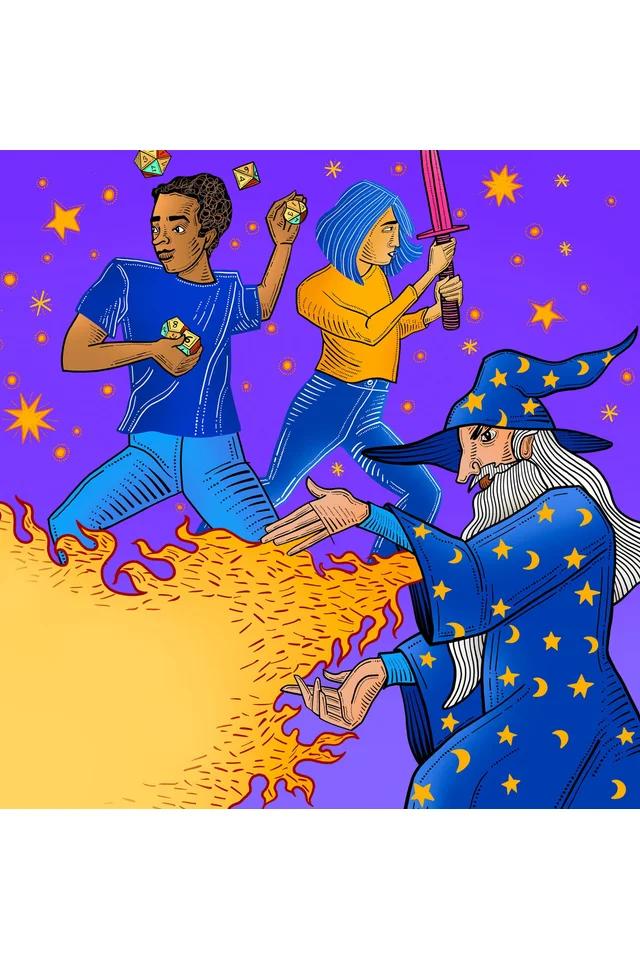
Nick and Tyler face the final session of their Dungeons & Dragons campaign before Nick moves away. When the other players fail to arrive, Tyler’s younger sister joins them, and audience choices help determine how their shared adventure ends.
Rollo's Wild Oat is a 1920 comedic play by Clare Kummer.
Rollo struggles with his brother Otto for power and murders him, then commits further violence before Edith and Hamond plot against him. After Rollo and Hamond die, Aubrey takes the dukedom and punishes the conspirators.
This six-hour stage adaptation condenses Shakespeare’s Coriolanus, Julius Caesar and Antony and Cleopatra to examine how political leaders make decisions and mistakes. Set in modern dress, it uses live video, audience seating onstage, surtitles and a news ticker to connect Roman politics with contemporary political life.
In a courtroom, a drowsy then manic judge presides over a volatile trial involving the prosecutor and his boyfriend, a defense attorney and his client, and a defendant who proposes a solution to the problems in the Middle East.
In his library in Washington Square, New York, Bishop Armstrong learns with disquiet that his grandson Harry is engaged to be married to Lucille Anderson, an actress. Harry says that the bishop has never felt the way he does; in response, the bishop finds a box of mementos (a handkerchief and dried violets) from an affair of long ago, and starts to tell Harry a story. The following scenes are a representation of the story. About 1867, there is an evening reception at the house of Cornelius van Tuyl, a wealthy banker. The guests include Madame Margherita Cavallini, an Italian opera star. Tom, the rector of St Giles (the bishop in younger days) is a friend of van Tuyl, who supports his church work. Van Tuyl expects Tom to say he wants to marry his niece Susan; instead, Tom says he disapproves of his association with Mme Cavallini, who has a bad reputation. When Mme Cavallini (Rita) enters with her admirers, she and Tom immediately notice each other. Tom awkwardly introduces himself to her, and she is interested in him. She says their moment together is like her bouquet of violets, to enjoy before they die. He wants to see her again, and she asks him to come to her hotel apartment. All this time he does not know who she is; as she leaves, she asks van Tuyl to tell him. The scene is the study of St Giles' rectory, on the afternoon of New Year's Eve, a few weeks later. Miss Armstrong, Tom's aunt, is anxious about Tom's affair with Rita, and asks van Tuyl to "save him from that dreadful woman". When Rita arrives, van Tuyl tells her she is amusing herself at Tom's expense. Tom arrives and the others go to tea; he talks to Rita. He says that love is finding the woman you want to live with all your life; she says it is like a little light in all the darkness. He asks her to marry him, but she says there is a reason she cannot. He tells her it will be all right if she repents of her sinful past. He is alarmed when he learns she had a relationship with van Tuyl, but she says it was not serious. Tom announces to van Tuyl that they are engaged, and he congratulates them. But Rita says she was van Tuyl's mistress until she met Tom. Tom is appalled, and Rita leaves. In her apartment later that evening, Rita is triumphant after her performance, and speaks from her balcony to the crowd below. Van Tuyl congratulates her. He tries to get her to eat the meal that has been prepared, but she is not hungry. She is going away the next day; he suggests that he goes away with her. She has a pistol, saying she will kill herself: that in the last weeks she has found something good in the world, but now cannot change. Van Tuyl leaves by a back way as Tom arrives. Tom, seeing van Tuyl's card and two glasses, thinks they have had a passionate meeting. Tom passionately says he wants to save Rita from her sinful life, but then declares his love. Rita says she will kill herself if he touches her. Finally he hears the chimes of midnight and the church procession which he has organized; his manner changes and he leaves to join them. The scene is as for the prologue; the bishop has finished his story. Harry, misunderstanding that the bishop's purpose was to sympathize with youthful impetuousness rather than encourage it, says he has been an ass to hesitate, and will marry Lucille. Harry's sister Suzette comes in; she sees in the paper an obituary of Mme Cavallini, and unaware of the connection with her grandfather, she reads it out; the opera singer never married.
Romanoff and Juliet is a play by Peter Ustinov. A comic spoof of the Cold War, it is set in the small mythical mid-European country of Concordia, whose leader is wooed by the United States and the Soviet Union, each one wanting him as an ally. Russia's ambassador, a member of the Romanoff family, has a son Igor who falls in love with Juliet, the daughter of the US diplomat. The two opposing families, one communist, the other capitalist, represent the warring Capulets and Montagues of Romeo and Juliet. The play premiered in Manchester, England on 2 April 1956. The Broadway production, produced by David Merrick and directed by George S. Kaufman, opened on 10 October 1957 at the Plymouth Theatre and ran for 389 performances. The opening night cast included Peter Ustinov as the General, Gerald Sarracini as Igor, and Elizabeth Allen as Juliet, with Fred Clark, Natalie Schafer, and Jack Gilford in supporting roles. Ustinov was nominated for Tony Awards for Best Play and Best Actor in Play. In 1961 Ustinov directed and starred in the film adaptation Romanoff and Juliet of the play.
Romantic Comedy is a play by Bernard Slade, author of Same Time, Next Year.
Romeo Montague and Juliet Capulet fall in love despite their families' feud and secretly marry. After a fatal street fight and Romeo's banishment, a failed message causes each to believe the other dead; their suicides bring the families' reconciliation.
When a basket containing an abandoned baby appears at astronomer Célestus's home, he and his philosopher friend Wolf debate what to do. A town mayor's accusations and the child's true parentage unsettle their household and lead the friends toward an unexpected family bond.
As the Western Roman Empire collapses in 476, Emperor Romulus refuses to resist the Germanic invasion, preferring his chickens. Courtiers plot against him, but when Odoacer arrives, the two rulers discover they share exhaustion with conquest and negotiate a strange settlement.
Struggling police detective Totomaru Isshiki teams up with Ron Kamonohashi, a brilliant sleuth barred from detective work after a past incident. As they solve a series of murders, Totomaru must also curb Ron’s dangerous condition, while members of the Moriarty family pursue their own interest in him.
Newlyweds Gerald and Clara Popkiss stay at Rookery Nook, a country house. When Rhoda Marley flees her bullying stepfather and arrives barefoot in pyjamas, Gerald shelters her. A series of family members and neighbors arrive, mistaken suspicions spread, and efforts to get Rhoda out of the house create escalating farcical confusion before Gerald and Clara reconcile and Clive pairs off with Rhoda.
Ma, kidnapped as a teenager and held captive for seven years, longs to escape with her five-year-old son Jack, who has never known the world outside their room.
A quick-witted theatre producer and several actors live on credit in a Broadway hotel while the producer searches for a $15,000 backer. The action is set in producer Gordon Miller’s room at the White Way Hotel.
Ann, a meat-packing worker from South Dakota, imagines herself as Elvis Presley and her date Brenda, a taxidermist from North Dakota, as Theodore Roosevelt. After their awkward weekend together, Ann’s imagined Elvis and Teddy personas accompany her on a road trip toward Graceland, as the play examines loneliness, queer desire, and competing ideas of masculinity.
Beatie Bryant returns to her Norfolk home and visits her family, hoping to share the thoughts of her unseen liberal boyfriend Ronnie. As she begins to express herself and the struggles of her community, Ronnie's letter announces he is leaving her.
Two university students murder a fellow student and conceal his body in a chest, then serve food from it at a party for the victim's friends and family. A former professor grows suspicious and returns to open the chest, confronting the murderers' claimed amorality.
Raised incognito as a shepherdess, Rosamunde seeks to reclaim Cyprus's throne. Governor Fulgentius tries to block her claim through intrigue, a marriage proposal and attempted poisoning, but her claim is supported by the Cypriots and Prince Alfonso; Fulgentius dies by his own poison and Rosamunde becomes queen.
In Wasaychigan Hill, a fictional reserve on Manitoulin Island, characters from the earlier Rez Cycle plays and newcomers prepare to open what they call the world’s biggest casino.
Rose Bernd speaks to a friend, Flamm, with whom she is now uncomfortable. He flirts with her: "Rosie, give me your dear, good, faithful little paw. By heaven, Rosie! Look here, I'm a deucedly queer fellow! I'm damned fond of my dear old woman; that's as true as..." Rose hides her face in her arm and says: "You make me want to die o' shame." Flamm complains of his wife: "Nine solid years she's been bedridden; at most she creeps around in a wheel chair.- Confound it all, what good is that sort o' thing to me?" Later, Streckman greets her, and insinuates he knows of her doings under a field-crucifix with Squire Flamm from Diessdorf. Father Bernd, a deacon, wishes Rose to marry August Keil, a bookbinder, whose health is weak. Rose intimates it would be better to delay the wedding, already the case for 3 years! Keil takes the matter in good stride: "I'm made for misfortune! An' that's what I've always told you, Father Bernd, in spite of it all I've taken thought an' I've worked an' God has given his blessin' so that I've not fallen by the wayside. But I can weep; these things aren't for me!" Father Bernd and Keil leave, disappointed. Mrs Flamm seeks to find out the reason behind Rose's delays, and guesses that she is pregnant. Having lost a son, Mrs Flamm, alone, exclaims: "Ah, lass, 'tis a good fortune that you have, not an evil! There's none that's greater for a woman! Hold it fast!" Finally, Rose decides to marry Keil, with Flamm's baby inside her belly. Rose admits loving Flamm, and he loves her, but, he being married, the situation is hopeless. Streckmann returns, and Rose accuses him: "I ran to you in the awful terror o' my heart! An' I begged you for the love o' God not to put nothin' between me an' August. I crept on my knees before you- an' you say, you, I ran after you! What was it truly? You committed a crime- a crime against me! An' that's worse'n a scoundrel's trick! 'Twas a crime- doubly and trebly! An' the Lord'll bring it home to you!" Streckmann jealously says: "I'm as good as Flamm. An' I don't want no more goin's on between you an' him!" Rose answers: "I'll jump into his bed, scoundrel! An' it wouldn't concern you that much!" She continues her accusations: "You pounced on me like a wild beast! I know! I tried to get out by the door! An' you took hold an' you rent my bodice an' my skirt! I bled! I might ha' gotten out by the door!" Bernd and Keil hear part of Rose's accusations. Baited, Streckmann strikes back, hitting Keil and calling Rose "a wench that's common to anybody as wants her...." Keil loses an eye. In their home, Mr and Mrs Flamm discuss his adultery. Later, Mrs Flamm attempts to hear Rose about the court proceedings, Father Bernd taking Streckmann to court for slandering his daughter. Rose failed to contradict Strackmann, for which Mrs. Flamm accuses her: "An' didn't you tell the truth, girl? You lied when you were under oath, maybe?- Haven't you any idea what that means an' what you've done? How did you happen to do that? How could you think o' such a thing?, whereupon Rose cries out brokenly: "I was so ashamed!" In Bernd's cottage, Keil tells him: "Father, you'll have to withdraw your suit." He refuses. Keil retorts: "Our Rose habeen but a weak human bein' like others." Bernd is stunned and answers confusedly : "No. I don't understand you rightly!" Rose arrives. Bernd is bitter against her, but Keil will stand by her, though worried about her perjury. Rose cries out: "O Jesus, Jesus, what did I do? Why did I go an' creep home? Why didn't I stay with my little baby?" Stunned that she had given birth, Keil asks: "With whom?" When a constable arrives to sign papers related to the court proceedings, Rose confesses to the murder of her baby.
The play was never published; this synopsis is compiled from contemporaneous newspaper and magazine reviews. Act I (Interior of Restaurant Pompadeur Caberet, at night.) This is a high class establishment with socially prominent customers. The set shows a small orchestra and "stage on a stage", which consists of risers leading to a series of open archways with curtain screens. Patrons, waiters, and entertainers swirl about the floor between numbers. The Valentines are there, along with Paradee. He is attentive to Mrs. Valentine, who misunderstands his sympathetic manner for romantice interest. She ignores her husband, who displays nervous behavior indicating emotional upset. Miss Nicely performs an interesting solo dance to music. Both men are momentarily diverted, Valentine to the music and Paradee to the girl. Later, Rose Briar appears on the risers in ornate Court of Versailles costume, singing Give Me That Rose (Madame Pompadour), and Valentine perks up. She returns in a simpler outfit to sing Love and the Moon, and Valentine is noticeably affected. Mrs. Valentine gets an idea; she summons her lawyer Mr. Little, and he, with the caberet managers, tell Rose she must go to Mrs. Valentine's country home that weekend if she wants to keep her job. (Curtain) Act II (Drawing room of Mrs. Valentine's home, the next weekend afternoon.) Rose now learns from Mr. Little what is expected of her: to lure Mr. Valentine into a compromising situation, so Mrs. Valentine can obtain a divorce. The reporter Miss Sheppard and Crecelous are present to testify to any unseemly behavior. At first Rose goes along with it; Valentine means nothing to her and she needs her job. But with time she conceives a dislike for Mrs. Valentine. She also realizes that Paradee isn't really interested in Mrs. Valentine, while Mr. Valentine's neurotic behavior is all due to Mrs. Valentine's coldness to him. Rose decides to compete with Mrs. Valentine for Paradee. (Curtain) Act III (Same as Act II, that evening.) Paradee now becomes the target of two battling women. Rose makes fun of Mrs. Valentine's proclivity for baby talk and incessant claims of persecution, but also helps clear up her mistaken impression of Mr. Valentine's infidelity. Eventually Paradee falls for his former love Rose, and Mrs. Valentine reconciles with her husband. (Curtain)
In Radio Falls, a Michigan town trapped in perpetual winter by the Rime Witch’s curse, the last remaining child, Rose, sets out to end the blizzard, confronting the danger of the witch’s magic coin and the costs of power.
Blocked novelist Rose Steiner needs money and plans a new bestseller. She imagines advice from her dead lover, celebrated writer Walsh McLaren, and decides to finish his unfinished novel with help from a young neighbor. Rose’s daughter and assistant Arlene becomes romantically involved with the young writer, Gavin Clancy.
When an accident interrupts Dorothy Cruickshank and William Westwood’s elopement, Sir Jasper Thorndyke hosts them and Dorothy’s parents, then persuades her father to accept the match. Sir Jasper falls in love with Dorothy but gives way; decades later, he is an old bachelor remembering what he lost.
Louis Parker revised this play in 1924, the only published version available. This synopsis favors the version produced on stage in 1896 and reported by contemporaneous drama critics. Act I: Sir Jasper Makes a Mistake (The High Road, just outside Sir Jasper's estate, evening.) Dorothy and William, eloping in a post-chaise, find themselves spilled out onto the ground when it overturns on a dark country road. The postboy George has also fallen and is unsure of their location. Fortunately, Sir Jasper and his servant Abraham arrive with a lamp. He quickly grasps the couple's situation, and invites them to spend the night at his manor house. No sooner are they settled, when another lost couple appears. Sir Jasper realizes these are the girl's parents, the Cruikshanks. Thinking that a shared misfortune might lead to reconcilement, he invites them also to lodge the night at Ingle Hall. (Quick Curtain) Act II: Sir Jasper Makes Amends (Dining-room at Ingle Hall, morning.) Sir Jasper is contemplating his little surprise for the two couples, when Dorothy surprises him with an armful of flowers from the garden. He is startled at his own awakening interest in the girl, who shows gratitude for his hospitality. The morning brings discord when William and Capt. Cruikshank encounter each other at breakfast. Sir Jasper eventually placates William by getting Capt. Cruikshank to talk about his experiences with Nelson. Jogram perplexes Priscilla with his highbrow manner of speaking, while he is baffled by her West Country solecisms. Having secured the parents' acquiescence to the nuptials, Sir Jasper suggests they all return to London to view the coronation celebrations. (Curtain) Act III: Sir Jasper Forgets (Mrs. Minifie's Coffee House, London.) Both couples, with Sir Jasper and Jogram, have arrived at Mrs. Minifie's Coffee House, where from an upper floor dining room they expect to view the coronation procession. Sir Jasper, aware he cuts a better figure than the callow and jealous William, now starts to imagine a life with Dorothy. However, he is brought up short by Jogram, who recalls him to honorable conduct, and assures that in time he will forget his love for Dorothy. She has given Sir Jasper some rosemary flowers, which he put carefully into his wallet, and some pages from her diary in which she wrote flatteringly of him. These he slips into a crack in the panelling of the dining room, as the company watches the procession below. (Curtain) Act IV: Sir Jasper Remembers (Same as Act III, fifty years later.) Sir Jasper, now aged 90, has returned as he does every year on this anniversary of the Queen's accession. The derelict coffee house has been owned by him for many years. He cherishes it for the memory of Dorothy, who like every other character in the play is long gone. He chuckles to himself over Prof. Jogram wanting to marry his housekeeper Priscilla as he grew childish in old age. Behind a decayed section of panelling he finds the remains of Rosemary's diary pages. Looking at them, he suddenly pulls some dried bits of flowers from his wallet. "Rosemary" he says, "that's for remembrance". (Curtain)
Two minor courtiers from Hamlet try to understand events unfolding around them, but their limited knowledge and the larger tragedy's plot leave them powerless. Their confused philosophical games, encounters with a troupe of players, and doomed voyage lead to the deaths foretold by Shakespeare's play.
Gilbert's burlesque of Hamlet has Claudius reveal that he once wrote a disastrous tragedy whose mention is punishable by death. Rosencrantz and Ophelia, who love one another, persuade Hamlet to stage it, hoping to rid themselves of his long soliloquies and unwanted engagement; Hamlet is banished and the pair marry.
After his wife Beata’s suicide, former clergyman Johannes Rosmer and his companion Rebecca West face political conflict, guilt and their mutual love. Rebecca admits she helped drive Beata to despair; unable to escape their guilt or trust each other, she and Rosmer jump into the mill-race together.
The play is structured with a framing device set in 1922, when Lawrence was hiding under an assumed name as "Aircraftman Ross" in the Royal Air Force, and is being disciplined by his Flight Lieutenant for alleged misconduct. No one seems to have become aware of his true identity, except for a man named Dickinson, who had seen Lawrence at the Paris Peace Conference of 1919 and quickly attempts to blackmail him to keep his identity secret. Lawrence, however, refuses, and Dickinson decides to reveal his identity to the Daily Mirror. After Lawrence has a dream sequence, flashing back to the various figures in his life, the play flashes back to mid-1916. Lawrence is being given an unofficial assignment as a liaison officer to the forces of the Arab Revolt, under Prince Feisal (who, although he is frequently mentioned, never appears as a character). Sir Ronald Storrs, the head of the Arab Bureau, tries to talk him out of the mission, as does Colonel Barrington, a bull-headed intelligence officer. Along with two Arab servants, Hamed and Rashid (similar to Lawrence's real-life companions Farraj and Daud), Lawrence enters the desert, revealing that he feels that the supreme being of the world is "the will", and he believes that he can achieve anything if he puts his mind to it. Lawrence later meets Auda ibu Tayi, leader of the Howeitat tribe of Bedouin, using flattery to convert him to the Arab cause (he has been paid off by the Turks to support them). Auda and Lawrence soon plan an expedition through the Nefud Desert to capture the Turkish-held port of Aqaba, which is weakly defended from the landward side. Along the way to Aqaba, however, he is forced to execute an Arab for murdering another in a feud. Meanwhile, the Turkish military governor of Deraa and his subordinate, a captain, watch with growing unease Lawrence's campaign against the Hejaz Railway, though they fail to ascertain the target of his campaign. The General decides to place a reward of £20,000 on Lawrence for his capture, and these leads to a comic scene where the Captain arrives in Auda's camp to offer him the reward, and Lawrence is present. Unable to act despite recognising Lawrence, the Captain is forced to leave the camp. At the end of Act I, Lawrence arrives at an army outpost in the Sinai Peninsula and uses a telephone station (despite the protests of a British naval officer) to report the Arab capture of Aqaba. Act II begins in the office of the new commander of the Egyptian Expeditionary Force, General Edmund Allenby, who is present with Storrs and Barrington. Allenby asks their opinions of Lawrence before Lawrence himself arrives. Storrs praises Lawrence, while Barrington finds him repugnant and undeserving of a position of responsibility. Allenby engages Lawrence in a brief discussion, which includes chat about archaeology, literature, and furniture, alternating with a serious discussion about the progress of the war. While Allenby wants Lawrence to be the permanent commander of the Arab liaison forces, Lawrence expresses the view that he is not up to the task, and admits to a conflict of conscience over aiding the Arabs while being aware of the Sykes-Picot Agreement to divide up the Ottoman Empire – although Allenby convinces him otherwise. On a reconnaissance mission in Deraa, Lawrence speaks with Hamed, with whom he has grown close, as Rasheed, the other servant, died on the march to Aqaba. Hamed has tried to bribe more Arabs into joining the cause, but they have been frightened into refusing by the Turks. Lawrence is arrested by a Turkish army sergeant, believing him to be a Circassian army deserter. He is taken back to Turkish HQ, where on the orders of the General, he is beaten and then raped. This is a deliberate action by the General, who feels that Lawrence is too extraordinary an enemy to simply kill; he must destroy his will and his personality through such an act, thus revealing his weakness. At the beginning of Act III, Allenby has just received word of the fall of Jerusalem and is posing for photographs for a journalist named Franks (a stand-in for Lowell Thomas), who requests an interview with Lawrence. During this scene Barrington (now a Brigadier General on Allenby's staff) asks Lawrence to deny that his men execute prisoners, although he is disgusted when Lawrence admits that they have. Allenby interrupts the conversation, and discusses Lawrence's request to be transferred from Arabia – a request Allenby turns down. Lawrence feels that he has learned "the truth" about himself, refusing to discuss his rape with Allenby. At this point, Storrs enters, informing Allenby that the British government wants him to enter Jerusalem in a triumph – and Allenby all but forces Lawrence to take part in the parade. The last sequence occurs in September 1918, the last days of the war, after the Battle of Megiddo has smashed the Turkish armies and the road to Damascus is all but open. Speaking with an RAF officer, Flight Lieutenant Higgins, Lawrence recounts his own force's hand in the operation, including the massacre of 4,000 Turks outside Tafas, in retaliation for their sack of the village. However, Higgins is more disturbed about Lawrence's execution of a wounded colleague – later revealed to be Hamed, Lawrence's servant. Lawrence then meets with Auda, recounting the death of Hamed. Lawrence inadvertently reveals the British treachery towards the Arabs to Auda, although he then promises Auda that he will fight for the Arabs "to the limits of my strength". At this point Barrington arrives, and Auda expresses his admiration for Lawrence to him before exiting. After Auda's departure, Barrington complains that the Arab forces occupying Deraa have committed atrocities against Turkish soldiers captured there and refuses to allow the Arabs to garrison the city. He also discusses the Tafas massacre with Lawrence, referring to him as a "callous, soulless, sadistic little brute", while Lawrence concedes that he is "lost to all human feeling". The play ends in 1922, with the RAF officers trying to smuggle Lawrence away from the barracks before the press, newly alerted to the identity of "Ross", can descend on them.
A contemporary play dealing with transgender relationships, gender, and human sexuality.
Aboard a 1930s transatlantic liner, playwrights Sandor Turai and Alex Gal discover that actress Natasha seems to reciprocate actor Ivor Fish’s declaration of love, devastating her younger composer-lover Adam. Turai fabricates a rehearsal explanation by writing a new ending from their overheard words. A storm and lifeboat drill interrupt the rehearsal; Adam falls overboard but is rescued, reconciles with Natasha, and the company replaces its failing musical with a new play.
Two bureaucrats investigate a man poised to jump from an apartment window, reviewing his life and ultimately leaving the outcome unresolved.
In the fictitious country of Yahoo, rulers preserve power by setting round-headed people against pointed-headed people, redirecting class conflict into racial antagonism. The epic parable unfolds in eleven scenes with songs.
Showing 4,465–4,584 of 8,284 shows
Load more shows