Midsummer Mechanicals
One year after A Midsummer Night’s Dream, Peter Quince and Nick Bottom prepare a new court play based on Bottom’s recollections, while missing actors and an unfinished ending threaten the performance.
8284 shows
Clear filtersOne year after A Midsummer Night’s Dream, Peter Quince and Nick Bottom prepare a new court play based on Bottom’s recollections, while missing actors and an unfinished ending threaten the performance.
A Spinoza-quoting Italian in Little Italy protests when authorities insist on holding an air-raid drill for a possible nuclear attack. The play ends with him beaten or killed and dragged offstage as his friends react.
Mile Away Murder is a 1937 murder mystery play by the British writer Anthony Armstrong. It ran at the Duchess Theatre in London's West End between 2 April and 8 May 1937. The cast included Walter Hudd, D. A. Clarke-Smith, Wilfred Caithness, Oliver Johnston, Evelyn Roberts and Gillian Maude. It received a negative review in The New Statesmanwhich considered it unmysterious while The New York Times described it as "highly competent".
The boastful soldier Pyrgopolynices has abducted Philocomasium from her Athenian lover. The clever slave Palaestrio and their neighbors stage a series of deceptions—including pretending Philocomasium has a twin and inventing a new admirer—to free her and reunite the lovers, while exposing and humiliating the soldier.
Across 1860, 1885, and 1912, three generations of a prosperous English family clash over marriage. Industrialist John Rhead resists his daughters’ and granddaughter’s choices, while changing technologies and family circumstances reshape each generation’s expectations.
True-crime writer Mark Styler visits an experimental hospital hoping to interview serial killer Easterman, but discovers that the doctor, nurse and patient identities are unstable and that his own identity may have been manipulated.
After their father is lynched and their mother dies, siblings in a northern city depend on Chris, who is crippled in factory work; when he is drafted for World War I, they debate whether he should serve a country that failed to protect his family before he chooses to enlist.
Minick is a three-act Broadway play written by Edna Ferber and George S. Kaufman, based on Ferber's 1922 short story "Old Man Minick", that opened on September 24, 1924. Producer Winthrop Ames staged it at the Booth Theatre on Broadway, with O. P. Heggie in the title role. The play is about an elderly widower who comes to live with his son and daughter-in-law in their Chicago apartment.
As the Taliban closes in on Kabul's UN compound in 1996, a Western journalist imagines meeting President Mohammad Najibullah.
Major von Tellheim, a discharged Prussian officer facing financial hardship and bribery allegations, refuses to marry his fiancée Minna. She pretends to be penniless to make him accept her, then reverses the ruse when his honor and fortune are restored.
A one-act kabuki adaptation of the Okiku ghost story by Segawa Joko III.
In the preamble of the tragedy, John, Duke of Mirandola, marries a lady named Isidora, who was initially betrothed to Guido, the Duke's son. According to the deception of the monk Gheraldi (one of the main conspirators of the conspiracy), who had reported Guido's death in battle, Isidora is induced to consent to the marriage with Duke John. The first act therefore opens with Guido's unexpected return to Mirandola, impatient to claim the love of his betrothed and unaware of the plot that took place in his absence, since all the letters between father and son had been intercepted by the monk's machinations. Once the deception was discovered, feelings of jealousy and mistrust arose between the Duke and Guido, accentuated by the attitude of Isabella, the Duke's sister, who hoped to ensure her son's succession to the Duchy of Mirandola. With his arts and the help of the notorious monk, the Duke's passions are driven to madness: he discovers Isidora together with his son Guido, and in his jealous frenzy orders the young man to be put to death. Guido's friend, who breaks in with the intercepted letters he had accidentally recovered from Gheraldi, arrives too late to save him. Duke John then dies in an agony of repentance and passion, with Isabella's diabolical schemes crowned with success. Isidora's destiny is instead left to the imagination of the spectator.
In a present-day Dublin Italian restaurant, Mirandolina navigates the attentions of men who admire her while trying to control her. She resists their pressure in Marina Carr’s reworking of Goldoni’s comedy about an innkeeper and her suitors.
Mirele, a capable but autocratic widow, has rescued her late husband’s business. When her daughter-in-law insists that Mirele’s son inherit the business and home, Mirele is cut off from the family. Ten years later she resists reconciliation until her grandson approaches her on his bar mitzvah day.
In the South Bronx in 1975, the Nieves family struggles with the accidental death of seven-year-old Puli. The play moves between past and present as his sister Miriam and their grieving parents confront loss, depression and self-harm.
During one afternoon at a country house, a gathering of guests debates marriage, class and social convention as eight proposals arise. An aircraft crashes into the conservatory, and the arrival of a daredevil acrobat and a frustrated cashier unsettles the household; Lina ultimately chooses independence over marriage.
At a Sydney radio station, its owners and a doctor investigate a killing after a sponsor appears to have been poisoned. They hide the body to secure another sponsor's contract, then discover the victim was an investigator pursuing foreign spies broadcasting in code from Woomera; the group tries to solve the crime.
In an isolated farmhouse, injured novelist Paul Sheldon depends on Annie Wilkes for care after a car crash. When she rejects his new book, she makes him destroy the manuscript and write new installments of her favourite fictional heroine’s story to stay alive.
Novelist Paul Sheldon survives a car crash but becomes a captive in the home of Annie Wilkes, his devoted reader. Furious that he has killed her favourite character, she forces him to write a new novel while he searches for a way to escape.
At a mountain resort, a young couple make a suicide pact; the situation is complicated by the arrival of two former suitors of the woman, Cornelia.
Mercenary Thrasonides frees and courts Krateia, who rejects him because she mistakenly believes he killed her brother. When she learns her brother is alive, she accepts Thrasonides and her father approves their marriage.
A Christmas-set continuation of Pride and Prejudice centered on Mary Bennet, the middle Bennet sister.
An elderly woman regresses to her childhood.
A romantic comedy in which love is disrupted by competing claims of being soulmates.
On Midsummer’s Eve at a Swedish estate, aristocrat Julie flirts with her father’s valet Jean, who is engaged to the cook Christine. Julie and Jean have sex and plan to flee and open a hotel, but their class positions and dependence on Julie’s father undermine the plan. After the Count returns, Julie asks Jean for a way out; he gives her a razor, and she leaves, presumably to die by suicide.
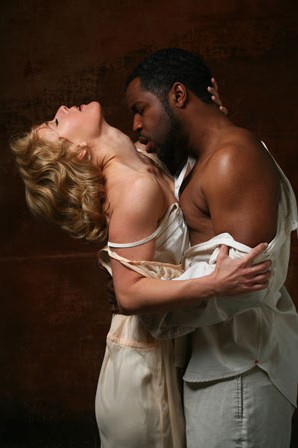
In Mississippi in 1964, a wealthy white woman and her father’s Black chauffeur enter a dangerous sexual encounter. Their struggle over power unfolds against the violence and contested freedoms of the civil-rights era.
Lulu Bett lives with her sister’s family, cooking and serving while enduring their criticism and condescension. This comedy of manners exposes the routine humiliations beneath a respectable middle-class household.
A grave crime committed for an altruistic purpose draws Miss Mabel and those around her into legal and moral scrutiny. The play follows the consequences of the act and asks whether noble intentions can justify the means.
Miss Margarida's Way (Apareceu a Margarida) is a satirical play written by Brazilian playwright Roberto Athayde in 1971 as a satire on abuse of power based on the dictatorship in his country, Brazil. It was first performed in the United States at the American Contemporary Theatre in San Francisco on 4 March 1975. It became well known when Estelle Parsons played in the performance on Broadway in 1977/8. The play is set in what looks like a school classroom. The play's cast typically consists of only two people: Miss Margarida, a school teacher, and a male student. This "student" often sits among the audience members, whom the "teacher" addresses and treats as if they were real school children. In many productions, the audience is encouraged to behave like a group of naughty, unruly 13- to 14-year-old students in a classroom. Frequently, there is a blackboard on stage, along with chalk that audience members can use to write or draw whatever they wish. The actress playing Miss Margarida has a great deal of power to improvise, and can deliver jokes or rants inspired by audience members. Playwright Athayde intended Miss Margarida to represent power: the power of government, the power of church, the power of family, the power of peers, raw power in all its forms. She can and will do anything to impose her will upon her students- first attempting to charm them, then to intimidate them, then to manipulate them with her sexuality. Miss Margarida's classroom techniques represent all the ways in which life can rob human beings of their individuality, and beat them into conformity and submission.
Sara and her lover Mellefont have fled to France, but his hesitation to marry and the return of his former lover Marwood set off a chain of deception. Marwood poisons Sara; before dying, Sara forgives her and asks her father to care for Mellefont and Marwood’s daughter.
After suicide, Veronica finds herself in the Tibetan Buddhist bardo and wants only to die again. Her upbeat spirit guide Maryamma repeatedly sends her back to life to learn its value, while Veronica's pessimism earns her the name Miss Witherspoon among the other spirits.
Teenager Tammy travels back one day in time to prevent her older brother’s death in a motorcycle accident.
Miss Biddy is devoted to Captain Loveit but has inadvertently encouraged two unwanted suitors. When they arrive in succession, she conceals one and presents him as her lover to the other, setting up a duel between a cowardly bully and an effeminate fop. Loveit returns and exposes the bully as a deserter.
A live comedy show in which comedians portray the touching and torrid posts in Craigslist’s “missed connections” section, using stand-up, improvisation and dozens of characters.
The two one-act plays examine intimacy and isolation: in Missing Marisa, Terry and Eli debate the disappearance of the woman both men love; in Kissing Christine, a separated married man and a woman recovering from a traumatic accident meet on a first date and form a tentative connection.
Mister Roberts is a 1948 play based on the 1946 Thomas Heggen novel of the same name.
A browbeaten wife takes revenge on her philandering husband.
A solo sequence of brief comic monologues draws on Biblical apocrypha and popular stories about Christ. Fo performs in Italian, regional dialects, and grammelot, a partly improvised language, following the tradition of medieval itinerant giullari.
A lyrical journey through inner-city London moves from night-bus arguments to the pressures of life as an artist, as Arinzé confronts the expectations others place on him.
Set in the kingdom of Pontus, Racine’s tragedy follows Mithridates’ sons Xiphares and Pharnaces as Roman forces threaten the kingdom and Monime, their father’s fiancée, becomes the focus of competing loyalties. Mithridates returns from apparent death, tests his sons’ allegiance, and plans an invasion of Italy; after Roman attack and his own defeat, he pardons Monime and unites her with Xiphares before dying.
Mithridates, King of Pontus is a 1678 tragedy by the English writer Nathaniel Lee. It was first performed at the Theatre Royal, Drury Lane in London by the King's Company. John Dryden wrote the play's epilogue. The original Drury Lane cast included Michael Mohun as Mithridates, Charles Hart as Ziphares, Cardell Goodman as Pharnaces, Philip Griffin as Archelaus, William Wintershall as Pelopidas, Martin Powell as Andravar, Thomas Clark as Aquilius, John Wiltshire as Another Roman Officer, Mary Corbett as Monima and Elizabeth Boutell as Semandra. The play has been revived a number of times, including a 1708 version again at Drury Lane featuring Robert Wilks, John Mills, Barton Booth and Anne Oldfield.
Jivram Bhatt hides his night blindness from his in-laws, repeatedly blundering while trying to preserve his reputation. His deception leads to escalating comic confusion, a false arrest, and a final repentance for his pride and hypocrisy.
Set on a pre-Independence college campus in Poona, the play follows Bapu, Mitra and Nama in a love triangle shaped by Mitra's attraction to Nama and her struggle with her sexuality.
Mitzi is advised by her doctor to end a pregnancy after the fetus is diagnosed with anencephaly. The play follows the woman's experience and the social and cultural conflicts surrounding the decision.

An emerging DJ fights to keep a Bronx record shop alive as an older generation confronts the loss of its musical and cultural home. Live DJ sets accompany a conflict over ownership, legacy and survival in a changing neighborhood.
A stage revue of short two-character sketches and linking monologues traces marriage from its blessing to a silver anniversary, using acid humor to portray everyday marital problems.
In Belfast, John Rainey tries to temper sectarian tension during a factory strike, but his son’s announcement that he intends to marry Catholic Nora Murray challenges his Protestant beliefs. As John withdraws support from the strike, riots intensify and the family is trapped in their home.
The storyline is set in a military unit during the socialist era. The simple intrigue showed shooting a civilist for guard's service. A starting point of this satiric comedy depicts people's army as totally absurd "machine" destroying people's characters.
A meta-theatrical lecture on memory leads into parallel stories: Virgil searches across Europe for Alice, who has left to find her father, while archaeologists investigate the ancient Iceman Ötzi. Recurring images link the journeys and ask how imagination helps recover the past.
In a mid-19th-century repertory theatre, actors milling about an empty stage are told to rehearse a version of Herman Melville’s Moby-Dick. As they improvise scenery from the sparse objects around them, they gradually become the characters and enact the story.
Across a year, a bridesmaid and bridegroom, a dissatisfied wife and handyman, a media executive and lover, a one-night couple, and a practiced pickup encounter explore sex, power, desire, and intimacy. One actor and one actress play all eight characters, changing costumes onstage between scenes.
This biographical drama follows Victorian painter Elizabeth Thompson and her poet sister Alice Meynell as they confront the Royal Academy’s exclusion of women. Its staging combines song and music-hall forms with drag and gender-nonconforming performance, framing the sisters’ artistic ambitions and equality campaigns through changing Victorian attitudes.
At a London school, teacher Amanda is pushed down by student Jason while intervening in a fight. To avoid expulsion, Jason and friends claim she attacked and racially abused him, isolating Amanda as the accusation escalates. The lies unravel, but the conflict exposes grief, self-harm, family pressure and institutional failures, ending in suicide and Amanda’s refusal to return.
Mohan searches for a missing diary containing memories of Gandhi’s youth, then narrates his early life and the experiences that shaped Gandhian ideas.
Set entirely within the seedy Atlantic club, Silver Johnny - a young and talented performer on the road to fame and fortune - is held back by his jealous and protective manager Ezra, owner of the nightclub and father to a psychotic unloved son, Baby. As Silver Johnny progresses up the ladder to stardom, local gangster/entrepreneur Sam Ross begins to take an interest, and the only way to remove his opposition (Ezra) appears to be sawing him in half, kidnapping Silver Johnny and leaving the club's fate in a state of limbo. Ezra is discovered the next morning by his second-in-command, the highly ambitious Mickey, who announces that Ross intends to take over the Atlantic Club setting the stage for a major power struggle; "He's been fucking cut in half. He's in two bins." Terrified by the potential threat of extermination by Ross and his gang, associates of the now deceased Ezra, (Potts, Sweets, Skinny and Baby) begin to lose their nerve and try to convince themselves that it's Mickey's idea of a joke; "It's Mickey's joke, it's Mickey's morning joke!" When this turns out to be false, the Atlantic Club gang prepare for what could be their final night. With just an ancient cutlass and an old Derringer as defence, the group starts to argue amongst themselves and even considers joining Ross or simply leaving. As the day wears on, people begin to gather outside the club waiting for the doors to open, oblivious to the situation. Sweating it out inside, the small group of four have to break the tragic news of Ezra's grisly death to Baby who takes the news in a dreamlike, distant manner. Uneasy about Baby's mental stability, the Atlantic gang begins to become restless - especially about their catering. Arguments break out over frivolous matters (Skinny's Uncle Tommy), and the group finally settles to consider just what its rivals are doing at that very moment. In the climax to the fast-paced story, Sweets checks downstairs to see if the coast is clear for the gang to have a little space, rather than being cooped up in a single room and finds Silver Johnny hanging from the ceiling. In sheer panic, Sweets calls for help and is joined by the others. Baby reveals that by saving Silver Johnny he killed Mr Ross and discovered that Mickey had betrayed them all for a share in the business. Skinny arrives and insults Baby, who responds by shooting him in the head with the Derringer. Mickey, Potts and Sweets attempt to cover the wound and to calm Skinny down while Baby wanders around aimlessly. Silver Johnny is lowered to the floor and Skinny dies. Unable to save Skinny's life, Mickey's authority and status break down and he kneels beside his friend's body.
As Molière's young wife Armande draws the attention of the court, Madame de Montespan tries to seduce the playwright and Louis XIV withdraws his favor. Molière turns his loyalty from king to nation, but later poverty, illness and Armande's departure do not stop him performing The Imaginary Invalid; he collapses backstage before the king can restore his favor.
Blind since infancy, Molly Sweeney undergoes an operation to restore her sight at her husband Frank’s urging and under the care of a surgeon seeking to revive his career. Her story, told in monologues by Molly, Frank and Mr Rice, traces the consequences of the operation for her independent life.
Physics students David and Elspeth fall in love but divide over belief. Years later they reunite while caring for their former lecturer Molly, who has Alzheimer's; David asks Elspeth to help end Molly's suffering, forcing them to confront conflicting ethics and their past. The play alternates time periods, using surrealism, direct address and parallel narratives.
On a Monday morning, eighteen-year-old Neena prepares for university while haunted by a childhood experience. Determined to protect her younger half-sister from the same fate, she struggles with its effects on her relationships with family and school peers and on her sense of self.
When a wealthy man’s will unexpectedly makes Alfred Evelyn an heir, his engagement to Clara falters as each fears the other is motivated by money. Evelyn feigns losing his fortune to test the people around him; mistaken assumptions and concealed generosity finally reunite him with Clara and bring other couples together.
When mathematician Peter is financially ruined by his brother's bankruptcy, neighbour Margaret asks his wealthy friends to help him, but they hesitate. The play grew from Williamson's question about whether a close-knit beach community would support a beloved member facing a disaster beyond his control.
Money the Mistress is a 1726 comedy play by the Irish writer Thomas Southerne. It was his final play. Staged by John Rich at the Lincoln's Inn Fields Theatre, the cast included James Quin as Warcourt, Lacy Ryan as Mourville, Thomas Walker as Marsan, Richard Diggs as Governor of Tangier, William Milward as Wingrave, Anthony Boheme as Don Manuel, John Hippisley as Davila, Jane Rogers as Harriet and Elizabeth Younger as Mariana.
Monique is a drama in two acts and six scenes by Dorothy and Michael Blankfort that is based on the novel She Who Was No More by Boileau-Narcejac. It premiered on October 10, 1957, at The Playhouse on Rodney Square in Wilmington, Delaware. A murder mystery thriller, the play was produced and directed by Shepard Traube and starred Denholm Elliott as Fernand Ravinel and Patricia Jessel as Dr. Monique Rigaud. The costumes were designed by Helene Pons.
Wasim, a small-time con artist, keeps several scams running under different identities. As his lies and disguises collide, misunderstandings escalate until his schemes are exposed in a comic confrontation.
After returning from a three-year journey, Vandome tries to repair the troubled lives of his friends: he helps the grieving Earl of St. Anne recognize Eurione’s love and breaks Countess Marcellina’s self-imposed isolation. In the comic subplot, the vain Monsieur D’Olive is tricked by courtiers into embarrassing himself at court and pursuing a forged love letter.
In the main plot, Valentine gives up his young fiancée Cellide when he learns his traveling companion Francisco loves her, only to discover Francisco is his long-lost son. In the subplot, wild young Thomas torments Mary with mock sanctimony until her pranks reform him and make him a suitable husband.
Duchotel disguises his affair with his friend's wife as country shooting trips. When his own wife agrees to an affair with Dr Moricet, overlapping rendezvous and mistaken identities in neighboring apartments lead to escalating farcical confusion before she forgives her husband.
A provincial lawyer comes to Paris to marry a young woman he has never met, but becomes the target of comic deceptions and ridicule.
A biographical play following the life and exploits of rock musician and political activist Screaming Lord Sutch.
Montauk is a play by David Hare. Its world premiere is announced for Broadway in spring 2027.
Two emergency telephone operators handle a terrifying sequence of calls in New York City on the morning of September 11, 2001.
A monologue centered on a vaqueiro, the horse-mounted livestock herder of the Iberian Peninsula, written for the royal celebration of Prince Dom João's birth.
Young songwriter Cat and producer Bernard face a dispute over the authorship and ownership of their hit song. Told through overlapping consultations with their lawyers and psychotherapists and flashbacks to the recording sessions, the play examines their unravelling collaboration and the power imbalance in the music industry.
Traveling actors George and Charlotte Hay hope to impress Frank Capra, but their marriage and a chaotic repertory performance unravel amid infidelity, mistaken identities and drunken confusion. The farce ends with the couple getting another chance when Capra calls back.
In the late Heian and early Kamakura periods, Yoshitsune reunites with his half-brother Yoritomo and lives in Kamakura with his companions and the Mononoke Kage. Political betrayal sends Yoshinaka into rebellion; after Tomoe dies and Kage sacrifices himself, a sleeping demon awakens within Yoshitsune, who kills Yoshinaka and grieves for him.
In a world ruled by beings with supernatural ancestry, Yoshitsune struggles with the losses of war. His unexpected friendship with the enemy warrior Taira no Noritsune makes the conflict increasingly painful as men who have shared companionship must fight one another.
In a poor Port of Spain yard, Ephraim dreams of leaving for Liverpool while his lover Rosa, pregnant with his child, is being exploited by wealthy landlord Old Mack. When former cricketer Charlie is arrested for robbing Mack’s café, his wife Sophia tries to protect their children and secure a future for daughter Esther. Ephraim leaves Rosa behind, and Esther’s return closes the play on a fragile hope for the next generation.
Moonchildren (originally titled Cancer) is a play by Brooklyn-based playwright Michael Weller. The play chronicles a year in the life of the "moonchildren" referred to in the title: eight college students living communally together in an off-campus attic in the mid-1960s.

A lonely young girl encounters magic and sets out on an adventure that changes how she sees her world. Little Chaos Co. tells her story through shadow puppetry.
Curtis, a young right-wing activist, returns to the East London tower-block flat where his brother died and tries to understand the ghost haunting him. Two squatters and one of their stories disrupt his plan.
On his deathbed, Andy revisits his past with his wife Bel, while their estranged sons speak in the shadows and their daughter Bridget bridges the divide between youth and age, life and death.
A poor young married couple argue over their child and, eventually, their relationship.
The Holloway family arrives at the "Wild Moose Lodge", which they have recently purchased, in the Adirondack Mountains, and they become trapped due to a storm. They pass the time playing a murder mystery game along with other people at the lodge: failed entertainers Snooks & Howie, and Nurse Dagmar who cares for patriarch Sidney Holloway. During the night, one Holloway son attempts incest with his mother. Several murders take place. According to reviewers, a mummified paraplegic (most likely Sidney) rises from his wheelchair to kick a man dressed as a moose in the crotch. However, this scene does not appear in the original script.
In Milan, the widowed Duchess feigns love for Cardinal’s nephew Lactantio to win approval for remarriage, but her real desire is General Andrugio. Meanwhile Lactantio’s pregnant former mistress disguises herself as a page, and a chain of mistaken identities, forged letters and shifting romances ends with the Duchess reasserting her vow while arranging Lactantio’s marriage to the page.
A world-famous Jewish writer, Jerzy Lesnewski, is suspected as having lied about his childhood during the Holocaust.
In 1832 Massachusetts, Simon Harford's mother and wife battle to control him through love. Set against the Industrial Revolution, their struggle leads to tragedy and despair.
More Ways Than One is a 1783 comedy play by the British writer Hannah Cowley. The original Covent Garden cast included William Thomas Lewis as Bellair, John Quick as Doctor Freelove, John Edwin as Sir Marvel Mushroom, Ralph Wewitzer as Le Gout, Richard Wilson as Evergreen, James Fearon as David, Richard Wroughton as Carlton, James Thompson as Lawyer's Clerk, Priscilla Kemble as Arabella and Sarah Maria Wilson as Miss Juvenile and Elizabeth Younge as Miss Archer.
Morecambe is a play by Tim Whitnall which celebrates the life of Eric Morecambe and is based on his life in the entertainment industry. The play was co-produced by Guy Masterson of Theatre Tours International and Feather Productions and premiered at the Edinburgh Festival Fringe in the summer of 2009 and transferred to the Duchess Theatre in London's West End for a limited Christmas season running from 9 December 2009 until 17 January 2010. Morecambes first production received several awards including the Laurence Olivier Award for Best Entertainment 2010, Scotsman Fringe First Award, Edinburgh 2009 and was nominated for several more including the Stage Award for Best Solo Performance Edinburgh 2009, The ITC Best Touring Production Award and WhatsOnStage Awards for Best Production and Best Actor. It starred Bob Golding as Eric Morecambe and was directed by Guy Masterson. The play was shown at the Churchill Theatre in Bromley, South London in October 2010.
In a small Midwestern town in 1928, four aging sisters confront their settled lives and family tensions as two decide to make changes before it is too late.
Detective Chief Inspector Morse investigates a murder involving the on-stage death of a young actress, with an old acquaintance as the lead suspect; the case draws him toward his own past.
Three Earth warriors travel to Outworld to rescue a comrade and recover a magic amulet from Shao Kahn to save Earth, in a live spectacle combining martial arts, dancing, music, and laser effects.
Severino, a poor migrant fleeing drought and exploitation in Pernambuco’s hinterlands, follows the Capibaribe River toward Recife. After encountering poverty there too, he considers drowning himself; the birth of a child prompts a communal celebration and a reflection on life’s persistence.
In the unfinished history play, the young Edward III learns how Roger Mortimer rose to power after deposing Edward II and plans revenge. The surviving text portrays Mortimer as an ambitious, scheming ruler who becomes overconfident and is eventually sent to execution.
When Moru and Bhaiyya's visit from Moru's aunt is cancelled, they persuade their friend Bandya, who performs female roles, to impersonate her. The deception leads to competing marriage proposals and the arrival of the real aunt and her niece.
In a fictional kingdom, Mosada attempts to summon her Christian lover, is arrested by inquisitors, and is sentenced to death; in prison she takes poison, and a monk discovers she is his beloved.
After a one-night encounter in an Edinburgh hotel, Mary confesses to Mike that she lied about contraception because she desperately wants to become a single mother. Mike reveals that he is the archangel Michael, sent to tell her she will bear God’s son; she wrestles with whether to believe him before they reconcile.
Most of the Game is a 1935 comedy play by the British writer John Van Druten. Much of the play is set in New York where a British writer and his aristocratic wife have fallen out of love with each other, and started new relationships with a teacher's daughter and a Hollywood actor respectively. Complications ensue when the press gets hold of the story. The play's Broadway run was at the Cort Theatre. The cast included Dorothy Hyson and Robert Douglas.
While his father is overseas, Philolaches borrows money to free the woman he loves and hosts a party. On his father's unexpected return, the slave Tranio invents a haunting to conceal the revelry and debt, spinning further deceptions until the truth emerges and the father forgives them.
Mother is a 1910 play which was the first successful play by Jules Eckert Goodman. The play was first performed on March 7, 1910 in Plainfield, New Jersey. Produced by William A. Brady, it debuted on Broadway on September 7, 1910 at the Hackett Theatre. It played at the Hackett through December 3, 1910, and then moved to the Circle(?) Theatre, where it opened on December 5 and ran through December 31, for a total run of 133 performances. The play was adapted to the screen in a 1914 silent film of the same name.
In a farcical rural comedy, two wealthy fathers try to arrange marriages between their foolish children while two poorer young lovers are kept apart by their families. Disguises, scheming pages and a secret exchange of babies unravel the fathers’ plans; Mother Bombie, a local cunning woman, helps reveal the truth and enable a happy ending.
The black comedy moves between 18th-century London, where Mother Clap’s molly house serves a gay subculture, and a 2001 party organized by a group of gay men, exploring the diversity of human sexuality.
During the Thirty Years' War, canteen woman Anna Fierling, called Mother Courage, follows armies to profit from the conflict while trying to protect her children. Over twelve years, she loses Eilif, Schweizerkas, and Kattrin to the war, yet keeps pulling her cart after Kattrin's death. The play follows how the business she depends on destroys her family.
Phyllis, a hardheaded matriarch, attempts to guide the direction of her children's lives as they move into a new apartment in Washington, D.C.
The play begins in 1992 post-Soviet Russia as the unassuming son (Evgeny) of a former powerful bureaucrat returns to his hometown of St. Petersburg. The play also features a narrator who is none other than Mother Russia herself, functioning as both a witty commentator and a voice of reason.
The play takes place 20 years after the events in McNally's 1990 television play Andre's Mother. Katharine Gerard lost her son to AIDS 20 years ago, and now Katherine visits her son's partner, Cal, who has married Will. The two attempt to reconcile.
In an unnamed prison, a young woman, an elderly woman, and two male prisoners face a regime whose guards control them and suppress the language they speak.
Act I It is late spring in front of the Mannon house. The master of the house, Brigadier-General Ezra Mannon, is soon to return from the Civil War. Lavinia, Ezra's daughter, like her mother Christine, has just returned from a trip to New York. Seth, the gardener, takes Lavinia aside. He warns her against her would-be beau, Captain Brant. Before Seth can continue, Lavinia's friend Peter Niles and his sister, Hazel, arrive. If Peter is proposing marriage to Lavinia again, he must realize she cannot marry anyone because her father needs her. Seth asks Lavinia if she has noticed that Brant resembles members of the Mannon family. Seth believes Brant is the child of David Mannon (Ezra's uncle, who later hanged himself) and Marie Brantôme (a French Canadian nurse), a couple expelled from the house due to fear of scandal and public disgrace. Suddenly Brant himself enters from the drive. Calculatingly, Lavinia derides the memory of Brant's mother, who died of starvation as Ezra never replied to a message she sent for help. Brant explodes and reveals his heritage. He tells Lavinia that her own grandfather (Ezra's father) also craved his mother and thus cast David out of the family. Brant has sworn vengeance. Act II Lavinia appears inside her father's study. Christine enters indignantly, wondering why Lavinia has summoned her. Lavinia reveals that she followed her to New York and saw her kissing Adam Brant. Christine defiantly tells Lavinia that she has long hated Ezra and that Lavinia was born of her disgust for him. She loves Lavinia's brother Orin because he always seemed to be hers alone, and never Ezra's. Lavinia says that she will keep her mother's adultery a secret for Ezra's sake but Christine must promise to never see Brant again. Christine accuses her daughter of wanting Brant for herself. Christine then appears to agree to Lavinia's terms but proposes to Brant that they poison Ezra and attribute his death to his heart trouble. Act III One week later, Lavinia stands at the top of the front stairs with Christine waiting for Ezra. When he arrives, Lavinia rushes forward and embraces him. Once Ezra is alone with his wife, he impulsively kisses her hand. The war has made him realize that they must put aside their differences. Christine agrees. They kiss and, for the first time in many years, share a bed. Act IV Toward daybreak in Ezra's bedroom, Christine slips out. Ezra, waking, bitterly rebukes her. He believes Christine awaits his death. Later, she deliberately taunts him that she is Brant's mistress. Ezra rises in fury, threatening to kill her but falls back, clutching his heart and begging for his medicine. Christine gives him poison instead. After taking it, Ezra realizes her treachery and calls out to Lavinia. Lavinia rushes into the room. With his dying breath, Ezra indicts his wife: "She's guilty — not medicine!", he gasps, and then dies. Christine collapses in a faint, and Lavinia falls to her knees in anguish. Act I Peter, Lavinia, and Orin arrive at the house. Orin complains of his mother's absence. He jealously asks Lavinia about Christine and Brant. Lavinia warns him against believing their mother to be innocent of an affair. Suddenly, Christine appears and embraces her son jubilantly. Act II Orin asks his mother about Brant. Christine explains that Lavinia has gone mad. Orin sits at Christine's feet and recounts his wonderful dreams about the two of them in the South Sea Islands. The islands represent everything the war was not: peace, warmth, and security, or Christine herself. Lavinia reappears in the room and coldly calls Orin to view their father's body. Act III In the study, Orin tells Lavinia that Christine has already warned him of her madness. Lavinia insists that Orin certainly cannot let their mother's lover escape. She proposes that they watch Christine until she goes to meet Brant as this should convince Orin of her treachery. Orin agrees. Act IV The night after Ezra's funeral, Brant's clipper ship appears at a wharf in East Boston. Christine sneaks out to meet Brant on the deck, and they retire to the cabin. Lavinia and an enraged Orin (who followed their mother from the house) listen from the deck. Brant and Christine decide to flee east and seek out their Blessed Islands. They painfully bid each other farewell. When Brant returns, Orin shoots him and ransacks the room to make it seem that Brant has been robbed. Act V The following night Christine paces the drive before the Mannon house. Orin and Lavinia appear, revealing that they killed Brant. Christine collapses. Orin kneels beside her promising he will make her happy, that they can leave Lavinia at home and go abroad together. Lavinia orders Orin into the house. He obeys. Lavinia tells her mother she can still live. Christine glares at her daughter then enters the house. Lavinia remains outside. A gunshot is heard from Ezra's study. Lavinia stammers: "It is justice!" Act I, scene 1 A year later, Lavinia and Orin return from their trip abroad. Lavinia now resembles her mother, even wearing a green dress like the one her mother was wearing at the start of the play. Orin has grown dreadfully thin and bears the statue-like attitude of his father. Act I, scene 2 In the sitting room, Orin grimly remarks that Lavinia has stolen Christine's soul. Peter enters from the rear and gasps, thinking he has seen Christine's ghost. Lavinia approaches him eagerly. Orin jealously mocks his sister's warmth toward Peter, accusing her of becoming a true romantic during their time in the South Seas. Act II A month later, Orin is working intently at a manuscript in the Mannon study. Lavinia enters and asks what he is doing. Orin says they must atone for their mother's death. As the last male Mannon, he has written a history of the family crimes. He then observes that Lavinia only became pretty like their mother on the islands they visited. Orin angrily accuses her of sleeping with one of the men on that island and Lavinia assumes Christine's taunting voice. Reacting like Ezra, Orin grasps her throat, threatening to kill her. It becomes apparent that Orin has taken Ezra's place as Lavinia has taken Christine's. Act III A moment later, the scene switches to Hazel and Peter in the sitting room. Orin enters, insisting that he see Hazel alone. He gives her a sealed envelope, warning her to keep it away from Lavinia. She should only open it, (a) if something happens to him, or (b) if Lavinia tries to marry Peter. Lavinia enters from the hall. Hazel tries to keep Orin's envelope hidden behind her back, but Lavinia rushes to Orin, beseeching him to let her see it. After Lavinia says she loves him, and agrees to do whatever he wants, Orin gives her the envelope. Orin then tells Hazel to leave. Orin forbids Lavinia from ever seeing Peter again. He tells her he loves her. Lavinia stares at him in horror, saying, "For God's sake—! No! You're insane! You can't mean—!" Lavinia wishes his death. Startled, Orin realizes that his death would be another act of justice. He thinks Christine is speaking through Lavinia. Peter appears in the doorway in the midst of the argument. Orin remarks that he was about to go clean his pistol and exits. Lavinia throws herself into Peter's arms. A muffled shot is heard, as Orin commits suicide in the other room. Act IV Three days later, Lavinia appears dressed in deep mourning. A resolute Hazel arrives and insists that Lavinia not marry Peter. Hazel admits she has told Peter of Orin's envelope. Peter arrives, and he and Lavinia pledge their love anew. Surprised by the bitterness in his voice, Lavinia desperately flings herself into his arms crying, "Take me, Adam!" Then, horrified, she breaks off their engagement and sends Peter away. She realizes she is forever bound to the Mannon dead. As there is no one left to punish her, she must punish herself. She decides to live alone in the old house with the ghosts of her ancestors. She orders Seth to board up the windows and throw out all the flowers – then she enters the dark house alone and shuts the door.
Two performers play Cassandra, a writer whose mother has died. As Cassandra prepares the eulogy, she loses the ability to speak; the play follows her struggle with grief and the politics of women’s voices over one day in present-day Toronto.
A short poetic drama, based on rumors surrounding Mozart’s early death, features Mozart, Salieri and a blind fiddler whose playing draws opposite reactions from the composers.
Mr Faint-Heart is a 1931 comedy play by the British writer Ian Hay. It was staged at the Shaftesbury Theatre in London's West End between 20 April and 20 June 1931. In 1935 it was adapted into a film All at Sea directed by Anthony Kimmins and starring Tyrell Davis, Googie Withers and Rex Harrison. A mild-mannered man inherits some money and goes on a cruise around the Mediterranean. To impress a lady on board, he pretends to be a famous writer, but this soon gets him into complications.
Mr Foote's Other Leg is a 2015 stage adaptation of Mr Foote's Other Leg: Comedy, tragedy and murder in Georgian London, a 2012 biography of the 18th-century actor Samuel Foote. Both the biography and the play were written by Ian Kelly. The play's prelude is an attempt to steal Foote's amputated leg from the Hunterian Collection, but the drama mainly covers the period from Foote's tutelage under Charles Macklin in the 1740s until his involvement in the controversy surrounding Elizabeth Chudleigh in 1774–76. The play premiered in London at the Hampstead Theatre, running from 14 September to 17 October 2015, directed by Richard Eyre and designed by Tim Hatley, with Kelly himself as George III, Foote played by Simon Russell Beale, David Garrick by Joseph Millson, Jock Hunter by Forbes Masson, Peg Woffington by Dervla Kirwan, Charles Macklin and Benjamin Franklin by Colin Stinton and Frank Barber by Micah Balfour. The production transferred to the West End to the Haymarket Theatre (a theatre previously run by Foote), with performances from 28 October 2015 to 23 January 2016.
The aristocratic landowner Puntila is warm and affectionate when drunk but cold and miserly when sober. His daughter Eva loves Matti, her father’s chauffeur, while Puntila tries to arrange her marriage to an attaché; Matti’s final resignation exposes the class barrier between them.
In a London bedsit in the late 1950s, George’s plans for a night out draw in his friends and landlady. The arrival of Mr Thomas turns the gathering sinister in a drama of repression, homosexuality and alcoholism.
A Corsican vendetta threatens the happiness of the lovers. When a fatal mistake removes the man stirring up the feud, the conflict gives way to reconciliation and marriage.
Mrs. Boullock asks Tintin and the Thompsons to find her missing millionaire husband, but two amnesiac men both claim to be him. Tintin seeks help from Professor Doryford and his truth-detector while an impostor’s henchmen try to stop them; the adventure ranges from Brussels to Casablanca, Argentina, China and Tibet before the impostor is exposed.
Shortly after an unspecified apocalypse, six survivors gather at a campfire. To distract themselves from mourning, they attempt to recount the episode "Cape Feare" of the TV show The Simpsons—itself a spoof on the story and characters of Cape Fear and its existing film adaptations based on a novel—as well as several other pieces of media. Seven years later, the group has formed a travelling theatre company that specializes in performing Simpsons episodes. Live theatre is a major entertainment form in the new society, with troupes fiercely competing to replicate pre-apocalyptic stories. Despite this goal, the group's rendition of "Cape Feare" differs from the real episode in many small ways. During a rehearsal, the group is attacked by armed robbers, with their fates unknown. 75 years after that, "Cape Feare" is performed as a musical in a theater dedicated to The Simpsons. The characters, plot and morals have changed into more serious and epic forms. For example, Mr. Burns has been combined with Sideshow Bob (the actual "Cape Feare" villain) and is now a supernatural avatar of death and destruction. In the musical's story, Burns destroys Springfield by sabotaging the nuclear power plant. The Simpsons flee from the catastrophe onto a houseboat. Burns and his demonic henchmen Itchy & Scratchy sneak onto the boat and untie the mooring ropes, then begin killing the Simpsons one by one. Bart, the last survivor, almost surrenders out of despair. However, he receives encouragement from the ghosts of his family and duels Burns in a swordfight. Burns almost wins, but when the boat enters violent rapids, he is flung onto Bart's sword and dies. As Bart sings a finale song about hope for the future, the stage is lit up by bicycle-powered electric lights—the first appearance of electricity in the play.
A comedy about a man who must literally live a dog's life in order to marry the woman he loves.
Mr. Kettle and Mrs. Moon is a comedy play by the British writer J.B. Priestley first staged in 1955 at the Duchess Theatre in London. The original cast featured Clive Morton and Fanny Rowe in the title roles and was directed by Tony Richardson. It ran for 211 performances. It is also known by the longer title The Scandalous Affair of Mr Kettle and Mrs Moon. Other cast members included Beckett Bould, Wendy Craig and Richard Warner.
Dryden's play bears significant parallels to his friend George Etherege's 1676 production The Man of Mode; both feature a man whose sexual attraction is so great (Woodall), that an intelligent and moral woman (Ms Pleasance) is willing to engage in an affair with him. He mentions working on the play in a letter dated October 1677, while a number of references, including one to the French general François de Créquy, date his revisions to 1679. The terms 'Mistress' and 'Keeper' implied a sexual relationship between an unmarried woman, the Mistress, and her male lover or 'Keeper', who supports her financially. Society at the time made a clear distinction between kept mistresses and prostitutes, several of whom appear as minor characters in the play; in Annus Mirabilis, Dryden suggested Charles II's multiple mistresses demonstrated his generosity of spirit, rather than immorality. The main characters include: Mr Woodall: a young, wealthy and amoral aristocrat Ms Judith: unmarried, servant of Mrs. Brainsick, seduced by Woodall Mrs. Brainsick: married to Mr. Brainsick, seduced by Woodall Ms Tricksy: Limberham's 'Mistress', who is seduced by Woodall Mr Limberham: Ms. Tricksy's 'Keeper', whom he later marries Ms Saintly: a widow, agrees to be seduced by Woodall who asks Gervase to stand in for him so he can sleep with Ms Pleasance Mr Gervase: Woodall's servant, who takes his place with Ms Saintly and marries her Ms Pleasance: Woodall's prospective bride (unknown to both of them) but who is willing to be seduced by him Mr Brainsick: husband to Mrs Brainsick, who remains unaware of her affair with Woodall Mr Aldo: a widower, who discovers he is Woodall's father Woodall first seduces the maidservant Judith, followed by Ms Tricksy, then Mrs. Brainsick; he asks his servant Gervase to take his place with Ms Saintly, a widow and is about to bed Ms Pleasance when he discovers she is his intended bride. While the female characters are all aware of each other's relationships with Woodall, the men are not, with the exception of Aldo; he supports Woodall in his seductions, arguing that he did the same when young and later discovers he is Woodall's father. At the end of the play, a series of marriages are agreed; Woodall to Ms Pleasance, Gervase to Ms Saintly and Limberham to Tricksy, while Brainsick is happily unaware that his wife was seduced. It finishes with Woodall telling the audience to find a woman who can be both a "wife and mistress".
Four-year-old Lucy plays with her imaginary friend, the often-absent Mr. Marmalade, while she tries to make sense of the adults around her. His assistant Bradley, her babysitter, and a troubled boy reveal the darker realities beneath her playacting.
Showing 3,601–3,720 of 8,284 shows
Load more shows