8284 shows

Clear filters

Meet Mr. Callaghan

Play · 1952

Meet Mr. Callaghan is a 1952 crime thriller play by the British writer Gerald Verner. It was adapted from the novel The Urgent Hangman by Peter Cheyney featuring the private detective Slim Callaghan. It premiered at the Kings Theatre in Southsea before transferring to the Garrick Theatre in London's West End where it ran for 340 performances between 27 May 1952 and 4 April 1953. The cast included Terence De Marney as Callaghan, Larry Burns, Jack Allen, Trevor Reid, John Longden, Lisa Daniels, Harriette Johns and Simone Silva. In 1953 Verner wrote another stage play featuring Callaghan, Dangerous Curves based on Cheyney's novel of the same title.

Meet the Cartozians

Play · 2025

In 1923, the Cartozian family meet with their Irish lawyer Wallace McCamant regarding their upcoming case before the Supreme Court. The Armenian-born Tatos Cartozian, an Oriental rug merchant living in Portland, Oregon, has lost his newly acquired citizenship due to the legal uncertainty of whether to classify Armenia as part of Europe, Asia, or the Middle East. McCamant presents the argument that they should be considered white by virtue of the word "Caucasian" referring to the Caucasus Mountains, which were originally part of Armenia. The recent events of the Armenian genocide weigh heavily on the family, who were forced to move to America as a result. McCamant argues they can win their case by hiding any aspects of their culture that would jeopardize their claim to being white, which leads to tensions among the family due to their varying skin tones and ability to grasp the English language. In July 2024, a group of four Armenian-Americans gather to be interviewed in the Christmas episode of a reality television series called Meet the Cartozians (a parody of Keeping Up with the Kardashians). The plan is for them to meet "the celebrity" (parodying Kim Kardashian), a well-known reality star who is distantly related to Tatos Cartozian, on camera. While waiting for her arrival, the group and their cameraman discuss their differing relationships to their heritage, as well as whether they consider themselves white or not as a result of the 1924 United States v. Cartozian, which Tatos won and was declared white. The group's differing experiences of racism soon leads to a full-blown argument over the topic, eventually leading the cameraman to cancel the production of the episode entirely. After most of the group has departed, "the celebrity" arrives on set to find the only remaining guest, Robert (played by the same actor as Tatos), eating some kadayif another guest had prepared. The two share the dessert while commiserating over their struggle to connect with their heritage, and the lingering trauma of displacement.

Meet the Wife

Play · 1923

Meet the Wife was a 1923 three act Broadway comedy written by Lynn Starling and produced by Stewart and French, Inc. It ran for 232 performances from November 26, 1923 to June 1924 at the Klaw Theatre. Mary Boland starred as inadvertent bigamist Gertrude Lennox, Humphrey Bogart as the juvenile lead reporter Gregory Brown and Clifton Webb as sporting youngblood Victor Staunton. It was set in Gertrude Lennox's living room. It was adapted as a feature film also titled Meet the Wife in 1931 starring Laura La Plante.

Metamorphoses

Play · 1996 est

The play is staged as a series of vignettes. The order is as follows: Cosmogony — Used to explain the creation of the world, as well as give the audience a sense of the style and setting of the play. Woman by the Water, Scientist, and Zeus help narrate how our world of order came from chaos, either by the hand of a creator or by a "natural order of things." Midas — The story is framed by the narration of three laundresses, who tell the story of King Midas, a very rich man. After Midas shuns his daughter for being too disruptive during his speech about caring for his family, a drunken Silenus enters and speaks of a distant land capable of granting eternal life. Silenus later falls asleep, and Midas shelters him in the cabana. When Bacchus comes to retrieve Silenus, he grants Midas a wish for his gracious care of Silenus. Midas asks to have whatever he touches turn to gold. Midas accidentally turns his beloved daughter into gold and is told by Bacchus to seek a mystic pool, which will restore him to normal. Midas leaves on his quest. Alcyone and Ceyx — Also narrated by the three laundresses, this story portrays King Ceyx and his wife Alcyone. Despite his wife's warnings and disapproval, Ceyx voyages on the ocean to visit a far off oracle. Poseidon, the sea god, destroys Ceyx's ship and the king dies. Alcyone awaits him on shore. Prompted by Aphrodite, Alcyone has a dream of Ceyx, who tells her to go to the shore. With mercy from the gods, the two are reunited. Transformed into seabirds, they fly together toward the horizon. Erysichthon and Ceres — This story tells of Erysichthon, man of no god, who chops down one of Ceres' sacred trees. For vengeance, Ceres commands the spirit Hunger to make Erysichthon captive to an insatiable appetite. After eating endlessly and spending all his gold on food, Erysichthon tries to sell his mother to a merchant. His mother is transformed into a little girl after praying to Poseidon and escapes. Erysichthon eventually falls to his endless hunger and devours himself. Orpheus and Eurydice — The story of Orpheus, the god of music, and Eurydice is told from two points of view., the first is from the point of view of Orpheus in the style of Ovid from 8 AD, who has just married his bride Eurydice. Bitten by a snake on their wedding day, Eurydice dies. Distraught, Orpheus travels to the Underworld to negotiate with Hades and the gods to free Eurydice. After Orpheus sings a depressing song, Hades, the god of the Underworld, agrees to let Eurydice return with Orpheus as long as Eurydice follows Orpheus from behind, and he does not look back at her. If he does, she must stay in the Underworld. Orpheus agrees but, when almost back to the living world, he looks back, as he could not hear Eurydice, causing Hermes to return her to Hades. The action is repeated several times, resembling the memory that Orpheus will have forever of losing his bride. The second time is told from the point of view of Eurydice, in the style of the poet Rainer Maria Rilke from 1908. After an eternity of this repeated action, Eurydice becomes forgetful and fragile, no longer remembering Orpheus. She returns to the Underworld ignorant of Orpheus, the man she loved so long ago. Narcissus Interlude — A brief scene showing Narcissus catching a glimpse of his own reflection in a pool. Enthralled, he becomes frozen. The actors replace him with a narcissus plant. Pomona and Vertumnus — A female wood nymph, Pomona, becomes involved with the shy Vertumnus. Pomona has refused the hands of many suitors and remains alone. Vertumnus, in order to see her, disguises himself in a variety of gimmicks. Trying to convince Pomona to fall in love with him, he refuses to show himself. After telling the story of Myrrha, Pomona tells Vertumnus to take off his ridiculous disguise, and the two fall in love. Myrrha — Vertumnus tells the story of King Cinyras and his daughter Myrrha. After denying Aphrodite's attempts many times to turn her head in love, Myrrha is cursed by Aphrodite with a lust for her father. Myrrha tries to control her urges, but eventually falls to temptation. With the help of her Nursemaid, Myrrha has three sexual encounters with her father, each time keeping him inebriated and blind so he would not know it's her. The third time Cinyras takes off his blindfold and tries to strangle Myrrha, who escapes and is never seen again. Phaeton — Phaeton narrates his relationship with his father, Apollo (the sun god), to the Therapist. With the Therapist adding her psychoanalytical points, Phaeton tells the audience of a distanced relationship with his father. After bullying at school, Phaeton goes on a journey to meet his father, who drives the sun across the sky every day. Racked with guilt from neglect of his son, Apollo allows Phaeton to "drive" the sun across the sky as compensation for his years of absence. Phaeton, who constantly whines, drives the sun too close to the earth and scorches it. The Therapist closes the scene in a monologue about the difference between myth and dream. Eros and Psyche — "Q" and "A" essentially narrate a scene about Psyche falling in love with Eros. Psyche and Eros remain silent during the whole interlude, but act out what Q and A discuss. Eros and Psyche fall in love, as Q and A tell the audience that they might wander in the darkness of loneliness until they blind themselves to personal romantic desires and give in to a deeper love. Psyche becomes a goddess and lives with Eros forever. Baucis and Philemon — The final story tells of Zeus and Hermes disguising themselves as beggars on earth to see which people are following the laws of Xenia. After being shunned by every house in the city, they are accepted into the house of Baucis and Philemon, a poor married couple. The couple feed the gods with a great feast, not knowing the identity of the strangers, except that they are "children of God". After the feast, the gods reveal themselves and grant the two a wish. Baucis and Philemon ask to die at the same time to save each other the grief of death. The gods transform their house into a grand palace and the couple into a pair of trees with branches intertwined. At the end of the scene, Midas returns to the stage, finds the pool, washes, and is restored. His daughter enters, restored from being fixed as a gold piece, and the play ends with a redeemed Midas embracing his daughter. The stories as they are told in the classic Ovid tales: Characters Creation King Midas Alcyone and Ceyx Erysichthon Orpheus and Eurydice Pomona and Vertumnus Myrrha Phaeton Apollo Eros and Psyche Baucis and Philemon
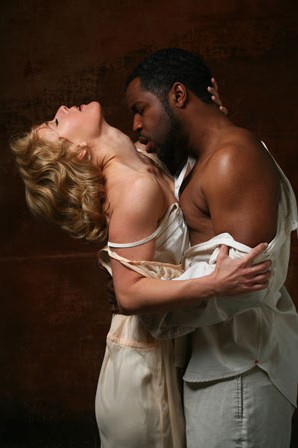

Michael and Mary

Play · 1929

Michael and Mary is a play by the British author A.A. Milne. It was staged at the Charles Hopkins Theatre in New York City, running for 246 performances between December 1929 and July 1930. It had by then transferred to the St James's Theatre in London's West End where it ran for 159 performances between 1 February and 21 June 1930. The original West End cast included Herbert Marshall, Edna Best, Elizabeth Allan, Frank Lawton, D.A. Clarke-Smith, Reginald Bach, Oliver Wakefield, J. Fisher White, Torin Thatcher, Olwen Brookes and Margaret Scudamore.

Mirandola: a Tragedy

Play · 1821

In the preamble of the tragedy, John, Duke of Mirandola, marries a lady named Isidora, who was initially betrothed to Guido, the Duke's son. According to the deception of the monk Gheraldi (one of the main conspirators of the conspiracy), who had reported Guido's death in battle, Isidora is induced to consent to the marriage with Duke John. The first act therefore opens with Guido's unexpected return to Mirandola, impatient to claim the love of his betrothed and unaware of the plot that took place in his absence, since all the letters between father and son had been intercepted by the monk's machinations. Once the deception was discovered, feelings of jealousy and mistrust arose between the Duke and Guido, accentuated by the attitude of Isabella, the Duke's sister, who hoped to ensure her son's succession to the Duchy of Mirandola. With his arts and the help of the notorious monk, the Duke's passions are driven to madness: he discovers Isidora together with his son Guido, and in his jealous frenzy orders the young man to be put to death. Guido's friend, who breaks in with the intercepted letters he had accidentally recovered from Gheraldi, arrives too late to save him. Duke John then dies in an agony of repentance and passion, with Isabella's diabolical schemes crowned with success. Isidora's destiny is instead left to the imagination of the spectator.

Miss Margarida's Way

Play · 1971 est

Miss Margarida's Way (Apareceu a Margarida) is a satirical play written by Brazilian playwright Roberto Athayde in 1971 as a satire on abuse of power based on the dictatorship in his country, Brazil. It was first performed in the United States at the American Contemporary Theatre in San Francisco on 4 March 1975. It became well known when Estelle Parsons played in the performance on Broadway in 1977/8. The play is set in what looks like a school classroom. The play's cast typically consists of only two people: Miss Margarida, a school teacher, and a male student. This "student" often sits among the audience members, whom the "teacher" addresses and treats as if they were real school children. In many productions, the audience is encouraged to behave like a group of naughty, unruly 13- to 14-year-old students in a classroom. Frequently, there is a blackboard on stage, along with chalk that audience members can use to write or draw whatever they wish. The actress playing Miss Margarida has a great deal of power to improvise, and can deliver jokes or rants inspired by audience members. Playwright Athayde intended Miss Margarida to represent power: the power of government, the power of church, the power of family, the power of peers, raw power in all its forms. She can and will do anything to impose her will upon her students- first attempting to charm them, then to intimidate them, then to manipulate them with her sexuality. Miss Margarida's classroom techniques represent all the ways in which life can rob human beings of their individuality, and beat them into conformity and submission.

Mithridates, King of Pontus

Play · 1678

Mithridates, King of Pontus is a 1678 tragedy by the English writer Nathaniel Lee. It was first performed at the Theatre Royal, Drury Lane in London by the King's Company. John Dryden wrote the play's epilogue. The original Drury Lane cast included Michael Mohun as Mithridates, Charles Hart as Ziphares, Cardell Goodman as Pharnaces, Philip Griffin as Archelaus, William Wintershall as Pelopidas, Martin Powell as Andravar, Thomas Clark as Aquilius, John Wiltshire as Another Roman Officer, Mary Corbett as Monima and Elizabeth Boutell as Semandra. The play has been revived a number of times, including a 1708 version again at Drury Lane featuring Robert Wilks, John Mills, Barton Booth and Anne Oldfield.

Mojo

Play · 1995

Set entirely within the seedy Atlantic club, Silver Johnny - a young and talented performer on the road to fame and fortune - is held back by his jealous and protective manager Ezra, owner of the nightclub and father to a psychotic unloved son, Baby. As Silver Johnny progresses up the ladder to stardom, local gangster/entrepreneur Sam Ross begins to take an interest, and the only way to remove his opposition (Ezra) appears to be sawing him in half, kidnapping Silver Johnny and leaving the club's fate in a state of limbo. Ezra is discovered the next morning by his second-in-command, the highly ambitious Mickey, who announces that Ross intends to take over the Atlantic Club setting the stage for a major power struggle; "He's been fucking cut in half. He's in two bins." Terrified by the potential threat of extermination by Ross and his gang, associates of the now deceased Ezra, (Potts, Sweets, Skinny and Baby) begin to lose their nerve and try to convince themselves that it's Mickey's idea of a joke; "It's Mickey's joke, it's Mickey's morning joke!" When this turns out to be false, the Atlantic Club gang prepare for what could be their final night. With just an ancient cutlass and an old Derringer as defence, the group starts to argue amongst themselves and even considers joining Ross or simply leaving. As the day wears on, people begin to gather outside the club waiting for the doors to open, oblivious to the situation. Sweating it out inside, the small group of four have to break the tragic news of Ezra's grisly death to Baby who takes the news in a dreamlike, distant manner. Uneasy about Baby's mental stability, the Atlantic gang begins to become restless - especially about their catering. Arguments break out over frivolous matters (Skinny's Uncle Tommy), and the group finally settles to consider just what its rivals are doing at that very moment. In the climax to the fast-paced story, Sweets checks downstairs to see if the coast is clear for the gang to have a little space, rather than being cooped up in a single room and finds Silver Johnny hanging from the ceiling. In sheer panic, Sweets calls for help and is joined by the others. Baby reveals that by saving Silver Johnny he killed Mr Ross and discovered that Mickey had betrayed them all for a share in the business. Skinny arrives and insults Baby, who responds by shooting him in the head with the Derringer. Mickey, Potts and Sweets attempt to cover the wound and to calm Skinny down while Baby wanders around aimlessly. Silver Johnny is lowered to the floor and Skinny dies. Unable to save Skinny's life, Mickey's authority and status break down and he kneels beside his friend's body.

Showing 3,553–3,672 of 8,284 shows

Load more shows