Lamp at Midnight
The play treats Galileo's 17th-century conflict with the Roman Catholic Church over the interpretation of his astronomical observations through the newly invented telescope.
8284 shows
Clear filtersThe play treats Galileo's 17th-century conflict with the Roman Catholic Church over the interpretation of his astronomical observations through the newly invented telescope.
Land's End, Cornwall. A remote old cliff-top house, rocked by equinoctial gales. It belongs to explorer and hunter, Hector Galbraith, who is away in Africa. His charwoman, the macabre Mrs Newsome, warns her favourite, Hector's daughter Valentine, 20, a student home from Oxford, that her mother Judith (who has been out shooting) is having an affair with her visitor, the writer Hugh Gifford. Valentine, a hard virginal individualist, devoted to her father and hostile to Gifford, is indignant. Her brother Vernon, 19, a student home from Cambridge, is indifferent to bourgeois morality; he is a Communist, dislikes his father, and finds Hugh charming. Judith has grown estranged from her husband since he pressured their elder son, Ivor, into an Amazon expedition, in which Ivor died. Relations between mother and daughter are also strained. Now Mrs Newsome confides in Valentine: she has written to the absent master, and the latter has just returned secretly to England to surprise the adulterous pair. He is on his way to Cornwall. She persuades Valentine not to tell the others. (End of Act One.) That evening, while Valentine and Vernon are in Penzance at a dance and the two lovers are alone in the gale-buffeted house (the scene never changes from this cluttered claustrophobic drawing-room), Galbraith walks in. After amusing himself by toying with the trapped lovers, he takes control of his house, downing brandy, throwing open the windows, brandishing a revolver, telling Judith she is starting for Africa with him (a plane is standing by at Lympne aerodrome), and giving Gifford five minutes to get out. Judith and Hugh refuse to separate. Galbraith locks Judith out of the room, tosses a second revolver at Hugh, and reminds him of the rules of duelling. If Hugh is killed, he is told, his petrol-drenched motor will be rolled off the cliff road with his body inside. Galbraith counts to three. Hugh, a veteran of the Western Front, fires well wide, in the honourable Turgenev tradition. Galbraith levels his revolver for the kill. A shotgun barrel is seen at the window. Judith blasts Galbraith. The shaken lovers hurriedly discuss their options, and decide that, as no one is likely to have seen Hector arrive, they should dispose of him as he had planned to dispose of Hugh. They drag his body out. (End of Act Two.) An hour and a half later the pair return from the deed, to clean up bloodstains. Just in time: Valentine and Vernon come back early from the dance, full of news: a car has gone over the cliff and is still burning in the cove! Vernon tells how he clambered down and managed to poke some burnt luggage out of the wreck. The luggage is examined: it contains an African death-mask. The distraught Valentine now realises who the victim of the "accident" was, and confesses she knew her father was coming home. Judith and Hugh feign shock. By ill luck, Valentine sees in the grate a tell-tale Russian cigarette stub, discarded by Hector before the duel – and recognises its significance. She confronts her mother. Judith, finding evasion impossible, confesses to killing her husband in defence of Hugh. Valentine, near-hysterical, decides she must call the police. Judith and Hugh try to dissuade her, as does Vernon. All three argue that concealment is possible, but that confession will be catastrophic. Valentine is anguished and torn. At that moment Mrs Newsome and a grizzled fisherman arrive, to ask if everyone is all right (the latter had seen the fire and gone straight to the Galbraiths' housekeeper). Valentine, sickened by Mrs Newsome's meddling, sends her packing, and picks up the telephone to call the police. To the end, we do not know what she will tell them.
In a farmhouse kitchen, Beth and Duff speak as if to each other but neither appears to hear the other. Their parallel monologues evoke a past romantic episode and practical concerns, emphasizing the breakdown of communication in their marriage.
The play is episodic and non-linear, as it travels back and forth in time. The plot centers on a woman named Betty, whose son, Bert, was recently murdered and decapitated in lower Manhattan. The location of the first and last scenes are the same. They take place on a boat, with Betty, who throws bottles filled with notes overboard, and an absurdly disguised Detective Holahan. Initially, Holahan accuses Betty of killing her son, but Betty insists this is not true. The audience later finds out, indeed, this is not true, as it is revealed that Bert's friend, Donny, killed him. Betty, whose past is dramatized in chunks, came to New York from Bangor, Maine, after having been sent to fetch her sister Rosalie, who has been acting in porn films. Incidentally, Rosalie gets hit by a bicycle and dies, so Betty takes Rosalie's place in life: she takes her job as both a worker for a Honeymoon Agency and a porn actress, dates Rosalie's Cuban boyfriend Raulito, and lives in New York with Bert. Bert, with his group of friends (Donny, Margie and Joanne) become hoodlums to some extent, as he and Donny lure men into their house and hit them over the head with a wrench so they can steal their watches. A childhood friend, Durwood Peach, confronts Betty after years of non-communication, claiming that his doctor said it would be best for him to propose to Betty, being that she has been the true love of his life his whole life. She goes with him down south, just to find that Durwood's parents just needed Durwood to return, and that she is not wanted. She goes back up to New York to find that Bert and Raulito both have been killed (the latter killed as a result of an inadvertent bank-robbery prank pulled by Bert).
A group of friends enters a North Carolina cave and wakes to find Celie missing. Years later, Celie’s ghost appears as the survivors recount their memories, which shift between past and present: Danielle confronts grief over her fiancé Tommy’s death, while JB is haunted by the deaths around him and the truth of Celie’s murder. Their fragmented accounts slowly expose guilt and violence.
Lanseloet’s mother schemes to end his attachment to Sanderijn, a woman of lower social rank. After he assaults Sanderijn, she flees and marries another man, while Lanseloet is consumed by remorse.
Laowang: A Chinatown King Lear is a play written by Alex Lin and directed by Joshua Kahan Brody. Part of 59E59 Theaters' winter 2025–2026 season, it reinterprets King Lear in Chinatown, Manhattan.
Political dissident and writer Leopold Nettles lives under state surveillance and fears imprisonment, leaving him unable to write. Friends, admirers, a lover, and government agents pressure him to repudiate his work; he ultimately chooses the possibility of prison over denying his authorship.
After King Fernando’s death, conflict erupts among his children. Sancho besieges his sister Urraca’s city of Zamora and is killed by Vellido Dolfos; the Cid later requires Alfonso VI to swear an oath at Santa Gadea.
The young Rodrigo avenges an insult to his father by killing Jimena’s father, despite his love for her. Banished, he fights the Moors and wins fame as the Cid; after further trials, he returns to Jimena and they marry.
Facing terminal cancer, Rex decides to end his life under the Northern Territory's assisted-dying law. He sells his possessions, says goodbye to his neighbor Polly, and drives from Broken Hill to Darwin, while the legality of his request remains in dispute.
Myra pursues Leonard into marriage, then finds that she wanted the chase more than married life; Leonard, initially reluctant, becomes determined to stay married.
At a Long Island lesbian community, Lil falls for Eva, a recently separated housewife who has rented a cottage without knowing the cove’s residents are lesbians. As their relationship deepens, Lil hides her terminal cancer until the summer ends in loss for the community.
In 1940, May, who hopes to become a missionary, meets Raleigh, an aspiring writer unable to enlist because of a medical condition, on a train carrying the bodies of F. Scott Fitzgerald and Nathanael West; they discover they come from neighboring Kentucky towns and negotiate love and wartime choices.
Last of the Red Hot Lovers is a comedy by Neil Simon. It premiered on Broadway in 1969.
A solo comedy places a fictional Catholic nun before her class: the actress is the only performer onstage, while audience members take the roles of her students in a participatory theatrical lesson.
At an English preparatory school, Latin teacher Dominic's sexual abuse of a 13-year-old pupil is discovered by senior teacher Brookshaw, who demands his own abusive punishments in exchange for silence. After Dominic is forced to leave, a later letter reveals that he and the boy have moved to Morocco.
A series of comic monologues exploring stereotypes.
Laugh When You Can is a 1798 comedy play by the British writer Frederick Reynolds. It premiered at the Theatre Royal, Covent Garden in London on 8 December 1798. The original cast included William Thomas Lewis as Gossamer, Joseph Shepherd Munden as Bonus, Joseph George Holman as Mortimer, John Fawcett as Sambo, John Whitfield as Delville, Edward Townsend as Costly, James Thompson as Farmer Blackbrook, Samuel Simmons as Waiter, Mary Ann Pope as Mrs. Mortimer, Maria Gibbs as Dorothy and Isabella Mattocks as Mrs Gloomly. The Irish premiere was at the Crow Street Theatre in Dublin on Dublin on 17 April 1799.
In a predominantly African-American apartment building, single mother Carol and her friend Belinda clash with neighbor Niecy, a sex worker, while a white couple moves in to save money. Their intertwined lives grow more dangerous as Carol meets police officer Donnie and Niecy’s pimp Eddie harms those around him.
Elvis fan Tom Weals and fiancée Alice cannot fly to a convention because of fog. Back at Tom's flat, they discover they have taken the wrong suitcases and now possess half a million dollars. Tom's brother, Alice's aunt, a thug and a police inspector add to the confusion before the real officer sorts matters out.
A woman describes impulsively striking a stranger who blocks her in a supermarket while choosing tuna. The man, who proves to be her victim, delivers a positive-thinking speech that repeatedly collapses into negativity. The play moves between their two monologues and scenes together.
Laughter in Court is a 1936 comedy play by the British writer Hugh Mills. It premiered at the Grand Theatre, Blackpool before transferring to the Shaftesbury Theatre in London's West End where it ran for 117 performances. The West End cast included Yvonne Arnaud, Ronald Squire, Evelyn Roberts, Edmund Breon and Wilfrid Caithness. It was one of a number of plays of the era with courtroom settings.
In a 1950s television comedy writers' room, Sid Caesar-like star Max Prince clashes with network executives while his staff write, fight, and joke. Simon's alter ego Lucas Brickman narrates their antics and the era's political and social tensions.
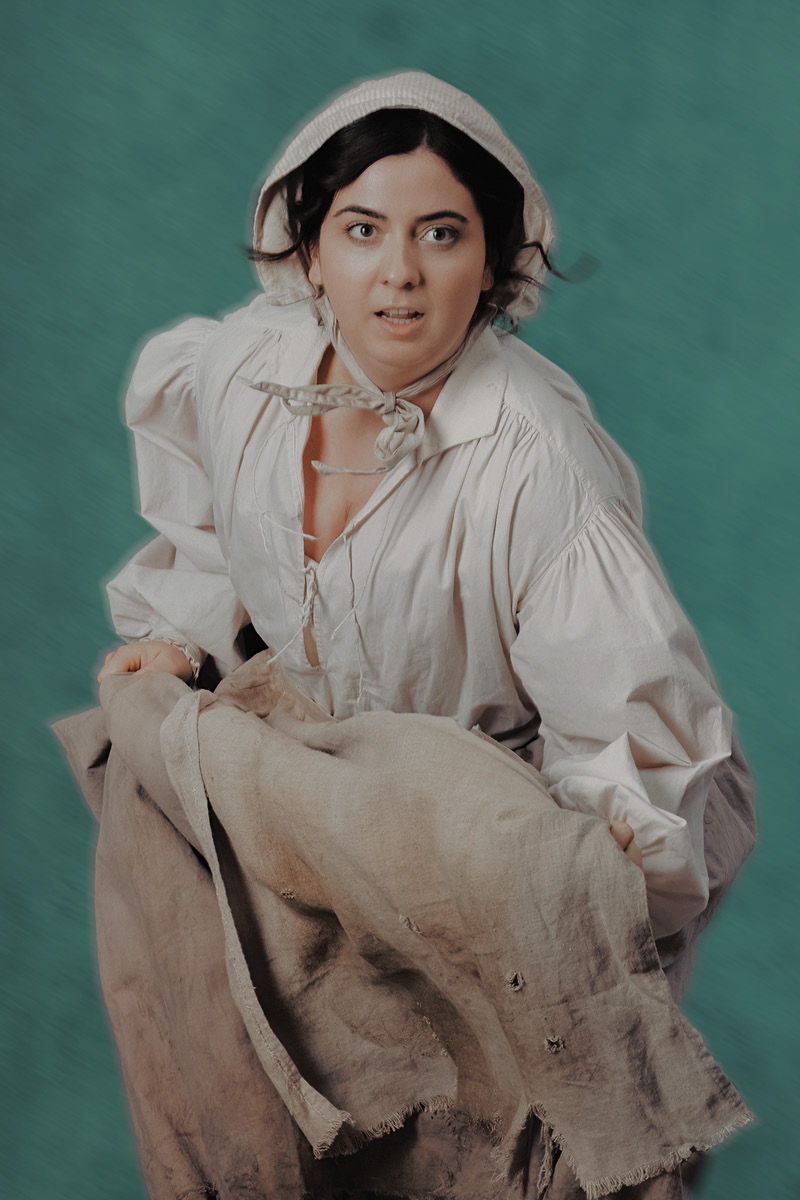
A comedy reimagines Laura Secord's journey to warn British forces of an American attack during the War of 1812, examining the stories built around her life.
After the British passport office questions why her South African passport omits her first name, a woman searches for answers through memories of growing up in Congo under Mobutu, post-apartheid South Africa, and migration to Ireland and England. Her investigation confronts questions of identity and the legal and political realities of immigration.
A wife confronts the woman who has taken her husband’s affection and peace of mind. Through a tangled domestic confrontation, the play asks why stealing money is punishable while taking someone’s love and happiness can escape the law.
In 1922, T. E. Lawrence retreats from public life at the home of George Bernard Shaw and Charlotte Payne-Townshend, revisiting the aftermath of his role in the Arab Revolt.
Framed as Henry Lawson telling stories over a campfire, the play brings to life the young Arvie Aspinall and the country woman of 'Past Carin’' alongside the humorous characters of 'Send Round the Hat.'
A collaborative drama revisits a court case in which Lesley, a struggling drug user and porn model, accuses a van driver of rape. Its shifting perspectives trace the encounter and her difficult life while examining the exploitation of women in the sex industry and criminal-justice system.
After Lazarus returns from the dead, he proclaims that death does not exist and that life is eternal laughter. Jews, Romans, and Greeks test his faith; despite the loss of his family and his own execution by Tiberius, he maintains his belief.
Murdoch, a middle-aged man who has taken to his bed for metaphysical reasons, receives a succession of visitors, including Death, a cheerful man with troubles of his own. After his mother's death shakes him out of bed, Murdoch begins reconnecting with life and falling in love.
Le Bal des Voleurs (Thieves' Carnival) is a play written by French playwright Jean Anouilh, first staged at Théâtre des Arts, Paris on 17 August 1938.
After Arlequin and Argentine marry and settle in Bergamo, a mistaken letter makes him suspect her of infidelity. Argentine’s secrecy is part of her effort to help Rosalba reunite with Lélio, and the misunderstanding is resolved when Rosalba confesses to her father.
Years after his earlier adventures, Arlequin lives in Paris with his daughter Nisida and a fortune. He initially betroths her to a marquis, but when she and Cléante reveal their love, Arlequin gives Cléante the fortune he inherited and welcomes him as a son.
Monsieur Jourdain, a wealthy bourgeois, pursues aristocratic status through lessons in the gentlemanly arts and costly displays. He hopes to marry a marchioness and marry his daughter to nobility, but Cléonte and his allies disguise themselves as Turkish royalty to win Jourdain's consent to Lucile's marriage.
When notary Maître André suspects his wife Jacqueline of an affair, Jacqueline's lover Clavaroche proposes using the young clerk Fortunio, who loves her, as a decoy to divert her husband's suspicion. Fortunio begins to understand that Jacqueline loves Clavaroche.
When Aubri de Mont-Didier is murdered after setting out on a night journey, the jealous Macaire and his accomplice Landry let a mute orphan, Éloi, be accused. Aubri’s dog leads the authorities to his grave and helps expose the killers, clearing Éloi.
Gnomes steal human hearts and keep them in a castle. Fairies seek to restore people’s capacity for love through two youths whose hearts remain pure.
Rodrigue and Chimène love each other, but after Rodrigue kills Chimène’s father in a duel to defend his own father’s honor, she feels bound to seek revenge. Rodrigue later wins renown fighting the Moors; the king ultimately arranges for the couple to marry after a year.
Bruno, a village scribe whose eloquence fuels his paranoia, fears his devoted wife Stella is unfaithful. To settle the question, he offers her first to his best friend and then to the village’s young men, provoking violent hostility toward him and threats against Stella.
A self-important police commissioner dismisses a stream of absurd complaints and refuses to help a fearful citizen, but loses his authority when a visitor claiming to be mad forces him to obey increasingly ridiculous commands.
A secular comedy set in a convent and featuring nuns as its central subject, the play helped establish the French Revolutionary-era convent-play genre, which used convent settings to criticize or parody religious practice. Its all-woman cast made it the first such cast in French theatre, and its treatment of nuns divided Parisian audiences.
Pontagnac pursues the faithful Lucienne while her husband Vatelin is pursued by another woman. Their tangled plans collide in a double-booked hotel room, where bells, mistaken identities and a succession of jealous spouses produce farcical chaos before the couples reconcile and Pontagnac discovers he is the fall guy.
At a weekly dinner where wealthy guests ridicule the person they consider the evening's fool, publisher Pierre Brochant brings François Pignon, a matchstick-model enthusiast. When Brochant's wife leaves him, Pignon's well-meaning but disastrous attempts to help expose Brochant's own cruelty and unravel his relationships.
Nicolas is 17 years old and lives with his mother, Anne. His father, Pierre, has just had a child with his new girlfriend, Sofia. Anne informs Pierre that their son, a depressed teenager, has not been to school for three months. Pierre then talks with Nicolas, who asks to come and live with him and Sofia. Pierre accepts, changes his high school and will do everything possible to restore his son's appetite for life.
Dorval, a young man of unknown parentage, falls in love with Rosalie, who is engaged to his friend Clairville. When Rosalie’s father reveals that Dorval is his illegitimate son, the pair recognize their love as familial; Rosalie marries Clairville and Dorval marries Constance.
When Gendarme Pénultième brings an alleged offender to Commissioner Médor, his bewildering report accuses a priest of indecency in the Marquise de Montonson’s park. The supposed priest reveals she is the marquise, who had stooped to pick a four-leaf clover; she invites the commissioner to dinner, while the gendarme is arrested for disrespecting his superior.
A liturgical drama in Anglo-Norman with Latin choral texts and stage directions, it dramatizes the temptation and fall of Adam and Eve, the story of Cain and Abel, and episodes involving prophets including Isaiah and Daniel. The surviving text's opening directions call for a staged representation of Paradise.
A dramatic pastourelle follows shepherdess Marion, her lover Robin and their friends after Marion resists a knight's advances. Dialogue in the Picard dialect is interspersed with short refrains and songs.
The drama recounts Columbus’s voyages through a theatrical “Book of Life” read by an Explicator and commented on by a Chorus. After Columbus dies, a second, mythic self watches his life unfold: from the voyage and discovery of America to his return, loss of power, imprisonment and death.
In Brussels, brewer Ferdinand Beulemans's daughter Suzanne is engaged to Séraphin Meulemeester, son of a competing brewer, for the business advantage of a dowry. Suzanne loves Albert Delpierre, a young French brewing intern, and learns that Séraphin has a child with another woman. She ends the engagement and urges Séraphin to acknowledge his responsibilities; the rival brewers then compete to become honorary president of their society. Suzanne and Albert help secure the position for her father.
In five tableaux, Sebastian’s faith and defiance of pagan worship bring him before the emperor and into martyrdom. He refuses the imperial crown and lyre, is shot with arrows, and is finally received into heaven. Debussy’s incidental score accompanies D’Annunzio’s mystery play.
Théophile sells his soul to the Devil, then, overcome by remorse, prays to the Virgin Mary, who delivers him from the pact. The religious drama draws on traditional saints’ lives and the legend of Theophilus of Adana.
Cléon schemes to take his provincial host's money and marry his female relatives. He persuades Valère to abandon Chloé and promises to marry Florise, but Ariste and Lisette expose him with help from his servant Frontin.
Woodcutter Sganarelle's wife tells two servants that he is a brilliant doctor who must be beaten to confess it. Forced into the role, he pretends to treat mute Lucinde, who is feigning illness to escape an arranged marriage; comic complications follow as Sganarelle helps her pursue her lover.
Valère loves Lucile, but her father Gorgibus intends to marry her to the elderly Villebrequin. Valère’s valet Sganarelle helps the lovers by impersonating his own twin brother, a doctor, while Lucile’s cousin Sabine helps the deception along. The comic scheme builds on the commedia dell’arte trick of a false doctor rapidly moving between two roles.
Set twenty years after L’Otage, the play follows Turelure, now an elderly official, and his son Louis, who owes money to Lumîr, a Polish woman seeking funds for her country’s liberation. Louis, Lumîr and Turelure’s mistress Sichel scheme to obtain Turelure’s hoard; after Louis shoots at his father and Turelure dies, Louis inherits his property and makes a self-serving marriage proposal to Sichel.
Rosimond travels from Paris to marry Hortense, a provincial woman chosen by his parents. Expecting her to be impressed by his courtly reputation, he treats her impertinently; Hortense decides she will not marry him unless he changes his manners.
The comically surreal play follows Baron Méduse, his daughter Frisette, her suitor Astolpho, and the Baron’s valet Polycarpe through misunderstandings and non sequiturs, accompanied by a mechanical monkey named Jonas dancing to intermittent music. It ends with the protagonists embracing.
Parisian lawyers Fauvinard and Tardivaut invent a trial as an alibi for their affairs, but their mistresses and other lovers converge in one apartment. Their efforts to avoid discovery drive a frantic farce of entrances, exits and false identities before the men return to their wives.
Angélique loves Dorante but resists marrying a wealthy middle-class man because of her aristocratic rank. Dorante tests her by proposing a disguised alternative suitor; when her father offers her younger sister instead, Angélique reveals that she cannot bear to lose Dorante.
André, a once proud old man, is showing the first signs of mental degeneration. His daughter Anne, who takes him in at her apartment where the play takes place, seeks only to help and protect him, but the progression of his illness becomes inexorable. Both angry and distraught, he gradually loses his mind and reverts to childhood under her clouded gaze. Through stagecraft, the production draws the viewer into the twists and turns of a diseased mind: the actors' roles swap and become interchangeable, furniture changes from one scene to the next, and the dialogue repeats itself. The viewer is brought inside the father's head, hence the misunderstandings and the feeling of constantly being caught between truth and fiction, nightmare and reality. As the father decays, the setting expands and the space empties, leaving him with his solitude, his own nothingness and his impending end.
Saint-Albin loves Sophie, a poor young woman whose parentage is unknown, but his father opposes their match and his uncle tries to send her to a convent. When the uncle recognizes Sophie as his niece, the young couples are free to marry and the father welcomes his children.
Set in Rome during Italian unification, the drama follows Pensée, the blind daughter of Sichel and Louis de Coûfontaine, and Orian, the Pope’s nephew and adopted son. Their love crosses religious and political conflicts; after Orian dies in the 1870 war, Pensée awaits his child amid the struggle between spiritual vocation and human love.
In an imagined supper after hearing of Richard Wagner's death, Ludwig II of Bavaria mourns the composer and confides his love for a young man while seeking absolute beauty. The play shifts to an asylum, where the young man is now his nurse and other supper guests reappear as attendants; the audience is left to interpret the king's death by drowning as murder, suicide, or accident.
In the small town of Beaujac in May 1910, Halley’s comet and a visiting Comédie-Française actress unsettle the ordinary routines of the Dujardin household and its neighbors. Young Simon watches the adults’ compromised desires and frailties, wondering why his father is not the hero he imagines.
A moralized dramatic proverb in which a cobbler returns the money he received from a financier and reconciles with his wife; they conclude that contentment is better than wealth.
An older man travels to Monaco and is wrongly suspected of gambling. He befriends a deserted demi-mondaine, but when she betrays him with his best friend, he must regain the forgiveness of his strict wife.
A three-act comedy by René Fauchois.
Eugène Ribadier hypnotizes his jealous wife Angèle so he can leave home for affairs, then wakes her with a secret trick. When her old admirer Thommereux learns the method, the deception unravels; Angèle turns the system against Ribadier, and a mistaken suspicion involving the household’s coachman finally brings the couple back together.
The one-act farce is the final installment of Lesage’s Arlequinade sequence; together with La Foire de Guibray and Arlequin Mahomet, it forms a linked comedy in three acts.
Set during the conflict between the Second Triumvirate and Sextus Pompey, the tragedy focuses on the suffering of the women in the lives of the men involved.
Wealthy coachbuilder Mr. Perrichon takes his family to the Swiss Alps, accompanied by two suitors competing to marry his daughter Henrietta. Falls into glacial ravines, a rescue that brings Perrichon public esteem, and a feud with a lovelorn mayor culminate in an absurd duel.
Gaston, an amnesiac veteran, is claimed by several families and identified as Jacques Renaud, a cruel young man before the First World War. Unable to reconcile that past with his present self, he leaves the Renauds and joins a surviving boy’s family, telling Jacques’s brother that Jacques is dead.
The love affairs of young people in Chioggia spark jealousy and quarrels among two groups of fishermen. Toffolo flirts with the engaged Lucietta, provoking Checca and a fight between the fishermen; after the official Isidoro intervenes, the couples marry and peace returns.
Angélique's brother has squandered the family's money and plans to send her to a convent. Her guardian Géronte, a curmudgeon, proposes a marriage to his elderly friend Dorval, while Angélique loves Valère. When the brother faces arrest for debt, Valère offers help and Géronte finally pays the debt, blesses the lovers and provides a dowry.
In Lima, actress Camila Périchole turns a quarrel with the jealous viceroy to her advantage and receives his splendid coach. The gift provokes concern about social scandal, but she surprises the court by donating it to the church so priests can bring the sacrament to the dying.
At the court of Francis I, jester Triboulet encourages the king’s seductions while trying to protect his daughter Blanche. Courtiers abduct Blanche, who later learns the king has been unfaithful but sacrifices herself to save him from an assassin. Triboulet discovers her dying in a sack and believes he has killed his child.
In 1958 York, Pennsylvania, down-on-their-luck Shakespearean actors Leo Clark and Jack Gable pose as the nieces of an ailing woman who has left a multimillion-dollar inheritance to relatives in England. They continue the deception after learning the heirs are women, while romantic entanglements and suspicions threaten their plan.
Leah is the daughter of a manipulative master jewel thief who has trained her to rob. When Paul Sylvaine catches her in his home, he persuades her to reconsider her life. She returns the stolen jewels, leaves her father, and returns to the farm where she was raised; years later she and Paul reunite and fall in love.
Lean Harvest is a 1931 play by the British writer Ronald Jeans. It portrays a married couple in the years after the First World War, with the New Statesman review concluding that the moral of the play was "too much money and too little money are equally dangerous to married happiness". Its original run at St Martin's Theatre in London's West End ran for 123 performances between 7 June and 21 August 1931. It starred Leslie Banks, who also directed, as well as Diana Wynyard, Nigel Bruce, Douglas Jefferies, E. Vivian Reynolds, Joan Swinstead and Allan Wade. It was produced by Raymond Massey. It then transferred to the Forrest Theatre on Broadway, where it ran for 31 performances from 13 October 1931 with Banks and Bruce reprising their roles.
Bond recasts Lear as a paranoid autocrat building a wall against imagined enemies. His daughters rebel, leading to war and Lear’s imprisonment. Blinded and haunted by the murdered Gravedigger’s Boy, Lear undergoes a journey of self-revelation and becomes a prophet. He tries to dismantle the wall he built, a final act that leads to his death but offers hope through practical activism.
Leave Her to Heaven is a 1940 play by the British writer John Van Druten. Actress Ruth Chatterton made her first appearance on Broadway in 15 years. She co-starred with Edmond O'Brien. It premiered at the Longacre Theatre on Broadway on 27 February 1940. Set in England, it was based on a true story about a woman who took her older husband's chauffeur as a lover, only for the younger man to kill her husband. It is unrelated to the film of the same title, which is based on a 1944 novel by Ben Ames Williams.
The first scene is set in the Oak Gallery in Blandings Castle, in the morning. At the castle is the Earl of Middlewick, his butler Bellows, his youngest son Freddie, and his secretary Baxter. Freddie's stepmother, Lady Middlewick, has inherited a diamond necklace (to the chagrin of second cousin Ethelberta). Freddie and Phyllis Jackson want to get married but her father will not approve unless Freddie either works for his jam business or invests five thousand pounds in the business. Freddie prefers the latter. He has inherited five thousand pounds, but Lady Middlewick must sign any cheques drawn by Freddie against his legacy, and she disapproves of the investment. Freddie and Phyllis see an advertisement offering Psmith's services for any job whatsoever. Freddie wants to hire Psmith to steal the diamond necklace and arranges a meeting. Middlewick goes to London to hire Eve Halliday to catalogue the castle's library, and to bring poets Ralston McTodd and Aileen Peavey to Blandings at Lady Middlewick's command. The second scene is set outside the Greek Park Tube Station. Cynthia, wife of Ralston McTodd, chats with a lift man and tells her friend Eve that Ralston, who is temperamental, has left her once again to go write poetry somewhere. It rains and Eve has no umbrella. Psmith takes Walderwick's umbrella from the nearby Morpheus Club and gives it to her. Psmith likes Eve and offers to steal the necklace for Freddie for free, to be near Eve at Blandings. Eddie Cootes also tries to trick Psmith out of money but fails. The third scene is set later in the Morpheus Club. Eve talks with club waitress Miss Rumbelow, sees Psmith again, and returns the umbrella. Psmith shows Walderwick where his lost umbrella is and Walderwick thanks him. Psmith tells Freddie his plan: they will steal Lady Middlewick's necklace, then she will sign Freddie's cheque to buy her a new one, but he will actually return her stolen necklace to her. Lord Middlewick annoys McTodd, and McTodd leaves while Middlewick is out. When Middlewick returns, Psmith pretends to be McTodd, which Middlewick believes because he has lost his glasses. Middlewick tells Eve that Psmith is Ralston McTodd. The second act is set in the Oak Gallery in Blandings Castle, in the following evening. There is a gramophone playing, and Freddie, Phyllis, Waldwerick, and Agatha dance. Lord and Lady Middlewick, Ethelberta, Baxter, and Psmith enter, and everyone settles down to drink coffee. Lady Middlewick is wearing her diamond necklace and shows it off to Ethelberta. Lady Middlewick announces that Miss Peavey and Mr McTodd are going to read their poetry for them. Aileen Peavey enters and talks poetically about fairies. Lord Chipstead, Walderwick's father and Lady Middlewick's cousin, also joins the party. Miss Peavey and Psmith (as McTodd) sign their names in Baxter's autograph book. When Eve privately talks to Psmith about his treatment of his supposed wife Cynthia, Psmith improvises and convinces her that Cynthia is wrong about him. Baxter shows Freddie and Phyllis that Psmith's signature is wrong. Baxter suspects Psmith is an imposter intent on stealing the necklace. Freddie and Phyllis discuss this with Psmith. Cootes appears again, pretending to be Ralston McTodd and hoping to steal the necklace, but Psmith stops him and lets him go. Cootes and Peavey recognize each other as they are both confidence tricksters and former partners. They realize Psmith is an imposter, and since Cootes has a gun, they get him to agree to introduce Cootes to the household. Psmith introduces Cootes to Bellows as his valet, and gets his gun by pretending Cootes was carrying it for him. Miss Peavey and Cootes plan to turn off the lights and take Lady Middlewick's necklace. They enact their plan and Cootes hides the necklace in a flower-pot. Eve takes it and hides it elsewhere, and then Psmith acquires it. The third act takes place the next morning, in a keeper's cottage at Blandings where Psmith is staying. Eve spoke on the telephone with Cynthia and realized that Psmith is not McTodd. She tells Freddie. Freddie tells her he already knows and had asked Psmith to steal the necklace. Lady Middlewick has signed Freddie's cheque, ostensibly for buying a new necklace. He gave the cheque to Phyllis to give to her father and now needs the stolen necklace. Eve thinks Psmith never intended to give it to Freddie. They look through Psmith's things for the necklace. Psmith appears and is disappointed in Freddie. He still has Cootes's revolver and locks Freddie behind a staircase door. He tells Eve that he agreed to steal the necklace for free, not to take the necklace himself but to be near Eve. She asks him to prove it by giving her Lady Middlewick's necklace and he complies. Miss Peavey appears with Cootes, who is holding a revolver and also grabs the one Psmith took. They take the necklace and decide to get married. Psmith manages to take the guns when Cootes is distracted by Freddie shouting, and Cootes gives him the necklace. Miss Peavey and Cootes leave without the necklace but plan to marry anyway. After Mr and Mrs McTodd arrive, Baxter and Lord Middlewick question Psmith about his identity. Psmith claims he was invited by Freddie to help guard the necklace, which Freddie corroborates. Psmith tells them Miss Peavey was a thief and Freddie recovered the necklace. Lady Middlewick thanks Freddie. Baxter is suspicious of Psmith but is ignored and resigns. Lord Middlewick hires Psmith as his new secretary. Psmith and Eve plan to get married. He again takes Walderwick's umbrella and they walk out under the umbrella.
In North London, Jamaican-born Enid works two jobs to support her daughters Del and Viv, who were raised in Britain. Worried about their futures, she seeks guidance from an Obeah woman and a family friend as the family navigates generational and cultural differences.
Two brothers, Steven, who runs a graffiti-removal company, and Barry, an artist seeking recognition, confront a traumatic childhood incident long left unspoken. Seventeen jaggedly ordered scenes move across locations and months.
Recently retired chancellor Vilém Rieger confronts the loss of power amid demands from his family, political functionaries and his own competing notions of truth.
During preparations for Bill Mercer's wedding, his older brother Ben announces he is leaving home, exposing tensions between the sons and their father Jacob. A former relationship between Jacob and the bride's mother further unsettles the family as the wedding plans come under question.
A future-set comedy that includes sexual relations between people and animals and between parents and their children.
The play tells the story of Delia Ephron and her journey through a late in life relationship and eventual marriage to Peter Rutter, a man from her past that comes back into her life unexpectedly after the death of her husband.
The lives of two women scientists intertwine across centuries: in 18th-century France, Émilie du Châtelet faces pregnancy and scientific ambition; in modern New Jersey, Olivia seeks motherhood through Millie, a surrogate balancing family pressures and her own future.
A mysterious, romantic young woman arrives in a remote Old West mining town seeking its legendary heroes. She finds what she is looking for among an outlaw, a sheriff, a banker, and the town's rough but lovable men.
Two aging rival film stars meet in an effort to revive their careers. Their competitive relationship and plans form a comedy about celebrity and the theatre business.
A wealthy, childless couple face relatives who scheme to secure the inheritance by encouraging them to adopt one of their siblings’ children. When Raja loses his wealth, the relatives abandon them, but their loyal servant stays; Rani’s pregnancy gives the couple hope to rebuild their lives.
After graduating high school, Alan moves from the Midwest to San Diego in the 1950s to live with his estranged father and his new family, confronting unresolved problems in that household.
A gender-swapped reworking of Lend Me a Tenor, with the opera within the play changed to Carmen.
The play takes place in 1934, in a hotel suite in Cleveland, Ohio. The two-room set has a sitting room with a sofa and chairs at right and a bedroom at left. A center "stage wall" divides the two rooms, with a door leading from one room to the other. (Throughout the play, the audience can see what's happening in both rooms at the same time.) As Scene I of the play opens, Henry Saunders, general manager of the Cleveland Grand Opera Company, is anxiously awaiting the arrival of Tito Merelli, a world-famous Italian opera tenor, known as "Il Stupendo" to his many fans. Merelli is coming to Cleveland to sing the lead role in a performance of Giuseppe Verdi's Otello. It's the biggest event in the Cleveland Opera's history. A sellout crowd and the members of the Cleveland Opera Guild will be at the opera house that evening to see the great Merelli. Saunders' harried assistant, Max, is also in the hotel suite. Saunders has charged Max with seeing to Merelli's needs, and with getting Merelli to the opera house in time for the performance. Also there is Maggie Saunders, Henry's daughter and Max's sometime girlfriend. Maggie is a fan of Tito Merelli, and hopes to meet him. Tito finally arrives at the hotel suite, accompanied by his hot-tempered Italian wife, Maria, who is jealous because Tito flirts with other women. When she finds Maggie hiding in the bedroom closet, trying to get Tito's autograph, Maria angrily assumes that Maggie is Tito's secret lover. Maria writes Tito a "Dear John" letter, and leaves the hotel. In the sitting room, Max gives Tito a tranquilizer-laced drink, trying to calm him down before the performance. (Unbeknownst to either of them, Tito accidentally takes a double-dose of tranquilizers.) When he learns that Max is an aspiring opera singer, Tito kindly gives Max a singing lesson, teaching him to "loosen up" and sing with more confidence. Tito and Max sing a duet together ("Dio, che nell'alma infondere" from Verdi's Don Carlos). When Tito returns to the bedroom, he finds Maria's note. Horrified that his wife has left him, Tito goes into a fit of passion and tries to "kill himself" with various non-lethal objects (e.g. trying to stab himself with a wine bottle). Max manages to calm Tito down, and takes the singer into the bedroom, where Tito lies down on the bed for a rest. Much later (Scene II), Max is unable to wake Tito from his nap. Max finds an empty medicine bottle and Maria's "Dear John" letter, which is written in such a way ("By the time you read this, I will be gone.") that Max mistakenly thinks Tito has committed suicide. When Saunders arrives, Max tearfully tells him that Tito is dead. Saunders is furious. The opera performance will have to be cancelled, and the audience will demand their money back. It will be a disaster for the Cleveland opera, and for Saunders himself. However, Saunders comes up with a plan. Since no one else knows that Tito is dead, Max will step into the Othello role and pretend to be Tito. Wearing Tito's costume and makeup, Max will star in the opera performance. The audience will never know that it is not Tito Merelli, and they can announce Tito's death tomorrow morning. Max reluctantly agrees to the plan. He goes into the bathroom to change, and later returns, dressed as Othello, in a costume, wig, and blackface makeup. As the curtain falls on Act One, Saunders and Max leave for the performance, just as Tito wakes up in the bedroom. As the second act opens, Saunders and Max return to the hotel suite. Max's performance as Othello was a huge success, and no one suspected that he was not Tito. Then Saunders gets a phone call, telling him that the police are downstairs in the lobby. They are looking for "a lunatic dressed as Othello, who thinks he's Tito Merelli." During Max's performance, the "lunatic" tried to force his way into the opera house, hit a policeman who tried to stop him, and ran away. Saunders tells Max to quickly change out of his Othello costume and makeup, while he goes downstairs to handle the police. Max returns to the bedroom, but is shocked and horrified to find Tito is missing from the bed. Still wearing his Othello costume, Max leaves the hotel suite and runs to find Saunders. A few seconds later, Tito Merelli returns to the hotel suite, also dressed as Othello, in a costume, wig, and blackface makeup. Frantic and on the run from the police, Tito is even more confused when other characters in the play show up to congratulate him on his "magnificent performance" as Othello. For the rest of the play, Max and Tito—who are identical in their Othello costumes and makeup—are repeatedly mistaken for each other, as they alternately run in and out of the hotel suite. Max is mistaken for Tito, and Tito is mistaken for Max by Saunders. Also, Tito and Max both find themselves being romantically pursued by Maggie Saunders, and by Diana, the Cleveland Opera's sexy and ambitious soprano. Eventually, Diana seduces Tito in the bedroom, while Maggie simultaneously seduces Max (who she thinks is Tito) in the living room. At the end of the play, things are sorted out. Maria returns to the hotel and makes up with the bewildered Tito, while Max manages to step into the bathroom long enough to change out of his Othello costume and wig, and emerge as himself. Tito and Maria leave together, while Saunders accompanies Diana to a downstairs reception. Maggie realizes that not only was Max the "Tito" that she had sex with, he was also the "Tito" who sang so passionately in tonight's opera performance. As the play closes, Max and Maggie share a kiss.
Structured around Lenny Bruce’s nightclub routines, the play follows the controversial comedian from his early career in 1951 through his death in 1966. Barry described the play as the story of Bruce’s inner life rather than simply the story of his life.
Prince Leonce and Princess Lena separately flee their arranged marriage. They meet while traveling in Italy, fall in love, and return disguised as automatons to their wedding, where their identities are revealed.
Leopoldstadt frames the narrative of a Jewish family in Vienna over a period of some 50 years. The main set is the drawing room of a wealthy family. There are five acts occurring in the years 1899, 1900, 1924, 1938 and 1955. 1899: the family gathers for Christmas, discussing ideas ranging from Theodore Herzl's Zionism to Jewish and Viennese arts and culture. Family members have integrated well with Viennese society, and enjoy their rights and civil liberties. Hanna asks Gretl to chaperone her on a date with a non-Jewish cavalry officer, Fritz. Hermann’s nephew, Pauli, expresses an interest in becoming a soldier. 1900: Gretl and Fritz strike up an affair, which Gretl eventually ends. Hermann gains knowledge of this, but ultimately dismisses Gretl's infidelity. The family gather for Passover Seder, celebrating the birth of Hermann’s niece, Nellie. 1924: Jacob, the son of Hermann and Gretl, fought in World War I alongside Pauli. Pauli was killed in battle; Jacob survived but lost an eye and has one useless arm. The family gather for a bris ceremony. This act explores the impacts of the Great War and the rise of Bolshevism. Fearing for the worst, Hermann meets with a banker to discuss transferring the family business to Jacob. 1938: the year of Anschluss. The family are gathered, with the company of a British journalist who is engaged to one of the girls in the family. The family discuss escape plans, including visas to England. The Nazis enter the property, harassing the family and seizing their belongings. The family's home is requisitioned by the Nazis and the family must leave to be transported the following day. Hermann is forced to sign the family business away to the Nazis, but Jacob retains legal ownership. It is revealed that Jacob is the legal son of Gretl and Fritz; Hermann planned and acknowledged the affair so that Jacob would not face antisemitism since he would be legally recorded as a gentile. 1955: the survivors of the Holocaust gather in the family home. Only three family members survived: Leo, who successfully gained a British visa and assimilated into British culture; Rosa, who moved to New York before the Holocaust; and Nathan, who survived Auschwitz. Leo has no memory of his life in Vienna as a Jew; the family painfully recollect their memories and acknowledge their murdered family members.
On the day of Angélique and Éraste's wedding, Merlin improvises a comedy with fellow actors. The one-act play uses rehearsal and performance to create confusion between theatrical fiction and reality.
George Dupont learns before his wedding that he has syphilis, rejects his doctor's advice to delay marriage, and later confronts the consequences for his wife and newborn child. In the final act, Henriette's father seeks a divorce while the doctor argues for public education rather than silence around the disease.
In 1960s Montreal, a woman who has won a large quantity of trading stamps invites female relatives and neighbors to a stamping party. As they paste the stamps into booklets, the women argue and reveal their frustrations with their lives and society.
A white American journalist, Charlie Morris, arrives at the mission – a remote and very rustic Protestant medical missionary outpost in Africa. He meets the idealistic and slightly naive young Dr. Marta Gotterling and the cynical much older Dr. Willy DeKoven. He also meets a wise and kindly old now-blind Norwegian woman, Madame Neilsen, the wife of Reverend Torvald Neilsen, who is currently away performing baptisms and a funeral across the river. The Neilsens have been at the mission for 40 years, and Madame Neilsen knows and loves the Africans and understands their traditions – but tells Charlie that for many years now "the trouble" has distanced the Africans from the Neilsens. Major George Rice appears, dragging a young African man by a noose a young African man and possible terrorist he refers to as "it", and informs Charlie of the ongoing conflict between the Colonial Reserve and terrorist members of the African resistance. After leaving the mission, the Major shoots the young man off-stage. Charlie and Dr. DeKoven discuss Amos Kumalo, the leader of the non-violent independence movement, who has been in Europe negotiating and has returned to the country. Tshembe Matoseh, a former villager who has become a world-travelled businessman with a white wife and biracial son, returns from his home in London to the village only one day too late to see his dying father, Old Abioseh. Tshembe tells his much younger, biracial half-brother Eric, whom he hasn't seen in seven years, of his family in England, and they discuss the struggle for independence. Their oldest brother Abioseh Matoseh returns to the village from a Catholic educational institution, St Cyprian's, wearing clerical garb, and reveals that he is in the process of being ordained as a priest. Tshembe rejects Abioseh's capitulation to Roman Catholicism, and Abioseh rejects the traditional African funeral ceremony being held for their father, creating a conflict of cultures between the two brothers. Charlie is attempting to convince Dr. Gotterling to join him for a walk when Major Rice arrives and tells them of a peaceful white family nearby that has just been murdered by terrorists. Tshembe arrives to renew his friendship with Madame Neilsen, but Major Rice calls him a "kaffir" before he identifies himself, and afterwards searches him for the tattoo sign of the terrorist group. He continues to belittle Tshembe, calling him "boy", and asking him why "you educated chaps" don't "talk sense" to the terrorists. In a conversation full of tension, Charlie expresses to Tshembe a desire to transcend ingrained race relations and to deeply understand and possibly publicize the Africans and their struggle, but Tshembe points up Charlie's unspoken paternalism, his unconscious internalized superiority, and his and other whites' need to find salvation or fulfillment at Africa's expense. Tshembe confronts his confused, directionless, and misguided biracial teenage half-brother Eric about wearing makeup given to him by Dr. DeKoven and "turning into a white woman", and about his excessive drinking. Tshembe wants to take Eric to live with him in London, but Abioseh wants him to go to the boarding school at St Cyprian's. Tshembe learns that Peter (who goes by his birth name Ntali in the village), the African longtime head servant at the medical mission, is part of the terrorist group. He also learns that his own father, the now-deceased Old Abioseh, had started the resistance movement several years previously. Peter, along with a militant villager named Ngago, try to recruit Tshembe to the terrorist group, but he tells Peter that Kumalo has returned to the country for negotiations and that he will go to Kumalo and deliver the people's messages to him, instead. Peter believes that strategy to be ineffectual and says the terrorists are determined to rule by whatever means necessary. Tshembe is distraught and reminds himself, "I have renounced all spears!" Charlie questions Dr. Gotterling about Reverend Neilsen, trying to explore his motives in coming to Africa to found a mission, but she idolizes the reverend, and rejects the notion that his mission exploited the villagers in any way or took advantage of the deprivation in the area. She also tells Charlie that the Africans "haven't earned the right to criticize yet" about the way they are treated by white settlers. Major Rice appears at the mission, saying that "this colony has always depended on the sacredness of a white life", and that because of the terrorist groups and because Kumalo has been arrested and killed, he is assuming full command at the mission. He states full-scale military operations, including internment camps for all African males and relocation of all African females and children, will be implemented. Troops will be quartered at the mission. Tshembe arrives at the mission, and is told Kumalo is dead. Charlie again attempts to engage Tshembe, but in another heated exchange he tells Charlie he is tired of words and tries to explain to him that nothing can come of their talking. Charlie wants Tshembe, as an educated and successful African expat businessman, to speak to the West on behalf of Africa, but Tshembe explains that for generations, lip service by white colonizers, governments, and apparent sympathizers have yielded no results but only the continued exploitation, oppression, mutilation, and murder of Africans. He says innumerable non-violent negotiations and protests have accomplished nothing. In his mind Tshembe sees The Woman (a non-speaking, symbolic role), a symbol of the urge he feels to rejoin his African roots by way of the resistance, and murmurs, "She has come for me now", but when internally impelled to choose sides he shouts in anguish, "I am just one man!" When Eric expresses his desire to join the terrorists, Abioseh reminds him he is half-white. Eric accidentally reveals to him that Peter is part of the terrorist group, which Abioseh condemns. When Tshembe appears Abioseh appeals to him as an upright, educated African like himself to wait till "the terror" has passed or is suppressed so that the two of them and others like them can step in afterwards and be peaceful leaders. Tshembe calls Abioseh an Uncle Tom and a Judas, but Abioseh is determined to report Peter to Major Rice, even though Peter was a village elder who helped raise the two brothers. Dr. DeKoven tells Charlie that the charitable medical work done at the unmodernized, unelectrified mission actually enables colonialism because keeping the villages and tribes uneducated and poor promotes subservience, white paternalism, and colonialism. He recounts that Reverend Neilsen had poured scorn on the villagers' proposal and petition for proportionate native representation in the legislature, which they had planned to take to the government in the capital. After that the villagers stopped coming to the mission except for medical needs. After their petitions went unheard in the capital and in Europe, the resistance movement was born. The natives stopped paying taxes, and the colonial government sent in soldiers, which then led to the terrorist groups. Tshembe goes to the mission to warn Peter that his cover has been blown, but Major Rice and Abioseh arrive first. The Major announces that Reverend Neilsen has been killed in a terrorist raid and that he has called in fresh troops, helicopters, jets, and mechanized units for a new coordinated military offensive. He calls for Peter and, after humiliating him by making him grovel and praise white rule, he shoots and kills him when upon being confronted he admits to cutting the flare system at the mission compound. Speaking to Charlie, Major Rice calls the country "my country" and exults over "our beautiful hills", concluding, "We wish the blacks no ill, Mr. Morris. But they are our hills." After he leaves, Dr. DeKoven tells Charlie that Major Rice is Eric's father, having raped Tshembe's and Abioseh's mother Aquah, who died in childbirth; he adds, "they say, from shame". Ngago calls the Kwi people together and describes the three centuries of murders, massacres, rapes, land grabs, oppression, and imprisonment committed by white colonizers. He calls on the men to kill and drive out the invaders. As the country erupts in chaos, the whites are told to evacuate from the mission within 24 hours. As Charlie and the doctors leave, Dr. Gotterling and Madame Neilsen each separately tell Charlie to write the truth of what he has seen and knows. Madame Neilsen tells Tshembe that, at 68, she is too old to leave and that Africa is her home and her final resting place. She reveals that Reverend Neilsen unfortunately believed that God intended that the races must remain separate, and that he wanted Aquah's unborn biracial child (Eric) to die and Aquah with it. Tshembe tells her he doesn't know what to do, regarding the terrorist movement. She tells him that Africa needs warriors and that colonialism will go on unchecked if not stopped. When they part, Tshembe kills his brother Abioseh and cries out in anguish. Madame Neilsen sits quietly by her husband's casket inside the mission that night, and blows out her candle, sitting in the dark. As villagers enter the compound, Eric sets fire to the mission.
Victor Hugo’s historical drama takes place along the Rhine and features the return of Emperor Barbarossa. It was inspired by Hugo’s journey along the river with Juliette Drouet and is associated thematically with his book Le Rhin.
A symbolical and allegorical drama about World War I, described as combining its allegory with shocking realism.
Merlin is depicted as an old, cruel enchanter who manipulates King Arthur's court with the help of a demon.
Arlequin wins the lottery, but his rival Scapin steals the ticket while trying to deceive him over a love letter from Argentine. Their crossed schemes lead Argentine to discover that Arlequin values her love above the fortune.
Two wives test their husbands’ fidelity by disguising themselves in pink dominoes at a masked ball and attempting to seduce each other’s spouse. Mistaken identities and shifting couples create a farcical chain of confusion before the women forgive their husbands.
French aristocratic émigrés are deported to an imagined southern land, where Indigenous inhabitants judge the corruption and pretensions of the displaced elite. The encounter becomes a revolutionary satire as the newcomers are sentenced to live under the authority of a French sans-culotte.
Financially ruined Dorante loves the wealthy widow Araminte. His former valet Dubois engineers false confidences, portraits and letters to make Araminte believe Dorante's passion is sincere; amid competing marriage plans and a legal case, the deceptions eventually lead Araminte to admit her love and Dubois to claim victory.
Henriette and Clitandre seek to marry, but her mother Philaminte and other women in the family want her to wed the pedantic poet Trissotin. A staged financial crisis exposes his mercenary motives, clearing the way for the young couple.
On a stormy night, an old peasant woman lies dying in a remote cottage with only a child beside her, while unknown presences batter at the door.
An unfinished political drama freely inspired by Plutarch, conceived under the working title Caïus or Les Gracques.
Les Liaisons Dangereuses is a 1985 play by Christopher Hampton adapted from the 1782 novel of the same name by Pierre Choderlos de Laclos. The play was first staged by the Royal Shakespeare Company and opened at The Other Place in Stratford-upon-Avon on 24 September 1985 starring Lindsay Duncan, Alan Rickman, Juliet Stevenson, Lesley Manville, and Fiona Shaw. It made its Broadway debut in 1987, with Duncan and Rickman reprising their roles. The play has since been revived several times on Broadway and the West End. The play was adapted into the 1988 film Dangerous Liaisons, directed by Stephen Frears and starring Glenn Close, John Malkovich, and Michelle Pfeiffer.
During a workers' strike, the employer opposes the strikers and the army violently crushes the movement; the tragedy ends with the deaths of the strikers, including their leader Jean Roule and his pregnant lover Madeleine.
A young actress, Liane, becomes involved with Florent, an established actor whose wife Esther is also a celebrated performer. After Liane's imagined affair unsettles Esther, the wife takes the younger actress into their home and deliberately pushes her toward Florent, setting a theatrical game of deception in motion.
Yvonne and Georges live with their son Michel and Yvonne's sister Léo, who is also in love with Georges. When Michel announces his love for Madeleine, Georges reveals that she is his own mistress. Léo tries to reconcile the family, but after Madeleine and Michel reunite, Yvonne takes a fatal insulin overdose.
Half-brothers Michel, a molecular biologist incapable of desire and love, and Bruno, a schoolteacher obsessed with sex, are followed through the 1980s and 1990s as the ideas of the 1960s and 1970s shape their self-loathing, narcissism, and boredom.
Showing 3,049–3,168 of 8,284 shows
Load more shows