La Cornette
A young wife satisfies both a canon and a young man, aided by the canon's generosity. When her husband's two nephews fear losing their inheritance and denounce her, the valet Finet warns her, and she drives her enemies away.
8284 shows
Clear filtersA young wife satisfies both a canon and a young man, aided by the canon's generosity. When her husband's two nephews fear losing their inheritance and denounce her, the valet Finet warns her, and she drives her enemies away.
After drinking too much at Maxim’s, Dr. Petypon wakes with la Môme Crevette, a Moulin Rouge dancer, in his bed. His uncle mistakes the dancer for Petypon’s wife and invites her to a country house party, where the deception spirals through mistaken identities, old romances, and frantic cover stories before the characters find their proper partners.
Orphan Claire arrives in Brussels and finds work at a furniture shop, where the owner initially doubts her abilities. She proves herself as a salesperson and falls in love with Amelin, the owner's son.
An aristocratic prince stages an experiment to determine whether men or women were the first to be unfaithful. Four orphans, two boys and two girls, are raised in isolation and then released together to discover love, sex, and jealousy.
The prince kidnaps Silvia from her beloved Arlequin, intending to marry her. His servant Flaminia uses flattery and disguise to turn each lover toward someone else, and the prince’s revelation lets Silvia and Arlequin end their engagement and marry their new partners.
Lawyer Pierre Pathelin tricks clothier Guillaume Joceaulme into giving him cloth on credit by feigning illness. When Joceaulme later prosecutes shepherd Thibault l’Aignelet for stealing sheep, Pathelin coaches him to answer only like a sheep; the judge confuses the cases, and the shepherd then uses Pathelin's trick to evade paying his fee.
A young Parisian woman, promised in marriage to Lelio without having met him, disguises herself as a knight and befriends him. Lelio seeks her help to escape a marriage contract with a countess, but the disguised woman exposes his mercenary plans and asserts her independence.
Madame Duru arranges marriages for her daughter Erise and son Damis against her husband's plan to match them with the wealthy Gripon family's children. When her husband returns disguised, the resulting confusion ends with Madame Duru explaining her reasons and the servant Marthe reconciling the couple.
The comedy follows the love relationships of two couples, Lysandre and Celidee, and Dorimant and Hippolyte, ending with both couples marrying.
Sculptor Lucio Settala is torn between his wife Silvia and his model Gioconda, whose presence fuels his pursuit of absolute art. After Lucio’s suicide attempt, Gioconda tries to destroy his statue; Silvia saves it at the cost of her hands, and Lucio leaves his wife for Gioconda.
Set in Siena during factional conflict, the drama follows Guelph leader Orso and Ghibelline noblewoman Cordelia. After Orso assaults her during the city's capture, Cordelia and her nurse Uberta seek vengeance; Cordelia later shelters the wounded Orso, but her brother poisons her, and the lovers die together as they are married in the plague-stricken cathedral.
In a provincial town, a writer of anonymous letters stirs fear and conflict within an unconventional family: a disengaged father, his daughter, and twin sons, one good-natured and the other recently out of prison. The father's former lover falls for the latter twin, while a police friend operates undercover.
A dead Colombian schoolteacher speaks to figures from her past in a dreamlike sequence. As they recall her childhood and teaching, the play exposes the military violence that led to her death.
Three years after separating, a man and woman reunite to finalize their divorce. As they talk, shared nostalgia and their history draw them together while misunderstandings and betrayals come to light.
Two sisters dress alike and hide their faces behind masks during a walk in a park. Their lover Ergaste mistakes one sister for the other, producing a series of misunderstandings before the sisters disappear together.
Afraid of marriage, Alidor stages a false love affair to make Angélique leave him and conspires with her admirer Cléandre to redirect her. Their plots misfire; Phylis and Cléandre fall in love, while Angélique enters a convent and Alidor gains the freedom he sought.
Princess Élide loves hunting and appears immune to love, but a young man wins her over by feigning indifference. The five-act comedy includes six intermèdes with verse and music.
Adine returns from abroad disguised as a young man and falls in love with Blanford, to whom she was promised in childhood. Blanford appears to favor Dorfise, a self-proclaimed prude entrusted with his money, while Adine’s disguise and the competing advances produce comic misunderstandings.
Ten linked scenes pass from one pair of lovers to the next, forming a circle of secret sexual encounters across social classes. The work examines sexual morality and class ideology in 1890s Vienna.
A collection of monologues told by La Sagouine, an Acadian cleaning woman from rural New Brunswick.
In the surviving fragment, Alexandrian noblewoman Myrrhina travels to the desert to tempt the hermit Honorius away from religious devotion. After their conversation, Honorius chooses to return to sin in Alexandria, while Myrrhina embraces religion and remains in the desert.
Silvanire’s wealthy father orders her to marry the rich but foolish Théante, though she loves the poorer Aglante. A jealous shepherd gives Silvanire a magic mirror and she is believed dead; after she revives, he tries to abduct her. Aglante and the other shepherds rescue her, and her parents finally consent to her marriage to Aglante.
A burlesque parody of Victor Hugo's romantic drama, the surviving scenes portray Queen Victoria's sexual and political intrigues, including her relationships with ministers and a concealed younger sister. The known manuscript preserves Acts 2 and 4, the latter possibly incomplete.
A Florentine comedy about the miser Ghirigoro and his obsession with money, alongside Alamanno’s pursuit of Fiammetta. Romantic intrigue and the trouble caused by greed eventually lead Ghirigoro to declare that he will change his way of life.
Gelsomina is sold by her mother to the travelling strongman Zampano. Their journey brings her into contact with a circus performer whose kindness challenges the life imposed on her, in an adaptation told chiefly from her perspective.
After being betrayed, Lélio renounces love and withdraws to the countryside, while the widowed countess also refuses to love. Their servants Arlequin and Columbine scheme to bring them together; they fall in love themselves, and the play ends with three couples united.
Eteocles and Polynices fight for control of Thebes despite the pleas of their mother Jocasta, sister Antigone, and their relatives. The conflict ends in the deaths of the principal characters.
Two hungry thieves trick Mendrugo, a simpleton carrying food to his imprisoned wife, by describing the fantastical Land of Jauja. While one spins tales of a place where food abounds and work is punished, the other steals from Mendrugo’s pot.
In 1800 Rome, opera singer Floria Tosca tries to save her lover, the artist Mario Cavaradossi, from police chief Scarpia. She kills Scarpia after agreeing to his terms, but discovers the promised execution was real and throws herself from the castle.
Margaret of Burgundy kills her lovers after their nocturnal encounters to prevent them from bearing witness. The five-act, nine-tableau drama is based on the circumstances of the Tour de Nesle Affair.
A two-act dramatic play centered on Salem and Kent, with one act set in Mexico and the other in the United States. Its title refers to the illness commonly associated with tourists; some interpretations connect the work to the Vietnam War.
Julio, a young man newly arrived in Venice, falls in love with a young married woman. The five-act comedy plays with the distinct Venetian, Tuscan, and Bergamasque dialects spoken by its characters.
In Paris, the widow Clarice is the mistress of Philiste. His friend Alcidon is in love with Philiste’s sister Doris, who is beloved by Célidan, while an official named Géron is also enamored of Doris.
At a Paris Catholic boys’ school, philosophy student André Sevrais forms a close friendship with younger, rebellious Serge Souplier. A teacher-priest, the Abbé de Pradts, pursues his own concealed obsession with Serge and uses his authority to obstruct the boys’ relationship.
In the surviving opening scene, a wealthy young man tells his father that he sought admission to a prestigious Granada casino. Members voted with white and black balls, and he received the black ball because he is gay.
While Pancracio is away, his wife Leonarda welcomes a penniless student and two lovers for a party; when her husband returns unexpectedly, the quick-witted student uses stories and wordplay to help conceal the gathering.
Finea’s large dowry draws suitors who underestimate her. Her lessons and love for Laurencio expose competing expectations of intelligence, education and marriage.
The personification of Death visits the Narces family four years after daughter Angelica’s disappearance. She fails to claim Martin, who brings home Adela, a would-be suicide who becomes part of the family. When Angelica returns, her past is revealed and Death comes for her, allowing the family to mourn and bury her.
Fairy princess Cherestani marries the mortal Farruscad despite her father Demogorgon's opposition. Farruscad must never curse her; if he does, she will be transformed into a snake for 200 years.
Juan, whose chronic epilepsy has led doctors to predict an early death, chooses to live fully; he meets Celina, a record seller, and their friendship develops into love.
In an Abruzzese castle in the 1820s, Gigliola seeks vengeance for her mother Monica, whom her stepmother Angizia murdered before marrying Gigliola’s father, Tibaldo. As Gigliola prepares to kill Angizia and then herself, Tibaldo kills Angizia first; Gigliola nevertheless dies from a serpent’s bite, and the family’s decay culminates in her father’s death as well.
A solo autobiographical theatrical narrative in fragments follows Josée Thibeault from her childhood as a mail carrier's daughter in Trois-Rivières to life in the Canadian West, reflecting on family ties to wood, paper and place.
After discovering his wife Savina’s infidelity, Paolo sends her abroad and pretends he has killed her. His acquittal brings public admiration, trapping him behind the heroic image he has manufactured.
On a night in August 1937 during the Spanish Civil War, a Republican lieutenant and an inexperienced Nationalist soldier confront one another.
Don Pedro, king of Castile, has taken Constance, princess of Navarre, captive. She escapes in disguise and finds refuge with Don Morillo, where she meets Alamir, who falls in love with her. After Alamir’s army defeats the Castilians, he reveals he is the Duke of Foix, clearing the way for his marriage to Constance.
A comedy rooted in Commedia dell'Arte, with a large cast that includes the perpetually quarreling gondoliers Nane and Menego.
Factory owner Gilbert Lemoine learns his father had an illegitimate daughter, Micheline, who works in his factory; they share his inheritance and pledge his wealth to workers. After a capitalist rival engineers Lemoine’s arrest, Micheline gives her inheritance to the workers, who reopen the factory and restore his honor.
A mermaid falls in love with a man named Ricardo.
Factory owner Giulio Cogliati follows a settled daily routine with his wife Lucia until he falls for Isabel, a much younger Brazilian woman. With two hours to decide whether to leave with Isabel or stay with Lucia, he must choose between a new life and his marriage.
Over twenty-five years in office, Labour MP David Lyons represents Kirkby-in-Ashfield while political change and personal relationships reshape the constituency and his party.
In order to get rid of his sponging relatives, a man declares to them that he is a master forger. Considerable doubt begins to arise about whether he may actually be telling the truth.
Lace on Her Petticoat is a play by the British writer Aimée Stuart. It takes place in a cottage on an island off the southwest coast of Scotland in the late Victorian era. It premiered at the Connaught Theatre in Worthing before transferring to the Ambassadors Theatre in London's West End where it ran for 188 performances between 14 December 1950 and 26 June 1951. The original West End cast included Ellis Irving, David Keir, Muriel Aked, Perlita Neilson and Sophie Stewart. A 1951 production at the Booth Theatre on Broadway lasted for 79 performances.
Lackawanna Blues is an American play written by Ruben Santiago-Hudson that premiered in 2001. It was later adapted as a television movie that aired in 2005. The play dramatizes the character of the author's primary caregiver when he was growing up in Lackawanna, New York, during the 1950s and 1960s.
Ladies and Gentlemen is a play by Charles MacArthur and Ben Hecht. The courtroom drama, inspired by a Hungarian play Twelve in a Box by Ladislaus Bus-Fekete, centers on the relationship that develops between two sequestered jurors, Miss Scott and Mr. Campbell, during a lengthy murder trial. The play premiered in Santa Barbara, then ran for two weeks each in San Francisco and Los Angeles, with Helen Hayes and Herbert Marshall in the lead roles. It marked Hayes' return to the stage three years after her lengthy run in Victoria Regina. The Broadway production was produced by Gilbert Miller and co-directed by MacArthur and Lewis Allen. The scenic design was by Boris Aronson. It opened at the Martin Beck Theatre on October 17, 1939 and closed on January 13, 1940 after running for 105 performances. The play was filmed as Perfect Strangers in 1950.
In mid-1930s Cornwall, sisters Ursula and Janet find a young Polish violinist washed ashore and nurse him back to health. Ursula falls in love with him as he prepares to pursue a career in America.
Ladies of the Evening is a play in four acts by Milton Herbert Gropper. It premiered on Broadway at the Lyceum Theatre on December 23, 1924. It closed in May 1925 after 159 performances. The production was produced and directed by David Belasco. It starred James Kirkwood as the painter Jerry Strong, Beth Merrill as Kay Beatty, Edna Hibbard as Dot Miller, H. Dudley Hawley as Calvin King, Kay Strozzi as Claire Standish, Vernon Steele as Tom Standish, and Robert O'Connor as Frank Forbes.
Jimmy Walters is a married man who avoids many social events because of his strong reaction to women who wear modern fashions that expose their bodies. His wife, Dulcy, is annoyed by his behavior. Their friends – the couples Alicia and Fred, and Mimi and Cort – make fun of him. Fred and Cort believe they can cure his anxieties by taking him to a masquerade ball where he will see many women in scanty attire. On the same evening, Alicia and Mimi will take Dulcy to the Larchmont Baths, which is hosting a ladies night event for women only. The second act begins with the group of men dressed in drag for the masquerade, which has been raided by the police. They flee through the first open window they find, which puts them inside the Larchmont Baths. The men pretend to be women to avoid being discovered, a pretense that is made more difficult by Jimmy's reactions to the many barely-clothed women in the baths. In the final act, the couples return to the Walters' apartment, where the men must explain their presence in the baths. As a result of his adventure, Jimmy is cured of his exaggerated response to women's bodies.
A group of unemployed workers develop a male strip show. The comedy follows their attempt to turn the venture into a new opportunity.
Irish widow Lady Frederick, deeply in debt, must navigate several suitors with differing motives and the return of a former lover. Her brother’s gambling debts and her own financial obligations complicate the proposals, while she maneuvers to protect her independence and reputation.
After an aristocrat is murdered, someone impersonates her husband.
Caroline Rayward, cook to the Rev Audley Pillenger, vicar of Stillford, is in fact Lady Huntworth. She was married to a drunken and abusive husband and endured eleven years of matrimonial misery before Lord Huntworth divorced her on a spurious charge of adultery so that he could pursue a rich widow. Thrown on her own resources, she has assumed a new identity and made use of her chief talent, which is for cooking. Also in the vicarage are Pillenger's sister, Hannah, and their niece, Lucy. The latter is betrothed, at her family's behest, to Captain Dorvaston, a genial, honest and not overbright officer retired from the Indian Army. He is not in love with Lucy, nor she with him. She loves the Rev Henry Thoresby, her father's mild young curate, and is resolved to marry him despite her family's wishes. The vicar, Gandy (his manservant), and the captain are all much taken with Caroline, and each plans to meet her in her kitchen on an evening when her fellow-servants are absent and the other inmates of the house have gone to a penny reading. After Caroline has discouraged Gandy's hopes, and before the vicar and Dorvaston arrive, a "Mr Crayll" intrudes. He is in fact Lord Huntworth, in his usual drunken state; he has come to ask his former wife to return to him. The reason for his pretended repentance is that he knows – as she does not, until now – that Caroline has come into a fortune. She scornfully rejects his offer and leaves him to sleep off his drunkenness in the scullery. The vicar enters, proposes marriage and is refused. On hearing someone approaching, he takes refuge in the larder. The new arrival is the captain, whose honest admiration touches Caroline. A third arrival – the vicar's sister – sends Dorvaston into hiding in a broom cupboard, where she discovers him and will hear no explanations. The act ends with the Captain, at Caroline's request, carrying out the sleeping Lord Huntworth to put him in a dry ditch at the bottom of the garden. In the last act Caroline appears in fashionable walking-dress, declares her true identity to the vicar and his sister, and takes leave of them. Before she goes, she gives Dorvaston the address "Poste restante, Brussels", where a letter will find her. Lucy and Thoresby return, having been made man and wife; Dorvaston, now free from his engagement to Lucy, joyfully prepares to follow Caroline to the continent.
Set in Scandinavia during the collapse of the Kalmar Union (1510–1540), the historical drama follows a last struggle to preserve Norwegian independence amid the Reformation and rising national sentiment.
The Tragedy of Lady Jane Grey, often shortened to Lady Jane Grey, is a 1715 tragedy by the British writer Nicholas Rowe. It portrays the brief reign of Lady Jane Grey, a pretender to the English throne following the death of Edward VI and her defeat and execution by Mary I in 1554. The title role was played by the prominent actress Anne Oldfield. The cast also included John Mills as the Duke of Northumberland, Barton Booth as Lord Guilford Dudley and Lacy Ryan as the Earl of Sussex, Colley Cibber as Bishop Gardiner, James Quin as the Lieutenant of the Tower and Mary Porter as the Duchess of Suffolk. Rowe was a staunch Whig and wrote the play in the wake of the Hanoverian Succession where George I had taken the throne ahead of his Catholic Jacobite rival James Stuart, who launched an unsuccessful rebellion later in 1715. Rowe dedicated the work to Caroline, Princess of Wales drawing comparisons between her and Lady Jane Grey as a rightful Protestant heir. Shortly afterwards he was appointed Poet Laureate. It was the final play written by Rowe. Although not his most successful play, it was revived on a number of occasions during the following century. The 1836 opera Giovanna Gray, with a libretto by Carlo Pepoli, was based on the play.
Lady Windermere suspects her husband is unfaithful and considers leaving him for Lord Darlington. Mrs Erlynne, the woman she believes is her rival, secretly reveals herself to be Lady Windermere's estranged mother and risks her own reputation to protect her daughter's marriage; the Windermeres reconcile while keeping their secrets.
Lady from Edinburgh is a 1945 comedy play by the British writers Aimée Stuart and L. Arthur Rose. A Scottish aunt arrives to oversee her family's affairs in Mayfair. It premiered at His Majesty's Theatre in Aberdeen before transferring to the Playhouse Theatre in London's West End where it ran for 560 performances from 10 April 1945 to 10 August 1946. The original London cast included Dulcie Gray, Sophie Stewart, Ethel Coleridge, Henry Hewitt, Richard Bird and Alan Haines.
Monica Sefton, wife of a dismissed reporter, tries to write a thriller to restore the family's finances and accidentally uncovers a Nazi spy ring.
A spy thriller relocated from London to Melbourne and reworked around a Japanese spy ring; Bill becomes an American soldier stationed in Melbourne, and Monica's background is changed.
Laff That Off is a play in three acts by Don Mullally. It premiered on Broadway at Wallack's Theatre on November 2, 1925. It moved to the 39th Street Theatre midway through its Broadway run in December 1925. It closed in June 1926 after 263 performances. Produced by Earl Carroll and directed by Roy Walling, the play starred Thomas W. Ross as Robt. Elton Morse, a.k.a. "Remorse" and Pauline Drake as Emmy, a.k.a. "Mopupus". Others in the cast included Wyrley Birch as Mike Connelly, Shirley Booth as Peggy Bryant, Alan Bunce as Leo Mitchell, Hattie Foley as Mrs. Connelly, and Norval Keedwell as Arthur Lindau.
A married couple navigates everyday tensions and misunderstandings. The play’s central idea is that marriage joins a person to the many temperaments and moods within their partner; the story opens with a fantasy sequence and treats middle-class married life through comedy.
Seven nymphs travel through the world to witness changes in nature and human society. They encounter a king grieving after destroying nature, evade bird catchers and move among lotus stalks that represent human destruction of the natural world; the final image presents peace through seven white umbrellas.
College student Dale Katzman takes a summer job as a cook aboard a Chicago steel company’s lake freighter. Through conversations with the crew, including veteran sailor Joe Litko, he learns about their shipboard lives and the violent fate of his predecessor.
Leslie Rees’s historical drama concerns the Eureka Rebellion and its human conflicts.
The play treats Galileo's 17th-century conflict with the Roman Catholic Church over the interpretation of his astronomical observations through the newly invented telescope.
Land's End, Cornwall. A remote old cliff-top house, rocked by equinoctial gales. It belongs to explorer and hunter, Hector Galbraith, who is away in Africa. His charwoman, the macabre Mrs Newsome, warns her favourite, Hector's daughter Valentine, 20, a student home from Oxford, that her mother Judith (who has been out shooting) is having an affair with her visitor, the writer Hugh Gifford. Valentine, a hard virginal individualist, devoted to her father and hostile to Gifford, is indignant. Her brother Vernon, 19, a student home from Cambridge, is indifferent to bourgeois morality; he is a Communist, dislikes his father, and finds Hugh charming. Judith has grown estranged from her husband since he pressured their elder son, Ivor, into an Amazon expedition, in which Ivor died. Relations between mother and daughter are also strained. Now Mrs Newsome confides in Valentine: she has written to the absent master, and the latter has just returned secretly to England to surprise the adulterous pair. He is on his way to Cornwall. She persuades Valentine not to tell the others. (End of Act One.) That evening, while Valentine and Vernon are in Penzance at a dance and the two lovers are alone in the gale-buffeted house (the scene never changes from this cluttered claustrophobic drawing-room), Galbraith walks in. After amusing himself by toying with the trapped lovers, he takes control of his house, downing brandy, throwing open the windows, brandishing a revolver, telling Judith she is starting for Africa with him (a plane is standing by at Lympne aerodrome), and giving Gifford five minutes to get out. Judith and Hugh refuse to separate. Galbraith locks Judith out of the room, tosses a second revolver at Hugh, and reminds him of the rules of duelling. If Hugh is killed, he is told, his petrol-drenched motor will be rolled off the cliff road with his body inside. Galbraith counts to three. Hugh, a veteran of the Western Front, fires well wide, in the honourable Turgenev tradition. Galbraith levels his revolver for the kill. A shotgun barrel is seen at the window. Judith blasts Galbraith. The shaken lovers hurriedly discuss their options, and decide that, as no one is likely to have seen Hector arrive, they should dispose of him as he had planned to dispose of Hugh. They drag his body out. (End of Act Two.) An hour and a half later the pair return from the deed, to clean up bloodstains. Just in time: Valentine and Vernon come back early from the dance, full of news: a car has gone over the cliff and is still burning in the cove! Vernon tells how he clambered down and managed to poke some burnt luggage out of the wreck. The luggage is examined: it contains an African death-mask. The distraught Valentine now realises who the victim of the "accident" was, and confesses she knew her father was coming home. Judith and Hugh feign shock. By ill luck, Valentine sees in the grate a tell-tale Russian cigarette stub, discarded by Hector before the duel – and recognises its significance. She confronts her mother. Judith, finding evasion impossible, confesses to killing her husband in defence of Hugh. Valentine, near-hysterical, decides she must call the police. Judith and Hugh try to dissuade her, as does Vernon. All three argue that concealment is possible, but that confession will be catastrophic. Valentine is anguished and torn. At that moment Mrs Newsome and a grizzled fisherman arrive, to ask if everyone is all right (the latter had seen the fire and gone straight to the Galbraiths' housekeeper). Valentine, sickened by Mrs Newsome's meddling, sends her packing, and picks up the telephone to call the police. To the end, we do not know what she will tell them.
In a farmhouse kitchen, Beth and Duff speak as if to each other but neither appears to hear the other. Their parallel monologues evoke a past romantic episode and practical concerns, emphasizing the breakdown of communication in their marriage.
The play is episodic and non-linear, as it travels back and forth in time. The plot centers on a woman named Betty, whose son, Bert, was recently murdered and decapitated in lower Manhattan. The location of the first and last scenes are the same. They take place on a boat, with Betty, who throws bottles filled with notes overboard, and an absurdly disguised Detective Holahan. Initially, Holahan accuses Betty of killing her son, but Betty insists this is not true. The audience later finds out, indeed, this is not true, as it is revealed that Bert's friend, Donny, killed him. Betty, whose past is dramatized in chunks, came to New York from Bangor, Maine, after having been sent to fetch her sister Rosalie, who has been acting in porn films. Incidentally, Rosalie gets hit by a bicycle and dies, so Betty takes Rosalie's place in life: she takes her job as both a worker for a Honeymoon Agency and a porn actress, dates Rosalie's Cuban boyfriend Raulito, and lives in New York with Bert. Bert, with his group of friends (Donny, Margie and Joanne) become hoodlums to some extent, as he and Donny lure men into their house and hit them over the head with a wrench so they can steal their watches. A childhood friend, Durwood Peach, confronts Betty after years of non-communication, claiming that his doctor said it would be best for him to propose to Betty, being that she has been the true love of his life his whole life. She goes with him down south, just to find that Durwood's parents just needed Durwood to return, and that she is not wanted. She goes back up to New York to find that Bert and Raulito both have been killed (the latter killed as a result of an inadvertent bank-robbery prank pulled by Bert).
A group of friends enters a North Carolina cave and wakes to find Celie missing. Years later, Celie’s ghost appears as the survivors recount their memories, which shift between past and present: Danielle confronts grief over her fiancé Tommy’s death, while JB is haunted by the deaths around him and the truth of Celie’s murder. Their fragmented accounts slowly expose guilt and violence.
Lanseloet’s mother schemes to end his attachment to Sanderijn, a woman of lower social rank. After he assaults Sanderijn, she flees and marries another man, while Lanseloet is consumed by remorse.
Laowang: A Chinatown King Lear is a play written by Alex Lin and directed by Joshua Kahan Brody. Part of 59E59 Theaters' winter 2025–2026 season, it reinterprets King Lear in Chinatown, Manhattan.
Political dissident and writer Leopold Nettles lives under state surveillance and fears imprisonment, leaving him unable to write. Friends, admirers, a lover, and government agents pressure him to repudiate his work; he ultimately chooses the possibility of prison over denying his authorship.
After King Fernando’s death, conflict erupts among his children. Sancho besieges his sister Urraca’s city of Zamora and is killed by Vellido Dolfos; the Cid later requires Alfonso VI to swear an oath at Santa Gadea.
The young Rodrigo avenges an insult to his father by killing Jimena’s father, despite his love for her. Banished, he fights the Moors and wins fame as the Cid; after further trials, he returns to Jimena and they marry.
Facing terminal cancer, Rex decides to end his life under the Northern Territory's assisted-dying law. He sells his possessions, says goodbye to his neighbor Polly, and drives from Broken Hill to Darwin, while the legality of his request remains in dispute.
Myra pursues Leonard into marriage, then finds that she wanted the chase more than married life; Leonard, initially reluctant, becomes determined to stay married.
At a Long Island lesbian community, Lil falls for Eva, a recently separated housewife who has rented a cottage without knowing the cove’s residents are lesbians. As their relationship deepens, Lil hides her terminal cancer until the summer ends in loss for the community.
In 1940, May, who hopes to become a missionary, meets Raleigh, an aspiring writer unable to enlist because of a medical condition, on a train carrying the bodies of F. Scott Fitzgerald and Nathanael West; they discover they come from neighboring Kentucky towns and negotiate love and wartime choices.
Last of the Red Hot Lovers is a comedy by Neil Simon. It premiered on Broadway in 1969.
A solo comedy places a fictional Catholic nun before her class: the actress is the only performer onstage, while audience members take the roles of her students in a participatory theatrical lesson.
At an English preparatory school, Latin teacher Dominic's sexual abuse of a 13-year-old pupil is discovered by senior teacher Brookshaw, who demands his own abusive punishments in exchange for silence. After Dominic is forced to leave, a later letter reveals that he and the boy have moved to Morocco.
A series of comic monologues exploring stereotypes.
Laugh When You Can is a 1798 comedy play by the British writer Frederick Reynolds. It premiered at the Theatre Royal, Covent Garden in London on 8 December 1798. The original cast included William Thomas Lewis as Gossamer, Joseph Shepherd Munden as Bonus, Joseph George Holman as Mortimer, John Fawcett as Sambo, John Whitfield as Delville, Edward Townsend as Costly, James Thompson as Farmer Blackbrook, Samuel Simmons as Waiter, Mary Ann Pope as Mrs. Mortimer, Maria Gibbs as Dorothy and Isabella Mattocks as Mrs Gloomly. The Irish premiere was at the Crow Street Theatre in Dublin on Dublin on 17 April 1799.
In a predominantly African-American apartment building, single mother Carol and her friend Belinda clash with neighbor Niecy, a sex worker, while a white couple moves in to save money. Their intertwined lives grow more dangerous as Carol meets police officer Donnie and Niecy’s pimp Eddie harms those around him.
Elvis fan Tom Weals and fiancée Alice cannot fly to a convention because of fog. Back at Tom's flat, they discover they have taken the wrong suitcases and now possess half a million dollars. Tom's brother, Alice's aunt, a thug and a police inspector add to the confusion before the real officer sorts matters out.
A woman describes impulsively striking a stranger who blocks her in a supermarket while choosing tuna. The man, who proves to be her victim, delivers a positive-thinking speech that repeatedly collapses into negativity. The play moves between their two monologues and scenes together.
Laughter in Court is a 1936 comedy play by the British writer Hugh Mills. It premiered at the Grand Theatre, Blackpool before transferring to the Shaftesbury Theatre in London's West End where it ran for 117 performances. The West End cast included Yvonne Arnaud, Ronald Squire, Evelyn Roberts, Edmund Breon and Wilfrid Caithness. It was one of a number of plays of the era with courtroom settings.
In a 1950s television comedy writers' room, Sid Caesar-like star Max Prince clashes with network executives while his staff write, fight, and joke. Simon's alter ego Lucas Brickman narrates their antics and the era's political and social tensions.
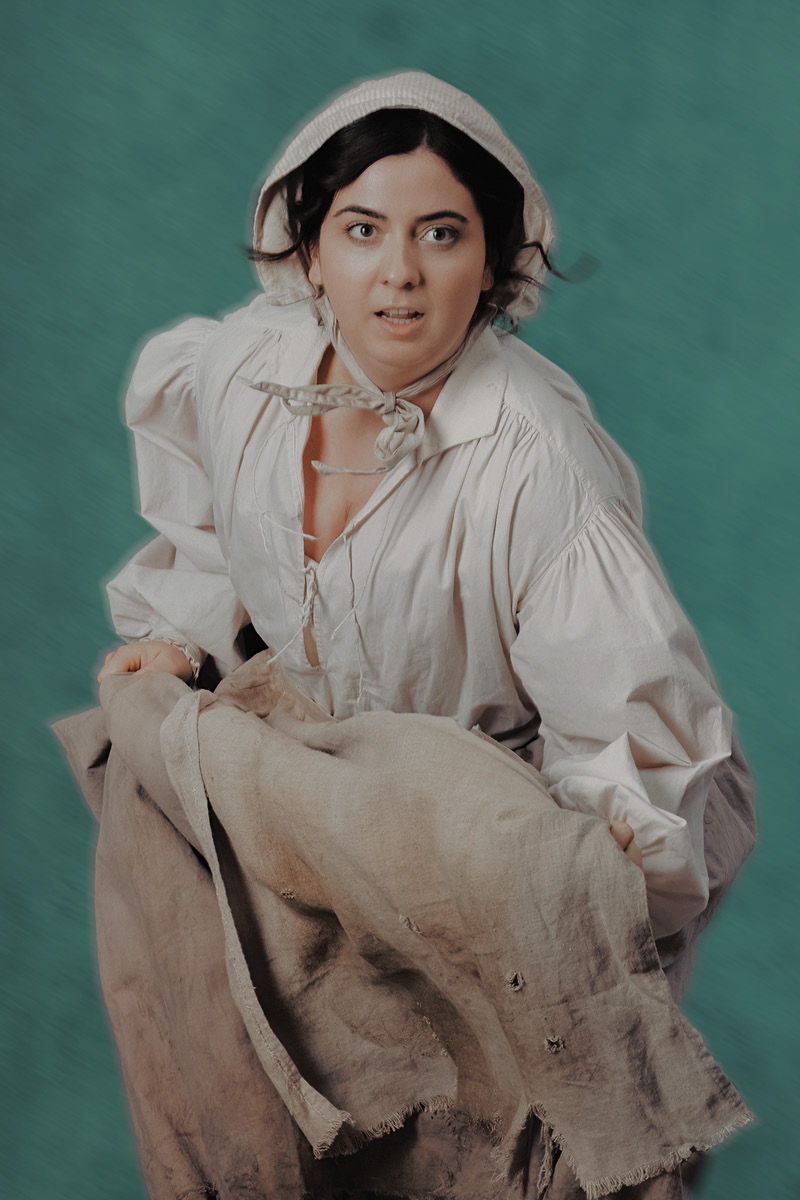
A comedy reimagines Laura Secord's journey to warn British forces of an American attack during the War of 1812, examining the stories built around her life.
After the British passport office questions why her South African passport omits her first name, a woman searches for answers through memories of growing up in Congo under Mobutu, post-apartheid South Africa, and migration to Ireland and England. Her investigation confronts questions of identity and the legal and political realities of immigration.
A wife confronts the woman who has taken her husband’s affection and peace of mind. Through a tangled domestic confrontation, the play asks why stealing money is punishable while taking someone’s love and happiness can escape the law.
In 1922, T. E. Lawrence retreats from public life at the home of George Bernard Shaw and Charlotte Payne-Townshend, revisiting the aftermath of his role in the Arab Revolt.
Framed as Henry Lawson telling stories over a campfire, the play brings to life the young Arvie Aspinall and the country woman of 'Past Carin’' alongside the humorous characters of 'Send Round the Hat.'
A collaborative drama revisits a court case in which Lesley, a struggling drug user and porn model, accuses a van driver of rape. Its shifting perspectives trace the encounter and her difficult life while examining the exploitation of women in the sex industry and criminal-justice system.
After Lazarus returns from the dead, he proclaims that death does not exist and that life is eternal laughter. Jews, Romans, and Greeks test his faith; despite the loss of his family and his own execution by Tiberius, he maintains his belief.
Murdoch, a middle-aged man who has taken to his bed for metaphysical reasons, receives a succession of visitors, including Death, a cheerful man with troubles of his own. After his mother's death shakes him out of bed, Murdoch begins reconnecting with life and falling in love.
Le Bal des Voleurs (Thieves' Carnival) is a play written by French playwright Jean Anouilh, first staged at Théâtre des Arts, Paris on 17 August 1938.
After Arlequin and Argentine marry and settle in Bergamo, a mistaken letter makes him suspect her of infidelity. Argentine’s secrecy is part of her effort to help Rosalba reunite with Lélio, and the misunderstanding is resolved when Rosalba confesses to her father.
Years after his earlier adventures, Arlequin lives in Paris with his daughter Nisida and a fortune. He initially betroths her to a marquis, but when she and Cléante reveal their love, Arlequin gives Cléante the fortune he inherited and welcomes him as a son.
Monsieur Jourdain, a wealthy bourgeois, pursues aristocratic status through lessons in the gentlemanly arts and costly displays. He hopes to marry a marchioness and marry his daughter to nobility, but Cléonte and his allies disguise themselves as Turkish royalty to win Jourdain's consent to Lucile's marriage.
When notary Maître André suspects his wife Jacqueline of an affair, Jacqueline's lover Clavaroche proposes using the young clerk Fortunio, who loves her, as a decoy to divert her husband's suspicion. Fortunio begins to understand that Jacqueline loves Clavaroche.
When Aubri de Mont-Didier is murdered after setting out on a night journey, the jealous Macaire and his accomplice Landry let a mute orphan, Éloi, be accused. Aubri’s dog leads the authorities to his grave and helps expose the killers, clearing Éloi.
Gnomes steal human hearts and keep them in a castle. Fairies seek to restore people’s capacity for love through two youths whose hearts remain pure.
Rodrigue and Chimène love each other, but after Rodrigue kills Chimène’s father in a duel to defend his own father’s honor, she feels bound to seek revenge. Rodrigue later wins renown fighting the Moors; the king ultimately arranges for the couple to marry after a year.
Bruno, a village scribe whose eloquence fuels his paranoia, fears his devoted wife Stella is unfaithful. To settle the question, he offers her first to his best friend and then to the village’s young men, provoking violent hostility toward him and threats against Stella.
A self-important police commissioner dismisses a stream of absurd complaints and refuses to help a fearful citizen, but loses his authority when a visitor claiming to be mad forces him to obey increasingly ridiculous commands.
A secular comedy set in a convent and featuring nuns as its central subject, the play helped establish the French Revolutionary-era convent-play genre, which used convent settings to criticize or parody religious practice. Its all-woman cast made it the first such cast in French theatre, and its treatment of nuns divided Parisian audiences.
Pontagnac pursues the faithful Lucienne while her husband Vatelin is pursued by another woman. Their tangled plans collide in a double-booked hotel room, where bells, mistaken identities and a succession of jealous spouses produce farcical chaos before the couples reconcile and Pontagnac discovers he is the fall guy.
At a weekly dinner where wealthy guests ridicule the person they consider the evening's fool, publisher Pierre Brochant brings François Pignon, a matchstick-model enthusiast. When Brochant's wife leaves him, Pignon's well-meaning but disastrous attempts to help expose Brochant's own cruelty and unravel his relationships.
Nicolas is 17 years old and lives with his mother, Anne. His father, Pierre, has just had a child with his new girlfriend, Sofia. Anne informs Pierre that their son, a depressed teenager, has not been to school for three months. Pierre then talks with Nicolas, who asks to come and live with him and Sofia. Pierre accepts, changes his high school and will do everything possible to restore his son's appetite for life.
Dorval, a young man of unknown parentage, falls in love with Rosalie, who is engaged to his friend Clairville. When Rosalie’s father reveals that Dorval is his illegitimate son, the pair recognize their love as familial; Rosalie marries Clairville and Dorval marries Constance.
When Gendarme Pénultième brings an alleged offender to Commissioner Médor, his bewildering report accuses a priest of indecency in the Marquise de Montonson’s park. The supposed priest reveals she is the marquise, who had stooped to pick a four-leaf clover; she invites the commissioner to dinner, while the gendarme is arrested for disrespecting his superior.
Showing 2,977–3,096 of 8,284 shows
Load more shows