In 1999
Set in a future where gender roles are reversed, this comic sketch follows a love triangle in which husbands perform domestic chores while women socialize at clubs. Its gender-swapped speeches parody the problem plays popular in 1912.
8284 shows
Clear filtersSet in a future where gender roles are reversed, this comic sketch follows a love triangle in which husbands perform domestic chores while women socialize at clubs. Its gender-swapped speeches parody the problem plays popular in 1912.
The play takes place in the Southeast of the United States, from 1885 to the beginning of the 20th century. Abe McCranie is a mixed-race African-American field worker, the son of Colonel McCranie, a white man. He tries to start a school to educate black children, as they were underserved by the state. Ultimately, he gets a school, but the white people run him out of it and drive him to murder.
In a Hell's Kitchen bar before Giuliani's city cleanup efforts, unemployed and struggling patrons cling to hopes of a better life. A newly released ex-convict, his alcoholic girlfriend, a junkie former actor, a young single mother and other regulars face the loss of their neighborhood refuge as redevelopment advances.
Marion, a young white woman who divides her time between Brisbane and Moreton Island, begins a relationship with Tom, an Indigenous young man. Their relationship affects the family and island community amid racial prejudice, isolation, and social expectations.
Three brothers return to their parents’ Derbyshire mining town to celebrate their fortieth wedding anniversary, bringing their contrasting temperaments into the family gathering.
In twelfth-century France, philosopher Peter Abelard and his brilliant student Heloise begin an affair that provokes opposition from conservative churchmen. The play follows their love, forced separation, and monastic lives alongside a public dispute between Abelard and Bernard of Clairvaux over reason, faith, and power.
An Italian-Canadian family reacts to their son's homosexuality; the production centers on his relationship with his boyfriend.
Set at Guantanamo Bay, the play follows central characters Sarfraz and Hamza as it explores American imperialism and philosophical divisions within Islam.
At the court of Charles II, the king debates nature, science, power and leadership with Isaac Newton, George Fox and artist Godfrey Kneller, with interventions from three of his mistresses. The short second act has Charles speaking with Queen Catherine of Braganza.
Returning from abroad, Philip Graham tells the barrister Sir George Carlyon that he is engaged to Rose Dalrymple. Sir George reveals that Rose is his niece and questions Philip about an earlier attachment to a married woman, exposing obligations that could threaten the new engagement.
A performance for four women, who remain nude throughout. One performance invited audience members to join them in stripping, if they wished.
A fictionalized meeting between William Blake and Thomas Paine in Lambeth in 1791.
A historical drama about the Anabaptist Münster Rebellion of 1534.
A satirical play about Pan-Arabism.
During the Second World War, a military-intelligence officer and his East European refugee wife each conceal her terminal illness from the other, using deceptions learned during the war to protect one another. Their writer friend carries an old love for Lydia, while their son rebels against his father's manner and politics.
During a royal banquet celebrating his political service, Norbert plans to ask the Queen for her cousin Constance’s hand. Constance urges him to approach the Queen indirectly; the Queen mistakes his words for a declaration of love, forcing Norbert to choose between his ambition and the woman he loves.
Set on the grounds of a psychiatric facility, the play follows two brothers confronting sexual and emotional abuse and trying to overcome its effects; one is a disbarred lawyer and patient, and a teenage girl is also central to the story.
In a Forest, Dark and Deep is a play by Neil LaBute. It received its world premiere production in the West End's Vaudeville Theatre on 14 March 2011 following previews from 3 March 2011, running for a limited season until 4 June 2011. The production starred Matthew Fox and Olivia Williams. A review in The Observer described the play as "[…] something approaching a conventional thriller [where] a college lecturer and her redneck brother meet in a log cabin in the midst of the wilds there's a whiff of incest. The play had its American premiere at Profiles Theatre in Chicago, Illinois in April 2012 through 3 June. The production stars Darrell W. Cox and Natasha Lowe and was directed by Joe Jahraus. The Chicago Tribune reviewer wrote:"Interesting and formatively atypical, it strikes me as very much a meditation on what is and is not true, on the ease of rushing to misjudgment, and also a further manifestation of the longstanding authorial fascination with the close link between deep intimacy and dark violence." This production was followed by a Contemporary American Theater Festival (Shepherdstown, West Virginia) production as part of the 2012 Festival from 6 to 29 July 2012.
As Jason Pierce packs to leave Toronto for the reserve where he grew up, Harry Dieter arrives claiming to be his half-brother. Their dying father needs a kidney, and Harry wants to know whether Jason can be a donor.
Queer workers repeatedly move from job to job as rising sea levels unsettle their lives, finding love among one another amid uncertainty and the approaching end of the world.
In a Tokyo hotel, alcoholic painter Mark suffers a mental breakdown while trying to revive his career with a new artistic style. His wife Miriam attempts to enlist his dealer and friend Leonard to take Mark back to New York; Mark dies, leaving Miriam without plans or direction.
In a modern urban setting, Hester, a poor mother of five, seeks help from her children’s fathers and others, whose confessions reveal how they exploit her. The tragedy reworks the central figure and motifs of The Scarlet Letter.
Chrissy arrives in 1960s Philadelphia with the dream of becoming a successful dancer. Desperation leads her to a job at a sleazy nightclub called Big Tom's Boom Boom Room. While working at the nightclub, she explores love and sex with a variety of unsuitable partners of both genders and forms a friendship with a gay neighbor. She tries to resolve troubling issues in her life, including her mother who had wanted an abortion and memories of sexual abuse by her father.
Set in the Asante Empire, the play follows a woman who disguises her daughter as a boy so the child can become king, and the difficulties the daughter faces as she grows up.
Two embittered male co-workers scheme to romance a deaf female colleague simultaneously and then abandon her. As their deceit damages the woman's life and strains their own relationship, the more passive conspirator's conscience conflicts with the cruelty of the plan.
In Chicago, book clerk George Garga and timber dealer Shlink engage in an inexplicable struggle that devastates Garga’s family. Their attempts to dominate and understand one another lead to betrayal, imprisonment and the ruin of those around them before Garga declares himself the victor and leaves.
In a prosperous post-Civil War town, Dr. Givings uses an electrical device to treat women's hysteria while his wife Catherine struggles with sexual dissatisfaction and motherhood. Patients and their spouses, including Sabrina and Dick Daldry, enter the household's medical and emotional orbit, exposing the limits of Victorian ideas about sex, intimacy and family.
In 1817, the year before his death, George III looks back over his life.
In an isolated Wicklow cottage, Nora tends the apparently dead body of her husband Dan. When Dan reveals he has feigned death, Nora chooses to leave with a visiting tramp rather than remain with Dan and the shepherd Michael.
A nameless Dealer approaches a Client with an offer to supply whatever the Client wants. Their prolonged, oblique exchange becomes argumentative and threatening, while withholding what is being negotiated and leaving its stakes open to interpretation.
In this Tupi-language religious play, devils conspire to take over Guaraparim. They try to claim the soul of the deceased Indigenous man Pirataraca, who answers their accusations with appeals to repentance and God’s forgiveness. A guardian angel protects him and drives the devils away.
Aspiring actors Melinda and Steve are cast in a musical by their acting teacher, Bernardo, but when it moves to Broadway only Melinda is invited along. Their relationship is tested as they negotiate acting, singing and dancing, with Steve’s mother repeatedly visiting their apartment to offer advice and money.
The crew of a small tramp steamer face the strains of life at sea during the First World War.
Inadmissible Evidence is a play written by John Osborne in 1964. It was film adapted in 1968.
After their mother Nawal dies, twins Jeanne and Simon receive a difficult mission that sends them to the Middle East to unravel her past, trace their family roots and find a long-lost brother. Their search reveals a family history shaped by political violence and secrets.
Incident at Vichy is a one-act play written in 1964 by American dramatist Arthur Miller. It depicts a group of men who have been detained in Vichy France in 1942; they are being held for their "racial" inspection by German military officers and Vichy French police. The play focuses on the subjects of human nature, guilt, fear, and complicity and examines how the Nazis were able to perpetrate the Holocaust with so little resistance. Miller said of Incident at Vichy, "What is dark if not unknown is the relationship between those who side with justice and their implication in the evil they oppose. [...] The good and the evil are not compartments but two elements of a transaction." The play premiered on Broadway on December 3, 1964, at the ANTA Washington Square Theatre in New York City. The production closed on May 7, 1965, after 32 performances. The cast included Michael Strong as LeBeau, Stanley Beck as Bayard, Paul Mann as Marchand, and David J. Stewart as Monceau. A London production in 1966 at the Phoenix Theatre starred Alec Guinness, Anthony Quayle and Nigel Davenport. Miller adapted the play for a 1973 television production directed by Stacy Keach and starring Andy Robinson, Burt Freed, Harris Yulin, Richard Jordan and René Auberjonois.
Lemml, the stage manager, introduces the troupe of actors and musicians who will be telling the story of a play that changed his life, playing many different parts in a retelling interspersed with songs. As the actors arrive on stage, ash pours out of their clothing. In 1906, Polish-Jewish playwright Sholem Asch writes a play in Yiddish, The God of Vengeance, which concerns the love between a prostitute (Manke) and the daughter of the brothel's owner (Rifkele). His wife, Madje, is impressed. He holds a reading of the play in a local salon run by the influential I. L. Peretz, receiving mixed reactions from the participants. Some are appalled by the lesbian storyline and the throwing of a Torah across the room, and Peretz, concerned the play perpetuates antisemitic stereotypes, advises Asch to burn the manuscript. Asch's only support comes from Lemml, a naive young tailor, who is moved to tears by the play. The play is eventually produced in Berlin, with Lemml as stage manager, starring the famous actor Rudolph Schildkraut. The play is successful throughout Europe and Lemml emigrates to America to stage-manage the first performances in New York in the Yiddish Theatre. In 1922, the play seeks a more commercial run, prompting an English translation. The actresses playing Rifkele and Manke, Reina and Dine, are in a romantic relationship offstage as well as on. Their relationship is tested when Reina is fired due to her problems learning English and is replaced by an inexperienced American actress. The play is transferred to Broadway, but Dine and Lemml are outraged when the producer alters the play, removing the love between the two women and suggesting instead that Manke seduces Rifkele to also become a prostitute. Asch returns from a visit to Europe, where he witnesses the rise of antisemitism, leaving him in a deep depression. He becomes a recluse in his Staten Island home. The play premieres on Broadway, but the entire cast is arrested for obscenity due to the content of the play. Asch is convinced this is an antisemitic plot, but the charges are revealed to have been organized by an American Rabbi scandalized by the play. The play is closed, but Reina and Dine reconcile. Asch, still depressed, refuses to testify in the actors' obscenity trial, ashamed and unwilling to admit that he approved the cuts without reading them due to his inability to speak English. Eugene O'Neill, an admirer of the play, attempts to testify for the defense but is turned away on a technicality, and the company is found guilty in a verdict that frames the play as "eastern exoticism" and a threat to American morality. A heartbroken Lemml condemns Asch for his inaction and returns to Europe, taking the play's Yiddish manuscript with him. Over the next 20 years, Asch remains in America and begins to receive letters from friends as they attempt to escape the Holocaust. In 1943, Lemml leads a tiny, starving troupe of actors in a performance of the play's second act in a tiny attic in the Łódź Ghetto. The performance is interrupted by the arrival of the Nazis. In his last moments before the troupe is presumably executed, Lemml slips into a fantasy that Manke and Rifkele have escaped. In 1952, Asch and Madje are packing up their house in Staten Island to relocate to England since Asch is being persecuted by the House Unamerican Activities Committee. A young Jewish-American theater student (played by the same actor who played Asch as a young man) visits Asch to receive permission to have a new translation of the God of Vengeance performed by his theatre group at Yale. Asch refuses, traumatized by the Holocaust and convinced the play's time is done, and echoes the advice Peretz gave him at the play's first reading to burn the manuscript. But the young man refuses to accept defeat and promises to one day produce the play. As Asch stands in his empty living room, he sees a vision of Manke and Rifkele falling in love as they dance in the rain.
In Salchester, John Forsyth and his suffragette wife Sidney struggle over her independence while his family’s investments collapse. After the household is ruined, Sidney takes work as a typist; she and John separate, then later reconcile when both find jobs with family friend Samuel Ritchie.
Adolescent Eddie tries to assert himself within a large, traditional Buffalo family. His parents, grandparents and jealous cousin surround him as the action moves fluidly through the family’s different settings.
In 1930, poet Flora Crewe travels to India, where artist Nirad paints her portrait as she falls ill with tuberculosis. In the 1980s, academic Eldon Pike and Nirad's son Anish separately seek answers from Flora's sister Eleanor about the poet's final days and her relationship with Nirad.
Indians is a 1968 play by Arthur Kopit. At its core is Buffalo Bill Cody and his Buffalo Bill's Wild West Show. The play examines the contradictions of Cody's life and his work with Native Americans. Alvin Klein, writing in The New York Times, wrote that the play intended "...to open up the real savage story of how the West was won, to demythologize that old game of cowboys and Indians..."
Indiscretion is an 1800 comedy play by the British writer Prince Hoare. The original Drury Lane cast included Thomas King as Sir Marmaduke Maxim, John Bannister as Burly, William Barrymore as Clermont, Robert Palmer as Frederic, Charles Holland as Gaylove, Ralph Wewitzer as Lounge, Alexander Webb as Francis, Montague Talbot as Algernon, Jane Pope as Victoria and Dorothea Jordan as Julia.
The play is about five women – four of them are in their 60s, one is 47 – staying at a health retreat in Northern California. The play takes place in May, 2019 and shows their interaction during various treatments and wellness programs which involve fasting. One of the characters reads Daniel Deronda, others engage in philosophical conversation, some indulge in intense sexual fantasies, and others drink exotic juices. There is one minor role for a man.
A satire about a right-wing radio shock jock, inspired by prominent Australian talkback personalities.
A guide leads audience groups through a large house, where they encounter twenty scenes ranging from staged episodes to seemingly private unfinished moments. The promenade piece implicates spectators in observing the lives of Argentina’s disappeared and questions how audiences respond to authority and performance.
Ingomar the Barbarian is an 1851 historical play by the British writer and former actress Maria Ann Lovell. It was based on the German play Der Sohn der Wildnis by Friedrich Halm. It premiered at the Theatre Royal, Drury Lane on 9 June 1851. The original cast included John Garside Neville as the Timarch of Masillia, James Robertson Anderson as Ingomar and Charlotte Vandenhoff as Parthenia. It appeared frequently on the American stage for the remainder of the nineteenth century.
The play takes place in the small town of Hillsboro, in an unnamed state in the central part of the United States. (It is often assumed to be either Kentucky or Tennessee.) Scenes take place either in front of the county courthouse or in the courtroom. It takes place in the summertime "not too long ago". The play begins with local high school student Howard Blair looking for worms in front of the Hillsboro courthouse. Melinda appears, and they have a discussion about evolution and the recent arrest of their teacher, Betram Cates. They exit when Rachel enters. Rachel convinces Meeker, the bailiff, to give her some time with Cates. Bert and Rachel's conversation tells the audience about why Bert taught evolution to his students. Rachel and Bert are engaged to wed, but her father does not approve. Meeker comes in as they are hugging, saying he needs to sweep. Rachel exits. Meeker tells Bert that Matthew Harrison Brady has volunteered to prosecute him and reminisces about seeing Brady speak during one of his failed presidential campaigns. When questioned, Bert says that the Baltimore Herald has offered to pay for his attorney but doesn't know the man's name. Bert and Meeker exit. Reverend Jeremiah Brown enters and speaks with the townspeople, Howard, and Melinda. Everyone is excited that Matthew Harrison Brady is coming to Hillsboro. When Timmy, a boy who lives in Hillsboro, sees smoke from the arriving train, everyone exits. E.K. Hornbeck, representing the Herald, delivers a soliloquy cruelly ridiculing the people of Hillsboro. Hornbeck spots a monkey someone has brought to mock Bert and feigns conversation with it. The crowd enters with Brady, Mrs. Brady, Rev. Brown, and the Mayor. Brady makes a brief speech, which the crowd wildly cheers. The Mayor honors Brady with the title of "Honorary Colonel" in the state militia and introduces him to Reverend Brown. Members of the Hillsboro Ladies' Aid Society set up a buffet lunch on the courthouse lawn as Brady discusses how he will handle Cates' legal counsel. Hornbeck then announces that the defense attorney will be Henry Drummond, a well-known liberal lawyer and Brady's former colleague. The scene ends with everyone in the town escorting the Bradys to a nearby hotel and the introduction of Drummond, who in contrast to Brady's lavish welcoming is only greeted with boos and mockery. Scene Two occurs in the courtroom. Present are Matthew Harrison Brady, Henry Drummond, Tom Davenport, the Mayor, the Judge, and many townspeople (sitting behind the defense and prosecution and watching the proceedings). It is a day or two later, and jury selection is under way. Davenport questions Mr. Bannister to see if he is an acceptable juror to the prosecution. Bannister says he attends church on Sundays, and the prosecution accepts him. Drummond questions Bannister, and it is revealed that Bannister is illiterate. Drummond accepts Bannister for the jury. Jesse Dunlap is then called to the stand. Brady asks Dunlap if he believes in the Bible. Dunlap states "I believe in the Holy Word of God. And I believe in Matthew Harrison Brady!" Brady finds Dunlap acceptable; Drummond does not but refuses to explain his reasoning. Brady demands that Drummond provide a reason for refusing Dunlap or at least ask him a question. Drummond asks Dunlap how he feels, then excuses Dunlap as unacceptable. Drummond also protests the use of the title "Colonel Matthew Harrison Brady" by the Judge. Realizing that Brady's honorary title may have prejudiced the judicial proceedings, the Mayor confers with the Judge and they agree to make Drummond a "Temporary Honorary Colonel" for the duration of proceedings. George Sillers is brought in after Dunlap steps down. Brady briefly questions Sillers, then accepts him. Drummond asks Sillers some questions on religion and then evolution, then accepts Sillers as well. Alarmed, Brady tells the court that Sillers won't render impartial judgment. Drummond objects to Brady's use of the word "conform". Brady tells the Judge (although his comments are subtly directed at Drummond) about the "Endicott Publishing Case", a trial in which Brady claims Drummond confused the jury so much that they delivered an incorrect verdict. Drummond states that all he wants to do is stop "the clock-stoppers" from inserting religious belief into the Constitution. The Judge reminds Drummond that this is not a federal case, and that constitutional questions cannot be entertained. Drummond demands that they be included, but the Judge rules him out of order. With the jury seated, court is adjourned for the day. After recessing the court, the Judge announces that Reverend Brown will hold a prayer meeting later that night. Drummond objects and argues that such announcements from the bench are prejudicial, but the Judge ignores him. Scene One occurs in front of the courthouse later that evening. Two workmen discuss whether to take down the "Read Your Bible" banner which hangs over the entrance to the courthouse (which Drummond had asked for in court earlier) but decide against it. They leave when they hear people approaching. At the hotel, Brady eats a large dinner while speaking to Hornbeck and some reporters from the "Reuters News Agency". He discusses his past relationship with Drummond, who worked with him on several cases and stumped for him in his presidential campaigns. Brady accuses Hornbeck of biased reporting, but Hornbeck replies that he is a critic - not a reporter. Reverend Brown and a crowd of supporters (including Drummond and Brady) enter for the prayer meeting. Brown engages in call and response with the crowd, preaching about how God created the world in six days. Brown denounces Cates as a heretic worthy of death, and Rachel (who has entered mid-sermon) demands that he stop. Instead, Rev. Brown loudly condemns anyone who seeks forgiveness for Cates. Rachel becomes very distressed. Brady, increasingly uneasy with the tenor of Brown's sermon, interrupts him and quotes the Book of Proverbs: "He that troubleth his own house shall inherit the wind..." Brady dismisses the crowd by reminding them of Jesus Christ's command to forgive. After the prayer meeting, Brady approaches Drummond and asks him why he is defending Cates. He accuses Drummond of having "moved away" from everything both men once believed in. Drummond replies, "All motion is relative. Perhaps it is you who have moved away by standing still." Scene Two occurs in the courtroom two days after the prayer meeting. It is the afternoon, and very hot. The scene opens with the trial already under way. Brady calls Howard Blair to the stand as a witness. Brady and Drummond then exchange heated words over "speech-making" before the Judge orders them to stop. Drummond attempts to cross-examine Howard, but Brady repeatedly objects to Drummond's questions (which the Judge sustains). Drummond instead delivers a monologue in which he declares "morality is meaningless, but truth is valuable", then dismisses Howard from the stand. Davenport then surprises everyone by calling Rachel as the next witness. Under Brady's questioning, she reveals that Cates stopped attending Rev. Brown's church after Brown preached that a local boy who had drowned was not saved because he had not been baptized. Cates angrily shouts that Brown had really preached that the boy was burning in Hell. The crowd tries to shout him down, but Cates continues until order is restored. Brady again questions Rachel, demanding to know if Cates denied the reality of God and compared marriage to the breeding of animals. Cates again interrupts her response, yelling that his statements to her were private and just questions — not statements of fact. Rachel weeps on the stand, and Drummond objects to the line of questioning. Brady ends his examination. Drummond is about to examine her, but Cates threatens to fire him, and he allows Rachel to step down. Drummond introduces a number of prominent scientists whom he intends to call as witnesses, but each is rejected by the Judge when Davenport argues that scientific fact has no bearing on the validity of the law. Drummond asks if the Judge will permit testimony about the Bible, which is accepted. He then calls Brady to the stand as his witness. Davenport objects, but Brady boastfully asserts that Drummond can say nothing that will change the outcome of the trial. Drummond attempts to question Brady about his knowledge of the writings of Charles Darwin, but the Judge rules that such questions are inappropriate. Drummond then asks Brady about the truthfulness behind the story of Jonah and the whale and other accounts. Brady states they are all true, and Drummond accuses him of wanting to throw all modern science out of the classroom. Davenport objects to Drummond's line of questioning, but Brady retorts that Drummond is only playing into his hands. Drummond submits that science has proven that a literal interpretation of the Bible is impossible. "God gave man the ability to reason, so why can't he use that ability to question the Bible?", Drummond asks. He also asks Brady if the ability to think is what distinguishes a man from a sponge. Confused and visibly frustrated, Brady responds that God determines who shall be a man and who shall be a sponge. Drummond declares that Cates only demands the same right as a sponge: To think. The crowd in the courtroom erupts in applause. Drummond changes his line of questioning. He asks Brady how old the earth is, and Brady replies it is about 6,000 years old, according to Biblical research. "But if local rocks and fossils are millions of years old, how can this be?" Drummond asks. Unnerved, Brady reasserts that the world was created in six days, as the Bible says. Drummond asks Brady if it isn't possible that, since the sun was not created until the fourth day, that the first "day" of creation wasn't necessarily a normal 24-hour day, which he concedes to.
In Victoria's Mallee, twin sisters Dibs and Girlie represent contrasting farming-family histories. Their children and relatives gather around Allandale, Dibs's family farm, to decide who will inherit it; the dispute exposes rural hardship, exclusion, and tensions between city and country.
An idealistic farmer leaves his Midwestern land to establish a college. Forty years later, his granddaughter supports Hindu nationals' right to protest there, jeopardizing the college's funding and setting herself against her uncle, the trustees' president. She defies her family and faces prison.
Nahum Tate’s adaptation of John Webster’s revenge tragedy The White Devil, published under the title Injur'd Love: or the Cruel Husband.
In October 1969, Australian businessman Rupert Murdoch is in negotiations to purchase the failing British daily newspaper The Sun from its parent paper The Mirror. He approaches the Daily Mails Northern editor Larry Lamb and asks him to be the editor of The Sun for its re-launch. Lamb, a Yorkshire native and former sub-editor for The Mirror, is frustrated over his lack of progress in his career, which he attributes to his working-class background. Reluctantly, he accepts Murdoch's offer. Murdoch and Lamb meet with Mirror chairman Hugh Cudlipp to finalise the sale. The contract stipulates that publication must continue uninterrupted after the handover, giving Lamb mere weeks to assemble the first issue. Cudlipp privately reveals to Lamb that he is selling The Sun (as opposed to shutting it down) only to avoid angering local unions. He expects the paper to fail and discourages Lamb from taking the job. Murdoch declares his intent to prioritise profits and proposes that Lamb strive to overtake sales of The Mirror within one year of the re-launch. Murdoch grants Lamb full freedom on the condition that he make the paper "loud", encouraging him to compete aggressively with other papers. On Fleet Street, Lamb frantically recruits new staff members for The Sun, the former staff having been laid off or re-absorbed into The Mirror. While brainstorming with the new staff, Lamb designs the paper's new logo and proposes new features, several of which are blatant pastiches of The Mirror. He also hires Stephanie Rahn and other models to pose in lingerie for the paper. At the London Press Club, Lamb encounters Cudlipp, who mocks The Suns lowbrow content and attempts to copy The Mirror. Convinced that The Mirror does not reflect the mood or interests of common people, Lamb pushes the re-launch of The Sun in a more populist direction that includes frank discussions of sexuality, a television section, and weekly giveaways. The evening before the re-launch, last-minute problems plague the staff, including a lack of enough "E" keys for the full headline and an interviewee's death. Murdoch and his wife Anna visit the office alongside his deputy Sir Alick McKay and his wife Muriel. A power outage delays printing and prevents that day's distribution in the north. Despite the limited distribution and rushed nature of the issue, the paper is an unprecedented success, worrying Cudlipp. In a televised interview, Murdoch defends The Suns outrageous content as a manifestation of the will of the masses. At a meeting, Lamb explains to Murdoch how the paper's newfound success has sown hostility in its competitors. While the Murdochs are visiting Australia, Muriel is kidnapped for ransom. The staff realise that Anna Murdoch was the kidnappers' intended target; the mistake arose after they stalked a Rolls-Royce the Murdochs had lent to the McKays while they were in Australia. Lamb insists on covering the incident in The Sun and publishing the ransom notes, in doing so defying the wishes of his staff, union leaders, and Murdoch himself. Two brothers are arrested for Muriel's abduction and presumed murder. The Sun is widely criticised for its treatment of the tragedy, though sales surge. In a last-ditch effort to take down The Sun, Cudlipp offers to make Lamb editor of The Mirror, but he refuses. As the one-year anniversary of The Suns re-launch approaches, sales remain behind that of The Mirror. Lamb asks Rahn to secretly pose for a fully-nude photo shoot, to be printed on Page 3 of The Sun. After some discussion, Rahn consents. The anniversary issue sparks public outrage, ruins Rahn's reputation, and infuriates Murdoch, but successfully outsells The Mirror. Conceding defeat, Cudlipp begins planning his retirement. Despite his own disapproval and Lamb's reservations, Murdoch allows the Page 3 feature to continue. At a dinner with Lamb, Murdoch proposes that The Sun start appealing to the new conservative government, confident that the paper has the power to sway public opinion. He also tells Lamb his plans to purchase an American television network and relocate The Suns office off of Fleet Street. He concludes the dinner saying, "People like stories." Lamb imagines that Murdoch will outlive him and someday publish his obituary in The Sun.
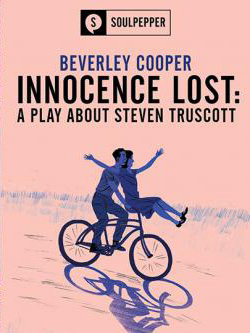
A fourteen-year-old boy is convicted of murdering a classmate in a small Ontario community in 1959. Drawing on the Steven Truscott case, the play examines the assumptions, testimony, and lasting damage surrounding a wrongful conviction.
A young widow suspected of murdering her husband enlists a leading King’s Counsel to prove her innocence. As the lawyer becomes convinced of her case, they work together to find the real killer.
The show begins with a cold open in which an on-stage audience are being seated before a performance of Hamlet. As Charles (Reece Shearsmith) begins to watch the performance, the members around him Angus (Steve Pemberton), Antonia and Daddy become too distracting causing Charles to comedically kill each of them before addressing the audience "Ladies and gentlemen, may I please remind you that you are in a theatre. No coughing, no eating and no mobile phones." Shearsmith and Pemberton step in front of the red curtain to introduce Stage/Fright and explain that the theatre the show is playing is haunted as the cold open was based on an incident that happened a number of years ago where Mr Dowling was in such a state of grieving for his wife that he killed three audience members. They explain about a Grand Guignol play called La Terreur de L'aisle or "Terror at the Asylum" was performed however its lead actress Madame Belle Catron was killed during a scene that went wrong and her ghost has since haunted the theatre called Bloody Belle. Suggesting that Mr Dowling might have seen Bloody Belle's ghost or the ghost of his late wife, they ask “For what is a ghost but a memory? A way of keeping a loved one’s memory alive? Maybe every ghost story is really just a love story.” They also explain the tradition of the ghost light before Pemberton sceptically encourages the audience to summon Bloody Belle by saying her name three times. In the next scene, the episode "Bernie Clifton's Dressing Room" is performed. Thomas "Tommy" Shelby (Shearsmith) arrives on an empty stage with props and a ghost light to meet his former "Cheese N Crackers" double act partner Len Drake (Pemberton) to attempt practising their old routines. Shelby has moved on from showbusiness while Drake is enthusiastic about starting again. Tommy reminds Len that he owes him £25 for "Bernie Clifton's dressing room" in which Len doesn't recall what he means. As Len goes out for a cigarette, Tommy reads a script that he has written about two burglars Eddie and Ray (played by Pemberton and Shearsmith respectively, reprising their roles from the episode "A Quiet Night In") who have mistakenly broken into the wrong house and taken a celebrity hostage (in which the celebrity is different every performance). The celebrity is tasked with an improvisational script before Ray accidentally shoots them dead. The scene ends with the celebrity taking a bow in front of the red curtain and is handed flowers. As the scene goes back to the episode "Bernie Clifton's Dressing Room", Tommy discovers that Len has been homeless by finding his belongings who insists that he never wanted any money, just to have Tommy by his side performing again. In rehearsing their final routine "Brown Bottles" which involves Len drinking seven bottles of beer within the song, Tommy reminds Len that during one night he collapsed in Bernie Clifton's dressing room choking on his own vomit and reveals that he stopped performing because of fear that Len would kill himself due to his alcohol addiction. Len's daughter Leanne walks to find Tommy who in fact has been on his own the whole time as it is revealed that Len died and he is preparing for his funeral speech. She gives him a card with £25 from Len. As the first half ends, the ghost light starts flickering. After Tommy leaves the stage, Bloody Belle appears. The second act begins with a performance of La Terreur de L'aisle. Suzette arrives at Dr. Goudron's (Pemberton) asylum to treat for her migraines and is greeted by Cragg, one of the nurses and Hugo (Shearsmith), one of the insane patients. Goudron offers a pain-free hypnotic method for operation by which he demonstrates by convincing Hugo to surgically remove his own leg. As violence and chaos ensures, Abby, a theatre usher and aspiring actress, enters with a coffee order ruining what is in fact a rehearsal for the play. Rehearsals continue using a camera and a screen on stage as Abby discusses the curse of Bloody Belle with the director Marcus (and Hugo), Vincent Gannymeade (Goudron) and the play's celebrity leading actress Sherrie Leeks (Suzette). After the rehearsal and theatre has been emptied and the ghost light has been left on, Sherrie and Abby stay behind to rehearse the play's lines. They begin to see movements on the camera and screen, which Sherrie uses the light on the camera to guide herself around the empty theatre to investigate the noises. Having lost Abby, she makes her way back onto the stage where she is frightened away by seemingly the ghost of Bloody Belle, which turns out to be Abby pretending in a ruse by her and Marcus to make Sherrie quit the play and attract publicity. As Marcus rejects the idea of Abby taking over from Sherrie, Abbie becomes possessed and strangles him to death as the real Bloody Belle appears. In what is seemingly the curtain call for Stage/Fright, the company take their bow before Pemberton steps forward to thank the audience for their support and paying tribute to Shearsmith who had in fact died in rehearsals before the show's run began, revealing that Toby, his understudy, had played Shearsmith's roles in the performance, ending with applause and an obituary photo of Shearsmith on the screen. After the curtain falls, the audience can still hear Pemberton on his microphone who walks onstage during the show's reset and is killed by a falling stage light. The curtain rises to see him being greeted by Shearsmith's ghost handing him a coffee, much to his annoyance that Pemberton still continued to go ahead with the show and that the "twist" was that he was dead. With nothing to do but to haunt the theatre, Pemberton exits the stage whilst Shearsmith turns to the audience revealing that the falling stage light was meant for Toby. The show ends with Shearsmith, Pemberton and the company performing "Tears of Laughter" (the finale number from the episode "Bernie Clifton's Dressing Room") in what is their memorial service all dressed in white on Cloud 9.
A struggling professional theatre company faces funding cuts and an inspection tied to a needed grant while staging its long-running A Christmas Carol. Mistaking a would-be actor for the inspector, the company’s members try to win him over as rehearsals and personal tensions unravel.
Jessica Parks, a London Crown Court judge and mother, balances her legal career with family life. When her teenage son Harry is accused of raping a classmate, Jessica must confront the collision between her commitment to justice and her instinct to protect him.
Outside a house, an old man and a stranger debate how to tell the family inside that one of the daughters has died. The family is visible through the windows as a crowd approaches with the body, and the old man enters to deliver the news.
Youth rejects Charity’s guidance and follows Riot and Pride in pursuit of pleasure and status. With Humility’s help, Charity persuades him to abandon his companions, seek forgiveness, and turn toward a virtuous life.
Behind the scenes of a long-running London stage show, actress Laura Mannington becomes increasingly offensive as fame changes her character over a two-year period.
In 1905 New York, Esther, a skilled Black seamstress, saves money to open a beauty parlor while sewing for wealthy women and prostitutes. She exchanges intimate letters with George, a worker on the Panama Canal, while developing a quiet bond with Mr. Marks, the Hasidic fabric shopkeeper. After marrying George, she discovers he deceived her and leaves with her savings; Esther returns to her sewing determined to rebuild her dreams.
A single opening scene branches according to Celia Teasdale's choice to smoke, then divides repeatedly as characters make further choices. The sixteen possible paths follow a small village's marriages, affairs, careers and other consequences over five scenes spanning five years.
At Balliol College, a feud pits privileged Old Etonians Julian and Billy Grenfell and Patrick Shaw-Stewart against social reformers Ronald Poulton and Keith Rae. The drama follows their rivalry from college conflicts over class and conduct into the trenches of the First World War, where all five die.
A play about John Donne's life, focusing on 1611 and his relationships with people involved in translating the King James Version.
Ferdinand, son of a powerful president, and Luise, a middle-class musician’s daughter, fall in love. Their families oppose the match, and the president and his secretary frame Luise through a forced letter, provoking Ferdinand’s jealousy and a fatal tragedy.
A blind grandfather waits with his family in a house where his ailing daughter lies in a nearby room after childbirth. As the family debates his reports of footsteps and a silent presence entering, the baby cries and a Sister of Mercy announces the mother’s death.
International acting student Maia develops severe insomnia and psychosis amid the pressures of Yale's drama program, then wakes in a youth psychiatric ward. She must adapt to the ward and its teen residents to leave in time for her acting showcase.
Teenager Lucy Baines escapes her unhappy family by reviving her imaginary friend Zara. Zara makes Lucy's family invisible and brings her into a fantasy household where Lucy at first feels happier, until Zara and her family turn against her. Lucy defeats them and restores her family, who begin to pay more attention to her.
At a society ball, twins Horace and Frédéric are caught in different romantic pursuits: Frédéric loves Diana, who desires Horace. To disillusion his brother, Horace invites Isabelle, a dancer, and stages her transformation into an aristocratic beauty.
A pseudo-classical tragedy based on the story of Inês de Castro, the Portuguese noblewoman executed on King Afonso IV's orders despite her relationship with his son Pedro.
At Delphi, temple servant Ion and childless Athenian noblewoman Creusa meet while seeking answers about their origins. Creusa's attempt to poison Ion fails; the pair recognize each other as mother and son, and Athena reveals Apollo's role in their reunion.
Ion, a Tragedy is a tragedy by the British writer Thomas Talfourd. Published in 1835, it was first performed at the Theatre Royal, Covent Garden in London on 26 May 1836. The Covent Garden cast included William Macready as Ion, Ellen Tree (and subsequently Helena Faucit) as Clemanthe, John Vandenhoff as Adrastus, King of Argos, Charles Thompson as Medon, George John Bennett as Phocion, Henry John Wallack as Ctesiphon, John Langford Pritchard as Agenor, Harriette Deborah Lacy as Abra.
The foundling Ion becomes king of Argos, inheriting a royal curse that has brought plague upon the city. Torn between his love for Clemanthe and his country’s survival, he resolves to sacrifice himself and asks that sovereignty pass to the people rather than another hereditary ruler.
The Greek fleet is stranded at Aulis, where Agamemnon is told he must sacrifice his daughter Iphigenia to obtain favourable winds. Her family and Achilles resist, but she ultimately offers herself for Greece. The authenticity of the surviving ending, in which a deer replaces her, is disputed.
Iphigenia, a Greek priestess forced to sacrifice foreigners in Taurica, learns that her brother Orestes has arrived with Pylades to steal Artemis’s statue. The siblings recognize one another and devise an escape by deceiving King Thoas; Athena intervenes to secure their departure.
Iphigenia, serving as Diana's priestess in Tauris, longs to return to Greece. When her brother Orestes and his companion Pylades are captured, she must choose between escaping with them through deception or appealing to King Thoas's humanity; she finally tells him the truth and wins their release.
At Aulis, Agamemnon faces pressure to sacrifice his daughter Iphigénie so the Greek fleet can sail against Troy. As Iphigénie accepts her fate and Achille tries to save her, Ériphile is revealed as the intended sacrificial victim and dies in her place.
During the German occupation of Poland, nurse Irena Gut hides twelve Jews from the Holocaust in a German officer’s house. When he discovers them, she begs him to spare their lives; he agrees and does not betray them. As the Red Army approaches, Irena and the people she protected flee into the forest.
After the Ottoman Sultan Mahomet captures the Greek Christian Irene, he offers to spare her and grant her power if she converts. Her choice draws her into a court power struggle; she is killed amid false suspicions, and Mahomet grieves when he learns she was not conspiring against him.
Iris Bellamy, a wealthy young widow bound by her late husband’s will to lose her fortune if she remarries, loves the penniless Laurence Trenwith but accepts millionaire Frederick Maldonado. After her trustee loses her money, Iris and Trenwith separate; years later Maldonado’s control and her divided choices lead to a tragic confrontation.
Sir Patrick Worthy represents good nature, arranges suitable marriages for his family without regard to money, and tricks his unprincipled son Charles into marrying a serving girl he has seduced.
In ancient Rome under Elagabalus, Greek rebel Irydion seeks to overthrow Roman despotism, but his pursuit of revenge and use of deception and ruthlessness undermine his cause. The tragedy weighs resistance against its motives and methods.
Irène loves Alexis, who returns victorious to Constantinople and defies Emperor Nicéphore's order to leave. After Nicéphore is defeated and killed, Alexis takes the throne, but Irène's father forces her toward a convent; she takes her own life rather than reconcile love and duty.
Twenty-one-year-old African-American twin sisters Racine and Anaia were burned and scarred as babies. Racine has burn scars on her arms, back, and neck, and Anaia has scars on her arms, face, and neck. After receiving a letter in their apartment in Northeast, they journey to the Dirty South to the deathbed of their mother, who is known as "SHE" or "God" and has scars all over her body. SHE informs them that their father, referred to as “Man”, set the fire that burned the three of them. SHE instructs the sisters to go west to The Valley to find and kill him for revenge. The sisters travel to the Valley to face Man and his new family.
A group of poor artists in Barbizon, France, fake a friend’s death to raise the value of his paintings, setting off a farce of cross-dressing, a sham funeral and lovers’ deceptions that satirizes the art market.
Impoverished painter Jean-François Millet and his artist friends stage his death to raise the value of his paintings. Millet disguises himself as the Widow Daisy Tillou, generating romantic and financial complications until his friends' scheme is exposed and he returns to claim his life and love.
Is Your Honeymoon Really Necessary? is a 1944 comedy play by the British writer Vivian Tidmarsh. The title is a reference to the wartime slogan Is Your Journey Really Necessary?. It ran for 981 performances in its original West End run at the Duke of York's Theatre, lasting from 1 August 1944 to 14 December 1946. The cast included Ralph Lynn, who also directed, and Enid Stamp Taylor.
Brooklyn boxer Chick Cowan and his talkative manager Hap Hurley enter Fifth Avenue society after wealthy Clint invites them to live with him and train him to fight. Their relationships and a prize bout become entangled with an embezzlement scandal and mistaken suspicions about a fixed fight.
An actor sentenced to death for performing a banned author's works is granted a final performance. He stages a satirical history of Christopher Columbus, depicting him as a shrewd but compromised figure navigating royal power and political advantage.
In a fictional 1930s United States, Senator Buzz Windrip wins the presidency and imposes authoritarian rule. Newspaper editor Doremus Jessup opposes the regime and joins a resistance movement as the country descends into conflict.
Alan Ayckbourn’s murder mystery is structured so that subtle changes can produce three different endings, each naming a different character as the murderer.
An idle son of a wealthy manufacturer sets up a sham business to compete with his father's company. The farce turns on the son's elaborate attempt to sell a product he has not yet manufactured.
It Pays to Sin is an American play in four scenes with an English adaptation by Louis Macloon and George Redman from the Hungarian by Johann Vaszary. The Broadway production was directed by Monty Collins at the Morosco Theatre, opening on November 3, 1933, and closing on November 5, 1933. It survived only 3 performances, receiving scathing reviews from the critics. Leon Ames, who played David Janossy (credited as "Leon Waycoff") and Garnett Lucille Ryman, who played Greta Kasda (credited as Jane Starr), each made their Broadway debut. Victor Sutherland played Zoltan Keleti.
During a storm in Massachusetts, guests become stranded at an isolated inn with the eccentric Saltmarsh family and follow a mystery involving a peculiar nurse, an obsession with “Effie,” and the family’s late ancestor known as the General.
A Yiddish comedy about the difficulties of Jewish-Gentile relationships in the Russian Empire.
A comedy of Moscow merchant life centered on Akhov, a domestic tyrant whose authority over the people around him is collapsing. Ostrovsky reproduces the merchants’ speech and way of life as he portrays the waning power of the samodur.
Elvis fanatic Tom and his fiancée Alice arrive in Spain for their wedding. Tom joins fellow fan Keith in trying to kidnap a man believed to be the real Elvis and sell the story, but the captive appears to die, setting off frantic attempts to hide the body and confusion among several apparent Elvises.
At a producer's opening-night party for a new Broadway play, the playwright, director, actors and friends nervously await the reviews. Their gossip, rivalries and disappointments unfold as the reviews arrive, and they start planning another show.
Louis returns home to tell his family that he is terminally ill, then leaves after his relatives deliver long, repetitive monologues marked by failed communication and self-correction.
Ostrovsky's comedy satirizes the self-satisfied Moscow merchant class through the household of merchant Samson Bolshov, his wife and daughter, his clerk Podkhalyuzin, a matchmaker, and a lawyer. The work's censorial troubles centered on its bleak view of merchant society and lack of positive examples.
On Christmas Eve 1946, a small group of actors gathers at Manhattan radio station WBFR to perform It’s a Wonderful Life live. The ensemble plays multiple roles, using sound effects and props to create the broadcast.
Racing driver Marshall takes the blame after his foster brother James borrows his car and hits a cyclist. When their mother is murdered, Marshall plants clues that make James appear guilty, setting up a crime puzzle built around their divided identities and alibis.
A comic romance set in Italian American New York, blending tall tale with a slice of local life and exploring gender conflict, loneliness and the joys and strains of a close-knit community.
Ribeiro’s Konkani stage version of Italian Boy unfolds through a sequence of changing scenes. Songs and dances on separate subjects entertain the audience in front of the curtain while the next setting is prepared behind it, creating the distinctive dramatic form later known as tiatr.
After twenty years away, Odysseus returns to his court in Ithaca and massacres the suitors who have pursued Penelope, seeking to restore order.
A malfunctioning time machine swaps a Moscow apartment superintendent with Ivan the Terrible, setting up a farce that satirizes parallels between Soviet and tsarist authority.
Nikolai Ivanov, deeply indebted and disillusioned, neglects his tubercular wife Anna while spending time with the Lebedevs. He becomes involved with their daughter Sasha; after Anna's death and as Ivanov prepares to marry Sasha, a public accusation about his motives prompts him to shoot himself.
A sardine seller falls for an upper-class courtesan and disguises himself as a samurai to reach her. After comic deceptions involving his father, a horse seller and a three-legged horse, the courtesan reveals she is a runaway princess who once fell for a sardine seller; the two are reunited and leave to marry.
At Ariwara Temple, a traveling monk meets a woman by a grave. She recounts the childhood love of a poet and his wife, then reveals herself as the wife’s ghost and dances beside the well where they once played.
The play opens in "a corner inside an enormous circus tent". Two vendors, Mr. Zuss (evoking the chief Greek god Zeus) and Nickles (i.e., "Old Nick," a folk name for the Devil) begin the play-within-a-play by assuming the roles of God and Satan, respectively. They overhear J.B., a wealthy New York banker, describe his prosperity as a just reward for his faithfulness to God. Scorning him, Nickles wagers that J.B. will curse God if his life is ruined. Nickles and Zuss watch as J.B.'s children are killed, his property is ruined, and the former millionaire is left to the streets. J.B. is then visited by three Comforters: Bildad, Eliphaz, and Zophar (representing history, science, and religion), who each offer a different explanation for his plight. J.B. declines to believe any of them, asking God himself to explain. Instead, he encounters Zuss and Nickles. Nickles urges him to commit suicide to spite God; Zuss offers him his old life back if he will promise to obey God. J.B. rejects them both, and finds comfort in the person of his wife Sarah. The play ends with the two building a new life together.
A semi-biographical play about James Thurber's childhood and eccentric family as they live through World War I.
A wartime reworking of Sheridan’s comedy The Rivals, set in July 1940.
Pasquil and Katherine face trials on their way to happiness, alongside the romance of Camelia and Planet. The play combines romantic and comic plots with satire of human folly, the absurdities of being in love, and the self-satisfied belief that some people are above foolishness.
Four flawed lower-middle-class New Yorkers navigate romantic and marital troubles while taking cooking classes, learning to swim and dealing with drug use.
The lazy servant Jenkin Careaway lies and steals to escape trouble. Jack Juggler, a trickster, dresses in Jenkin's clothes and impersonates him; when Jenkin tries to expose the prank, his master and mistress disbelieve him and punish him.
After Emma leaves her husband Jack, who has abandoned law for creative work as an island-resort bellhop, their friends' failing marriage and the arrival of new partners bring the group into confrontation.
In this absurdist play, Jack’s family arranges his marriage to Roberta; when she does not satisfy them, they present Roberta II. Their exchanges spiral through clichés and surreal conceits, including Roberta’s multiple noses.
After the Fitzgerald sisters win the lottery three times, their good fortune attracts family, opportunists and an investigator who suspects a crime.
Poor Leonard hopes to marry Lucilia, but faces competition from two wealthier, eloquent rivals: soldier Jacob von Thyboe and Styge Stygotius.
Jacques and his aristocratic Master travel through an unexplained void, exchanging and interrupting stories of romantic betrayal. An innkeeper adds a third tale, and the three stories interweave as variations on one another, while the characters' dialogue questions authorship and artistic creation.
A Caucasian woman passes herself off as a minority to sell a book to a major publishing company.
Showing 2,617–2,736 of 8,284 shows
Load more shows