8284 shows

Clear filters

A Flea in Her Ear

Play · 1907

The play is set in Paris at the turn of the 20th century. Raymonde Chandebise, after years of wedded bliss, begins to doubt the fidelity of her husband, Victor Emmanuel, who has suddenly become sexually inactive. Raymonde is unaware that his behaviour is due to a nervous condition. She confides her doubts to her old friend Lucienne, who suggests a trick to test him. They write him a letter, in Lucienne's handwriting, from a fictitious and anonymous admirer, requesting a rendezvous at the Hotel Coq d'Or, an establishment with a dubious reputation, but a large and prominent clientele. Raymonde intends to confront her husband there, and she and Lucienne leave to do so. When Victor Emmanuel receives the letter he has no interest in such an affair and believes the invitation from the mysterious woman was meant for his best friend Tournel, a handsome bachelor. Unknown to Victor Emmanuel, Tournel has his eye on Raymonde and eagerly exits to make the appointment. Camille, the young nephew of Victor Emmanuel, is overjoyed to have his speech impediment corrected by a new silver palate from Dr Finache. In celebration, he and the household cook, Antoinette, also hurry to the Hotel Coq d'Or, followed by Etienne, Antoinette's jealous husband. Dr Finache decides to go to the hotel in search of his own afternoon rendezvous. Victor Emmanuel shows the letter to Lucienne's husband, Carlos Homenides de Histangua, a passionate and violent Spaniard. Carlos recognises Lucienne's handwriting and assumes that she is trying to start an affair with Victor Emmanuel. He runs off to the hotel, vowing to kill her. Victor Emmanuel, hoping to prevent the threatened murder, hurries off in pursuit. The various characters arrive in search of their goals: Finache for fun; Raymonde for Victor Emmanuel; Tournel for Raymonde; Camille with Antoinette, followed by Etienne; Carlos for Lucienne; and Victor Emmanuel to stop Carlos. Carlos, attempting to kill his wife, shoots at anything that moves. Victor Emmanuel sees Raymonde talking with Tournel and believes she is unfaithful. Victor Emmanuel is believed to be insane when Poche, an alcoholic porter at the hotel who is a dead ringer for Victor Emmanuel, is mistaken for him. Camille loses his palate, and Tournel tries very hard to seduce Raymonde. The confusion persists even after all are reunited again at Victor Emmanuel's house. Things begin to clear up when Carlos discovers a rough copy of the letter written by Lucienne on Raymonde's desk, this one in Raymonde's handwriting. The owner of the hotel comes by to return an article left behind by a member of the household and clears up the confusion between his porter and Victor Emmanuel. Finally, Raymonde tells Victor Emmanuel the cause of her suspicions, and he assures her that he will put an end to her doubts—tonight.

A Fond Husband

Play · 1677

A Fond Husband; Or, The Plotting Sisters also known as The Fond Husband is a 1677 comedy play by the English writer Thomas D'Urfey. It was first staged by the Duke's Company at London's Dorset Garden Theatre with a cast that included William Smith as Rashley, Henry Harris as Ranger, James Nokes as Peregrine Bubble, Anthony Leigh as Old Fumble, Samuel Sandford as Sir Roger Petulant, Thomas Jevon as Sneak, John Richards as Spatterdash, Thomas Percival as Apothecary, Elizabeth Barry as Emillia, Rebecca Marshall as Maria and Margaret Hughes as Cordelia. The published version was dedicated to the Irish statesman James Butler, Duke of Ormonde. It was a popular work and was revived on a number of occasions.

A Fool's Preferment

Play · 1688

A Fool's Preferment; Or, The Three Dukes Of Dunstable is a 1688 comedy play by the English writer Thomas D'Urfey. It is a reworking of John Fletcher's Jacobean work The Noble Gentleman. It was first performed by the United Company at the Dorset Garden Theatre in London. Henry Purcell composed the play's incidental music. It was his first major work composing for the theatre in seven years since Sir Barnaby Whigg. The original cast featured James Nokes as Cocklebrain, Anthony Leigh as Justice, William Mountfort as Lyonel, Edward Kynaston as Clermont, George Powell as Longevile, John Bowman as Bewford, Thomas Jevon as Toby, Martin Powell as Usher and Elizabeth Boutell as Aurelia.

A Free Man of Color

Play · 2010

A Free Man of Color is a play written by John Guare. The play is set in New Orleans in 1801 as the United States is attempting to purchase Louisiana from France, as well as some scenes taking place in Haiti and France. The story follows main character Jacques Cornet, "a new world Don Juan" and the wealthiest colored man in New Orleans. Cornet gains all of his money from his father who is a wealthy plantation owner. With extreme wealth comes much responsibility for which Cornet is not quite ready. Cornet spends his time searching for maps of the New World and sleeping with women all over the city who find Cornet's money very attractive. During the time of the play New Orleans lacked any true law and order and the city is a parade of young men and women. Guare directs the play through the actions of Cornet as he is able to meet with characters Thomas Jefferson and Napoleon Bonaparte throughout the play. By showing these confrontations the reader is able to learn about significant historical data such as the Yellow Fever, Napoleonic tactics, and the slave rebellion that nearly took over Santo Domingo's government. Cornet deals with a significant amount of adversity as the city goes through rapid expansion. His world changes as racism enters the city.

A Full House

Play · 1915

A Full House is a farce in three acts by Frederick J. Jackson. A comedy of errors, the play centers around the theft of a ruby necklace and relies heavily upon slapstick and physical comedy. It premiered on Broadway at the Longacre Theatre on May 10, 1915. It closed at that theatre in August 1915 after 112 performances. The production was produced by Harry Frazee, directed by Edward MacGregor, and starred Edgar Norton as Parkes, May Vokes as Susie, Ralph Morgan as Ned Pembroke Jr., Elizabeth Nelson as Ottilie Howell, Maude Turner Gordon as Mrs. Winnecker, Claiborne Foster as Daphne Charters, Herbert Corthell as Nicholas King, George Parsons as George Howell, Bernice Buck as the show girl Vera Venon, and Hugh Cameron as the policeman Jim Mooney.

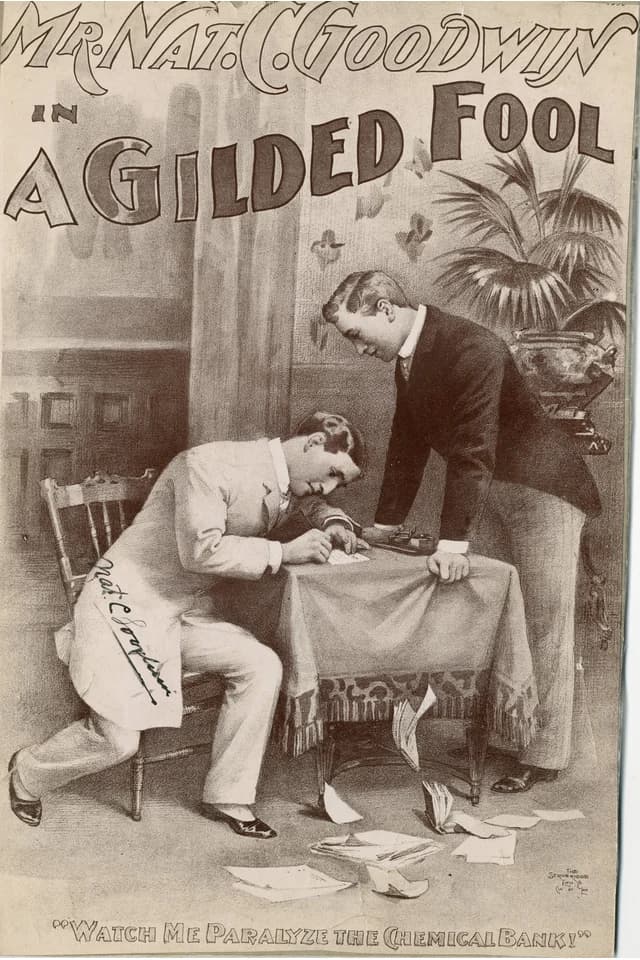
Poster for A Gilded Fool

A Gilded Fool

Play · 1892

Chauncey Short, a friendly but unworldly young man, inherits a large fortune. He is romantically interested in Margaret Ruthven. The business run by Margaret's father, Matthew, is failing due to the manipulations of Bannister Strange. Strange tries to prevent Chauncey from helping the Ruthven firm by convincing him that Margaret is no longer interested in him. Suspicious, Chauncey asks for help from detective Jacob Howell, who disguises himself as a preacher to investigate Strange. Upon learning that Strange is lying, Chauncey decides to do the opposite of everything Strange recommends. By defying Strange's misleading advice, Chuancey builds an even bigger fortune and is able to save the Ruthvens from bankruptcy.

A Hand Is on the Gate

Play · 1966

A Hand Is on the Gate is a collection of Black poetry and song that had a limited run on Broadway in 1966. The production marked the directorial debut of actor Roscoe Lee Browne, who also arranged the material and served as the show's emcee. It was produced by Ivor David Balding and Stephen Aaron; its music was arranged by Bill Lee and Stuart Scharf, and its lighting design was by Jules Fisher. The cast of eight also included Josephine Premice—who received a Tony Award nomination as Best Featured or Supporting Actress in a Musical for her performance—as well as Leon Bibb, Gloria Foster, Moses Gunn, Ellen Holly, James Earl Jones and Cicely Tyson.

A Kiss for Cinderella

Play · 1916

In First World War London, German Zeppelin raids are going on. Mr Bodie, a middle-aged artist of independent means, is visited in his studio by a policeman who wants to admonish him about showing a light in the blackout and to ask about suspicious activities on the part of his cleaning girl. She is in her teens, and her name is apparently Jane Thing, but Bodie renamed her Cinderella for her bravery and sweetness amid the drudgery of her job. She had not heard the story of Cinderella before Bodie so named her, but has now read it and identifies with the character; she thinks Bodie has called her that for her small feet. The policeman suspects her because she collects wooden boards, asks questions about the royals and knows German words. He observes her from hiding when she comes in, then emerges and talks to her. He is diverted from his suspicions by her talk, and ends by addressing her contention that she is a nobleman's daughter by giving her his "infallible" test; it proves her to be "common clay", because a lady hides her treasures in her bodice and a common girl puts hers in her pocket. When she leaves to go home, he follows her. On a snowy night, in Cinderella's poor street, she is in her room. She earns pennies from her neighbours by sewing, healing and morale-bolstering jobs. She used her boards to build boxes which are fastened to the wall several feet up. The policeman finds out that these are the safe havens for four little children, war orphans of various nationalities, one of whom is German, hence her learning the words. He leaves satisfied. Cinderella believes that this is the night when she will go to the ball – she has arbitrarily decided this because it has to be some time – and, after putting the awed children to bed, she steps outside so that her fairy godmother will not miss the house. The fairy godmother duly arrives, wearing a Red Cross uniform, and grants Cinderella's three wishes: to go to her ball, to help nurse the wounded, and to gain the love of the man of her heart. The ball follows. It is a working-class girl's vision of utmost splendour: everything is gilded and ceremonious, but everyone from the King and Queen on down speaks and acts informally. The children are there in a special balcony to see Cinderella's triumph. The Prince, who resembles the Policeman but is a bored cad, judges the marriageable girls at the ball in the manner of a horse show, including having their temperatures taken to see who is morally good. When Cinderella arrives, dressed splendidly in a gown of inexpensive fabric, he is still bored and rude as she passes the thermometer test, but when she shows him her feet he is instantly transformed into a true lover filled with all the virtues. They are married by the stuffed penguin in Bodie's studio, who is a bishop, and dance, but midnight strikes and Cinderella's splendour vanishes. The ballroom dissolves, and she is seen to be lying asleep on her doorstep in the snow, near death from freezing. In a country house which has been taken over as a nursing home for wounded soldiers, Bodie's sister, Dr Bodie, tends Cinderella, whom the policeman has found and taken to the hospital and whom Bodie has got into his sister's care. He is looking after her orphans. He comes to see her, and hears from Dr Bodie with dismay that she has little chance of getting well. She is weak and confined to a bed on casters, but is making bandages to help nurse the wounded and is charming all the other patients and nurses. She rejoices in having enough to eat for the first time, and admits that she now, with enough food in her, knows she is not really the Cinderella. She has tea with an orderly who was a plumber in civilian life and a young daughter of the upper classes who is an eager though incompetent nurses' aide; the latter two agree that their friendship is one of the best things in their lives and they will not have as much fun when class separates them after the war. The policeman comes to visit, and Cinderella produces the letter he has written her, which she treasures, from her bodice. He asks her to marry him, and, when she says yes, presents her with a specially made pair of glass slippers instead of a ring. But when he embraces her, he turns his face away because "Dr Bodie has told him something."

A Lie of the Mind

Play · 1985

Told in three acts set in Montana and California, the story alternates between two families after a severe incident of spousal abuse leaves all their lives altered until the final collision at an isolated cabin. The two families are linked by the marriage of Jake (son of Lorraine and brother of Sally and Frankie) and Beth (daughter of Baylor and Meg and sister of Mike). The play begins with Beth recuperating in her parents' home after a hospitalization resulting from Jake's abuse. Exploring family dysfunction and the nature of love, the play follows Jake as he searches for meaning after his relationship with Beth and her family as they struggle with Beth's brain damage.

A Man About the House

Play · 1945

A Man About the House is a play by the British writer John Perry, adapted from Francis Brett Young's 1942 novel of the same title about an Edwardian English spinster who inherits an Italian villa, and falls in love with and marries the butler who has secret designs on the estate that had once belonged to his family. It premiered at the Grand Theatre, Derby on 15 October 1945 before transferring to the West End. It ran for 100 performances from 27 February to 25 May 1946 at the Piccadilly Theatre. The cast included Flora Robson, Basil Sydney and Ernest Thesiger.

A Memory of Two Mondays

Play · 1955

A Memory of Two Mondays is a one-act play by Arthur Miller. He began writing the play in 1952, while working on The Crucible, and completed it in 1955. Based on Miller's own experiences, the play focuses on a group of desperate workers earning their livings in a Brooklyn automobile parts warehouse during the Great Depression in the 1930s, a time of 25 percent unemployment in the United States. Concentrating more on character than plot, it explores the dreams of a young man yearning for a college education in the midst of people stumbling through the workday in a haze of hopelessness and despondency. Three of the characters in the story have severe problems with alcoholism. Paired with the original one-act version of A View from the Bridge, the first Broadway production, directed by Martin Ritt, opened on September 29, 1955, at the Coronet Theatre, where it ran for 149 performances. The cast included Van Heflin, J. Carrol Naish, Jack Warden, Eileen Heckart, and Richard Davalos, who won the Theatre World Award for his performance. In 1959, Miller adapted the play for an ITV broadcast starring Alan Bates. Miller adapted the play for a 1971 television movie directed by Paul Bogart, A Memory of Two Mondays. After seven previews, a Broadway revival directed by Arvin Brown opened on January 26, 1976, at the Playhouse Theatre where, paired this time with 27 Wagons Full of Cotton by Tennessee Williams, it ran for 67 performances. The cast included Thomas Hulce, John Lithgow, Tony Musante, Joe Grifasi, and Meryl Streep.

A Message from Mars

Play · 1899

The play presents an unusual evening in the life of Horace Parker, a selfish man. Horace refuses to escort Minnie, his ward and fiancee, to a ball because he would prefer to spend his evening at home reading about new discoveries about the planet Mars. Minnie goes to the ball with another escort, leaving Horace home alone. Horace falls asleep and dreams that he is visited by a man, a messenger from Mars. The Messenger sets out to cure Horace of his selfishness. After a series of visions, the Messenger reduces Horace to a beggar in rags. Having realized the error of his ways, Horace awakens a changed man.

A Moon for the Misbegotten

Play · 1947

Set in a dilapidated Connecticut house in early September 1923, the play focuses on three characters: Josie, a domineering Irish woman with a quick tongue and a ruined reputation, her conniving father, tenant farmer and bullying widower Phil Hogan, and James Tyrone, Jr., Hogan's landlord and drinking companion, a cynical alcoholic haunted by the death of his mother. The play begins with Mike, the last of Hogan's three sons, leaving the farm. As a joke during one of their drunken bouts, Tyrone threatens to sell his land to his hated neighbor, T. Steadman Harder, and evict Hogan. Hogan creates a scheme in which Josie will get Tyrone drunk, seduce him, and blackmail him. Josie and Tyrone court in the moonlight. The scheme falls through when Josie finds out that Tyrone isn't going to sell the land to Harder after all. Tyrone tells Josie the story of how, after his mother died, he traveled back East on the train, and hired a blonde prostitute for $50 a night to overcome his grief. The four-act play ends with James Tyrone leaving for New York to handle his mother's estate, apparently to die soon of complications from alcoholism.

A Movie Star Has To Star in Black and White

Play · 1976

The show begins with an image of the Columbia Pictures Lady drenched in a bright light. This first scene takes place in the Now, Voyager set as well as the hospital lobby. It is summer in New York, 1955. The Columbia Pictures Lady sets the scene and talks about suicidal thoughts, loneliness, and marital troubles (all recurring throughout). The scene fades to Clara, an African-American woman in a maternity dress. She longs to be a successful writer as well as find someone she can "...co-exist in a true union" with. The Scene switches to Bette Davis and Paul Henreid on the deck of a liner from Now, Voyager. Bette takes on the thoughts of Clara and expresses her concerns about dying from blood loss in childbirth, as her mother had. She was supposed to be an angel to the family, but she did not bring her family peace. Clara's Mother comes into the picture and explains the difference of living between the blacks and whites in their town. Whites had sidewalks with paved roads, nice bathrooms and water fountains. Blacks had dirt roads, they weren't allowed to sit in restaurants and they had to sit on a separate train. Bette dreams of talking to Jesus; she writes about God often. Clara's father left the family to be with a girl who talks to willow trees. She talks about her forced relationship with her ex-husband, Eddie. The pregnant Clara enters and talks to Eddie about jealousy. She wants to do something with her life like he does. She reads her own story about dragging the dead body of her father through the grass, her is her "blood father". She talks about how her father had attempted suicide. She yearns to fly free like the Owl to be in the Kingdom of God. Dead. In scene two, the lights come up on Clara's entrance into her brother's hospital room and Viva Zapata!. Wally, Clara's brother is in a coma. Jean Peters takes on the story of Clara. Clara's mother enters upset about how her children are unhappy. Clara expresses that she is very happy because she is going to have one of her plays produced. Clara's mother doesn't understand how Clara could be happy without a family of her own. She asks Clara to get back together with Eddie now that she is pregnant. Jean Peters has extreme depression about her divorce from Eddie. She has to borrow money from Eddie because she doesn't make enough money independently, which drives her crazy. Wally is most likely not going to survive. Clara recites a poem about calling to God, but The Owl Answers. Clara's Mother and Father fight about their divorce. Jean Peters recites more from her play, wishing that she could fly away like the Owl to God. In the final scene, it is a flashback where Shelley Winters and Montgomery Clift are rowing in a small boat from the set of A Place in the Sun. Clara is in bed. She is bleeding and writing poems. Kennedy then notes that Clift continues to grow; she says that all three male movie stars are to be mute. Clara is sharing her aspirations of being an African American writer from a very young age. People told her it was unrealistic. Eddie calls her passion for writing an "obsession to write". Eddie says that she has become shy and secretive. Eddie feels like Clara is a spectator of her own life and that her diaries consume her. Eddie doesn't seem the same since he came back from the war in Korea. Jean Peters reads a segment of writing that talks about a bad fight between her mother and father. She again speaks of being an Owl in a fig tree and reaching the Kingdom of God. Jean Peters tells the story of Wally who dropped out of school to be in the army. He committed a crime and was let go from the army and is working in a hospital. He tried to go back to school but dropped out again. He married a girl right before he went to Germany. She graduated cum laude while he was a prisoner in stockade. It is back to current times and Clara cries about her brother being close to death. Her brother will live brain dead and paralyzed. The show closes with a "Brief dazzling image of the Columbia Pictures Lady."

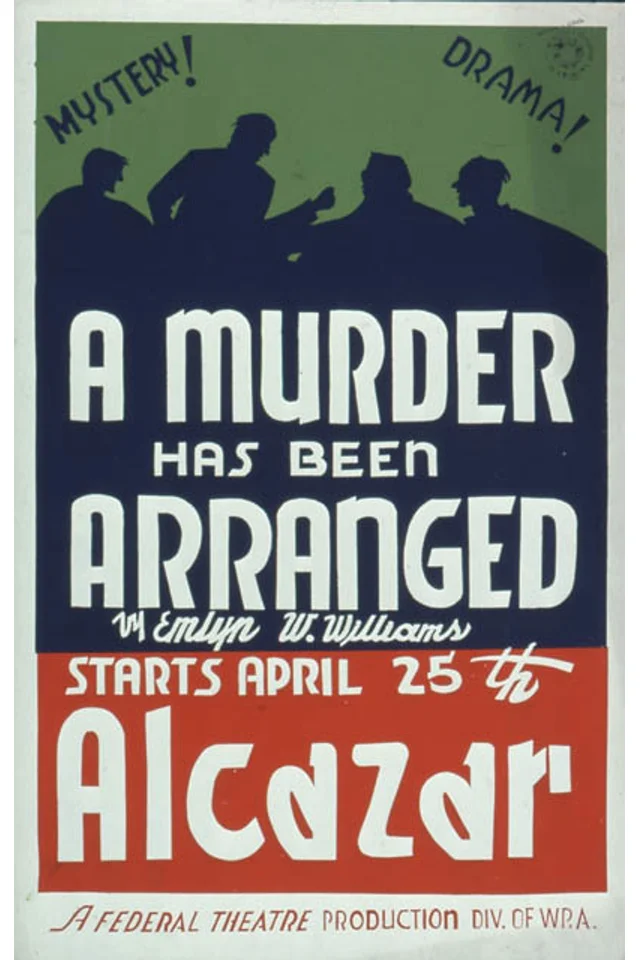
Poster for A Murder Has Been Arranged

A Murder Has Been Arranged

Play · 1930

A Murder Has Been Arranged is a 1930 thriller play by the British writer Emlyn Williams. It ran for 77 performances at the St James's Theatre in London's West End between 26 November 1930 and 31 January 1931. The cast included Henry Kendall, Margaretta Scott and Amy Veness. It then went on an extended national tour with Donald Wolfit in the cast. In 1932 it was staged on Broadway and at the Pasadena Playhouse. The Broadway production featured Joseph Cotten in one of his earliest roles.

A New Trick to Cheat the Devil

Play · 1632 est

After Anne rejects her lover Slightall for the aristocratic Lord Skales, he falls into spendthrift behavior and debt. Her father stages an infernal masque and disguises himself as the Devil, offering financial rescue in exchange for Slightall’s soul; the supposed diabolical marriage instead reunites the lovers. In a comic subplot, a friar exposes an innkeeper’s wife and her constable lover through a staged conjuring trick.

A New Wonder, a Woman Never Vexed

Play · 1612 est

Stephen Foster, imprisoned for debt, is freed by his nephew Robert, then returns to gambling and marries a wealthy widow who hopes to find some trouble in her fortunate life. When a storm destroys the merchants’ ships, Stephen helps reform his brother and reconcile the family. In a subplot, Alderman Bruin’s daughter Jane prefers Robert to two foolish suitors, and the play ends with family reconciliation and a charitable foundation.

A Parisian Romance

Play · 1882

A Parisian Romance (Un Roman Parisien) is a play written in French by Octave Feuillet and adapted in English by Augustus R. Cazauran. Producer A. M. Palmer staged it at the Union Square Theatre on Broadway, where it debuted on January 11, 1883, with Richard Mansfield starring as Baron Chevrial. Mansfield later purchased the rights to the play and made it part of the repertory of his touring company. The production used sets designed by Richard Marston. In 1932 Allied Pictures produced a film adaptation, also titled A Parisian Romance, directed by Chester M. Franklin. It starred Lew Cody and Marion Shilling.

A Passage to India

Play · 1960

The play begins with two English women, Mrs. Moore and Adela Quested. They travel to 1920s India, where Mrs. Moore's son, Ronny, is working. Ronny is supposed to be engaged to Adela. The women hope to experience India while they are there. Adela and Ronny are unsure if they are meant to be together. While on a hike led by Dr. Aziz, Adela is attacked in the Marabar Caves. She assumes it was Dr. Aziz, but later while testifying in court, which becomes a media sensation, she realizes Dr. Aziz is not the person who attacked her. Dr. Aziz brings up the racial tensions he feels between the English and the Indians.

A Perfect Future

Play · 2011

New York power couple John and Natalie are hosting a dinner for Elliot, a friend from their college days, along with Mark, a strait-laced young man. After drinking too many expensive bottles of wine, the group's past and their long-buried secrets resurface. Over the course of this raucous evening, their basic belief systems are upended, as the four come to terms with what happens when they try to reconcile idealism with reality. This high-society evening turns into a night of sexually charged mind games that could change their lives forever.

A Prayer for My Daughter

Play · 1978

The play is set in the interrogation room of a downtown New York City police station in the early hours of July 5. Two hardened cops (Sergeant Kelly and Jack Delasante) have arrested two suspects for the murder of an old woman. During the interrogations, the police try to get confessions from the two suspects, Sean and Jimmy. As they do, they reveal far more about their own vulnerabilities than they intend. The tension of the play is increased by constant updates, by phone, of the state of mind of one of Kelly's daughters. Lonely and unstable, she becomes increasingly suicidal during the play. Jimmy (Alan Rosenberg) Sgt Kelly (George Dzundza) Jack Delasante (Jeffrey DeMunn) Sean (Laurence Luckinbill)

A Prior Claim

Play · 1805

A Prior Claim is an 1805 comedy play by the English writer and poet laureate Henry James Pye and Samuel James Arnold. It premiered at the Theatre Royal, Drury Lane on 29 October 1805. The original cast included William Dowton as Sir William Freeman, Vincent De Camp as Young Freeman, Robert William Elliston as Henry Mortimer, William Barrymore as Colonel Raymond, Robert Palmer as Lounger, John Henry Johnstone as Patrick O'Shatter, Maria Rebecca Davison as Maria, Harriet Siddons as Emily and Maria Theresa Kemble as Fanny. It was Pye's third play to be staged and marked a break from his two previous works, the historical tragediesThe Siege of Meaux (1794) and Adelaide (1800).

A Question of Fact

Play · 1953

A Question of Fact is a 1953 play by the British writer Wynyard Browne. A schoolteacher questions his beliefs and his career when he discovers that his father was hanged for murder. It was first staged at the New Theatre, Oxford before transferring to the Piccadilly Theatre in London's West End where it ran for 242 performances between 10 December 1953 and 10 July 1954. The original cast included Pamela Brown, Paul Scofield, Gladys Cooper, Henry Hewitt, Maureen Delany and Edith Sharpe.

A School for Greybeards

Play · 1786

A School for Greybeards is a comedy play by the British writer Hannah Cowley that premiered on November 25, 1786. The original cast included Thomas King as Don Alexis, John Philip Kemble as Don Henry, William Parsons as Don Gasper, John Bannister as Don Sebastian, John Palmer as Don Octavio, Mary Ann Wrighten as Rachel, Ann Maria Crouch as Donna Maria, Sarah Maria Wilson as Carlota, Margaret Cuyler as Donna Clara and Elizabeth Farren as Donna Seraphina.

Showing 121–240 of 8,284 shows

Load more shows