Casanova
Revue operetta based on the life of eighteenth-century Italian adventurer Giacomo Casanova.
1634 shows
Clear filtersRevue operetta based on the life of eighteenth-century Italian adventurer Giacomo Casanova.
Castles in the Air is a musical comedy, with a book and lyrics by Raymond Wilson Peck and music by Percy Wenrich (additional lyrics by R. Locke). The story concerns two young men, Monty Blair and John Brown, who mistake an exclusive Westchester resort for an inn. They decide to pretend to be nobility, and Monty introduces John as a Latvian prince. Evelyn's uncle Philip decides to teach her a lesson about social climbing by taking her to Latvia, intending to expose John as an impostor. The plan backfires, though, because John really is a prince. The musical opened on Broadway in the Selwyn Theatre on September 6, 1926. It moved to the Century Theatre on December 6, 1926. The production was directed by Frank S. Merlin and choreographed by John Boyle and Julian Mitchell. It starred J. Harold Murray as John and Vivienne Segal as Evelyn. On June 29, 1927, a production opened in London, at the Shaftesbury Theatre.
The musical follows the events of books from both the Cat Kid Comic Club and Dog Man series, including Dog Man: Fetch 22 and the first book of Cat Kid Comic Club. Rather than tell one linear story, most of the songs describe events that happen within comics written by the characters. The opening of the musical shows Molly Pollywog and 21 mind-controlled psychokinetic tadpoles turned evil using their powers to 'destroy the city and stuff', as Sarah Hatoff reports that this very well could be "The End" of the world. Li'l Petey, as his superhero identity Cat Kid, treats Molly and the tadpoles with compassion, and invites to join "The Cat Kid Comic Club", where he can teach them to express themselves by creating their own comics. Flippy, a bionic fish who was once turned evil through mind control, sees himself in the tadpoles, and decides to adopt all of them. The tadpoles grow into frogs, but two of them – Melvin and Naomi – argue throughout. The first comic, written by Melvin, is about a toothbrush who wishes to be a lawyer for dinosaurs, and goes to 'lawyer school' and builds a time machine to go back 67 million years and defend an iguanodon teenager falsely accused of eating a baby ("Dennis the Toothbrush Lawyer for Dinosaurs"). Naomi says she thinks Melvin's idea was dumb, and Flippy sends her to time-out rock. The second comic follows an aptly named "Supa Fail" who tries to be helpful by bringing back a restaurant-owner his stolen toothpick, and accidentally destroys the entire world instead. Frog Poppy writes of "The Cute, Little, Fluffy Cloud of Death" who is bullied by the sun for being creepy, but befriends a ghost girl and her skelopup, who all ignore the sun until he goes away. The next comic tells the tale of "Chubbs McSpiderbutt", who gets bitten by Jake the Spider, causing spider legs to grow from his butt, which he decides to use for good. Chubbs and Jake, as his sidekick, encounter the evil members of the not very nice club – Dr. Pasty McSprinkles and Scott the Worm – but we are left on a cliffhanger as to how the story ends. Flippy, having read all of these comics, believes that the comics are too full of potty humour, creepy characters, or cartoon violence, deeming them awful, which makes the frogs upset. He laments about being the "Worst Dad Ever". Meanwhile, Naomi and Melvin get into a musical argument, which devolves from petty insults into Naomi criticising Melvin for not standing up for her when she was treated differently for being a girl. Melvin runs away, exclaiming about a new comic idea, and Naomi is annoyed by his sudden departure ("All About You"). Another frog, Starla, is interested in poetry, so writes a haiku about nature which she turns into a comic ("Birds, Flowers, Trees"). Melvin reveals his new comic is called "My Sister, Naomi", and retells the incident where she was mistreated and lets her stand up and speak for herself. Everyone celebrates their getting along and sings and dances at "The Mega-Gigantic, Humonga-Normous Comic Club Party!"
In the 1960s, Frank Abagnale Jr., a young con man, is cornered at the Miami International Airport by FBI Agent Carl Hanratty and his team. Hanratty asserts that there's no use in running, as his men are trained to shoot. Before his arrest, Frank pleads with Hanratty to allow him to inform the people in the airport why they're beating at him, though Hanratty only wants to know how he passed the bar exam in New Orleans to pose as a lawyer. Frank promises to tell him all his secrets if they allow him to tell his story ("Live in Living Color"). A reluctant Hanratty agrees. In a home in New Rochelle, New York, Frank lives with his parents Frank Abagnale Sr. and Paula Abagnale. His parents met in Montrichard, France, during World War II. Paula was performing at a diner and noticed Frank Sr. among the soldiers in the audience ("The Pinstripes Are All That They See"), marrying him soon after. Due to money shortages, Frank is unable to attend private school, nonetheless wearing his school jacket to public school. He is taunted there as looking like a substitute teacher, which gives Frank an idea; a few days later, the principal informs his parents that Frank has been teaching French class at the school while their teacher is absent. One day, Frank walks home from school to find his mother dancing with one of Frank Sr.'s friends. She pleads with him not to tell Frank Sr., but a distraught Frank is soon in court, with Paula and Frank Sr. fighting over custody of him. Frank decides to run away ("Someone Else's Skin"). He soon learns to create fake checks, cashing them at banks across the country and successfully conning millions of dollars. While entering a New York City hotel, Frank notices several attractive women, all of them stewardesses; he decides to become a pilot. After creating a fake ID card, he finds a co-pilot job at Pan American World Airways. The workers express the joys of a life in the skies ("Jet Set"). Hanratty finds several fake checks on his desk in Washington, D. C. He and Agents Branton, Dollar, and Cod are assigned to track down the writer of these fake checks ("Live in Living Color [Reprise]"). Hanratty gives a word of wisdom to whoever wrote the checks: "Don't Break the Rules." Frank enjoys his pilot job, remembering how his dad always said that "women love a man in uniform," as "The Pinstripes Are All That They See." Feeling homesick, he visits Frank Sr., upset to find out that he had to close his store to save money. Frank offers him several checks to improve his financial situation, but Frank Sr. declines, believing that Frank should be happy with his success and not worry about him ("Butter Outta Cream"). Meanwhile, Hanratty sorts through leftover items from the hotel Frank had just stayed at, looking for ("The Man Inside the Clues.") Hanratty tracks Frank to a hotel room in Los Angeles, but Frank escapes after tricking Hanratty into believing that Frank is a Secret Service agent named Barry Allen. Frank attends a holiday party for the airport staff ("Christmas Is My Favorite Time of Year") but ultimately feels lonely, calling Hanratty on a pay phone for comfort. Hanratty, realizing the culprit is just a kid, reveals that he, too, has no one to spend Christmas with ("My Favorite Time of Year"). Frank comes across another staff party, this time for a hospital. When asked what his job is by one of the doctors, Frank lies that he is a pediatrician at the Death Valley Children's Hospital, working with "snot-nosed kids" and calling himself "Dr. Connors." Feeling sorry for him, the doctor finds him a job at the Atlanta General Hospital, surrounded by nurses who are ready to take the ("Doctor's Orders"). Hanratty is still searching for Frank, going through missing person reports ("Live in Living Color (reprise)"). He eventually finds the house of Paula and her new husband, questioning her on the whereabouts of Frank. She tells him not to worry, as does Frank Sr. Both plead with Frank: ("Don't Be a Stranger"). While talking to Frank Sr. at a bar, Hanratty realizes that both men had overbearing fathers ("Little Boy Be a Man"). Meanwhile, Frank has fallen in love with one of the nurses, Brenda Strong, though she finds him intimidating. He tells her he has seen the "Seven Wonders," but none of them compare to her beauty. Brenda brings Frank to meet her family in New Orleans, where he lies that he's a lawyer, a doctor, and a Lutheran to impress her father. Her father does not believe him but permits him to be with Brenda after Frank admits how much he loves her. Brenda's parents, Carol and Roger Strong, tell Frank that they have a "family sing-along" each night after dinner; they turn on the television to the song "((Our) Family Tree"), after which Frank proposes to Brenda, and she accepts. Shortly before the engagement ceremony, Frank discovers Hanratty has figured out where he is. He admits the truth to Brenda, telling her his real name: Frank William Abagnale Jr. He promises to return after escaping from Hanratty. Just as he leaves, Hanratty enters, asking Brenda where Frank went. She laments that she loves Frank and would never tell on him ("Fly, Fly Away") but is tricked into doing so shortly thereafter. The story returns to the opening scene, where Frank is cornered in the airport. The agents escort passengers out of the area as Frank threatens to run. Hanratty states that he doesn't want to use force but would have to if Frank ran. Hanratty informs Frank that his father is dead; a drunken Frank Sr. had fallen downstairs at the bar, breaking his neck. Realizing he has nobody, Frank gives in to Hanratty ("Goodbye"). Although sentenced to fifteen years in prison, Frank is released after seven. Shortly after his release, he is hired by Hanratty and the FBI to track down others who committed crimes like his. Hanratty and Frank embrace, noting that their partnership is "Strange But True." Hanratty then makes Frank keep his promise, telling him how he passed the New Orleans bar exam. Frank tells a surprised Hanratty that he didn't cheat: "I studied."
Catch My Soul is a rock musical produced by Jack Good and adapted from Shakespeare’s Othello. It premiered in Los Angeles in 1968 and later played in the United Kingdom.
After the overture, a tribe of cats known as the Jellicles gather on stage and describe themselves and their purpose ("Jellicle Songs for Jellicle Cats"). The cats (who break the fourth wall throughout the show) then notice that they are being watched by a human audience, and proceed to explain how the different cats of the tribe are named ("The Naming of Cats"). This is followed by a ballet solo performed by Victoria to signal the beginning of the Jellicle Ball ("The Invitation to the Jellicle Ball"). At this moment, Munkustrap, the show's main narrator, explains that tonight the Jellicle patriarch Old Deuteronomy will make an appearance and choose one of the cats to be reborn into a new life on the Heaviside Layer. Munkustrap introduces the first contender Jennyanydots ("The Old Gumbie Cat"), a large tabby cat who lazes around all day, but come nighttime, she becomes active, teaching mice and cockroaches various activities to curb their naturally destructive habits. Just as Jennyanydots finishes her song, the music changes suddenly and Rum Tum Tugger makes his extravagant entrance in front of the tribe ("The Rum Tum Tugger"). He is very fickle and unappeasable, "for he will do as he do do, and there's no doing anything about it". Then, as Rum Tum Tugger's song fades, a shabby old grey cat stumbles out wanting to be reconciled; it is Grizabella. All the cats back away from her in fear and disgust and explain her unfortunate state ("Grizabella: The Glamour Cat"). Grizabella leaves and the music changes to a cheerful upbeat number as Bustopher Jones, a fat cat in "a coat of fastidious black", is brought to the stage ("Bustopher Jones: The Cat About Town"). Bustopher Jones is among the elite of the cats, and visits prestigious gentlemen's clubs. Suddenly, a loud crash startles the tribe and the cats run offstage in fright. Hushed giggling sounds signal the entrance of Mungojerrie and Rumpleteazer, a pair of near-identical cats. They are mischievous petty burglars who enjoy causing trouble around their human neighbourhood ("Mungojerrie and Rumpleteazer"). After they finish, they are caught off-guard and confronted by the rest of the cats. Finally, the Jellicle patriarch, Old Deuteronomy, arrives before the tribe ("Old Deuteronomy"). He is a wise old cat who "has lived many lives" and is tasked with choosing which Jellicle will go to the Heaviside Layer every year. The cats put on a play for Old Deuteronomy ("The Awefull Battle of the Pekes and the Pollicles"), telling a story about two dog tribes clashing in the street and subsequently being scared away by the Great Rumpus Cat. A moral from Old Deuteronomy is interrupted by a second loud crash, presumably from Macavity, which sends the alarmed cats scurrying. After a quick patrol for Macavity, Old Deuteronomy deems it a false alarm and summons the cats back as the main celebration begins ("The Jellicle Ball"), in which the cats sing and display their "Terpsichorean powers". During the Ball, Grizabella reappears and tries to dance along, but her age and decrepit condition prevent her from doing so ("Grizabella: The Glamour Cat (Reprise)"). As a result, she is once again shunned by the other cats, but that does not stop her from vowing to return for another chance to be in the spotlight while a guilty Old Deuteronomy looks on ("Memory (Prelude)"). After the Jellicle Ball, Old Deuteronomy gathers his tribe to contemplate the nature of happiness. Jemima (also known as Sillabub), the youngest of all Jellicles, understands the patriarch is referring to Grizabella, and passes the message on to the rest of the tribe ("The Moments of Happiness"). Gus – short for Asparagus – shuffles forward as the next cat to be introduced ("Gus: The Theatre Cat"). He was once a famous actor but is now old and "suffers from palsy which makes his paws shake". He is accompanied by Jellylorum, his caretaker, who tells of his exploits. Gus then remembers how he once played the infamous pirate captain, Growltiger ("Growltiger's Last Stand"). He tells of Growltiger's romance with Lady Griddlebone, leading to the pirate's capture by a horde of Siamese cats and his execution by walking the plank. Back in the present, after Gus exits, Skimbleshanks is seen sleeping in the corner ("Skimbleshanks: The Railway Cat"). He is the cat who is unofficially in charge of the nightly train from London to Gallowgate, and it will not depart unless he is aboard. Within his song, a whole steam train engine is assembled out of objects in the junkyard. With a third crash and an evil laugh, the "most wanted" cat Macavity appears. He is the so-called "Napoleon of Crime" who always manages to evade the authorities. Macavity's henchmen capture Old Deuteronomy and take off with the patriarch in tow. As Munkustrap and his troop give chase, Demeter and Bombalurina explain what they know about Macavity ("Macavity: The Mystery Cat"). When they are finished, Macavity returns disguised as Old Deuteronomy, but his cover is blown by Demeter and he ends up getting beaten by Munkustrap and Alonzo. Macavity holds his own for a time, but as the rest of the tribe begin to gang up and surround him, he shorts out the stage lights and escapes in the resulting confusion. After the fight, Rum Tum Tugger calls upon the magician Mr. Mistoffelees for help ("Magical Mr. Mistoffelees"). Known as the "original conjuring cat", Mr. Mistoffelees can perform feats of magic that no other cat can do. He displays his magical powers in a dance solo and uses them to restore the lights and bring back Old Deuteronomy. Now, the "Jellicle choice" can be made. Before Old Deuteronomy can make his decision, Grizabella returns to the junkyard and he allows her to address the gathering. Her faded appearance and lonely disposition have little effect on her song ("Memory"). With acceptance and encouragement from Jemima and Victoria, her appeal succeeds and she is chosen to be the one to go to the Heaviside Layer and be reborn into a new Jellicle life ("The Journey to the Heaviside Layer"). A tyre rises from the piles of junk, carrying Grizabella and Old Deuteronomy partway towards the sky; Grizabella then completes the journey on her own. Finally, Old Deuteronomy closes the show by giving his final speech to the audience ("The Ad-dressing of Cats"). Notes:
Celebration is a musical with a book and lyrics by Tom Jones and music by Harvey Schmidt. The musical fable, employing a nearly bare stage, explores the contrasts between youth and old age, innocence and jaded corruption, love and ambition, and poverty and wealth. It was presented on Broadway in 1969 and was not a financial success. Although the critics found the show interesting, it did not develop a broad following among audiences. The show has been revived occasionally.
Marie, called Cendrillon, lives as a servant in her father’s household. A prince visits disguised as a beggar, then as his valet, and invites the family to a ball. Her fairy godmother transforms a pumpkin, animals, and her clothes so she can attend, but warns her to return by midnight. At the ball the Prince recognizes her, and they fall in love before she flees, leaving a slipper behind. The Prince searches the household; when the slipper fits Marie, he asks her to marry him, and her family apologizes.
Chaplin: The Musical, formerly titled Limelight: The Story of Charlie Chaplin, is a musical with music and lyrics by Christopher Curtis and book by Curtis and Thomas Meehan. The show is based on the life of Charlie Chaplin. The musical, which started at the New York Musical Theatre Festival in 2006, debuted at the La Jolla Playhouse in 2010, and then premiered on Broadway in 2012.
Charlie and Algernon is a musical with a book and lyrics by David Rogers and music by Charles Strouse. It is based on the 1966 novel Flowers for Algernon by Daniel Keyes. It received its premiere on December 21, 1978, at The Citadel Theater, in Edmonton, Canada.

Charlie Bucket wins a rare invitation to tour Willy Wonka’s mysterious chocolate factory. Alongside four other children, he encounters extraordinary inventions and tests of character that gradually reveal the purpose of the visit.
Set in Victorian England, Charlotte Sweet spotlights Charlotte, a girl with one of the highest and most beautiful soprano voices in the world. Because of her father's debts, she is forced to leave Ludlow Ladd, her Liverpool sweetheart, and join Barnaby Bugaboo's “Circus of Voices”: a troupe of freak voices including low-voiced Katinka Bugaboo, fast-voiced Harry Host, bubble-voiced Cecily Macintosh, and Skitzy Scofield (with dual personalities and voices). Becoming the troupe's biggest sensation, Charlotte is mercilessly exploited by Barnaby until she has a vocal breakdown. Thereupon, Barnaby and his wife Katinka addict Charlotte to helium balloons in order to maintain her high notes. Only Ludlow Ladd can rescue her.
In 1928 Herbert Fields wrote a libretto based on Pettit's book in which the Grand Eunuch's son, Li-Pi, and his wife, Chee-Chee, are forced into exile when the Grand Eunuch announces his plan for Li-Pi to become a eunuch and take his father's place as the Grand Eunuch. Chee-Chee is captured and rescued, and Li-Pi is captured and rescued, and finally the musical ends happily.
Chess is a 1986 musical with music by Benny Andersson and Björn Ulvaeus of the pop group ABBA, lyrics by Ulvaeus and Tim Rice, and book by Rice. The story involves a politically charged, Cold War–era chess tournament between two grandmasters, one American and the other Soviet, and their fight over a woman who manages one and falls in love with the other. Although the protagonists were not intended to represent any real individuals, the character of the American grandmaster was loosely based on Bobby Fischer, while elements of the story may have been inspired by the chess careers of Russian grandmasters Viktor Korchnoi and Anatoly Karpov. Chess allegorically reflected the Cold War tensions present in the 1980s. The musical has been referred to as a metaphor for the Cold War, with the insinuation that the Cold War is itself a manipulative game. Released and staged at the height of the strong anti-communist agenda that came to be known as the "Reagan Doctrine", Chess addressed and satirized the hostility of the international political atmosphere of the 1980s. As with other productions such as Jesus Christ Superstar and Evita—both of which Rice developed with Andrew Lloyd Webber—a highly successful concept album was released prior to the first theatrical production in order to raise money. In the case of Chess, the concept album was released in late 1984 while the show opened in 1986 in London's West End, where it played for three years. A much-altered US version premiered on Broadway in 1988 with a book by Richard Nelson, but survived only for two months. Chess is frequently revised for new productions, many of which try to merge elements from both the British and American versions, but was not revived in the West End until 2019. Chess was revived on Broadway in 2025 with a new book by Danny Strong, and it closed on June 21, 2026. Chess placed seventh in a BBC Radio 2 listener poll of the UK's "Number One Essential Musicals".
Children of Eden is a 1991 musical with music and lyrics by Stephen Schwartz and a book by John Caird. The musical is based on the Book of Genesis, with Act I telling the story of Adam and Eve, and Cain and Abel, while Act II deals with Noah and the flood. Though commercially the musical has had very little success, it is popular in community and regional theatres worldwide, due to its ability to accommodate a large or small cast, religious subject, and its universal themes of family and love. The show's publisher, Music Theatre International, reports that Children of Eden is one of its top 20 most frequently licensed properties.
Children's Letters to God was a Drama Desk Award nominated Off-Broadway musical that was based on the best selling book by Stoo Hample, music by David Evans, and lyrics by Douglas J. Cohen.
In Gaul in 567, King Chilpéric visits the woods to consult the Druids about his next battle. He meets shepherd Landry and Landry’s fiancée Frédégonde, takes a fancy to her and brings both to court. As Chilpéric prepares to marry the Spanish princess Galswinthe for political reasons, Brunehaut plots to kill the couple and take the throne, while Frédégonde and Landry become entangled with other lovers. On the wedding night, several plots to murder the women go awry amid confusion in the bridal chamber. Chilpéric returns victorious from battle, rescues Galswinthe, pardons Frédégonde and lets the other plotters off with comic punishments.
The junkyard manager Coggins recounts the last race of the British champion race car, the Paragon Panther, which was contested against the Vulgarian Vulture in the 1910 British Grand Prix: the Panther crashed after Vulgarian spies sabotaged it ("Opening"). Years later, the Panther sits in a junkyard, forgotten by all save the young siblings Jeremy and Jemima Potts, who are enamored with Coggins' tales and the car's history. They are shocked when Coggins tells them he plans to scrap it, but he promises to save the Panther for them if they can purchase and move it within a few weeks. Truly Scrumptious, daughter of the wealthy Lord Scrumptious, arrives at the junkyard seeking a spare part, but upon finding the truant children, takes them home to their father, the widowed inventor Caractacus. Meanwhile, two Vulgarian spies, Boris and Goran, acting under the direction of their leader, autocratic Baron Bomburst, have discovered the location of the Panther and make plans to purchase the car before the children. Truly arrives at the Potts household, an old windmill, with the children and lectures Caractacus on their improper upbringing before leaving; as he prepares a meal for the children ("You Two"), they tell him about the plans to scrap the Panther and he promises to purchase the car for them. Caractacus's father, Grandpa Potts, recounts the family's troubles ("Them Three") and after trying some of his son's inventions, realizes he has devised a candy that can be played like a flute. The next day, Caractacus goes to Lord Scrumptious's candy factory to sell the design and raise the money needed for the Panther. Truly helps the Potts family make their sales pitch ("Toot Sweets"), but the demonstration ends in disaster as the musical boiled sweets unintentionally summon many stray dogs who invade the factory. Boris and Goran decide to pass themselves off as locals ("Think Vulgar" / "Act English") as they realize the patriotic Coggins will never sell the Panther to Vulgarians. Dispirited from the Scrumptious Sweet Factory debacle, Caractacus sings a lullaby to the children ("Hushabye Mountain") and decides to try selling another invention tomorrow. In the morning, Caractacus brings another invention, his automatic hair-cutting machine, to a local fair ("Come to the Funfair"), but the first demonstration again goes awry, as the hapless inventor's machine shaves the prospective client nearly bald. Caractacus escapes the wrathful client by joining a spirited morris dance group ("Me Ol' Bamboo") and the hair-cutting machine is sold instead to a turkey farmer, who plans to use it to pluck and cook his birds, giving Caractacus the money he needs to purchase the Panther. After purchasing the derelict racer and towing it home, Caractacus performs an intensive restoration while Grandpa and the children maintain the household ("Posh!"); after several days, Caractacus emerges from the workshop with the beautifully refurbished car, which they decide to take for a drive with Truly. Collectively, they rename the car Chitty Chitty Bang Bang for the unusual noises made by the engine ("Chitty Chitty Bang Bang"), and the four go for a seaside picnic. During the picnic, the children confess their love to Truly ("Truly Scrumptious"), who reciprocates and realizes she has feelings for Caractacus as well; distracted by their emotions, the adults fail to notice they have become stranded by the rising tide, but Chitty demonstrates its amphibious capabilities by transforming into a boat ("Chitty Chitty Bang Bang" (nautical reprise)) as the Vulgarians attempt to capture the car and the Potts make a clean escape with Truly. Learning the car is also a boat both infuriates Baron Bomburst and renews his desire to own it. The Vulgarians arrive at the Potts family windmill first, though, and believing mistakenly that Grandpa is responsible for the wonders of Chitty, they hook his hut from an airship, kidnapping him inside. The rest of the family arrive with Truly in time to see them taking off with Grandpa. Speeding in pursuit, Chitty goes over a cliff but in another remarkable display, transforms into an aircraft ("Chitty Takes Flight") and follows the airship, hut, and Grandpa back to Vulgaria. Upon his arrival in Vulgaria ("Vulgarian National Anthem"), Grandpa is forced by Baron Bomburst to give the Baron's car floating and flying capabilities like Chitty, working with other inventors previously kidnapped by the Baron. After learning they have failed for years to accomplish this, Grandpa despairs but is cheered by his fellow prisoners, who see their failures merely as learning experiences ("The Roses of Success"). Chitty arrives shortly afterwards bearing Truly and the three remaining Potts; the Toymaker hustles them into his workshop just as the Childcatcher rushes to their landing site, suspecting the presence of children, who are banned in Vulgaria ("Kiddy-Widdy-Winkies"). As Caractacus learns that to comply, the citizens of Vulgaria have sent their children underground to live in the sewers, the Childcatcher tricks Truly and imprisons Jeremy and Jemima. Caractacus, Truly, and the Toymaker devise a plan to rescue the children and Grandpa; having learned of Vulgaria's misery, Caractacus and Truly vow to end the Baron's rule ("Teamwork"), while the Baron and Baroness prepare for his birthday party ("Chu-Chi Face"). The Baroness's party plans come to fruition ("The Bombie Samba") as the Toymaker brings in Truly and Caractacus, disguised as dolls that sing and dance ("Doll on a Music Box" / "Truly Scrumptious" (reprise)), distracting the Baron as the children of Vulgaria rush from the sewers and overpower the Baron's henchmen. The Potts children and Grandpa are rescued ("Us Two" / "Chitty Prayer"). The Toymaker banishes the Baron and Baroness from Vulgaria and the children from underground are reunited with their families ("Teamwork" (reprise)). Caractacus and Truly declare their love for each other as they fly home to England ("Chitty Flies Home").
Chris and the Wonderful Lamp is a stage work in three acts with music by John Philip Sousa and both book and lyrics by Glen MacDonough that is based on the 1895 children's novel of the same name by Albert Stearns. Both the stage work and the novel are a reimagining of the Aladdin folktale within an American context; with the premise of the story being the purchase of Aladdin's lamp by an American boy, Chris Wagstaff, in an antique shop in Connecticut. Chris's wishes with the lamp lead to adventures in New York City, San Francisco, on a ship at sea, and ultimately the fictional kingdom of Etheria where Chris awakens and meets Aladdin who has been in an enchanted sleep for centuries.
The musical is based on the book My Indian Family, which tells the story of an Austrian woman who travels to India to spend time with her daughter and her Indian son-in-law. While in India, the daughter dies and the mother-in-law steps in to help the widowed husband find a new bride. The musical follows some of the broad strokes of the book, but with significant changes including a love story between the mother-in-law (Christine) and the widowed son-in-law. Christine arrives in India to visit her daughter Mary-Anne, and her daughter's husband, Dr Rashil Singh ("Welcome Song/My Indian Family"). She discovers though that her daughter has died in childbirth, along with the child, her widowed doctor husband racked with sorrow and guilt over not being able to save her life ("A Doctor's Soliloquy"). Aided by Dr Singh's Auntie and Uncle, Christine takes on the mother's duty to find a new wife for her son-in-law ("How to Pick a Man a Wife" and "The Lovely Girls of Akbarabad"), but instead finds herself falling in love with him ("Room in My Heart"). As Act I ends, Christine and the Doctor sing of their love for each other ("I Never Meant to Fall in Love"). Act II opens on explorations of the perceived cultural peculiarities of India ("Freedom Can Be a Most Uncomfortable Thing" and "Ireland Was Never Like This"), before exploring the unrequited love a local girl, Sita Roy, has for Dr. Singh ("He Loves Her"). Sita works in the doctor's clinic and notes that the locals have stopped coming to the doctor's dispensary, due to Christine's presence, so Sita implores Christine to leave. Christine tells the doctor of her discomfort with the situation, but he asks her to marry him and she agrees ("Christine"). As the ceremony is prepared in which Christine is to reveal the wife she has chosen for Dr. Singh, she decides that she cannot stay after all ("I Love Him"). At the ceremony, she shocks everyone by choosing Sita Roy to be his bride. She tells Dr. Singh she must return to Ireland ("The Woman I Was Before"), which she does, slipping away while Sita and Dr. Singh's wedding is taking place.
In a small town in South America, Bayardo San Roman, a newly married man rejects Angela Vicario, his young bride when he discovers that she is not a virgin. She returns to her family home, where they make her reveal her lover. She names Santiago, the best friend of her brothers, who is innocent. They are determined to avenge the family honor by killing their best friend: a "death foretold."
Chu Chem is a musical with a book by Ted Allen, lyrics by Jim Haines and Jack Wohl, and music by Mitch Leigh.
Setting: Baghdad, Palace of Kasim Baba The wealthy merchant Kasim Baba (brother of Ali Baba) is preparing to give a lavish banquet at his home for a wealthy Chinese merchant, Chu Chin Chow, who is on his way from China. The robber chieftain, Abu Hasan, wishes to add to his riches the property of Kasim. Abu Hasan forces his captive, the beautiful Zahrat al-Kulub, to spy for him in Kasim's house, disguised as a slave girl, by holding her lover hostage. She is nearly found out several times. Zahrat sends a message to Abu Hasan, letting him know about the banquet. Hasan arrives at Kasim's palace in disguise as Chu Chin Chow, whom his gang has robbed and murdered. He tries to glean information that will enable him to rob his host. Meanwhile, the slaves tell Ali Baba, Kasim's poor, lazy brother, about Hasan's secret cave and the password "open sesame". Ali Baba enters the lair and helps himself to some of the thieves' treasure. The greedy Kasim persuades his brother to tell him where his sudden wealth came from and slips out to see what he can find at Hasan's cave. Kasim finds the treasure but is captured by Abu Hasan and put to death. Hasan and his forty thieves plan an attack on Baba household on the occasion of the wedding of Ali Baba's son Nur al-Huda Ali and the slave girl Marjanah. Finally, on the eve of the attack, Zahrat gets her revenge by disposing of Hasan's men using boiling oil, stabbing Abu Hasan to death, and generally saving the day. Zahrat and her lover are reunited, Ali Baba gets Kasim's widow, Alcolom, and all ends happily.
Church Basement Ladies (CBL) is a musical comedy series following the members of a Midwestern church and their relationships as they organize food and solve the problems of their rural Minnesotan town. The setting involves many characters of American-Nordic diaspora, with each of the titular ladies married to a man of Norwegian heritage. Among those prolific in the church are Vivian Snustad, the eldest Basement Lady and widow, Karin Engleson, mother and renowned cook, Mavis Gilmerson, a farmer's wife, Beverly Signe Engleson, Karin's daughter, and Pastor E.L. Gunderson, the leader of the church and friend to the Ladies. The series and its entries were non-chronically-produced, though rightsholder and production company In The Basement Productions includes an in-universe chronological timeline on their website.
At Les Halles, aristocrat Antonin ends his relationship with Zénobie and helps the farm-girl Ciboulette. A fortune-teller predicts Ciboulette will marry a man found under a cabbage after a woman turns white and she receives a death notice in a tambourine. Antonin is found asleep in Ciboulette’s vegetable cart, and he pretends to be a farm steward to escape the eight suitors arranged by her family. After jealousy separates them, Ciboulette disguises herself as a Spanish singer and helps Antonin recognize his love for her; the prophecy is fulfilled and they reunite.
Cinder Ellen up too Late is a musical burlesque written by Frederick Hobson Leslie (writing under the pseudonym A. C. Torr) and W. T. Vincent, with music arranged by Meyer Lutz from compositions by Lionel Monckton, Sidney Jones, Walter Slaughter, Osmond Carr, Scott Gatti, Jacobi, Robertson, and Leopold Wenzel. Additional lyrics were written by Basil Hood. The show was a burlesque of the well-known pantomime and fairy tale, Cinderella. The piece was first produced in Melbourne, Australia at the Princess's Theatre on 22 August 1891 and then in Sydney, on 5 October at the Theatre Royal. It then debuted in London at the Gaiety Theatre in London and ran from 24 December 1891 until 9 July 1892, a total of 181 performances. It was revised and revived later in 1892. The production was directed by Walter Raynham, with choreography by Katti Lanner and Willie Warde and costumes by Wilhelm. Nellie Farren created the title role in Australia; in London the part was played by Kate James and then Letty Lind. The piece was re-written during the run; some characters were dropped and new ones were introduced. The cast included Sylvia Grey as Linconzina and Florence Levey as Fettalana (the stepsisters), E. J. Lonnen as Prince Belgravia, Arthur Williams as Sir Ludgate Hill, and Fred Leslie as "a servant". Adelaide Astor had the small role of Templina and later the larger one of Fettalana, and Topsy Sinden danced in the piece. Lottie Collins sang her sensationally popular song, "Ta-ra-ra Boom-de-ay" as an interpolation in the show every evening. The title was a "playful allusion" to the real first name, Ellen, of the Gaiety's famous star, Nellie Farren. After the company's return from Australia, and before the opening of Cinder Ellen in London, Farren experienced an attack of rheumatic fever which aggravated her spinal disease. She had to withdraw from the London production of Cinder Ellen. Her illness progressively crippled her, and Farren rarely performed after this. Farren's withdrawal left Kate James to open in the title role in London.
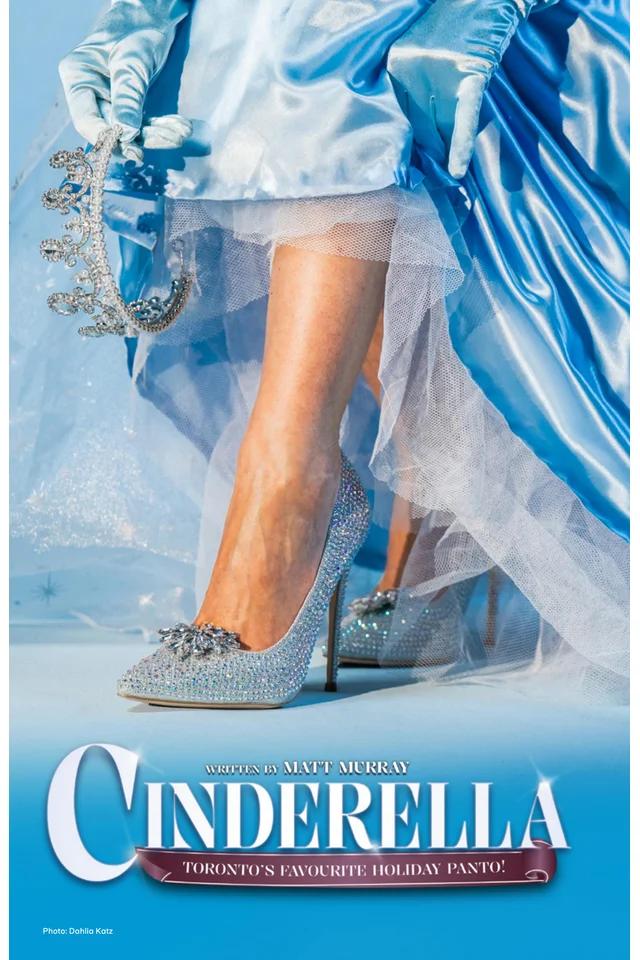
A contemporary pantomime retells Cinderella’s story with pop songs, audience participation and comedy for children and adults.
Cinders is a musical in two acts with music by Rudolf Friml and both book and lyrics by Edward Clark. It re-sets the Cinderella fairy tale in 1920s era New York City. It premiered at the Garrick Theatre in Philadelphia on March 12, 1923, and later that month toured to the National Theatre in Washington, D.C. It moved to Broadway where it opened at the Dresden Theatre on April 3, 1923. It ran for 31 performances, and closed on April 28, 1923. Cinders starred Nancy Welford in the title role. It was both produced and staged by Edward Royce. Others in the cast included W. Douglas Stevenson as John Winthrop, Margaret Dale as Mrs. Horatio Winthrop, Queenie Smith as Tillie Olsen, George Bancroft as Great Scott, Fred Hillebrand as Slim Kelly, John H. Brewer as Major Drummond, Lillian Lee as Miss Breckenridge, Kitty Kelly as Tottie, Estelle Levelle as Lottie, Eden Gray as Ninette, Roberta Beatty as Mrs. Delancey Hoyt, Edith Campbell-Walker as Mme. Duval, Mary Lucas as Geraldine, and Thomas Fitzpatrick as the Butler.
Cindy is a musical with music and lyrics by Johnny Brandon, and a book by Joe Sauter and Mike Sawyer. It ran off-Broadway at the Gate, Orpheum, and Cricket Theatres (not simultaneously) in 1964 and 1965. It is an adaptation of the story of Cinderella. It was produced by Chandler Warren and Philip Temple, by arrangement with Stuart Wiener and Jerry Grace.
City of Angels is a satirical musical comedy with music by Cy Coleman, lyrics by David Zippel, and a book by Larry Gelbart. The show takes a critical look at Hollywood through the eyes of Stine, a successful writer who is adapting his latest novel into a film.
Dennis Lee’s poems become a staged musical meditation on Toronto and Canadian identity. Public spaces, shared history, and the obligations of citizenship connect private reflection with questions about the country’s future.
Cliff – The Musical was a musical based on the life of Sir Cliff Richard which was staged at The Prince of Wales Theatre, London from 17 March 2003 to June 2003. The show was written by Mike Read and Trevor Payne, with Payne directing. Four performers played the part of Richard.
As the show begins, Hillary Rodham Clinton introduces herself and her husband, William Jefferson "Bill" Clinton. She reveals that Bill is actually two personalities, WJ and Billy, and that she is the only person who can see both of them ("Overture"). With help from Hillary, WJ and Billy win the 1992 presidential election ("Awful-Awesome"). After arriving at the White House, WJ states his plans to be a serious and successful president, Hillary states her plan to be loved by the American people, and Billy states his plan to "get some tail" ("The Me I See"). In order to remain focused on his job, WJ starts ignoring Billy's fun-loving urges. Just a few days after being inaugurated, the media starts reporting on the Whitewater scandal, despite the fact that nobody who is reporting has any idea what the scandal actually is, and are just stretching the story out to gain viewers ("The Day After That"). Kenneth Starr is hired to investigate the scandal. Starr announces to the audience that he doesn't actually care about the American people or the Whitewater scandal, he's just in it for the fame ("A Starr is Born"). Hillary becomes increasingly worried that Billy will use his new office to cheat on her. As WJ reassures Hillary that he'll control Billy, Billy seduces White House intern Monica Lewinsky in the Oval Office ("Lie to You"). In order to comfort Hillary, WJ tells her that she can write the country's new healthcare plan. Republican Newt Gingrich is infuriated by this, and he works with Ken Starr to rally other Republicans and take control of the Congress majority ("Say Nay"). During an encounter with Billy in the Oval Office, Monica Lewinsky exclaims that she can't believe she's having an affair with the president ("Monica's Song"). WJ finds out about this and confronts Billy, starting an argument between the two. Hillary finds out about their fight and explains to them that "the public likes it better when politicians work together" ("Both Ways"). After settling his differences with Billy, WJ confronts Newt Gingrich and convinces him to pass Hillary's healthcare bill. WJ and Billy are reelected in the presidential election of 1996, but Billy is the only one that takes the oath of office, which means Billy is able to start ignoring WJ as payback for the beginning of their first term ("Both Ways (Reprise)"). As his second term begins, Billy celebrates in the Oval Office, while Linda Tripp secretly collects evidence of his affair with Monica ("What Could Go Wrong?"). Linda's evidence becomes public, but Billy attempts to convince the American people that the affair never happened ("That Woman, Miss Lewinsky"). Since he is officially the president, Billy must give the State of the Union address, a job WJ had previously done. Billy can't resist making sexual innuendos while writing his speech, so Hillary is forced to write the address and let Billy take all the credit ("State of the Union"). Having been abandoned by Billy and the American people, WJ reflects on all the things he was hoping to accomplish in his second term ("A Place Called Hope"). Monica, whom Billy has also abandoned, looks back on how confident he made her feel during their affair ("Monica's Song (Reprise)"). Hillary becomes increasingly angry at both WJ and Billy for the things they do behind her back. Though she still loves them, she decides she can't handle the stress anymore and tells the audience that she plans to divorce them ("Enough"). Meanwhile, Kenneth and Newt lead the movement to impeach and remove Billy from office ("Sexual Relations"). Hillary is visited by a vision of Eleanor Roosevelt, who tries to convince her to stay with Billy and WJ, but Hillary misinterprets Eleanor and instead decides that she's going to run for president ("Brew It for Your Country"). Billy and WJ realize that their legacy will not be the work they did to advance universal healthcare, but instead, they will always be remembered for Billy's affair ("The Me I See / What Could Go Wrong? (Reprise)"). WJ and Billy forgive each other and apologize to Hillary. The three decide that the only way to ensure that Billy remains in office is to reveal to the world that William Jefferson Clinton is, in fact, two people. Newt is hesitant to forgive the Clintons but is forced to when WJ reveals Newt's affair with Calista Bisek. The Senate votes to keep Billy in office and Hillary announces her 2008 candidacy for president ("Finale").
Film star Clivia Gray travels to the South American republic of Boliguay to make a movie. She becomes involved in political complications and falls in love with the Boliguayan president, whom she ultimately marries.
Clorindy, or The Origin of the Cake Walk is a one-act musical by composer Will Marion Cook and librettist Paul Laurence Dunbar. The piece premiered in 1898 and was the first Broadway musical with an all-black cast. It starred the famous African-American performer Ernest Hogan. Popular songs from the show included "Who Dat Say Chicken In Dis Crowd" (one of the first documented uses of the well-known "Who Dat?" comedy motif) and the finale, "Darktown Is Out Tonight".
Closer Than Ever is a musical revue in two acts, with words by Richard Maltby, Jr. and music by David Shire. The revue contains no dialogue, and Maltby and Shire have described this show as a "bookless book musical." The show was originally conceived by Steven Scott Smith as a one act revue…
The story is narrated by retired rock icon and actress Billie Trix (Frances Barber), who otherwise has a fairly small part in the story. The opening number, "My Night", is sung by Billie and the rest of the cast, and is used to introduce the characters. Shell Christian (Stacey Roca), is going to see her estranged father, Vic Christian (David Burt), for the first time in years. Vic, who is gay, left Shell and her mother during her childhood, and now runs a successful gay club in London. Meanwhile, Straight Dave (Paul Keating), who has just arrived from Ireland, is working as a bartender at Vic's club, although his ambition is to be a dancer at the club. After seeing and speaking to her father, Shell meets Dave, and they immediately fall in love. Record producer Bob Saunders (Paul Broughton) is a friend of Billie Trix and a regular at Vic's club. He sees Dave dancing and decides he wants to sign him for a boy band he is forming. He makes an offer to Dave, who has no interest in signing; however, Saunders continues to pressure Dave into working for him. Dave meets and falls in love with drug dealer Mile End Lee (Tom Walker), who deals at Vic's club. Shell is devastated when she discovers that Dave is gay, although part of her has suspected it all along. Meanwhile, Vic discovers Lee dealing drugs in his club and confiscates the drugs. Lee is worried he will be killed for losing the drugs. At this point, everyone gets high on ketamine – Shell is still upset about Dave; Lee is worried about being killed; Dave is frustrated that Lee has withdrawn from him; and Billie, a habitual user, needs no excuse. Lee has a drug overdose and dies. At Lee's funeral, Dave sings a song, "For All of Us". A few months later, Dave is apparently back on the road to success and sings "Positive Role Model" to end the show on a high. (The 2015 and 2019 productions replaced "Positive Role Model" with "Vocal" as the closing song, and the 2024 production used "For Every Moment").
Mr. Boddy acts as host as he invites the audience to play "The Game" while introducing each of the other characters. He then brings three audience members onstage to choose one card each from one of three stacks, representing six suspects, six rooms, and six weapons. These selected cards, unseen by the selectors, cast, or the audience, are placed in an oversized envelope marked "Confidential", which is displayed on stage for the duration of the musical and opened to reveal the cards near the end. Mr. Boddy instructs the audience on how to play along. Between scenes throughout the musical, Mr. Boddy gives rhyming clues, which provide the audience with information they may jot down on a form supplied to them and use to solve the mystery. In the kitchen, Mrs. White prepares dinner and argues with Mr. Boddy over her forced servitude to pay debts because he once helped her son. She laments "Life Is a Bowl of Pits". In the billiard room, Mr. Boddy's business partner, Mr. Green, clashes with him over missing funds. In the ballroom, Col. Mustard and Mrs. Peacock engage in an affair, but are caught by Mr. Boddy. Over drinks in the lounge, Miss Scarlet and Mr. Green are revealed to have been business partners of Mr. Boddy's and former lovers, and that Mr. Boddy double-crossed them both and unceremoniously dumped Miss Scarlet. They muse revenge and that "Everyday Devices" such as a wrench and lead pipe are dangerous when used for the wrong reasons. In the study, Prof. Plum recounts how Mr. Boddy ruined his family fortune to Mrs. White while she tries to unsuccessfully flirt with him. In the conservatory, Mrs. Peacock plans to add Mr. Boddy to her growing list of dead husbands ("Once a Widow"). After dinner, Mr. Boddy invites his guests and staff to fulfill their destiny — murdering him. They search through "Corridor and Halls" for the right combination of suspect, room and weapon. Mr. Boddy is soon found dead ("The Murder"), the cause of which is unknown ("After the Murder"). Mr. Boddy miraculously revives to introduce a new character, a hard-nosed, attractive Detective. As she searches the mansion for clues, the suspects nervously speculate "She Hasn't Got a Clue". She returns with six possible weapons – a wrench, candlestick, lead pipe, knife, revolver and rope – found in six rooms: the lounge, kitchen, ballroom, conservatory, billiard room, and study. All of these have the suspects' fingerprints on them, which were made between 9:00 PM and midnight, the latter of which is the time of Boddy's murder. After the suspects tell her how they used the "Everyday Devices", the Detective questions Prof. Plum, who tries to seduce her ("Seduction Deduction"). After his attempts fail, she in turn interrogates Col Mustard, Mr. Green, Miss Scarlet, Mrs. Peacock, and Mrs. White, as each speculates that she is a "Foul-Weather Friend". As the Detective prepares to make her accusation, the Suspects cry "Don't Blame Me" and panic at "The Final Clue". She reveals the random killer, location, and weapon as per the three cards drawn earlier, and the killer confesses. Then, it is revealed that the previously stated murderer was only an accomplice, and that the true murderer is Professor Plum. He is then revealed to be a disguised "dorky school teacher", as the true Plum is disguised as a piano player in the orchestra. The suspects ponder life beyond the mansion, but are compelled by Mr. Boddy to repeat their fate and continue playing "The Game".
Cher Horowitz is a popular, wealthy teenager living a picture perfect life in Beverly Hills ("Perfect"). Her father, Mel, is a lawyer and the two live in a mansion, sometimes joined by Josh, Cher's ex-step-brother. Tai, a new girl from New York, arrives at in town and Cher decides to make her her new project, making her popular ("New Girl").
Set between early autumn of 1953 and late spring of 1954, fashion designer Coco Chanel, after fifteen years of retirement, decides to return to the world of haute couture and reopen her Paris salon. With her new collection derided by the critics, she faces bankruptcy until buyers from four major American department stores - Saks Fifth Avenue, Bloomingdale's, Best & Company, and Ohrbach's - place orders with her. She becomes involved with the love life of one of her models, and flashbacks utilizing filmed sequences recall her own past romantic flings. Adding humor to the proceedings is a highly stereotypical rude gay designer who tries to impede Chanel's success. The finale is a fashion show featuring actual Chanel designs from 1918 to 1959.
Come Fly Away is a dance revue conceived, directed and choreographed by Twyla Tharp, around the songs of Frank Sinatra. The musical, set in a New York City nightclub, follows four couples as they look for love. It premiered on Broadway in March 2010 after tryouts in Atlanta and has received mostly warm reviews.
Come Summer is a Broadway musical with a book and lyrics by Will Holt and music by David Baker, based on Rainbow on the Road by Esther Forbes and vocal arrangements by Trude Rittmann.
The musical takes place in 1941, in Keijō (Seoul), Korea, Empire of Japan. The musical is about young Korean women from a small town in Korea who are ostensibly enlisted to work in a factory in Japan by a Japanese agent. Goeun, Youngsun, Namsoon, Malsoon, Soonja, and Jinju are forced to service soldiers in Indonesia. Minsik creates a way to take the women back to Korea. To empower the female characters, Kim rewrote part of the script in 2018, making the female characters, rather than the male soldier, plot their escape from the military brothel. The 2019 production of the musical has also reduced the violent scenes.
Coming Thro' The Rye is a "satiretta" or musical in two acts with both lyrics and book by George V. Hobart and music by A. Baldwin Sloane and J. Sebastian Hiller.
In the early 1990s, Furth and Sondheim revised the libretto, cutting and altering dialogue that had become dated and rewriting the end of act one. This synopsis is based on the revised libretto. Robert is a well-liked single man living in New York City whose friends are married or engaged couples. The couples are Joanne and Larry, Peter and Susan, Harry and Sarah, David and Jenny, and Paul and Amy. It is Robert's 35th birthday and the couples have gathered to throw him a surprise party. When Robert fails to blow out any candles on his birthday cake, the couples promise him that his birthday wish will still come true, although Robert wished for nothing, and said that his friends are all he needs ("Company"). What follows is a series of disconnected vignettes in no chronological order, each featuring Robert visiting with one of the couples or alone on a date with a girlfriend. In the first vignette, Robert visits Sarah, a foodie who is dieting, and her husband, Harry, a recovering alcoholic. Sarah and Harry taunt each other on their vices, escalating toward karate-like fighting and thrashing that may or may not be playful. This prompts the caustic Joanne, the oldest, most cynical, and most-often divorced of Robert's friends, to sarcastically comment to the audience that it is the little things that make a marriage work ("The Little Things You Do Together"). Harry explains, and the men concur, that most people are both thankful and regretful about getting married, and that marriage changes both everything and nothing about the way they live ("Sorry – Grateful"). Robert is next with Peter and Susan, on their apartment terrace. Peter is an Ivy League graduate, and Susan is a Southern belle; the two seem to be a perfect couple, yet they surprise Robert with the news of their upcoming divorce. At the home of the uptight Jenny and chic David, Robert has brought along some marijuana that the three share. The couple turns to grilling Robert on why he has not yet gotten married. Robert claims he is not against the notion, but three women he is currently dating—Kathy, Marta, and April—appear and proceed, Andrews Sisters-style, to chastise Robert for his reluctance to being committed ("You Could Drive a Person Crazy"). After Jenny asks for another joint, but is discouraged by David, David privately tells Robert that Jenny does not actually like marijuana, but partakes in it as a show of her love for him. All of Robert's male friends are deeply envious about his commitment-free status, and each has found someone they find perfect for Robert ("Have I Got a Girl for You"), but Robert is waiting for someone who merges the best features of all his married female friends ("Someone Is Waiting"). Robert meets his three girlfriends in a small park on separate occasions, as Marta sings of the city: crowded, dirty, uncaring, yet somehow wonderful ("Another Hundred People"). Robert first gets to know April, a slow-witted airline flight attendant. Robert then spends time with Kathy. They had dated previously and both admit that they had each secretly considered marrying the other. They laugh at this coincidence before Robert suddenly considers the idea seriously. However, Kathy reveals that she is leaving for Cape Cod with a new fiancé. Finally, Robert meets with Marta; she loves New York, and babbles on about topics both highbrow and lowbrow. Robert is left stunned. The scene turns to the day of Amy and Paul's wedding; they have lived together for years, but are just now getting married. Amy has gotten an overwhelming case of cold feet, and as the upbeat Paul harmonizes rapturously, a panicking Amy breaks the fourth wall and confesses to the audience that she can't go through with it ("Getting Married Today"). Robert, the best man, and Paul watch as Amy complains and self-destructs over every petty thing she can possibly think of, and then finally explicitly calls off the wedding. Paul dejectedly storms out into the rain and Robert tries to comfort Amy, but emotionally winds up offering an impromptu proposal to her himself. His words jolt Amy back into reality, and she runs out after Paul, at last ready to marry him. Before she leaves, Robert tosses Amy's bouquet over to her. She catches it, joyfully exclaiming: “I’m the next bride!” The setting returns to the scene of the birthday party, where Robert is given his cake and tries to blow out the candles again. He wishes for something this time ("Marry Me A Little"). The birthday party scene is reset, and Robert goes to blow out his candles. This time, he gets them about half out, and the couples have to help him with the rest. The couples share their views on Robert – both complimentary and unflattering – with each other as Robert reflects on being the third wheel ("Side By Side By Side"), soon followed by the up-tempo paean to Robert's role as the perfect friend ("What Would We Do Without You?"). In a dance break in the middle of the number, each man, in turn, does a dance step that is answered by his wife. Robert likewise does a step but he has no partner to answer it. Robert brings April to his apartment for a nightcap, after a date. She marvels at how homey his place is, and he casually leads her to the bed, sitting next to her on it and working on getting her into it. She earnestly tells him of an experience from her past, involving the death of a butterfly; he counters with a bizarre remembrance of his own, obviously fabricated and designed to put her in the mood to succumb to his seduction. Meanwhile, the married women worry about Robert's single status and the unsuitable qualities they find in the women he dates ("Poor Baby"). As Robert and April have sex, we hear Robert and April's thoughts, interspersed with music that expresses and mirrors their increasing excitement ("Tick-Tock"). In some productions, including the original Broadway production, this is accompanied by a solo dance by Kathy. The next morning, April rises early, to report for duty aboard a flight to Barcelona. Robert tries to get her to stay, at first wholeheartedly, parrying her apologetic protestations that she cannot with playful begging and insistence. As April continues to reluctantly resist his entreaties, and sleepiness retakes him, Bobby loses conviction, agreeing that she should go; that change apparently gets to her, and she joyfully declares that she will stay, after all. This takes Robert by surprise, and his astonished, plaintive "Oh, God!" is suffused with fear and regret ("Barcelona"). Robert and Marta visit Peter and Susan, and learn that Peter flew to Mexico to get the divorce, but he phoned Susan and she joined him there for a vacation. Though they are divorced, they are still living together, claiming they have too many responsibilities to actually leave each other's lives, and that their relationship has actually been strengthened. Susan takes Marta inside to make lunch, and Peter asks Robert if he has ever had a homosexual experience. They both admit they have, and Peter hints at the possibility that Robert and he could have such an encounter, but Robert uncomfortably laughs off the conversation as a joke. Joanne and Larry take Robert out to a nightclub, where Larry dances, and Joanne and Robert sit watching, getting thoroughly drunk. She blames Robert for always being an outsider, only watching life rather than living it, and also persists in berating Larry. She raises her glass in a mocking toast, passing judgment on various types of rich, middle-aged women wasting their lives away with mostly meaningless activities ("The Ladies Who Lunch"). Her harshest criticism is reserved for those, like herself, who "just watch", and she concludes with the observation that all these ladies are bound together by a terror that comes with the knowledge that "everybody dies". Larry returns from the dance floor, taking Joanne's drunken rant without complaint and explains to Robert that he still loves her dearly. When Larry leaves to pay the check, Joanne bluntly invites Robert to begin an affair with her, assuring him that she will "take care of him". Robert's reply, "But who will I take care of?" seems to surprise even him, and strikes Joanne as a profound breakthrough on his part. Robert insists he has been open to marriages and commitment, but questions "What do you get?" Upon Larry's return, Robert asks again, angrily, "What do you get?" Joanne declares, with some satisfaction, "I just did someone a big favor". She and Larry go home, leaving Robert lost in frustrated contemplation. The couples' recurrent musical motif begins yet again, as they all again invite Robert to "drop by anytime...". Rather than the cheery, indulgent tone he had responded with in earlier scenes, Robert suddenly, desperately, shouts "STOP!" He sings, openly enumerating the many traps and dangers he perceives in marriage. Speaking their disagreements, his friends counter his ideas, one by one, encouraging him to dare to try for love and commitment. Finally, Robert's words change, expressing a desire, increasing in urgency, for loving intimacy, even with all its problems, and the wish to meet someone with whom to face the challenge of living ("Being Alive"). The opening party resets a final time; Robert's friends have waited two hours, with still no sign of him. At last, they all prepare to leave, expressing a new hopefulness about their absent friend's chances for loving fulfillment, and wishing him a happy birthday, wherever he may be, as they leave. Robert then appears alone, smiles, and blows out his candles ("Finale").
Lost in a forest, the Lady is lured to the magician Comus’s palace. A spirit tells her two brothers that she is held there, but Comus’s followers delay them. With an enchanted potion, they eventually enter the palace and interrupt Comus as he tries to make their sister drink from his cup. Comus flees, and the nymph Sabrina frees the Lady from his spell. The masque ends with a celebration of virtue.
Contact is a musical "dance play" that was developed by Susan Stroman and John Weidman, with its "book" by Weidman and both choreography and direction by Stroman. It ran both Off-Broadway and on Broadway in 1999–2002.
The story is set in Regency Brighton in 1811. Paul, the Duc de Chaucigny-Varennes, an émigré from the terrors of the French Revolution, is passing off Melanie, a beautiful young girl, as his ward – the daughter of an executed friend, the Marquis de Tramont. In fact, Melanie is a dance hall singer. Paul's plan is to marry Melanie to a rich husband such as Edward, Marquis of Sheere, who seeks her hand. The rich Lady Julia Charteris, who is much taken with Paul, encourages Edward's marital plans and tries to woo Paul for herself. But Melanie has long loved Paul, and in a last gamble to turn him away from Lady Julia, she pretends to return to France. Her trick works: Paul realises the depth of his feelings for her and there is a romantic happy ending.
Stephanie Zinone, leader of the Pink Ladies, has a romantic fling with English transfer student Michael Carrington. The only way she'll stay with him, however, is by him becoming a T-Bird.
Copperfield is a 1981 musical with a book, music, and lyrics by Al Kasha and Joel Hirschhorn, who were nominated for the 1981 Tony Award for Best Original Score. It is based on the classic 1850 novel David Copperfield by Charles Dickens. The Broadway production was directed and choreographed by Rob Iscove. It began previews at the ANTA Playhouse on March 25, opened on April 16, and closed on April 26 after 39 performances, including 26 previews.
Coraline is a musical with music and lyrics by Stephin Merritt and a book by David Greenspan. It is based on the 2002 novella of the same name by Neil Gaiman. The story follows Coraline Jones, a young girl who discovers a parallel world beyond a secret door in her new home. The world has everything Coraline dreams of, but hides an ominous secret. Coraline premiered off-Broadway in June 2009, four months after the film adaptation's release.
Count Tassilo works under an assumed name as a bailiff to earn money for his sister Lisa’s dowry. Countess Maritza arrives at her estate to celebrate a fictitious engagement to Baron Koloman Zsupán, but the actual Zsupán appears. Maritza and Tassilo grow attracted to one another, while Zsupán turns his attention to Lisa. After Maritza learns Tassilo’s identity and mistakenly believes Lisa is his lover, she insults him; she later writes a marriage proposal disguised as a reference. The operetta ends with both couples engaged.
Courtin' Time is a musical adapted by William Roos from Eden Phillpotts's 1916 play The Farmer's Wife, with lyrics and music by Jack Lawrence and Don Walker. Set in the state of Maine in the year 1898, the musical centers around the character of the widower Samuel Rilling who asks his long time housekeeper, Araminta, to aid him in finding a new wife. Araminta herself loves Samuel, but agrees to help him. After several potential candidates all end in failure for a variety of reasons, Rilling discovers that the ideal candidate is in fact Araminta. Courtin' Time premiered on Broadway at the National Theatre on June 13, 1951 in a production directed by Alfred Drake with choreography by George Balanchine. Ralph Alswang was the production's lighting and scenic designer, and Saul Bolasni designed the costumes. The cast was led by Joe E. Brown as Samuel Rilling and Billie Worth as Araminta. Other cast members included Carmen Mathews as Theresa Tapper, Rosemary Kuhlmann as Sadie, and Joseph Sweeney as Mr. Hearn. In mid run the production moved to the Royale Theatre where it closed on July 14, 1951 after 37 performances.
Act 1 Backstage at the Zangler Theater in New York in the 1930s, the last performance of the Zangler Follies is wrapping up for the season, and Tess, the Dance Director, is dodging the advances of the married Bela Zangler. Bobby Child, the rich son of a banking family, is backstage hoping for an audition with Mr. Zangler. Bobby performs "K-ra-zy for You," but fails to impress Zangler, having landed on Zangler's foot during the final flourish of his dance routine. Dejected, Bobby heads outside. Bobby is met by Irene, the wealthy woman to whom he has been engaged for five years, and then by his mother, who demands that Bobby take over her piece of the banking business. Bobby is told to go to Deadrock, Nevada, to foreclose on a rundown theater. As the women argue over him, Bobby imagines himself dancing with the Follies Girls and joins them in a rousing rendition of "I Can't Be Bothered Now." Brought back to reality, Bobby decides to escape to Nevada. When Bobby arrives in Deadrock, it's clear that the gold mining town has seen better days. The men, who are cowboys, sing "Bidin' My Time" in a long, slow drawl. Everett Baker receives a letter from New York warning of the bank foreclosing on the Gaiety Theater. The only woman left in this forlorn town is Everett's daughter, the spunky Polly Baker, who vows to get even with Bobby Child if she ever meets him. Lank Hawkins, proprietor of the town's saloon, argues with Everett, trying to convince Everett to let him buy the theater before the bank takes it. The stubborn old man refuses to give up the theater due to his memories of Polly's mother being the star of all the theater's old shows. Bobby enters the town almost dying of thirst, and falls in love with Polly at first sight, not realizing who she is, and expresses his excitement in "Things Are Looking Up." Lank isn't pleased to see a rival for Polly's affections. Bobby finds himself in quite a bind. If he forecloses on the theater he will lose the girl of his dreams. Inspired, he comes up with the idea of putting on a show to pay off the mortgage. Polly agrees to this plan until she finds out who he is and suspects a trick. Bobby and Polly are both heartbroken, but Bobby decides to put on the show anyway... disguised as Mr. Zangler. Polly, deeply hurt, expresses her loneliness in "Someone to Watch Over Me." A few days later, ten Follies Girls on vacation from The Zangler Follies appear like a mirage in the desert. Bobby has asked them to help stage a spectacular show in Deadrock. When the men of Deadrock see the girls, the sleepy town becomes very lively. Lank Hawkins continues to express extreme dislike for the show, threatening to shoot Bobby. Rehearsals for the show aren't going well and the cowboys in particular are terrible dancers. Bobby changes all that in the course of one rehearsal with the song "Slap That Bass." Spirits are now at a high point. Meanwhile, to Bobby's dismay, Irene arrives, threatening to expose Bobby's charade, and Polly has fallen in love with Bobby's impersonation of Zangler. She expresses her love for Zangler with the song "Embraceable You." Opening night arrives, with everyone's hopes high ("Tonight's the Night!"). Sadly, everyone is disappointed to find that the only people to arrive at the show are Eugene and Patricia Fodor, British tourists writing a guidebook on the American West. What starts out as a disappointment changes into the realization that the show has galvanized the once sleepy town. They celebrate with a spirited rendition of "I Got Rhythm" while the real Zangler stumbles unnoticed into the town, almost dehydrated, and collapses just as the scene ends. Act 2 In Lank's saloon Bobby is professing his love to Polly. Unfortunately, she is still in love with the man who she thinks is Zangler. Bobby is about to convince Polly that he has been impersonating "Zangler" when the real Zangler stumbles into the saloon looking for Tess. Zangler finds Tess, but refuses her request to produce the show. Tess storms off, and Zangler, now drunk after being disgusted by the town, bemoans his fate. Bobby, dressed like Zangler, reels in to drown his sorrow over losing Polly. Drunk and depressed, the two men act as mirror images of each other, and lament their lost loves in "What Causes That." The next morning, Polly sees the two Zanglers and realizes what has happened. She slaps Bobby and leaves in a huff, while the townsfolk prepare for a meeting at the theater to discuss what to do with the show. Irene comes to Bobby in one final attempt to make him go back to New York with her, but Bobby rejects her, and states his love for Polly. Immensely frustrated with Bobby, Irene seduces Lank in "Naughty Baby." The townsfolk are all now gathered at the theater. Bobby is all for trying the show again, while Polly thinks they should abandon the venture. The Fodors counsel the dejected townspeople to keep a "Stiff Upper Lip," which includes a parody of the barricade scene from Les Misérables, but by the end of the song only Polly, Everett, Bobby, and Tess still think the show should continue. Everyone but Bobby and Polly leave the theater. Bobby prepares to leave for New York, professing that his memories of Polly will never fade in "They Can't Take That Away from Me." Polly realizes, too late, that she does love Bobby, and after he leaves, laments her loss in "But Not For Me." Meanwhile, Bela Zangler decides to put on the show as a favor to Tess; the two seem to be in love once more. Although he had been planning to cast Bobby as the lead, he makes Polly the star of the show after learning that Bobby has left for New York. Six weeks later, Bobby is still thinking of Deadrock as he works in his mother's bank. For his birthday, Mrs. Child gives him the Zangler theater (Zangler has used all his money on the show in Deadrock). While initially ecstatic, Bobby realizes that his love for Polly is worth more in "Nice Work if You Can Get It," and leaves with Mrs. Child for Deadrock to pursue Polly. Back in Deadrock, Polly has decided to leave for New York to look for Bobby. She leaves with Custus, one of the cowboys, just before Bobby arrives. After learning that Polly has left to find him, he leaves to "wash up" before driving back to New York to catch her. Bobby's mother and Irene (who is now married to Lank) notice each other and start an argument. Everett notices Mrs. Child, and falls head-over-heels in love with her, as shown in a reprise of "Things Are Looking Up." His affections are reciprocated, and immediately afterward, Polly reenters with Custus. On their way to the train station, his car ran out of gas, and Polly missed the train to New York. Seeing the situation, the townspeople concoct a plan to get Polly and Bobby together, and the two are finally reunited in the "Finale."
Crest of the Wave is a musical with book and music by Ivor Novello and lyrics by Christopher Hassall. It premiered at the Theatre Royal, Drury Lane in London, on 1 September 1937, starring Novello as both hero and villain, Dorothy Dickson, Olive Gilbert, Walter Crisham and Edgar Elmes. Directed by Novello's frequent collaborator Leontine Sagan, it ran for 203 performances. The best-known songs from the musical are "Rose of England", "Why isn't it you?", "Haven of your heart" and "If you only knew". The story concerns an impoverished nobleman, The Duke of Cheviot, who is shot by a lover and pursued by the villainous Otto Fresch. The staging featured a spectacular train crash, one of several Novello musicals featuring a spectacular disaster: Glamorous Night has a shipwreck and Careless Rapture depicts an earthquake.
Criss Cross is a musical comedy in two acts and prologue, with book and lyrics by Otto Harbach and Anne Caldwell and music by Jerome Kern. Set in France and Algiers, the plot concerns a successful aviator, Christopher Cross (Fred Stone) who manages to help Captain Carleton save Dolly Day from the…
Cruel Intentions: The '90s Musical, known during its Californian performances as Cruel Intentions: The Completely Unauthorized Musical Parody, and during its off-Broadway run as Cruel Intentions: The Musical, is a 2015 American jukebox musical based on the 1999 film Cruel Intentions, with a score…
Cry for Us All is a musical with a book by William Alfred and Albert Marre, lyrics by William Alfred and Phyllis Robinson, and music by Mitch Leigh. The show ran on Broadway for nine performances in 1970.
In Baltimore 1954, the first annual Anti-Polio Picnic and Vaccination Carnival is being overseen by Mrs. Vernon Williams, the president of Baltimore Women’s Club. Baldwin and the Whiffles lead a group called "The Squares" made up of well-behaved teens (“The Anti-Polio Picnic”). Their performance is interrupted by a rival group, "the Drapes", who enjoy terrorising the Squares (“Watch Your A**”). Wade “Cry-Baby” Walker arrives to receive his polio vaccine. Allison, Mrs. Williams' granddaughter is particularly taken by him which unnerves her (“I’m Infected”). Baldwin and the Whiffles perform (“Squeaky Clean”) at the Maidnenhead Country Club for Safety Awareness Day. Cry-Baby and his loyal trio interrupt and he invites Allison to the Jukebox Jamboree, though Mrs Williams forbades this. This deeply upsets Cry-Baby. (“Nobody Gets Me”). Allison questions being a Square and sets off the emergency alarm, sending the everyone into a panic. Amidst the chaos, she sneaks off with Cry-Baby (“Nobody Gets Me – Reprise”). At the Jamboree, Cry-Baby's friends are trying to deter a girl, Lenora, who's obsessed with him. They then give advice to Allison on how to be a bad girl (“A Whole Lot Worse”). Lenora then sings a ballad about her mental health and love of Cry-Baby (“Screw Loose”). Dupree, who's emceeing, introduces Cry-Baby and the Teardrops onto the stage (“Baby, Baby, Baby, Baby (Baby, Baby) Baby”). Afterwards, Allison and Cry-Baby drive to a spot in Turkey Point, where they grow closer (“Girl, Can I Kiss You with Tongue?”). He gifts Allison a gold-plated guitar-pick (“I’m Infected – Reprise”). However, their moment is interrupted by a sudden wildfire. Immediately blaming Cry-Baby, Baldwin has him and the Drapes arrested, where they are put on trial (“You Can’t Beat the System”). The Judge finds them guilty and they are sent off to jail. Lenora claims she is pregnant with Cry-Baby's child which shocks Allison and the courthouse, as he is taken away. At home, Allison longs for Cry-Baby (“Misery, Agony, Helplessness, Hopelessness, Heartache and Woe”). Baldwin informs her that the Whiffles will be performing at a newly built theme park to celebrate the Fourth of July, to which she hesitantly agrees to sing. Her grandmother finds her crying and comforts her (“Misery, Agony, Helplessness, Hopelessness, Heartache and Woe – Reprise”). At a jewellery store, Baldwin and Lenora bond over their dislike of each others respective love interests as they shop for wedding rings (“All in My Head”). Dupree, now imprisoned, works on the farm creating license plate presses (“Jailyard Jubilee”). Cry-Baby hears Baldwin and Allison get engaged over the radio and becomes enraged. Dupree attempts to calm him down but he starts a riot (“A Little Upset”). During the uproar, Cry-Baby escapes, heading straight for Allison. He turns up at her house and her Mrs. Williams helps him avoid the police. She overhears Baldwin admitting to the Whiffles that he framed Cry-Baby for the arson at Turkey Point (“I Did Something Wrong Once”). She settles on doing the right thing. At the Star-Spangled Funland, the Whiffles, with Allison, perform (“Thanks for the Nifty Country”). After exposing Baldwin's confession, the Judge, Mrs. Williams and a newly exonerated Cry-Baby arrive at the theme park. Judge Stone sentences Baldwin, the true culprit to hard time in prison. Still vying for Allison, Baldwin challenges Cry-Baby to a musical battle for her heart (“This Amazing Offer”). Cry-Baby wins (“Do That Again”). Lenora, not actually pregnant, arrives with his "baby", a teddy bear, and states that she now loves Baldwin instead. Mrs. Williams, now accepting of Cry-Baby and Allison's relationship, asks him to be a part of their family. (“Nothing Bad’s Ever Gonna Happen Again”).
A widow and a general feign affection while each plans to sell the other’s supposedly valuable china. Their prized objects turn out to be counterfeits made by the general, who explains he manufactured English china to oppose the fraudulent trade. The pair reconcile and decide to make china in Japan.
Curley McDimple is a musical with music and lyrics by Robert Dahdah and book by Robert Dahdah and Mary Boylan. The play is a spoof of Depression-era Shirley Temple movies and was presented in a black and white design. This was one of two musicals in which Bernadette Peters appeared that spoofed some aspect of Hollywood—the other was Dames at Sea. "The Meanest Man in Town" is its best-known song.
In 1959, a new musical called "Robbin' Hood!", a western version of Robin Hood, is in the midst of its preview performances at the Colonial Theatre in Boston, Massachusetts. During the closing number of one of the performances, Madame Marian, played by faded film star diva Jessica Cranshaw, looks on as Rob Hood, played by Bobby Pepper, wins a sharp-shooting contest and proposes to Miss Nancy, a schoolmarm, played by Niki Harris. The cast then sings the finale of the show, during which it is clear that Jessica can neither sing, dance, nor act ("Wide Open Spaces"). She takes her bow and, after receiving two bouquets, collapses behind the curtain. Later that night, Carmen Bernstein, the show's hard-bitten co-producer, divorced songwriting team Aaron Fox and Georgia Hendricks, and the show's financial backer, Oscar Shapiro, read the reviews, most of which are terrible, especially the Boston Globe's, which is the review they needed to make it to Broadway. The group wonders how anyone could be so heartless to become a critic ("What Kind of Man?"). The show's flamboyant English director, Christopher Belling, arrives, and says that he had an epiphany about how to fix the show after walking into a church. Just then, stage manager Johnny Harmon tells Carmen that there is a phone call for her. Carmen suspects that it's her philandering husband, Sidney Bernstein, the show's theatrical promoter. Meanwhile, Aaron argues with Georgia about the reason she joined the show, as he believes that she only wanted to rekindle a romance with the show's leading man, Bobby. Belling asks Georgia to sing Madame Marian's opening number. Everyone is pessimistic, but she does so spectacularly, and it is clear that she is thinking about her failed marriage with Aaron. Aaron begins to sing with her, but Bobby cuts him off and they finish the number together ("Thinking of Him"). Belling then announces his plan: they are going to replace Jessica. Niki, the actress who plays Miss Nancy, steps forward and says she would feel terrible taking over, but Belling goes on to say that he is actually casting Georgia as Madame Marian. Bambi Bernét, the show's featured dancer, steps forward and says that Niki should get the role, but Belling sees right through her: Bambi is Niki's understudy, meaning if Niki got the lead, she'd get to play Miss Nancy. Georgia is cast, in spite of Aaron's disapproval. Carmen then enters and tells everyone that it was the hospital that had called and confirms that Jessica has died. The cast performs a brief ceremony, and it is clear that no one is sorry to see their leading lady die ("The Woman's Dead"). Lieutenant Frank Cioffi of the Boston Police Department then arrives to announce that he is there to investigate foul play in Jessica's death, as he reveals her death was caused by cyanide poisoning. Cioffi tells Belling to finish up his cast meeting before Cioffi begins questioning. The ensemble tries to leave, saying that they want to quit the show, but Carmen tries to convince them that the show must go on, though various members of the cast stand up to her, including Bambi, who is actually named Elaine and is in fact Carmen's daughter. Cioffi, an amateur performer himself, enthusiastically convinces them to do the show, and helps them realize how lucky they are to be actors and actresses ("Show People"). Thanks to the newfound energy and commitment, Carmen decides to treat everyone to a drink at the local bar. However, since Jessica was poisoned in the last ten minutes of the show and never left the stage thereafter, Cioffi believes that she must have been murdered by a member of the company, and he enforces a lockdown on the building and will not let anyone leave. Sidney, Carmen's husband, then arrives after flying in from New York, and Cioffi begins to suspect him, although Sidney claims to have been with a certain woman whose name he refuses to give. Cioffi is left alone with the winsome Niki, who is now the understudy for Georgia. The lieutenant is struck by Niki's charm and confides in her about his investigation and his lonely life, as he feels as if he's married to his job ("Coffee Shop Nights"). She seems to return his affection, so he hopes she is not the murderer. The next day, Georgia attempts to learn a dance from the show, but is failing miserably despite Bobby's constant belief in her. Daryl Grady, the critic who wrote the terrible review for the Boston Globe, arrives at the theatre. Cioffi asks him how he got inside and Daryl points out that, as a member of the press, he's exempt from the building's quarantine. It is revealed that Carmen and Sidney called him in to request a re-review the show with Georgia as the new lead, and Daryl agrees to re-review the show, the following night, to which they reluctantly agree. In his original review, Daryl only praised the choreography and Niki's performance. Niki tries to thank Daryl for his kind words about her, however he tells her that he does not associate with the artists he reviews, and leaves after having a brief argument with Cioffi about his previous review. Bobby, Belling, and Georgia enter, enraged with the fact that they have so little time to prepare for a review. Belling works to re-stage a difficult production number, featuring Niki, Georgia and Bambi ("In the Same Boat #1"). Cioffi suggests that the song needs to be rewritten, and he is left alone with Aaron, who shows Cioffi the process for composing a song. After he lets it slip that he misses Georgia, Aaron confesses that he still loves her and would like to reconcile ("I Miss the Music"). Georgia and the cast then hold a dress rehearsal of the big saloon hall number ("Thataway!"). Georgia pulls it off spectacularly and everyone finally believes they have a shot of putting on a great show. Cioffi and tells the cast that he has figured out that Sidney has been blackmailing every member of the show into working for him. Belling then interrupts and requests to re-work the ending pose of the song. While the curtain is closing, Sidney Bernstein is simultaneously rung up, with the curtain rope tied around his neck. Sasha, the conductor, turns to the audience to reveal that Sidney's hanging was fatal ("The Man is Dead"). A makeshift dormitory has been set up on the stage of the still-sequestered Colonial Theatre. Each member of the company grows more paranoid by the hour, and often suspects the others during various periods of the night ("He Did It"). Cioffi returns from the coroner's office and tells everyone that Sidney was knocked out before being tied to the rope, so everyone is still a suspect, but his focus is more on whether the show will be ready for its re-opening. Niki then finds a death threat for Sidney, stating he will die unless he closes the show. Oscar reveals Sidney died for nothing as he was going to comply, going so far as to giving back last checks he made out. Carmen takes them back, saying she is going to keep the show open. Aaron previews his new version of "In the Same Boat", now featuring Bobby, Randy, and Harv ("In the Same Boat #2"), though Cioffi is still unsatisfied with the product. Bambi asks that a pas de deux be added for herself and Bobby during the show's square dance number. Carmen agrees, but she insist that she is no stage mother, as her duty has always been to the box office ("It's a Business"). Daryl Grady then comes in and tells everyone that he's taking interviews from the cast in the Green Room. At the rehearsal of the re-staged square dance number, Bambi and Bobby are doing incredibly well, and everyone is impressed, however, towards the end of the number, Bobby is shot, and left wounded in the arm ("Kansasland"). Through use of angles, Cioffi is quick to figure out that Carmen was actually the target of the shot, not Bobby. Niki comes forward with the gun, and the company immediately jumps to the conclusion that she is guilty ("She Did It (Reprise)"). She says that she innocently found the gun backstage and hands it over, albeit after she accidentally pulls the trigger and almost kills Cioffi. Cioffi gathers Aaron, Georgia, and Bobby and tells them that Sidney had no blackmail material on them, and yet they were still content working for such low pay. Georgia then quotes a death threat which Cioffi had not read out loud, leading Cioffi to arrest her when Aaron attempts to takes the blame for her, reviving their romance ("Thinking of Him/I Miss the Music (Reprise)"). Cioffi reveals that it was all an act, and that Bobby had only been pretending to be Georgia's boyfriend so that she could stir something back up in Aaron. She leaves, and Bobby confesses that he does love Georgia, and that he would do anything for her, even commit murder. Niki laments how love makes people feel bad, but Cioffi begins flirting with her and reminisces about the first time he saw her on stage, leading them into an elaborate fantasy sequence, in which they daydream about being a couple in a musical ("A Tough Act to Follow"). He then confronts Niki about a coded memo in Sidney's blackmail book, as there was a black zero next to her name. Johnny tells Cioffi that he knows the secret, but refuses to tell Cioffi what it is. He is then shot while alone onstage. He tears out a page from his notebook reading "Drop in Planet Earth", and then bleeds out ("In the Same Boat #3"). Cioffi takes Niki and Belling up to the theatre's catwalk high above the stage. While searching for messages on the back of the drops, he announces that he's solved the mystery. Left alone, he is hit with a sandbag and is sent tumbling down. He narrowly escapes death by clutching onto a prop, which lowers him to safety. When on the ground, he exclaims that he has solved it... he finally knows how to stage "In the Same Boat". Putting together all three versions, the cast is able to sing an incredible, show stopping number ("In The Same Boat- Complete").
Curvy Widow is a 2016 musical comedy based on a true story with music and lyrics by Drew Brody and a book by Bobby Goldman.
Cyrano: The Musical is a musical with music by Ad van Dijk, an original book and lyrics (in Dutch) by Koen van Dijk. For the Broadway production, English lyrics were provided by Peter Reeves, with additional lyrics by Sheldon Harnick. Produced by Joop van den Ende, the original Dutch production Cyrano de Musical premiered in 1992 at the Stadsschouwburg (City Theatre) in Amsterdam. It is based on Edmond Rostand's classic 1897 play of the same name focusing on a love triangle involving the large-nosed poetic Cyrano de Bergerac, his beautiful cousin Roxane, and his classically handsome but inarticulate friend Christian de Neuvillette who, unaware of Cyrano's unrequited passion for Roxane, imposes upon him to provide the romantic words he can use to woo her successfully in mid-17th century Paris. After 38 previews, the Broadway production, directed by Eddy Habbema, opened on November 21, 1993, at the Neil Simon Theatre, where it ran for 137 performances. The cast included Bill van Dijk as Cyrano, Anne Runolfsson as Roxane, and Paul Anthony Stewart as Christian, with James Barbour and Jeff Gardner in supporting roles. Timothy Nolen played Comte de Guiche and later took over the role of Cyrano. Robert Guillaume also took over the title role during the run. The production garnered Tony Award nominations for Best Musical, Best Book of a Musical, Best Original Score, and Best Costume Design. In addition to the Netherlands and the United States, the musical has been produced in Belgium, Germany, and Japan. Despite the show's critical success, no Broadway recording was ever produced.
Act I Sunny lives on the islands with his Grandma Ella, who receives a letter from Sunny's mother Pearl in England, telling them that she wants him home. Young Sunny is hostile towards her at first, and begins to feel the music, bursting into song during church. Years later, Sunny is part of the Subsonics, a music crew led by Shake. At a recording session with Rasputin, they run into The Blades, another music crew, led by Benny Baker, Ma Baker's son. Later at a launch party for Asia Blue, Benny's girlfriend, Sunny and Rose meet. When Ma Baker finds out her daughter is seeing Sunny, she goes to visit him, and gives him a coat once owned by his father, Johnny Cool. Upon asking his mother about it, Pearl explains how Ma Baker was Johnny's dance partner—and took her away from her when she was pregnant with him. Act II After a music battle between the Subsonics and the Blades, Shake is shot by Benny, but when Sunny gets the opportunity to get payback, he does not take it, instantly being disowned by the Subsonics, and subsequently breaking up with Rose. Rasputin tells him to make it up with Rose, but he is arrested, accused of shooting Shake, as Benny and Ma have set him up. As the Notting Hill Carnival takes place, Shake, Rose, Asia, and Sunny appear. It is revealed that someone has given evidence against Benny over the shooting—Benny's best friend, Naz.
Note: While relatively retaining elements from Webster's book, some details have been changed, added, or removed (e.g.: In the book, Jerusha changes her name to Judy, whereas in the stage musical, she does not). The current synopsis reflects the current Off-Broadway production. In an orphanage called the John Grier Home, Jerusha Abbott calls the first Monday of every month a "perfectly awful day" due to orphanage's trustees' monthly visit and how she bears the load of the preparations. After the visit, Mrs. Lippett, the home's matron, calls for Jerusha in her office. On her way there, she glimpses one of the Trustee's long, spindly, and spidery shadow cast by the headlights of his awaiting car ("The Oldest Orphan in the John Grier Home"). Mrs. Lippett hands her a letter from the Trustee she just saw leaving the home. Impressed by her amusing satirical essays about life at the orphanage, he devised a nine-point plan for her further education. The Trustee will be sending her to a local college with all expenses paid, with the intention that she educate herself to become a writer. The only condition is that Jerusha must write to him reporting her progress and impressions of the college, and that he will remain anonymous, only to be addressed as "Mr. Smith". Her letters will never be answered, nor take the slightest attention to them ("Who Is This Man?"). Jerusha arrives at the college, and begins to pen her first letter. She complains regarding her benefactor's alias: "Why couldn't you have picked out a name with a little personality?" After musing over what she'll call her mysterious benefactor, she finally decides on "Daddy Long Legs" due to his tall figure and she imagining him to be old and gray ("Mr. Girl Hater"). In his study in Manhattan, young philanthropist Jervis Pendleton, Jerusha's benefactor, is amused and puzzled over her first letter ("She Thinks I'm Old"). Jerusha writes about her lessons from her freshman year classes ("Freshman Year Studies"), and describes her anxiety over trying to fit in with the other girls at her college due to her upbringing in an orphanage ("Like Other Girls"). She then writes about her embarrassment at her lack of education and her excitement about learning ("Things I Didn't Know"). During the Christmas vacation, Jerusha stays behind in the college to catch up on her reading, and sends her love to Daddy Long Legs in her loneliness. The shy and awkward Jervis finds her affection-filled letters disconcerting ("What Does She Mean By Love?"). Jerusha flunks two of her first exams and is mortified. She becomes ill and writes angrily to Daddy Long Legs, accusing him of not caring for her and simply supporting her merely out of charity. Moved by this, Jervis sends her a bouquet of flowers, and Jerusha is penitent ("I'm A Beast"). Enthralled by her letters, Jervis arranges to meet his young beneficiary, under the pretence that he is meeting his niece Julia, who happens to be Jerusha's least favorite friend ("When Shall We Meet?"). After meeting Jervis, Jerusha is immediately drawn to him: "He's a real human being, not a Pendleton after all... he looked at me as if he really knew me, almost better than I know myself." Despite this, Jerusha becomes more and more curious regarding her old and gray Daddy Long Legs ("The Color of Your Eyes"). The summer arrives, and Jerusha begs Daddy Long Legs not to send her back to the John Grier Home, as she has nowhere to go to. Jervis, adopting another guise as a "secretary" to Mr. Smith, sends her to Lock Willow Farm, where she explores her talent as a writer. Jerusha then proclaims that she finally knows what the secret of happiness is, and that is to live in the now ("The Secret of Happiness"). She also stumbles upon a connection between Jervis Pendleton and Lock Willow Farm, yet doesn't connect this information to her Daddy Long Legs. Jerusha expresses her longing to finally see her Daddy Long Legs, while Jervis becomes increasingly frustrated on whether he should reveal himself as her benefactor or not, realizing he is falling in love with her ("The Color of Your Eyes (Reprise)"). Upon returning to the college for her sophomore year, Jerusha continues her studies and her writing, as well as become socially involved with the family of her friend Sallie McBride ("Sophomore Year Studies"). Jervis, upon reading of Jerusha's attachment to Sallie's attractive brother Jimmy, realizes that he is already falling for her. He then invites Jerusha, Julia, and Sallie for a long cultural weekend ("My Manhattan"). The summer arrives again, and Jerusha asks for permission to spend her vacation at the McBrides' country home on the Adirondacks. Jervis, through his secretarial alias, insists that she spend the summer at Lock Willow Farm instead due to his fear of Jerusha falling in love with Jimmy. Feeling alone and trapped, Jerusha writes an angry letter in response to his domineering nature and finds it hard to forgive Mr. Smith ("I Couldn't Know Someone Less"). Jervis struggles to finally reveal himself to Jerusha as her Daddy Long Legs and subsequently confess his feelings. He thinks that Jerusha will never forgive him if he comes clean regarding his true identity ("The Man I'll Never Be"). Jervis visits Jerusha in Lock Willow, the farm where he grew up as a boy. The couple enjoy the countryside together and find themselves growing more and more attached to one another ("The Secret of Happiness (Reprise)"). Jerusha receives an invitation from Sallie to join her family at Camp McBride, and another from Jervis to meet him at Lock Willow. Despite Mr. Smith's warnings, Jerusha proceeds to Camp McBride due to some negative remarks she received from Jervis when he found out she turned down an invitation to Paris from Julia, to work as a teacher in French and algebra to support herself. Jervis then contemplates his controlling nature, both as Jervis and as Mr. Smith ("Humble Pie"). After four years, Jerusha completes her studies and invites Mr. Smith to her graduation ceremony to finally meet him. Jervis does attend the ceremony as Julia's guest, but does not reveal himself to the bitterly disappointed Jerusha ("Graduation Day"). Back in his Manhattan study, Jervis reflects on the concept of charity and its effects on both the benefactor and the beneficiary, and how Jerusha became a recurring character in his life ("Charity"). In Lock Willow, Jerusha writes to Mr. Smith that she will never think of him again after his no-show at her graduation ceremony ("I Have Torn You From My Heart"). After a few months, she writes that her first novel has been accepted by a publisher, and enclosed a check of $1000 as a first installment of her repayment of her college fees. She then tells him that she will continue to repay her debt to him, and all future royalties will proceed to the John Grier Home, making her a trustee and therefore, meeting him at last. Jervis is overwhelmed by this gesture and overjoyed at her success as a writer ("My Manhattan (Reprise)"). Jervis visits Jerusha in Lock Willow to ask her hand in marriage. Unable to tell him of her origins, she turns him down, thinking that he and his family might feel indifferent towards her when she does tell him. In her final letter, Jerusha declares her love for Jervis, and appeals for a personal meeting with Mr. Smith. Jervis, writing as Mr. Smith, agrees to meet her. Jerusha finally arrives at their meeting place, and is surprised to see Jervis, whom she initially and skeptically assumes to be Mr. Smith's secretary. Jervis finally reveals to her that he is Mr. Smith or Daddy Long Legs. Distressed over this revelation, as well as realising that he has read her private letters about him, Jerusha accuses him of playing with her feelings and the mere fact that he didn't even write back over the course of four years, which Jervis acquiesces to ("I'm A Beast (Reprise)"). At last, he declares his love for Jerusha, which she reciprocates. Jerusha finally understands the grand scheme of things that led her to where she is now ("All This Time").
In the early 1930s, a Broadway musical is in rehearsal. Mona Kent is its temperamental diva star, Joan a wise-cracking chorus girl, and Hennesy the producer/manager/director. The naive Ruby arrives from Utah, with "nothing but tap shoes in her suitcase and a prayer in her heart", determined to be a Broadway star. She promptly faints into the arms of Dick, a sailor and aspiring songwriter ("It's You"). Ruby gets a job in the chorus, but Hennesy informs the cast that the theater must be torn down, and they must find another place, which turns out to be a ship, for the show. Joan and Lucky, another sailor and her former boyfriend, renew their romance ("Choo-Choo Honeymoon") while Ruby admits her feelings for Dick ("The Sailor of My Dreams"). Dick and Lucky persuade their Captain to volunteer the use of their ship ("Dames at Sea"). Mona recognizes the Captain as a former boyfriend ("The Beguine"). When Mona kisses Dick, to persuade him to give her one of his songs, Ruby notices and becomes despondent ("Raining In My Heart"). Dick explains the misunderstanding and the couple make up ("There's Something About You"). While rehearsing on the actual ship, Mona becomes seasick ("The Echo Waltz"); Ruby steps in to save the show and becomes a star ("Star Tar"). The three couples decide to marry ("Let's Have A Simple Wedding"). John Wilson in The New York Times pointed out that the music is a mixture of parody, such as the torch song "That Mister Man", pastiche ("Raining in My Heart"), and the real thing. Wilson wrote that "The pastiche songs, built around phrases borrowed from or close to actual songs of the genre, usually project an appealing period flavor." The joke was that, while spoofing the large, lavish movie musicals, Dames at Sea did it with a cast of six, two pianos and percussion, and a tiny stage. In the 2015 Broadway production, director Randy Skinner noted that this was "the first time in New York that 'Dames at Sea' will be heard with an orchestra, and the show will have more dancing than ever before with all new dance and vocal arrangements by Rob Berman". This production opened with movie credits projected onto a screen, reproducing exactly the font used by Warner Bros. in the early 1930s. Skinner received a 2016 Tony Award nomination for his choreography.
Damn Yankees is a 1955 musical comedy with a book by George Abbott and Douglass Wallop, and music and lyrics by Richard Adler and Jerry Ross. The story is a modern retelling of the Faust legend set during the 1950s in Washington, D.C., during a time when the New York Yankees dominated Major League Baseball.
Dance With Me is a musical written by Greg Antonacci. It opened on Broadway on January 23, 1975, and ran at the Mayfair Theatre for 396 performances. The musical was directed and choreographed by Joel Zwick. The musical is set in present day at a New York City subway station. It was first performed in 1971 as Dance Wi' Me.
Dance a Little Closer is a musical with a book and lyrics by Alan Jay Lerner and music by Charles Strouse. The story is an updated version of Robert E. Sherwood's 1936 antiwar comedy Idiot's Delight.
Dance of the Vampires is a musical adaptation of the 1967 Roman Polanski film (known as The Fearless Vampire Killers in the United States). Polanski also directed the musical’s original German-language production (titled Tanz der Vampire). The music was composed by Jim Steinman, orchestrated by Steve Margoshes, and Michael Kunze wrote the original German book and lyrics.
An unlikely Canadian racehorse becomes a champion. Northern Dancer’s journey to the Kentucky Derby unfolds through the people who care for him and a dancer who embodies the horse.
Darling of the Day is a musical with a book by Nunnally Johnson, lyrics by E. Y. Harburg, and music by Jule Styne. Based on the Arnold Bennett novel Buried Alive and his play The Great Adventure, the original 1968 Broadway production starred Vincent Price and Patricia Routledge, who won the Tony Award for Best Actress in a Musical.
In the spring of 1826, Schubert, a poor young composer, has quarters in an old Viennese house together with two friends. The three daughters of Christian Tschöll, the court glass maker, visit the three friends. Two of the girls are in love with Schubert's roommates, and the third, Hannerl, is chaperoning her sisters. More of Schubert's friends come to visit. The father arrives in search of his daughters. Schubert's two roommates drink with Tschöll in their courtyard, underneath a Lilac tree, and he agrees to their engagements with his daughters. Schubert takes on Hannerl as his singing pupil, and although the two fall in love, they are each too shy to reveal their feelings. A couple of months later, the first two daughters are marrying their fiancés at Tschöll's house, and the three roommates are all guests at the wedding. Actress Giuditta Grisi, the mistress of Baron Franz Schober, one of Schubert's friends, arrives. She is jealous and believes that he must be cheating on her. She assumes that Hannerl is the other woman and warns her to stay away from her man. Schubert, still unable to tell Hannerl that he loves her, instead asks Schober to sing a song that he has written for her ("Ungeduld"). Hannerl misunderstands Grisi's warning, believing it to be about Schubert rather than Schober. She turns away from the composer and falls in love with Schober. In the Prater the following morning, everyone assembles. Eventually, Schubert ends up alone, disappointed, but consoled by Hannerl's happiness and by his music.
In 1580, Cervantes mocks Count Villalobos in a song and is arrested, but the King releases him because the Queen admires his writing. The Queen sends Cervantes a lace handkerchief confessing her love; Villalobos finds it, and the King sends his wife to a convent. Cervantes and his friends disguise themselves as thieves and bring the Queen back. Disguised as a servant, she serves the King his favorite dish, and Cervantes tells a story that reconciles the couple.
Das Veilchen vom Montmartre is a three-act operetta by Emmerich Kálmán with a libretto by Julius Brammer and Alfred Grünwald.
Around 1840, singer Christine Holm comes to a small German principality for a court concert and to learn who her father was. Walter von Arnegg falls in love with her and supports her when rumors drive her away. The sovereign recalls her, recognizes the song her mother sang, and realizes that he is Christine's father. He acknowledges her and makes her a noblewoman, allowing her to marry Walter and perform the concert.
The following is taken from the Days of Wine and Roses CD pamphlet Joe Clay, public relations man and Korean War Veteran, meets lovely secretary Kirsten Arnesen, daughter of Norwegian immigrant farmers, at an office party (“Magic Time”). He’s buzzed. She’s first bemused, then game. Part of what drives their click (“The Story of the Atlantic Cable”) is that Joe introduces Kirsten to alcohol. A farm girl from a chilly upbringing intrigued by her new life in the city, she takes to drink immediately (“There Go I”) and she and Joe connect exuberantly through it (“Evanesce”). They marry. And during her pregnancy and the early months with their daughter, Lila, Kirsten is happy and sober (“Sammen i Himmelin”). Kirsten only abstains briefly, though, before joining Joe in the bottle (“As the Water Loves the Stone”). Joe’s drinking gets him demoted to an account in Houston, away from his family. Both keep drinking alone, nevertheless (“Are You Blue?”), and one night Kirsten, taking care of Lila alone (“Underdeath”), passes out with a lit cigarette and nearly burns down their apartment building. Joe and Kirsten quit drinking and move in with Kirsten’s austere father on the farm where she had grown up, relieved to be healthy again (“First Breath”). But Joe has smuggled in alcohol, with a spare bottle hidden in Arneson’s greenhouse, ending up in a drunk ward (“435”). They now move back to the city, and Joe begins working with Jim Hungerford, his sponsor in Alcoholics Anonymous (“Forgiveness”). But that night on her father’s farm, Kirsten had also begun to drink again, and her morning-after take on the matter is different from Joe’s. The only happiness she has known are the early years of their marriage, which included drinking. Joe’s association with A. A. feels like a shaming (“Morton Salt Girl”). She leaves on an open-ended bender, hoping but struggling to rejoin being a mother to Lila, as Lila hopes for her mother’s return (“The Letters”). Kirsten manages to put together five days without alcohol (“Forgiveness (Reprise)”). Joe and Lila nurse a wan hope that Kirsten will eventually rejoin them (“Lila Hangs the Moon”), but the best Kirsten can do is stop by briefly to leave Lila a present (“There Go I (Reprise)”). “The world looks so dirty to me when I’m not drinking,” she pleads – and with this ends the story of Kirsten and Joe.

Imprisoned in Reading Gaol, Oscar Wilde writes to his former lover Lord Alfred Douglas, reflecting on their relationship and his life through memory and song.
Dear Anyone is a musical with book by Jack Rosenthal, lyrics by Don Black and music by Geoff Stephens. It concerns an agony aunt who can solve everyone's problems but her own. The original production featuring Jane Lapotaire, Peter Blake and Stubby Kaye premiered at Birmingham Repertory Theatre on 12 September 1983. It opened in London's West End at the Cambridge Theatre on 8 November 1983.
Dear Edwina is a musical by Zina Goldrich (music) and Marcy Heisler (book and lyrics). A children's one-hour musical, it concerns a young girl who gives her neighborhood friends and family advice through singing in a musical show. It is set in the town of Paw Paw, Michigan (but also based on Deerfield, Illinois, where Marcy Heisler was born). A 'Junior' version for younger children cuts the songs Seamus and RSVP.
Evan Hansen, a 17-year-old high school senior in Maryland with social anxiety and depression, is assigned by his therapist to write letters to himself detailing what will be good about each day, starting each with "Dear Evan Hansen, today is going to be a good day, and here's why". Evan's overworked mother, Heidi, suggests that Evan, having fallen out of a tree and broken his arm, ask people to sign his cast to make friends. Meanwhile, Cynthia and Larry Murphy struggle to connect with their own 17-year-old son, Connor, a sullen and equally depressed drug abuser who is abusive to his younger sister, Zoe ("Anybody Have a Map?"). At school, Evan meets compulsively-overachieving classmate Alana Beck and his reluctant "family friend" Jared Kleinman, both of whom neglect to sign his cast. Evan runs into Connor, who misinterprets his awkwardness for hostility and pushes him to the ground. Zoe, with whom Evan is infatuated, feels obliged to apologize for her brother's behavior. Evan wonders if his destiny in life is to always be ignored ("Waving Through a Window"). Evan writes the letter to himself in the school library, wondering how he could talk to Zoe and if anyone at school would notice if he disappeared ("Waving Through a Window" [Reprise #1]). Connor bumps into Evan again, this time ironically offering to sign Evan's cast. He finds Evan's letter on the printer and, thinking that Evan intentionally made the letter so Connor would find it, becomes furious and storms out, taking the letter with him. Meanwhile, Alana ponders her own inner anxieties ("Waving Through a Window" [Reprise #2]). A few days later, Evan is called to the principal's office, where Connor's parents tell him that their son has died by suicide. They found Evan's letter in Connor's pocket, and mistakenly believe it is a suicide note Connor wrote to Evan. Despite Evan's fumbling attempts to explain the truth, the Murphys believe the two boys had a close friendship and invite Evan to their house for dinner. There, Evan tells them what he thinks they want to hear to avoid discomfort, pretending that he and Connor had secretly been best friends, and recounting a fictional version of the day he broke his arm at an abandoned apple orchard the family had visited years ago ("For Forever"). Evan enlists Jared's help in creating fake, backdated email conversations between him and Connor ("Sincerely, Me"). After Evan shows the Murphys the fake emails, Cynthia is ecstatic to "learn" that her son had a friend, but Larry is hurt, believing Connor took his family and his privileged life for granted, and Zoe still refuses to mourn Connor because of how he abused her ("Requiem"). However, after reading the "suicide note", Zoe notices that she is mentioned fondly and asks Evan why Connor would say that about her, so he tells her all the reasons he likes her under the guise of Connor saying them ("If I Could Tell Her"). Evan impulsively tries to kiss Zoe, but she pulls away. Disgusted by the idea of Connor being forgotten, and motivated by Alana and a vision of Connor, Evan enlists Alana and Jared's help in founding "The Connor Project" to keep Connor's memory alive, which the Murphys eagerly encourage ("Disappear"). While making a speech at a school assembly for Connor, Evan suffers from a panic attack but composes himself, and the speech goes viral online; Zoe, overcome by the impact her brother and Evan have had, kisses him ("You Will Be Found"). Evan and Alana pitch a fundraising campaign on The Connor Project's website, to raise $50,000 to restore the abandoned apple orchard. Meanwhile, Jared continues to help Evan write fabricated emails, narrowly avoiding a fabricated incest subplot from Jared ("Sincerely Me" [Reprise]). After Heidi learns about Evan's speech about Connor online, she asks him why she never knew about this or the "friendship", and they get into a fight. Evan runs to the Murphys' house, where he bonds with Larry, who offers Evan Connor's old, unused baseball glove ("To Break In a Glove"). While on a date in his house, Evan offhandedly mentions that Heidi is struggling for funds to pay for his college ("Only Us"). Evan becomes preoccupied with Zoe and neglects Heidi, Jared, and The Connor Project. On one of his many visits to the Murphys, Evan finds Zoe invited Heidi for dinner. The Murphys reveal they want to give Connor's college fund to Evan, offending Heidi that Evan would discuss her money troubles with others. At home, Heidi and Evan fight, with Evan telling her he has found family in her absence. Heidi, Alana, and Jared converge in Evan's conscience, compounding his guilt and doubt over his decisions ("Good for You"). Evan debates with the vision of Connor about whether he should tell the truth, where it’s revealed that Evan intentionally fell from the tree in his own suicide attempt ("For Forever" [Reprise]). Alana has become suspicious about Evan's "friendship" with Connor, so Evan shows her Connor's "suicide note" to try and prove it. Realizing that the letter is the key to fulfilling the fundraising goal for The Connor Project, Alana posts it online without Evan’s consent. This also goes viral and achieves the goal, but the public begins to blame Connor's wealthy, previously dysfunctional family for his suicide ("You Will Be Found" [Reprise]), making them the targets of harassment. Evan walks in on the Murphys fighting among themselves about the blame and finally admits to them his fabrication; as the Murphys leave in disgust, Evan absorbs his perceived brokenness as inescapable ("Words Fail"). Heidi recognizes the "suicide note" online as one of Evan's therapy assignments and apologizes to him for not seeing how badly he has been hurting. She recalls the day his father moved out and promises that she will always be there for him when he needs her ("So Big/So Small"). A year later, Evan is still living with his mother, working at a store to earn enough money for college the next semester. Zoe invites him to meet her at the orchard, which has been reopened. He apologizes for the pain he caused and Zoe forgives him, saying the ordeal brought her family closer together. After they part ways, Evan mentally writes himself one last letter reflecting on the impact he has had on his community and questions what is to come next ("Finale").
A corporation has discovered oil under the streets of Paris, directly under a bistro. The Countess Aurelia (known as The Madwoman of Chaillot) lives in the bistro's basement, driven mad because of a lost lover and reminiscing about her past. When the corporation decides to blow up the bistro to get the oil, a young executive, Julian, helps to foil the plan because he has fallen in love with Nina, the bistro's waitress. Aurelia lures the corporation executives to the underground in the sewer system.
Dearest Enemy is a musical with a book by Herbert Fields, lyrics by Lorenz Hart, and music by Richard Rodgers. This was the first of eight book musicals written by the songwriting team of Rodgers and Hart and writer Herbert Fields, and the first of more than two dozen Rodgers and Hart Broadway musicals. The musical takes place in 1776, during the American Revolutionary War, when Mary Lindley Murray detained British troops long enough in Manhattan to give George Washington time to move his vulnerable troops.
The show opens with Viola Van Horn and her group of immortals sharing "a secret you would die for" by offering the audience a magic potion that grants eternal beauty and perfection ("If You Want Perfection"). Vain and self-absorbed actress Madeline Ashton performs in the Broadway show Me! Me! Me! ("For the Gaze"). She is visited by her old friend and struggling writer Helen Sharp, whom she frequently belittles and insults for her own amusement. However, Helen has one-upped Madeline by revealing she is engaged to famed plastic surgeon, Ernest Menville, and relishes the opportunity to get back at her frenemy ("That Was Then, This is Now"). Madeline invites the two over to her home, where she seduces Ernest ("Tell Me, Ernest"), steals him from Helen and ends up marrying him ("Madeline Ashton's Intimate Wedding Extravaganza"), with Ernest promising during the wedding to stay "til death do us part" ("Ernest's Real Vows"). Helen has a psychotic break and is forcibly committed to a mental hospital, where she obsesses over killing Madeline ("Madeline"). Ten years later, Madeline and Ernest remain unhappily married. Madeline has begun to age visibly, costing her acting jobs ("(I See) Me!"), while Ernest copes with his regrets by drinking ("Til Death"). The couple are invited to the publication of Helen's debut novel, and upon arrival, Madeline is given Viola Van Horn’s business card by a mysterious waiter named Chagall. Helen appears, having become mysteriously young, successful, and beautiful. She further humiliates Madeline by mocking her age and her recent embarrassing film roles, and openly flirts with Ernest ("Tell Me, Ernest (Reprise)"). Madeline has a panic attack in the parking lot and vows not to let her career and image "fall apart" before she visits Viola at her home ("Falling Apart"). Viola offers Madeline the potion on the condition that she vanish from the public eye after ten years to keep its existence a secret. She takes the potion, becoming young and beautiful again. Viola leaves Madeline with a warning: "take care of your body" ("Siempre Viva"). Back at Ernest and Madeline's home, Helen breaks in and rekindles her relationship with Ernest, and the two plan to run away together by murdering Madeline ("Let's Run Away Together"). Upon Madeline's return, she and Helen get into a fight, which results in Madeline falling down the stairs and breaking her neck. As Helen devises a new plan to report the death as an accident, Madeline suddenly reanimates, accusing Helen of pushing her intentionally. As they stare at Madeline, seemingly alive but with a twisted neck, Viola appears onstage and taunts that she has "a secret you would die for" ("Confrontation"). Ernest and Helen frantically drive Madeline to the hospital, where it is confirmed that she is clinically dead, yet still alive. The sequence is intercut with Viola appearing on the stage, addressing the audience and admonishing Madeline for ignoring her warning ("Don't Say I Didn't (Warn You)"). Returning home, Madeline realizes Helen has taken the potion as well and shoots her with a shotgun, leaving a massive hole in her torso. Their bickering leads to further violence and more injuries: Helen is impaled by an umbrella, and Madeline is decapitated before Ernest stops them ("Hit Me"). The two women coerce Ernest to use his surgical skills to repair their bodies, and he agrees on the condition that he be allowed to leave afterward. Drunk and delirious, Ernest plans to fix them with glue, clay, and spray paint ("The Plan"). He also fires Stefan, Madeline's long-suffering assistant, to prevent him from discovering their immortality ("Stefan's Turn"). Madeline and Helen realize they'll need Ernest for maintenance and plot to drug him and have him drink the potion so he can become immortal too. After knocking Ernest out, they take him to Viola's, where she is hosting a ball with the other immortals ("Live to Serve"). Ernest awakens, and Viola tempts him with the potion, but he refuses and escapes ("Siempre Viva (Reprise)" / "The Chase"). Madeline and Helen chase Ernest to the roof, and when he declares that he would rather die than have to spend eternity with them, Viola pushes him off to his apparent death ("Til Death (Reprise)"). Helen despondently realizes she's doomed to outlive all of her friends and family and be alone forever. Madeline, finally apologizing for her actions, tells her that they can fix one another and can be each other's "person" ("Alive Forever"). The two drop their rivalry, embrace, and head home. Fifty years later, while visiting their own gravesites, Madeline and Helen run into an elderly Ernest, who had survived the fall, fell in love with his nurse, married her, and had children and grandchildren ("Fifty Years Later"). As Ernest and his wife leave, Helen and Madeline momentarily lament that they will never have an "ending" of their own before exiting the cemetery together, while Viola suddenly appears once more and taunts the audience to "[not] say [she] didn't warn [them]" ("The End").
Debbie Does Dallas: The Musical is an off-Broadway musical with a book by Susan L. Schwartz, composed by Andrew Sherman, with Tom Kitt and Jonathan Callicutt providing additional music and lyrics. It is based on the 1978 pornographic film Debbie Does Dallas.
Impoverished Count René enters a sham marriage with opera singer Angèle so she can gain a title and marry Prince Basil. They are kept apart during the ceremony, but meet and fall in love months later without realizing they are already married. When the prince is ordered to marry his former fiancée and René’s property is restored, René can repay the prince and remain with Angèle; Armand and Juliette also decide to marry.
A three-act operetta based on Victorien Sardou’s comedy Piccolino.
The operetta includes the aria ‘Sei nicht bös’ (‘Don’t be cross’), which became a concert staple.
The Tsarevich flees with Sonja, believing her to be a boy disguised as a Circassian dancer. He later discovers that she is a girl, and they fall in love and escape to Naples. When he learns that his father has died, he must become Tsar and cannot continue the relationship. The couple part on bittersweet terms.
Exiled landowner Sándor Barinkay returns to claim his family castle and falls in love with Saffi, a young woman raised by the Gypsies living nearby. After they find hidden treasure, they marry, but learn that Saffi is the daughter of the last Pasha of Hungary. Barinkay joins the army; after military victories make both of them nobles, they are free to marry.
Pali Rácz, a celebrated Gypsy violinist and orchestra leader, disapproves of his son Laczi’s classical musical studies and hopes to marry his niece Juliska. Juliska and Laczi love one another, and Laczi leaves home after his father’s criticism. In Paris, Countess Irini persuades Pali to let them follow their relationship; Pali and Laczi reconcile, and Sari marries Irini’s grandson.
At Carnival, Peter Sander is puzzled by a masked young woman in a golden Pierrot costume, unaware she is his daughter Edith. Edith meets Horst, whom her father has chosen for her, and Horst falls for the masked woman while assuming Edith is dull. Six months later, on their wedding day, Horst receives a note from Pierrot inviting him to meet. Edith believes he intends to betray her, but Horst reveals that he recognized her disguise.
Act I Johnny Blood, a hotheaded young cowboy, killed a man in a bar fight for a saloon girl Bella Rose, and is sentenced to death (“The Ballad of Johnny Blood”). Knowing that Johnny killed in self-defense, the sheriff decides to ask Johnny's sister Susanna, a novice nun – Sister Mary Jo, to plead with the governor for Johnny's life (“That’s Just How It Is”). The governor, who sees strict law and order as his political legacy (“Some Day They Will Thank Me”), ignores her pleas (“Look in Your Heart”), but suggests exchanging Susanna's chastity for Johnny's freedom. Seeing the dilemma Susanna faces, Johnny argues “It’s Good to Be Alive”. The sheriff suggests a plan to switch Susanna with a saloon girl after the dark (“It Doesn’t Hurt to Try”). They find Bella Rose, who agrees to participate for free because she is in love with Johnny (“It’s Getting Hot in Here”). The sheriff and Susanna coach Bella to walk and smile like a nun, while Bella teaches Susanna to lighten up (“The Way That You Feel”). Alone, Sheriff wonders about the feeling he has grown towards Susanna (“Stop There”). At night, Susanna goes to the governor's house, only to switch with Bella after the light is off. Everyone wonders how their lives are changed “In the Dark”. Act II The next morning, Susanna visits the governor for Johnny's pardon, but he confesses that he has fallen in love with her (“What a Night!” – “About Last Night”), and threatens to still have Johnny hanged if Susanna does not agree to marry him the next day. Bella Rose visits Johnny in the jail, who becomes jealous of her sleeping with another guy, even though it is for saving his life (“Just for You”). The sheriff comes up with a new idea. He has the governor sign a new agreement: if Sister Mary Jo agrees to marry him, Johnny will go free (“What a Day”). At the same time, he has Susanna telegram the abbey to allow Bella to become a nun, also named Sister Mary Jo, to marry the governor. As plan B, he also leaves Johnny a key and a horse to escape. Susanna realizes her feeling for this man (“What is This Feeling”). Everyone wonders what will happen (“Life Takes You by Surprise”). The governor barges into the dressing room, almost exposing the plan, which is only saved by the identical wedding dresses and some quick wit. Susanna and Bella decide they should have fun with the fake wedding (“It’s a Beautiful Day”). Instead of escaping to Mexico, Johnny stops the ceremony. The sheriff finally gets the upper hand, and the wedding becomes the happy ending for both couples (“Finale”).
Dessa Rose is a musical based on the novel of the same name by Sherley Anne Williams with book and lyrics by Lynn Ahrens and music by Stephen Flaherty. It tells the story of a young black woman and a young white woman and their journey to acceptance in 1847 in the ante-bellum South, as they tell their story to their grandchildren.
Destry Rides Again is a 1959 musical comedy with music and lyrics by Harold Rome and a book by Leonard Gershe. The play is based on the 1939 film of the same name.
Dew Drop Inn is a musical with music by Alfred Goodman and Rudolf Friml, lyrics by Cyrus Wood, and a book by Walter DeLeon and Edward Delaney Dunn. While Goodman was the principal composer for the work, composers Rudolf Friml, John Frederick Coots, and Jean Schwartz also contributed songs to the show in collaboration with lyricist McElbert Moore. Produced by Jacob J. Shubert and directed by Fred G. Latham, the musical premiered on Broadway at the Astor Theatre on May 17, 1923, where it ran until August 25, 1923 for a total of 88 performances. The cast included James Barton, Alice Brady, Spencer Charters, Harry Clark, Danny Dare, Evelyn Cavanaugh, and Mabel Withee. The musical is set at a seaside resort somewhere in Southern California. Barton starred in blackface as the hotel porter, Ananias Washington. Critic Burns Mantle described Dew Drop Inn as being primarily a vehicle for Barton, "an entertainment evidently intended for a summer run, being as fresh as flowers in its costuming, and as generously hued," but added that "the fun I thought pretty thin."
In the earlier plot, landowner Theophil controls his ward Hermine’s inheritance; she must wait three years or marry him immediately. Hermine loves poet Ferdinand, who mistakenly believes their relationship has ended and dedicates poems to peasant girl Lieschen. Their relative Barbara resolves the confusion by showing Theophil a written marriage agreement. A separate 1936 Quedenfeldt libretto relocates the action to a rural marriage market, where a lost estate heir returns from Budapest and true love prevails.
In Paris, Indian Prince Radjami falls in love with singer Odette Darimonde and asks a theater manager to arrange an introduction. Odette rejects him, but Radjami enlists Napoleon St. Cloche to help and uses roses to hypnotize her. During a party at the prince’s palace, Odette awakens from a trance and leaves him humiliated. Radjami later stages a false return to India, and Odette, believing he is gone, realizes she loves him. Meanwhile, Napoleon and Marietta marry but grow bored with each other; Marietta’s former husband is given a position in India, and Napoleon tells him he may take her back.
Cabaret performer Sylva Varescu is preparing to tour America when Edwin promises to marry her within ten weeks. They meet again in Vienna, where Edwin is about to be engaged to Stasi and his family expects Sylva to have gained noble status before marrying him. Sylva rejects their conditions and leaves. Edwin’s mother is revealed as a former Budapest cabaret singer; Sylva and Edwin, along with Boni and Stasi, depart for America.
Forester Hans Lange’s daughter Christine meets a stranger hunting in the forest and tells him what she thinks of the emperor. She is in love with Franz Földessy, who is revealed to be a deserter after striking an officer who seduced his sister. Christine goes to Vienna to seek a pardon and discovers the stranger is Emperor Joseph II; he pardons Franz, while Christine falls for the emperor. The emperor says he cannot follow his own heart and arranges Christine’s marriage to Franz, who has been made head forester. Christine makes peace with her disappointment and marries Franz.
Johann Rudolf Zumsteeg’s three-act German singspiel adapts Shakespeare’s The Tempest.
Wealthy Chicagoan Mary Lloyd bets that she can buy Europe’s most expensive object. In bankrupt Sylvaria, Prince Sándor Boris disguises himself as an aide-de-camp and meets Mary in Budapest. She falls for the aide, then discovers his identity after buying the royal palace and decides she must also have its prince. A misunderstanding over her letter to her father sends the prince back to his previous engagement. Bondy and Princess Rosemarie elope, while an American producer’s demand for a happy ending reunites Mary and the prince.
A two-act German-language operetta with prologue featuring the tramp couple Berta and August Fliederbusch, Prince Adolar Gilka, and other characters.
Operetta featuring film-star heroine Dena Darlo.
Circus performer Mister X is hired by a disappointed suitor of Princess Fedora Palinska to pose as a nobleman and marry her. Mister X is himself a nobleman, the disinherited nephew of a deceased prince.
A jealous wife seeks divorce after her husband and a young actress are accidentally locked together overnight on a train. After complications in court, husband and wife reunite, while the judge finds romance with the actress.
A three-act German operetta based on the play Le fils à papa.
Sculptor Pygmalion loves his statue Galathée and refuses to sell it to patron Mydas. He asks Venus to bring the statue to life, but Galathée proves independent and favors Pygmalion’s servant Ganymed. She also accepts jewelry from Mydas. After Pygmalion catches her with another man, he asks Venus to turn her back into stone; the jewelry is petrified as well, and the statue is sold to Mydas.
A German-language musical comedy mixing operetta and revue songs, set in 1820s Naples.
A Hungarian count attempts to arrange brides for a group of settlers.
Different Times is a musical with music, lyrics, and book by Michael Brown. It was originally produced on Broadway in 1972. It opened on May 1, 1972 at the ANTA Playhouse and closed on May 20, 1972 after 24 performances.
After a storm interrupts their wedding, Hoël disappears, and Dinorah loses her reason. A year later, Hoël returns, having found a treasure, and recruits Corentin to help recover it despite a legend that whoever first touches it will die. Dinorah wanders through the woods looking for her pet goat and dances with her shadow, believing it is Hoël. When Hoël and Corentin reach the treasure, Corentin learns the legend from Dinorah. During a storm, Dinorah falls into the river. Hoël rescues her, and she regains her sanity. The villagers gather and lead the reunited couple to the chapel to marry.
During a family holiday in 1963, Frances “Baby” Houseman develops a relationship with dance instructor Johnny Castle and begins to assert her independence.
Inside a lively casino near the French Riviera ("Overture"), con-artist Lawrence Jameson is tricking wealthy women out of their money with the help of his "bodyguard" Andre ("Give Them What They Want"). Muriel Eubanks and a few other women express their devotion and amorous feelings for Lawrence, who has conned them ("What Was a Woman To Do"). Andre warns Lawrence about a highly successful con-artist known as "The Jackal", who is said to be visiting the area. Later, aboard a train, Lawrence watches an American named Freddy Benson (who he figures is The Jackal) swindle a woman, but notes that Freddy makes much less money than Lawrence does. Lawrence brings Freddy to his lavish mansion, where Freddy envies Lawrence's success as a swindler and describes everything he'll have when he's rich ("Great Big Stuff"). Freddy asks Lawrence to show him his ways. Andre thinks Freddy is unworthy of Lawrence's attention and compares Freddy to a chimp in a suit ("Chimp in a Suit"). Lawrence is reluctant Freddy's request until Jolene Oakes, a woman he's conned, informs him at gunpoint that he's going to marry her and move with her to Oklahoma ("Oklahoma?"). Lawrence decides to use Freddy's help: Freddy poses as Lawrence's repulsive brother Ruprecht. Seeing that Lawrence plans to make Ruprecht a large part of their life together, Jolene calls off the wedding and leaves him behind. ("All About Ruprecht") After the pair argue over who did the most work, Lawrence begins to think that there isn't enough room in town for both him and Freddy. They make a bet: the first to swindle a woman out of $50,000 gets to stay in town, while the other has to leave. Immediately after they agree on this, the arrival of "The American Soap Queen" is announced. Her name is Christine Colgate, and she is optimistic, naive and hopelessly clumsy, constantly bumping into people ("Here I Am"). Both con men decide to target her. Freddy presents himself as a war veteran paralyzed from the waist down to win Christine's sympathy and get close to her. Christine and Freddy discuss his medical options and he explains that only one therapist, Dr. Shuffhausen, can help him, but he can't afford Dr. Shuffhausen's $50,000 fee. Christine tells him to keep his hopes up ("Nothing Is Too Wonderful To Be True") and offers to pay for the therapy just as Freddy had hoped ("The Miracle"). She reveals that Dr. Shuffhausen is at the hotel, and Freddy is shocked to discover that Lawrence is posing as Shuffhausen. After a short introduction ("Entr'acte"), Lawrence as Shuffhausen performs several torturous tests on Freddy's legs ("Ruffhousin' Mit Shuffhausen"), who has to endure them without complaint. In the side show Muriel meets Andre and the two fall in love ("Like Zis/Like Zat"). Taking Christine to a dance, Lawrence makes every effort to get close to her while Freddy helplessly watches ("The More We Dance"). When he realizes that Christine is not as rich as the men thought after she tells him she sold her possessions to afford the fee, Lawrence tells Freddy that they should call off their $50,000 bet. Freddy reluctantly agrees and they agree on new terms: whoever beds Christine gets to stay. Freddy convinces two sailors to kidnap Lawrence so that he can have Christine to himself. Freddy meets with Christine at the hotel where he tells her his condition isn't physical, but he needs emotional motivation to get out of his chair. She says she'll be his motivation ("Love Is My Legs"). She sits on the bed until he is finally able to stand up out of his chair and walk to her on the bed (where he "accidentally" falls on top of her in exhaustion). Lawrence then shows up and it turns out to be a test planned by him and Christine. Afterwards, Lawrence has the same two sailors kidnap Freddy while he takes Christine to the train station so she can leave, though feels conflicted after seeing how virtuous she was ("Love Sneaks In"). Freddy shows up, having escaped the sailors too late to get to Christine. The next day Freddy meets Christine back at the hotel, who says she couldn't leave without seeing him again. When the two agree to have sex, Freddy is excited over it and winning the bet, but realizes he has real feelings for Christine ("Son of Great Big Stuff"). The two get in bed together before the scene is switched to Lawrence's mansion where Christine arrives, telling him tearfully how she came back to see Freddy, how they had sex, and then when she woke up all her money was gone: “I’m beginning to think he was never really paralyzed.” Out of remorse and believing Freddy was responsible, Lawrence packs 50 thousand dollars in a suitcase and tells her to take it. Christine takes it, but returns and gives him back the suitcase saying, "I’ll have something so much better to remember you by" before leaving. A few minutes later Freddy shows up in his underwear. Lawrence is angry at him for taking Christine's money, but Freddy claims that they never had sex at all; they were about to when she knocked him out, and when he woke up all his belongings were gone. Lawrence then opens up the suitcase to find the money gone, replaced by Freddy's clothes and a note that reads, “Goodbye boys. It was fun! Love, 'The Jackal'”, thus revealing that she knew about their scam the entire time, and instead ended up scamming them ("The Reckoning"). The two men reflect on the events at Lawrence's chateau, agreeing that despite what happened, the entire thing was a ton of fun ("Dirty Rotten Number"). A while later Christine shows up, posing as a real-estate agent and bringing a group of tourists with her. After distracting the tourists, she reunites with Lawrence and Freddy, telling them that although she's made millions from scams in the past year, taking their money was the most fun. The men join Christine's scheme to scam the crowd of people together in the "Finale".
Disaster! takes place in 1979 Manhattan during opening night of the Barracuda, the first floating casino and discothèque in New York. The plot follows several characters' dynamics and interactions throughout the opening night as they deal with various plot elements reminiscent of 1970s disaster cult films such as The Poseidon Adventure and Airport 1975. It's 1979 and the opening night for "The Barracuda", New York City's first floating casino. Chad Rubik is looking for female company ("Hot Stuff") and decides to join his best friend, Scott, as a waiter aboard the casino boat. Meanwhile, on the pier, Professor Ted Scheider is collecting water samples to determine whether the new pier has been drilled directly into a dangerous fault line. Marianne, a freelance reporter, has heard that Tony Delvecchio, the owner of the Barracuda, ran out of money and had to cut corners. He asks her to join him on board for some drinks and she agrees, hoping to get a scoop. While the guests wait in line, a dour Sister Mary Downey appears, collecting money for the orphans fund and warning people that gambling is a sin ("The Lord's Prayer"). She meets Shirley and Maury Summers, who are celebrating Maury's retirement. Despite the Sister's protestations, Shirley buys her a ticket and she enters the casino. Faded disco star Levora Verona runs onto the pier with her precious dog, Baby. She successfully avoids a cab driver she can't afford to pay and gets on board, hoping she'll win back her fortune ("Theme from Mahogany (Do You Know Where You're Going To)"). Inside her casino dressing room, sexy lounge singer Jackie excitedly tells her children, 11-year-old twins Ben and Lisa, that Tony told her, "If tonight goes perfectly, he will ask me to marry him... possibly!" Tony enters just as a tremor shakes the room, causing Ben's Lite-Brite toy to fall to the ground. Ben cries as he notices that "The Lite-Brite pieces are lost in the shag carpeting!" Tony explains that the tremor was probably caused by nearby construction and tells Ben that he should never, ever cry. Jackie then goes onstage to wow the opening night crowd ("Saturday Night"). During her number, Scheider warns Tony that the vibrations from everyone dancing is going to trigger an earthquake and Tony angrily throws him off the ship. Meanwhile, Sister Mary is practically salivating over a Hawaii Five-O-themed slot machine but when noticed by Shirley, adamantly denies having a gambling addiction. Marianne tries to interview Tony but he's only interested in one thing, ("Do You Wanna Make Love"). She accuses him of having a trap door installed at the bottom of the ship to dump illegal contraband and produces proof that he skipped safety precautions. Tony panics but is able to sneak away when Marianne freezes at the sight of Chad who has offered them drinks. Shaken, she apologizes to Chad for leaving him at the altar years ago. He tells her it's "fine", and then retreats to the bathroom to express his true feelings ("Without You"). Hurt by Chad's indifference, Marianne drinks an entire bottle of wine, then runs into Lisa and tries to convince her (and herself) that being an independent woman is the most important thing in the world ("I Am Woman/That's the Way I've Always Heard It Should Be"). Jackie is in her dressing room when Scheider runs in to hide. He explains that an earthquake is coming and enlists Ben and Lisa to run and tell the captain to ready the lifeboats. Tony suddenly enters and Scheider quickly throws on a bird mask. Jackie covers by telling Tony that Scheider is a performer she hired and drags him onstage ("Mockingbird"). Shirley and Maury run into a depressed Marianne, who is surprised to find out they're married because they "seem so happy". They admit that marriage is hard but tell her that they still love each other dearly ("Still the One"). While Scheider hides out with Jackie, he reveals that his first wife, Dr. Wo-Ching Lee, died in a volcanic explosion and he feels responsible. Since then, he's become a disaster expert and tells Jackie one of the main rules is not to try to save individual lives. When Jackie leaves to perform, we see three private moments: Chad sings about Marianne, Marianne sings about Chad, and Scheider sings about Wo ("Feelings"). In the casino, Sister Mary's out-of-tune guitar upsets Baby. Levora is extremely insulted because Sister doesn't know any of her hit songs (including "Makin' Sweet Sweet Love" and "Put It Where I Want It"). Levora leaves in a huff, unknowingly dropping a quarter. Sister Mary knows she should give it to the orphans but imagines gambling it and winning them more. Nonetheless, she tries to walk away from the slot machine but is unable to ("Never Can Say Goodbye"). Sister ultimately gambles away all the fund money. She bumps into Shirley on the elevator and they ride in uncomfortable silence, interrupted only by elevator music ("Feels So Good"). Suddenly, Shirley reveals that she has a fatal disease, and explains that she'll soon show the final warning signs, like uncontrollable winking and inappropriate verbal outbursts. She hasn't told Maury because she wants whatever time they have left to "only be happy". Shirley shyly suggests she might soon end it all because she doesn't want Maury to have to watch her suffer. The Sister tells her unequivocally that taking one's life is a sin and an eternity in Hell will await her if she does it. Ben and Lisa run into Chad and tell him that an earthquake is coming and he immediately runs off to warn Marianne. In the casino, a wealthy woman approaches Levora and offers to buy Baby for an extraordinary sum. Levora can't bear to part with the only thing she's ever loved, yet she has only one quarter left to gamble and gain back her fortune. She knocks on the wood-paneled slot machine for luck and talks to Baby ("Knock on Wood"). Soon, various patrons are knocking along with her, on the machines, the floor... everything. While this is happening, Marianne confronts Tony about the safety precautions and runs away as he tries to throw her off the boat. Chad sees Marianne hiding and tells her to get off the boat, but she misunderstands, thinking Tony has sent him. Scheider has heard the knocking and runs to the casino to warn everyone they're going to trigger an earthquake. They stop and start to tiptoe off the boat, but Levora has put in her quarter and wins ("Hawaii 5-0"). All the coins pouring out of the machine hit the floor and trigger an enormous earthquake. Act Two opens ("All Right Now") to reveal massive destruction in the casino as well as the Hawaii Five-O slot machine lever impaled in Scott's stomach. Chad arrives and tries to get Scott to safety ("You're My Best Friend")†, but Scott dies. Shirley, Maury, Jackie and Lisa are all in Jackie's dressing room but Jackie soon leaves to find Ben, who's missing. In a deserted hallway, Tony explains to his right-hand man that the earthquake actually solved his problems. It will be considered a force majeure and all of his debt will be paid. And he's positive he'll end the night being seen as a hero. Chad is on the deck to give Scott a burial at sea and runs into the wealthy man, whose wife was killed by a falling ice sculpture ("Three Times a Lady"). While waiting in Jackie's dressing room, Shirley starts showing signs of her impending death (inappropriate verbal outbursts) and Lisa discovers Ben, who is passed out because of his diabetes. Lisa volunteers to carry Ben to the infirmary to get insulin and Maury and Shirley follow. On the way they meet the sister, who is praying for death because she thinks that the earthquake was her punishment. She's certain that God wants her in hell but Shirley convinces her that God actually wants her to help other people and they all set off for the insulin. Lisa spies the infirmary and they run to it ("Ben"). Ben is revived in the nick of time. Everyone in the casino is panicking because the earthquake has caused the boat to detach from the pier, but Tony is calm and directs people to the lifeboats. However, Scheider warns that a tidal wave is coming and quickly ushers them into a hallway. Upon learning this, Marianne runs out onto the deck and gets Chad off his lifeboat ("Baby Hold On to Me") and back onto the ship. The tidal wave hits and the ship turns upside down. Scheider assures everyone that the safest thing to do is stay put, but Tony boasts that he'll save everyone through an exit ladder in the kitchen. Scheider objects, but Tony assures them the kitchen has fire doors and is therefore safe, so half the survivors, including Jackie, Ben and Lisa leave with him. The others choose to wait it out with Scheider ("25 or 6 to 4"). There is an explosion from the kitchen and only Tony reappears. Scheider realizes Tony lied about the fire doors, and they all express their anger at him, as Chad also shares his anger with Marianne for not showing up to their wedding ("Sky High"). Jackie and her children survived the blast but are hanging from a wall. She hopes Tony will come and rescue them, but the kids know better ("When Will I Be Loved"). Scheider decides to buck his own rules, braves the fire, and arrives to rescue them with a daring routine on a high beam ("Nadia's Theme"). On their way back to the casino, they hear Tony, who's trapped in a flooded room with sharks ("Don't Cry Out Loud"). The explosion has separated Levora from her dog, Baby. The sister appears and helps Levora find him by strumming her guitar until he barks ("Come to Me"). Marianne admits to Chad she did love him but was scared their marriage would make them as miserable as her parents. They find themselves in a room that's flooding and filled with man-eating piranhas. The only way to escape is through a water-tight door, but it's locked. Perched together atop a pile of chairs, Chad admits he regrets not calling her for years. ("I Really Want to See You Tonight").
The action takes place over two days in the summer of 1936 on the French Riviera. The characters are older versions of the characters introduced in The Boy Friend. In Nice on the French Riviera in the foyer of the Hotel du Paradis greeted by the hotel manager Gaston singing "Here We Are In Nice Again" with an assortment of hotel guests. The three naughty wives (Dulcie, Fay, and Nancy) confess to hotel receptionist Hortense that they're on a spree after telling their French husbands that they were going to England to visit their families there. Polly, our heroine, arrives without her husband, Sir Tony, who is busy at home handling their estate. The three naughty wives reappear with giddy greetings all around. Reflecting on their dreary mates who seem more concerned with matters of business than with matters of the heart, they croon "Whatever Happened To Love?" Hortense consoles the frustrated wives and cheers them up with the news that tomorrow night an international star, the mysterious Madame K, will appear in un Grand Cabaret. The American, Bobby van Husen, enters tipsily from the bar and sings "Someone to Dance With" offering to waltz, fox-trot, tango, or rumba if only he could find a partner. Hardly recognizing each other, Bobby and Polly meet and each asks after the other's spouse. Bobby says his wife Maisie is supposedly in London seeking a husband for his older sister Hannah. Bobby and Polly plan to have dinner together. Meanwhile, Mme Dubonnet confides in Hortense that she is the mysterious entertainer Madame K; she also admits she is Polly's stepmother, married to Percy who fled to South America after losing his fortune in the stock-market crash of 1929. With the loss of their fortune and his escape to the New World, she was forced to pursue a lowly career in cabaret. She wants to keep the awful truth from Polly; she's changed her hair to blonde and her name to Mme K and expresses her hard, heart-breaking life behind the "glittering facade" of her theatrical calling in her number, "Lights! Music!" Offstage cheering heralds the arrival of the South American nation of Monomania. Pierre, Marcel and Alphonse, the errant husbands of Nancy, Fay, and Dulcie, show up in Nice feeling like bachelors again and sing of a special girl, "Maisie," they remember from their carefree single days. Lady Brockhurst (Polly's mother-in-law) arrives with a trio of young girls dressed in hiking gear. Their anthem is "Back To Nature," urging one and all to forget the city and explore the rugged life of the great outdoors. She brings her troops to a halt and Lord Brockhurst, dressed in plus-fours, is a reluctant member of her troop—far more interested in pinching the rear than bringing it up. The troop march off in search of a spot to pitch camp, and true to form, Lord Brockhurst sneaks off in the opposite direction in pursuit of a skirt. He runs into Dulcie, Fay, and Nancy, and they agree not to snitch on one another for deserting their mates for a frolic. They sing "On The Loose." The President of Monomania and Percy, in a tropical suit and dark glasses, greet each other as compatriots. Since they are of the same stature, Percy agrees to don a false beard and the President's uniform to take his place at the Café Pataplon gala, as the President must be elsewhere for a reason he cannot reveal. Then Percy spots a poster of Madame K and recognizes his wife Kiki (Mme Dubonnet) but with blonde hair. Scene 3 reveals two balconies side by side. Hortense and Gaston (both of the hotel staff) are inspecting each of the suites and simultaneously come out on the balconies to glimpse of the Riviera view. Ever dedicated to their chosen professions, their duet describes their dream resort, "Paradise Hotel" as other members of the staff join in the song. They exit before Polly enters one suite, kissing the photo of her husband Sir Tony; Bobby in the other suite follows suit, kissing the photo of his Maisie. Polly goes out on her balcony, Bobby goes out on his, and he invites her over for champagne—as old friends, of course. They drink to absent mates, sing "No Harm Done," and dance a bit. She protests, saying they must say goodnight before anything silly happens. They dance a bit more from his suite to hers. He accidentally drops his scarf in her quarters. Her telephone rings; it's Sir Tony, then Bobby gets a call on his telephone; It's Maisie. In the adjoining suite Sir Tony spots the scarf. He argues with Polly as to what it's doing there. Angrily he exits to take a bath. She rushes to the balcony to tell Bobby about his scarf. His news is that Maisie's on her way up. He welcomes Maisie to the suite and pours champagne. The glass has lipstick on it. She accuses him of having a secret lover—so that's why he came to Nice! In tears she rushes out of the room. He calls for Polly from the balcony and lets her know he has made Maisie as jealous as she has made her Tony. Isn't it delicious? Soon, from inside each suite, we can hear their mates apologize for their suspicious behavior. Polly and Bobby signal each other that they've each won this round. The next morning each couple in turn in pajamas and negligees on their respective balconies have breakfast and sing "Together Again." As the number ends the two couples spot each other. Bobby acts surprised, as does Polly. Suddenly, Bobby's older husband-hunting sister Hannah bursts in looking for her brother. Sir Tony's mum, Lady Brockhurst, still in her camping togs, looking for her son and complaining about the hotel management follows the intrusion. She seems to have set up her tent in the hotel gardens. Arguments ensue. Hannah introduces herself to Sir Freddy once she discovers he's a baronet. From the suite above, Madame K (Mme Dubonnet) complains about all the noise below. Enter valets, chambermaids, manicurists, and chefs, all squeezing into the tiny room. Hortense and the hotel staff join in for a reprise of "Paradise Hotel" as pandemonium ends the act. Outside the Cafe Pataplon, Hannah mentions the scarf as well as the lipstick stain on the glass and provokes another argument between each couple (Tony vs. Polly; Bobby vs. Maisie). They sing to their mates "Divorce Me, Darling." Others arrive at the cabaret discovering their mates' flirting. Husbands and wives are shocked at each other's capricious behavior accuse each other and pick up loose ends of the song. The President (actually Percy in a false beard, the President's military uniform, and dark glasses) is ceremoniously announced as the Monomania "Anthem" is struck up by the band. Upon seeing his daughter Polly, Percy does a double-take and enters the ballroom. Hannah laments her unattached state with "Here I Am, But Where's My Guy?" As the sibilance-challenged Sir Freddy arrives, she nabs him and sweeps him into the ballroom. Mme Dubonnet (Madame K) confides in Hortense that if she did her nightclub act, Polly would find out that her stepmother is a lowly cabaret performer. She convinces Hortense to don a mask and go on in her place. They rehearse a brief reprise of "Lights! Music!" Bobby and Maisie are still at odds and she's still determined to divorce him. He sings "Out Of Step" and urges her to dance. She joins him reluctantly. The manager of the Cafe Pataplon introduces the act, and Hortense, wearing a mask, goes on as Madame K singing "Fancy Forgetting" (reprise). Percy (disguised as the President) leaps up to expose the impostor. He tears off Hortense's mask and Mme Dubonnet steps in singing a line from the song. Percy is overwhelmed. She, in turn, exposes him. He's not the President of Monomania! He admits it tearing off the beard. Polly cries out "Daddy!" Lady Brockhurst and her uniformed girls march in and perform a military drill. A champagne bottle literally explodes! Someone has placed a bomb in the jereboam to kill the President of Monomania. The real President enters and commends Percy for his bravery in impersonating him and putting himself on the line. The President invites all to continue the party aboard his yacht. Percy, Mme Dubonnet, and Polly are reunited ("Together Again" (reprise)). The proper British Sir Freddy and the all-American Hannah also reunite ("You're Absolutely Me"). On board the President's yacht Polly and Tony are reunited, each apologizing for playing games and acting foolish. They are in each other's arms ("Back Where We Started"). Polly and Bobby run into each other on deck and she assures him everything is patched up between her and Tony. Maisie is approaching them as the yacht lurches and Polly stumbles into Bobby's arms. Maisie, in tears, runs off. Entertaining the President and his guests, Mme Dubonnet sings (a la Marlene Dietrich) "Blondes For Danger", warning sailors to beware of this breed ("You can make a household pet/Of a redhead or brunette... " but cautions them about the dangerous blonde). Commending Percy for his heroism, the President awards him a deed to the Monomanian Platinum Mine. Percy and Mme Dubonnet embrace. Hannah has Sir Freddy in tow; they're to be married. Bobby is searching for Maisie. Lady Brockhurst is shocked to see her girls have traded their scouting uniforms for scanty shorts, sailor caps and tap shoes as they break into song with a trio of sailors: "Swing Time Is Here To Stay". Maisie, in an abbreviated seafaring uniform, leads the cast in the song and dance. Bobby patches things up with Maisie, supported by Polly and Tony. Suddenly Polly faints. In turn Maisie and the other girls faint as well. Their husbands come to their rescue—all delighted to discover they're all in the family way ("Divorce Me, Darling" (reprise)). "I would like to make it plain/You'll never hear me say again/Divorce me, darling!"
Do Black Patent Leather Shoes Really Reflect Up? is a novel published in 1975 by author John R. Powers. It was subsequently adapted into a Broadway musical and a screenplay.
Do I Hear a Waltz? is a musical with a book by Arthur Laurents, music by Richard Rodgers, and lyrics by Stephen Sondheim.
Showing 265–384 of 1,634 shows
Load more shows